

By Prajna Girish (27S06O)
you ons for matcha x thrifting, girl?
Scroll through Instagram stories any weekend or holiday and chances are you’d see aesthetic, vintage-style digicam pictures blurred just the right amount, stickers in just the right places, and just the perfect song playing over a version of The Classic Friend Outing. A cozy afternoon at Orchard Road or Haji Lane. Stacks of photobooth strips. A movie to escape the sweltering heat. Lunch at a cafe, followed by iced coffee and a wander through thrift stores after mandatory pit stops at Yochi and Brandy Melville’s pre-teen cousin, Subdued.
It seems as though every Singaporean teen has gone through this ritual, or at least some part of it. Despite the constant wallowing over empty wallets and packed schedules, many of us manage to find the time to “speedrun” this itinerary with friends like a mapped cycling route, though any one of the aforementioned has the ability to break the bank.
Now, I’m not speaking from a moral high ground—when I hit the trifecta of good people, good food, and good pictures, I’m out the door in moments. One of the reasons these “genre” plans have become commonplace is exactly this—it’s a pre-packed, fail-safe model for a good time. But somewhere between the camera roll to prove we had fun and frigid fingers from holding that strawberry matcha, have we ever stopped to wonder why exactly it became the go-to outing formula? What else do we wish for when making plans with peers?
Singapore’s wired headphones
In times of global political and economic instability, humans turn to safety in the familiar: we always have. Trends like “2026 being the new 2016”, reminiscing the “pre-covid era”, the revival of polaroid cameras, record players, wired headphones, Ipods and Y2K styles evince an international wave of seeking comfort in past ideologies that seemed to work, when the future is uncertain. Digital cameras with in-built grainy “vintage vibes” were selling out in stores long before MOE’s secondary school phone ban. Many photobooths and cafes feature rooms or atmospheres inspired by the 2000s that boast rotary phones and rock-band posters.
Fashion-geeks are actively seeking out late 1900s brands, citing better craftsmanship and design. In an era of curated, polished bigtech productions from algorithms to AI, many crave the stark, cozy human quality we used to have in the “better days”, or at the very least tangible memories of our fleeting youth to hold with bare hands.

My friend’s photostrip wall, featuring even friends from different countries!
Apart from the obvious aesthetic appeal, these choices serve as an investment: dropping a few bucks in exchange of a solid reminder of what once was, preserved beyond a phone’s lifespan for us to look back on.
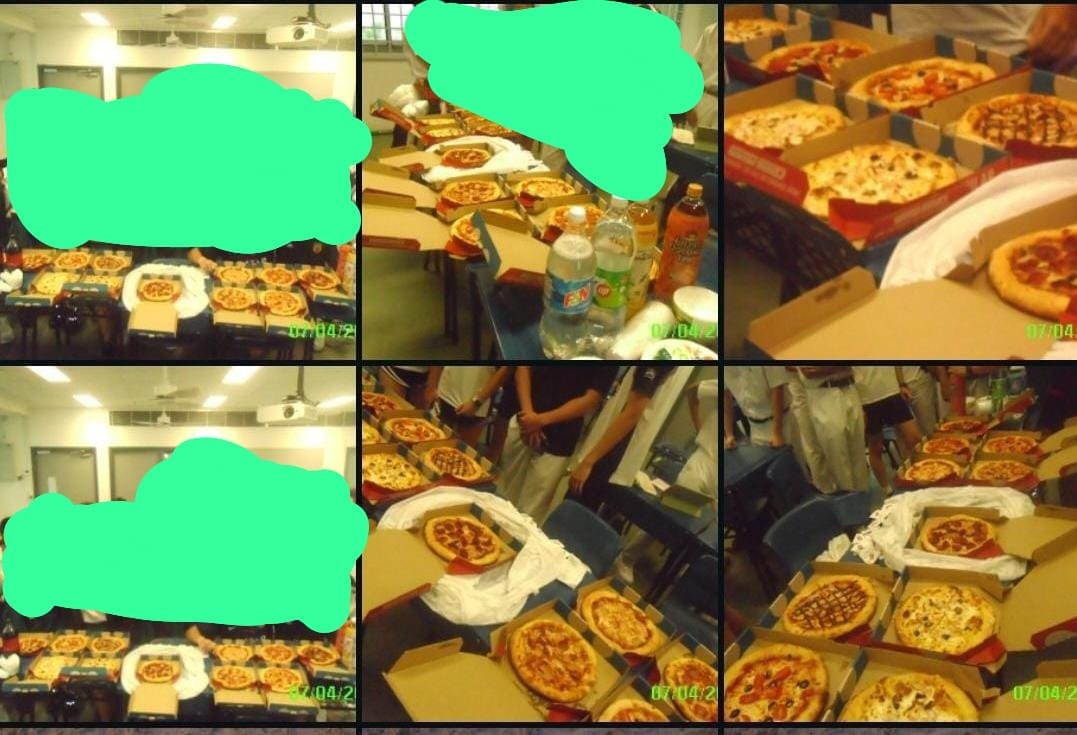

Pictures taken by my class’ residential digicam holder during a class pizza party, and her digispam account
Is the World Losing its Colour?
Our current culture, framed by the aforementioned, and a fast-paced, economy-centered world has led to two shifts: a lack of affordable third spaces and an external quest for internal originality.
A third space is an accessible social space separate from the two usual social environments of home (“first place”) and workplace (“second place”). As stated in the linked Wikipedia page, social critics like Karen Christensen have supported the need for these spaces, opining that they “are the answer to loneliness, political polarization and climate resilience” since they facilitate relaxed interactions. Despite being a widely proliferated concept, most of the ones in Singapore…don’t really cut it. Libraries demand silence, most of us can’t enter bars, not everyone works out in gyms or goes to bookstores, they’re all “exclusive” in some way.
Teens can’t be blamed for turning to cafes—the promise of food, possibly free WiFi, and company a much better deal than the rest. Be it snug locations tucked into corners of Bugis, or million-dollar giants like Chagee, cafes have secured their place as the best third space options available, with their warm lighting, Instagrammable background and delicacies.
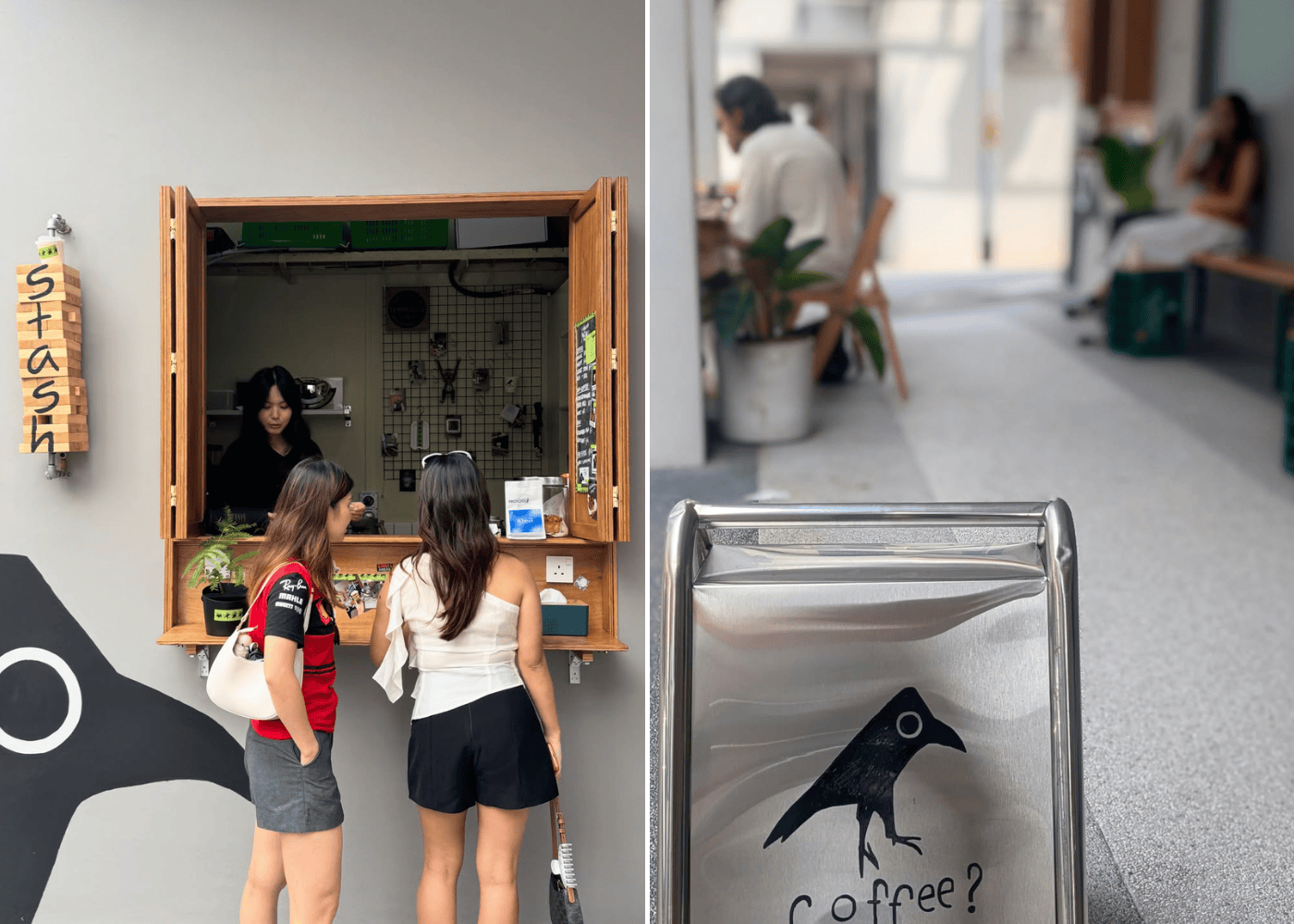
Stash, one of the viral ‘hole in wall’ cafes. Photo: @stash_sg via Instagram
Singapore has a long way to go in creating enough fun and affordable places that spur true bonding. Not everyone can consistently afford the nose-bleed price of a Starbucks frappe, and the rare ‘free’ third spaces like *SCAPE are currently not stimulating enough with minimal events and overpriced shops.
Mass-produced Individuality
On top of the scarce places for creativity and unhindered conversations comes the teenage conundrum of identity. We’re all growing into our own people. However, when it seems that we’re steered into certain pathways, be it through ready-made clothes, accessories (and the heat) curbing personal style, or a lack of time and platforms to share non-academic or non-CCA hobbies, simple delights like thrifting and social media posts grow into outlets of self expression.
Ironic, considering clothing styles born from these wishes like Punk and Boho have been reduced to “aesthetics” repacked by fast fashion companies to be marked up, stripped off their communal values, and spoonfed to us as machine-made “uniqueness”. Vintage denim pieces with specially stitched bronze buttons…that two hundred other people also have. Even thrift stores have more Shein items than the genuine DIY or “vintage” pieces we want for ourselves.
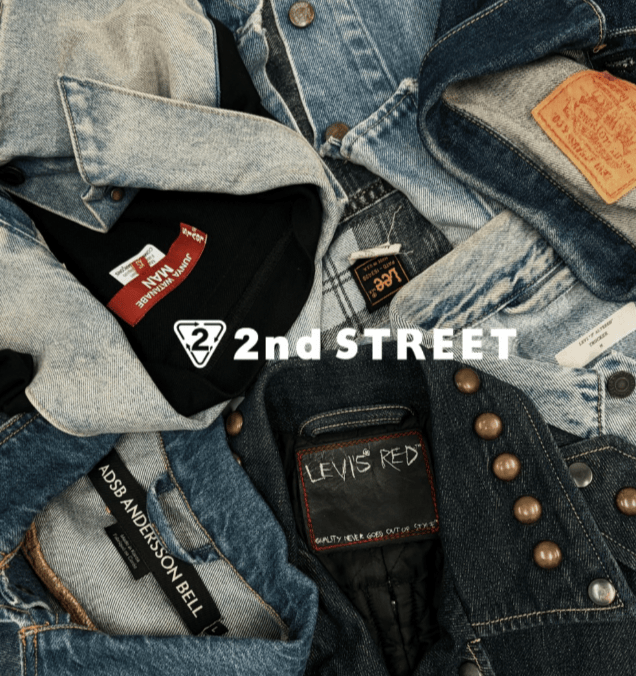
Promotional material showcasing vintage denim pieces at one of Singapore’s more popular thrift stores. Photo: @2ndstreet_singapore via Instagram
There is of, course, nothing objectively wrong with buying from fashion giants like UNIQLO or having simple clothing preferences. Most people don’t have fully handmade wardrobes, and in this bustling day and age that’s practically impossible. However, when these metaphorical ‘boxes’ are placed on what we wear, where we do, what we do, and how long we do it for…what is left for us to choose? What stops the feeling that we’re all ultimately experiencing the same lives?
Choice: An Illusion?
Fun fact: Yochi struggled to gain popularity when it first started out in Australia in 2012, but its first Orchard outlet in Singapore was a smash hit. Raised in a system with strict rules and limitations, the prospect of seemingly having full control and novelty over something as basic as food is a thrilling feeling. I remember being spoiled for choice, staring eagerly at the seven yoghurt machines mounted on the walls during my first Yochi experience.
Be it Mala, Yochi, or the dozens of photo studios lining both sides of Haji Lane, these companies have done a brilliant job of making consumers feel not just FOMO (fear of missing out), but that they’re the ones at the wheel, not the backseat. A spark of ‘you’ in what’s otherwise just another human life—like changing the wallpaper of your phone to ‘highlight’ your personality. I’m not here to elaborate on the sense of false security these products give (you can check out this Press article for that), but I would question the concept of wanting to be different—does that make anything, or anyone, truly special at all?
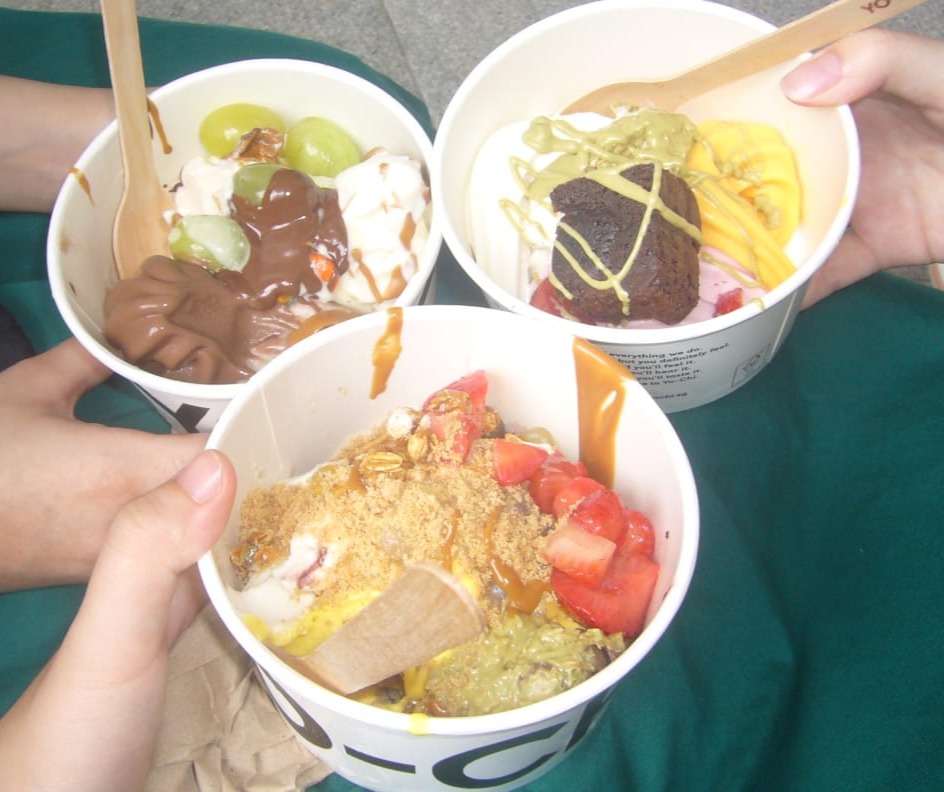
A digicam picture of me questioning our financial choices in real time
A more Subdued reason?
Or perhaps it isn’t that deep. Those who thrift do so since it’s somewhat cheaper than H&M and Van Heusen. The Classic Friend Outing exists because it’s fun, has AC, and promises a satisfactory break from school. Everyone goes to Orchard and Yochi and posts about it because well… everyone else does it. But I believe there could be underlying reasons behind why trends become trendy, and that they’re worth analysis.
Or maybe not.
None of us have the time for it anyway, right?


