

By Tran My Linh (27A01B)
I have a relatively expensive taste for someone who’s still living off my parents’ allowance.
For one, I love Mala–but not just any Mala chain–specifically Hot Hideout, the most expensive one of them all. And I’m no better than your average teenager because I, too, love Yo-Chi. Run the numbers (spoiler alert: there might be a lot in this article), and I would likely be spending $25 if I were to make a visit to Somerset and find myself in both chains. That’s equivalent to 10 plates of chicken rice from the Y1-4 canteen or 6 plates of chicken briyani from the Prata store being gone in a day. Albeit a personal one, I’m certain this anecdote resonates with many of us. Blame it on inflation, but Mala and Yo-chi’s pay-by-weight business model ultimately entices us to pay more than if we opted for a standard food court meal at 313@Somerset or Yolé right across the street.
Drawing parallels with the pricing model of cai png (economic rice), the pay-by-weight model adapts naturally to the local scene. Unlike the fixed portions typically offered elsewhere, this pricing system charges customers based on the weight of the food they select. The message for such a model is simple: You control how much your food costs. Having witnessed immense success with hyper-popular stores like Hundred Grains, Bibim Deli, A Hot Hideout, Yo-Chi and many more, it is clear that we Singaporeans love having choices over our food. For the sake of simplicity (and my personal biases), this article will focus on the latter two.
In the case of Hot Hideout and Yo-Chi, the rates are $3.25 and $3.50 per 100g respectively. The numbers may seem small at first, but here comes the trap: we are horrible at judging how heavy food is. Customisation and flexibility make the price model appealing, but they also, quite literally, come at a cost. What appears to be nothing more than a modest serving of froyo or a bowl of spicy noodles can quickly add up, leaving us with a rather unpleasant surprise when the total flashes at checkout. This is how the pay-by-weight model drains our wallet.
The reality
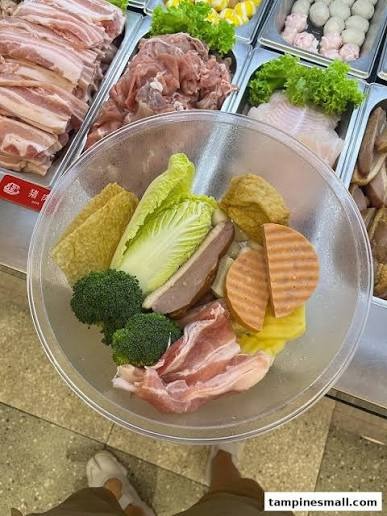
Upon entering Orchard Cineleisure’s Hot Hideout outlet, you are immediately hit by a blast of cool mist, as a wide array of dew-fresh, appetising ingredients awaits. Your stomach is grumbling; your mouth is watering. You simply can’t wait for the incoming feast.
To preface this article–and perhaps justify my own spending behaviours when I visited these chains–I conducted a simple survey for my friends to fill up.
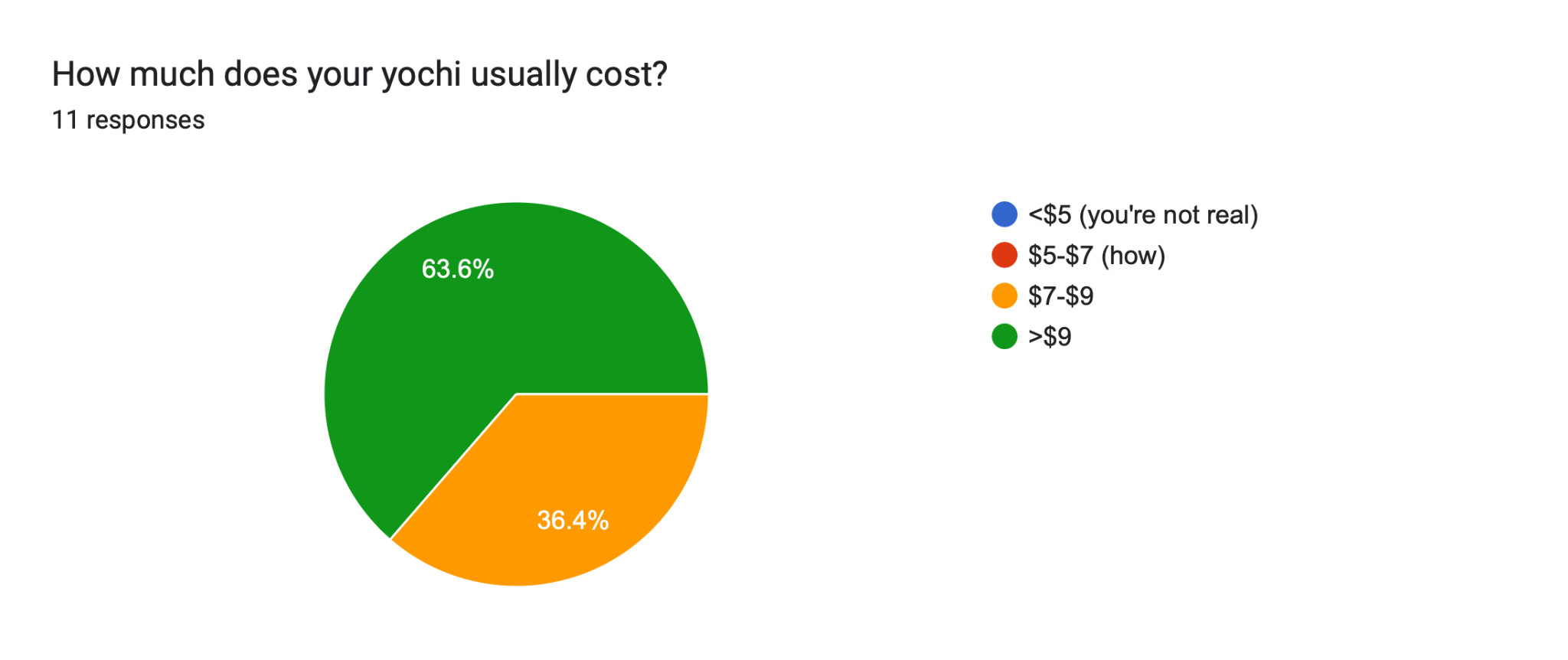
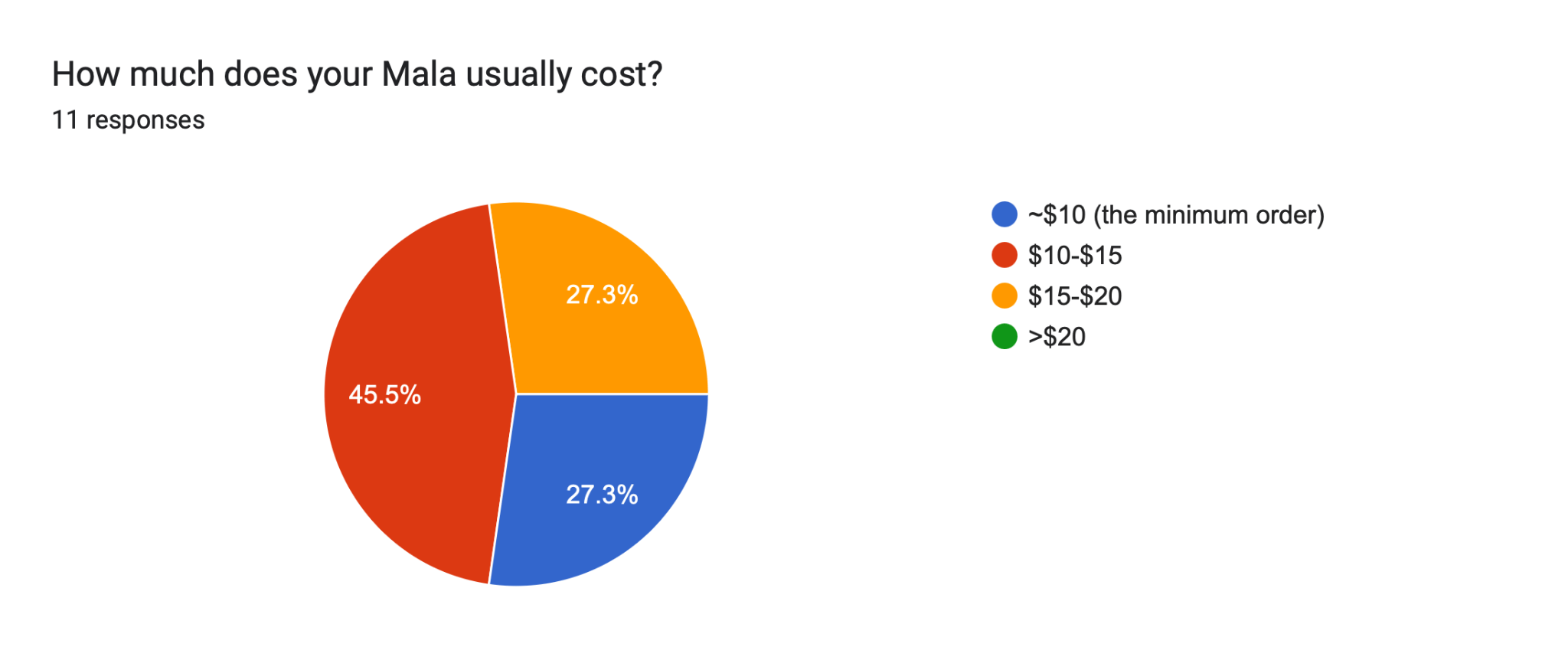
While food prices vary depending on the location and ‘fanciness’ of your taste buds, more often than not, a budget of $5-$10 would suffice in providing you a satisfactory meal, given the many student meals and discounts offered in large chains like Subway, Pepper Lunch and Jinjja Chicken. As shown in both pie charts, purchases made within both categories likely exceed the proposed budget, excluding other miscellaneous expenses when you hang out.
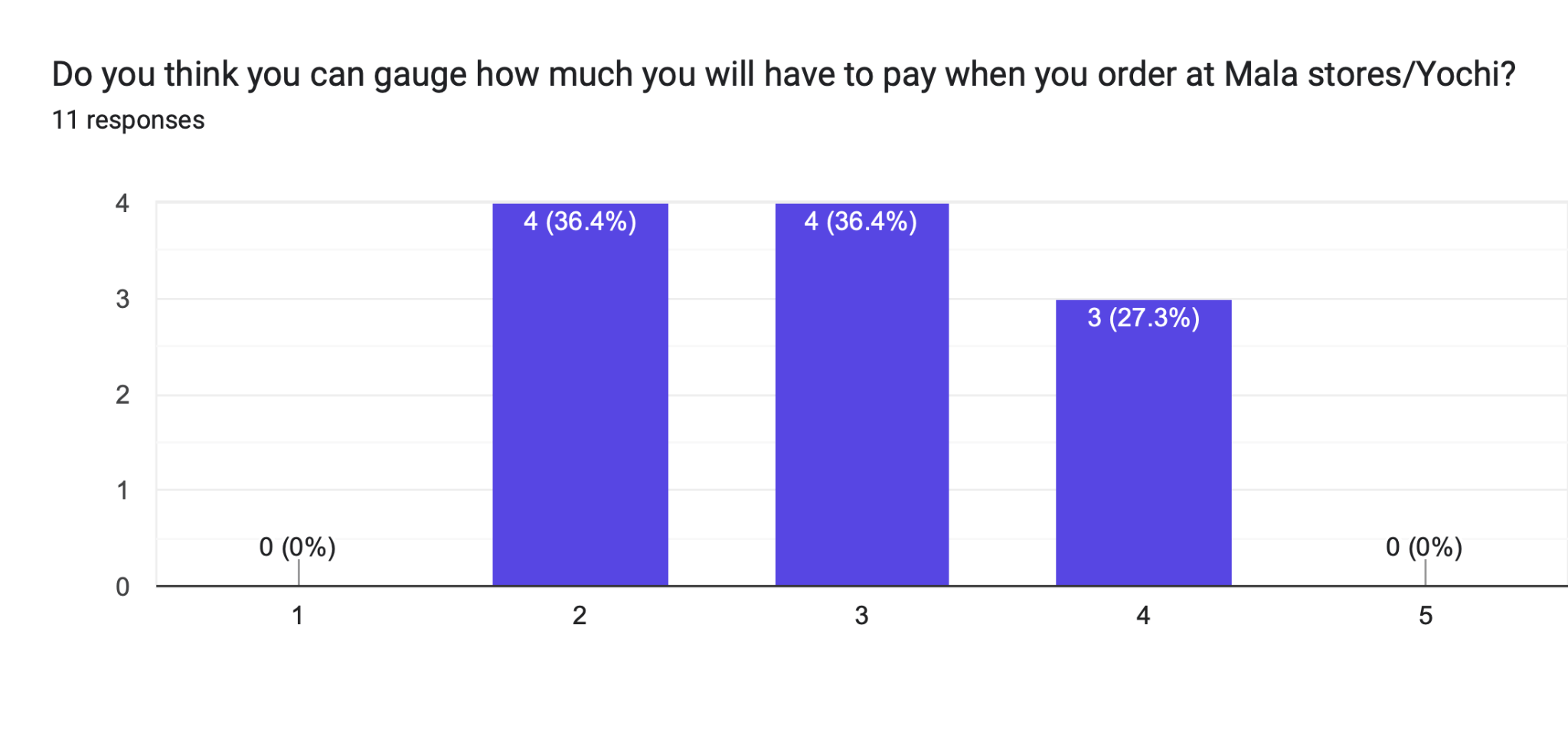
Furthermore, respondents were largely unable to gauge the price of their food when charged under the pay-per-weight model. This reiterates that consumers are generally bad at estimating the financial damages of their bowls. But the question of why we are willing to pay such an exorbitant amount for these foods remains unanswered.
Ingredient equality
In the world of Yo-Chi and Hot Hideout, all ingredients are treated with the same price; a classless society where a gram of cabbage and a gram of pork are treated with absolute equality on the digital scale. It does not matter whether you put sliced chicken or mushrooms into the bowl, because at the end of the day, they are charged based on the total weight rather than the raw ingredient cost. The price is flat across all items, and naturally, an average consumer would assume that this is a steal; cheap ingredients are priced the same as expensive ones.
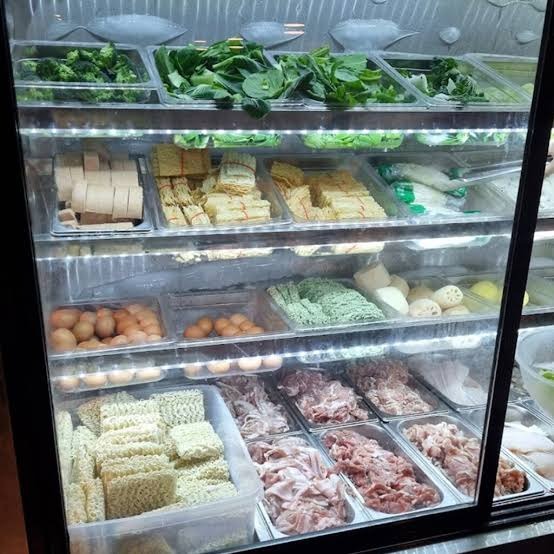
However, the reality is that as much as you’re paying less for premium proteins, you’re also paying much more for cheap but dense ingredients (e.g, potatoes, lotus roots) that you could have otherwise gotten at a much lower price outside. These ingredients also contribute much more to the overall cost of the bowl, hence generating higher profit margins for businesses. From the perspective of F&B establishments, the unpredictability of customer behaviour means they must use cost-based calculations to set a high enough flat “per-gram” price and absorb the cost of their high-value ingredients, further marking up the cheaper options to guarantee profitability. In layman’s terms, while it may be cheaper to get 50 grams of chicken, it is also much more expensive to get 50 grams of kang kong.
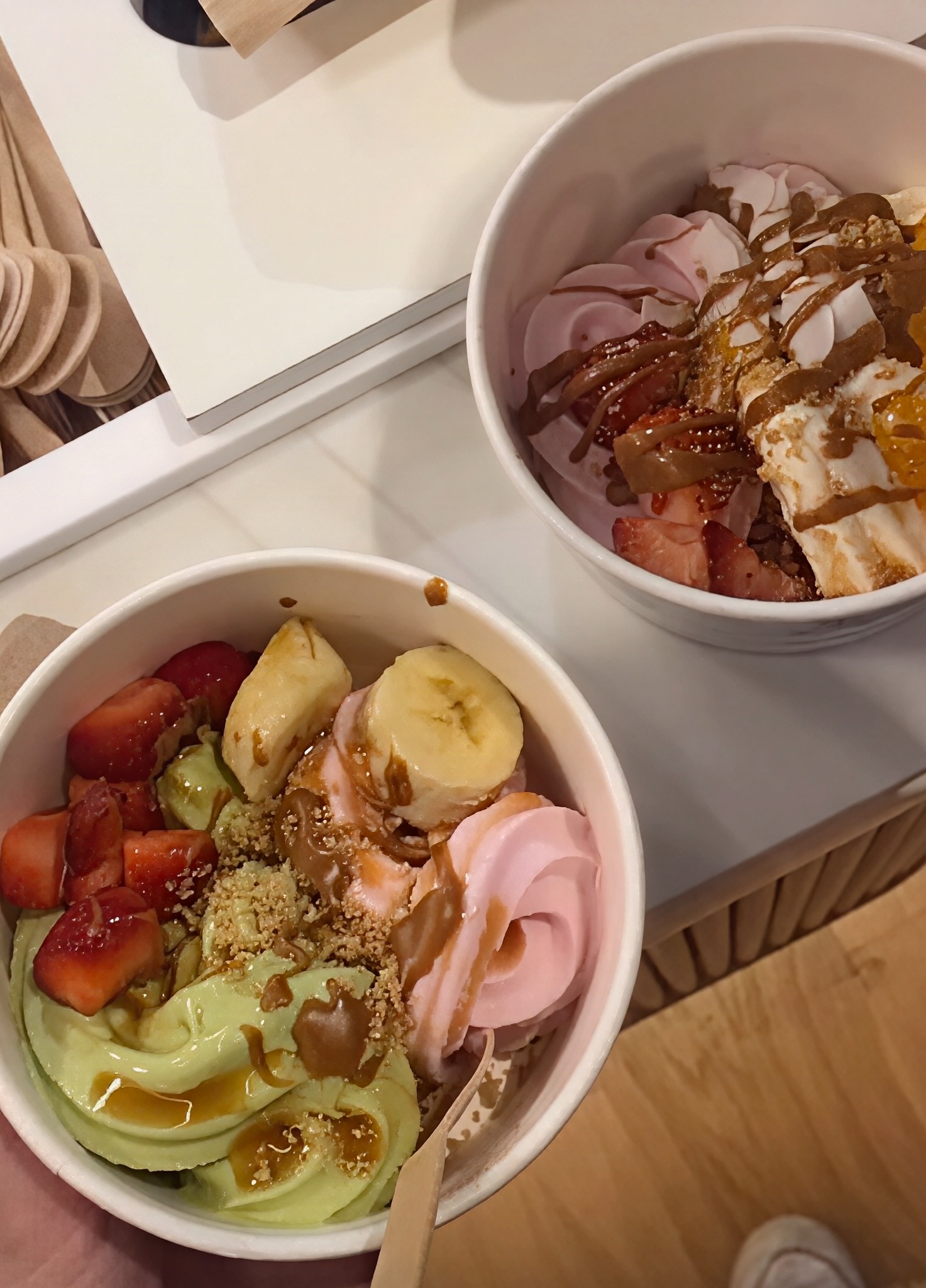
The case is slightly different with Yo-Chi. The brand instead offers expensive but highly dense ingredients such as the froyo base, brownies, cookie dough, and sauces. In this instance, the blanket rate is calculated much closer to the raw cost of these toppings, therefore ensuring high profits on every transaction. Meanwhile, the lower-cost toppings like Hello Panda, strawberry mochi and sour strips still offers variety that closely suits the Singaporean taste, even when they may not necessarily generate equally high profit margins.
So really, the ingredients are equal, but at what cost?
It is really that damn bowl
You really think you have good self-control? Step into a Mala chain and think again.
As much as the Mala ‘economy’ has a monopolistic competition structure, there is one thing all Mala stores have in common: that one big, transparent bowl to put all your ingredients in. Perhaps they purchased them from the same factories in China, but these bowls are there to give us the illusion that the portion is tiny in comparison to the bowl. This prompts us to put more ingredients to fill in the empty space–that is, of course, excluding the fact that such a size caters to those with a big appetite or sharing their meal. This is known as the Delboeuf illusion, the idea behind how we are tricked into underestimating serving sizes because they are served over larger tableware, causing us to overcompensate by scooping more food.
The same idea applies to Yo-Chi’s bowl. The straight, wide sides and flat bottom create an optical illusion that you should pump more frozen yoghurt, which, in reality, is where the bulk of the weight lies. So yes, you can blame yourself for the poor financial decision made after paying for your Yo-Chi or Mala, but if it helps appease your heart (and wallet), just know it is not entirely your fault; you’re just a victim of the profit-maximising product design.
In this economy
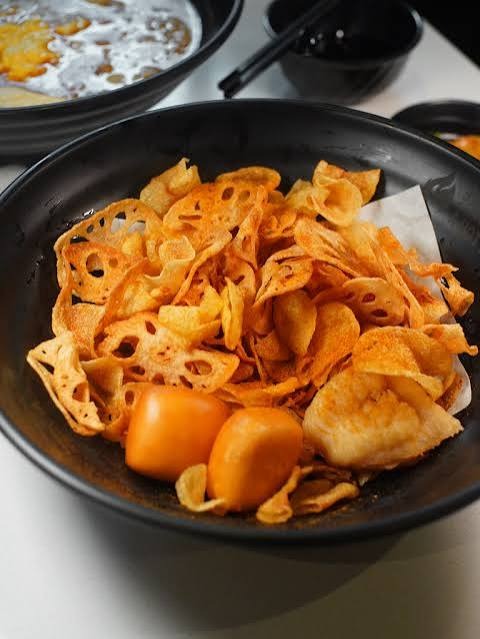
But let’s show the F&B businesses some empathy over here. With the rising cost of operations, raw ingredients and rental fees, it is increasingly difficult for F&B businesses to turn a profit. And to adjust prices without losing customers in a hyper-competitive economy like Singapore is a rather tricky math equation. Some businesses have had to adopt different strategies to cope with such changes and maintain profits. While Hot Hideout establishes its signature dishes, such as thinly-sliced lotus roots and potato chips, for customers to justify paying for the extra hidden liquid weight, Yo-Chi often pushes out limited edition toppings like deconstructed Dubai Chocolate and Yuzu Miso Caramel Sauce to keep customers (me) coming.
The pay-by-weight price model hereby offers the best of both worlds—that is, to keep the profit margins high while maintaining a sustainable pool of customers. Given that traditional set meals often force a fixed ratio of rice to side dishes, more and more diners are choosing to opt for customised-style restaurants. This gives them the freedom to decide the ratio of carbs, proteins and fibre–or lack thereof–that best caters to their dietary preferences. Even though the total costs may turn out to be much higher than other standard restaurants, customers are willing to incur such costs given the autonomy they have over their food, hence maintaining a large customer base.
Llaollao may be a cheaper alternative to Froyo, but because I love having brownie with sour strips in my Yo-Chi bowl, I will still hesitantly sacrifice my $10 in exchange for the sweet treat.
Ultimately, the aim of this article is not to paint the aforementioned businesses as evil, capitalistic corporations that aim to squeeze every last cent out of our wallets through the pay-by-weight price model. As an avid Yo-Chi and Hot Hideout lover myself, I will shamelessly admit that I derive joy from every trip made to these stores.
Rather, my point is that oftentimes, we may be under the illusion that we are saving money by visiting these stores, and in the process make impulsive financial decisions that we regret.
Hopefully through this article, readers are able to gain a better understanding of the pricing model, and practice more conscious spending habits and self-control when they visit such restaurants. Otherwise, I hope this has given you a good opportunity to revise some Economics concepts, because I certainly did in the process of writing this.


