

By Joshua Gerrard Tan (27A01A)
For anyone who’s been keeping up with local arts news, Dear You (给阿嬷的情书)(2026) is a film that’s certainly crossed your radar. For the three months since its release, this film has sat at the centre of a renewed debate surrounding censorship, education, and the importance of Chinese dialects. Yet this film is deceptively simple in its premise—it is a story of lost letters, of separated lovers, of integrity, loyalty, and a white lie lasting over half a lifetime.
Initially, Dear You appears to tell the story of Xiaowei, a man burdened with debt, going to Thailand to look for his long-lost grandfather, Den Bhagsheng, who fled the country years ago to avoid forced conscription. Yet this is only a frame for the real narrative of the movie, as the film shifts to the past. The story covers Bhagsheng’s experiences as an immigrant far away from home, but it’s clear that the narrative’s focus remains on the two women tied to Bhagsheng; Iap Sogriu, his wife who remained in China for years taking care of their three children, and Zia Lamgi, the innkeeper who managed the house in which Bhagsheng stayed.
Dear You is ostensibly a tearjerker, piling on layer after layer of tragedy and selfless kindness in a bid to make the audience feel something, not unlike How to Make Millions Before Grandma Dies, another low-budget film which received much acclaim two years ago. But what truly makes Dear You so emotionally strong is its authenticity to its historical, cultural, and linguistic setting.
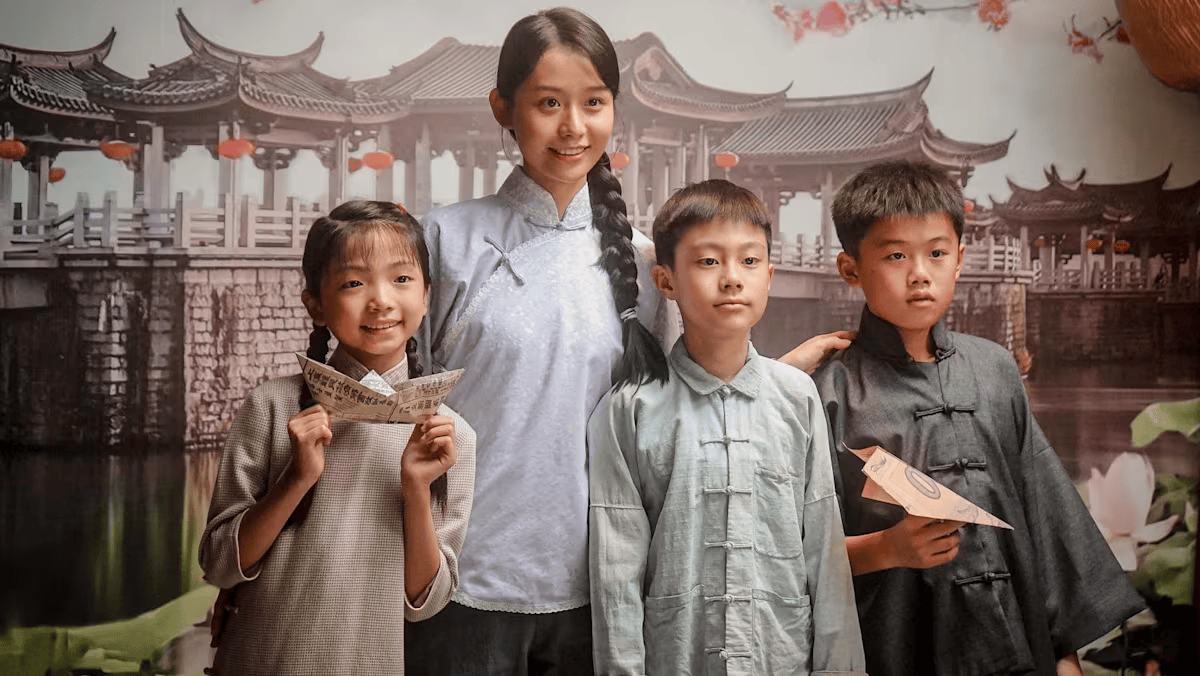
I said Dear You is a story of lost letters. These letters are qiaopi (侨批), consisting of letters and money sent by Chinese migrants abroad back to their families in China. When Bhagsheng is jailed and can no longer head to the post office to write letters, he enlists Lamgi’s help in writing monthly qiaopi to his family.
It is these letters that serve as the catalyst for Lamgi and Bhagsheng’s friendship; through writing his letters, Lamgi begins to understand more of Bhagsheng as a husband and father. And through the ones Sogriu sends back, Lamgi gets a glimpse of the wife and children Bhagsheng works so hard for. In this process of reading and writing, Lamgi herself starts to ‘know’ and love the family she has connected with.
Through these intimate letters, we are introduced to one of the film’s key themes: love and separation. Throughout the movie, the audience is constantly reminded of an existing “other”; be it Sogriu and family in China, or Bhagsheng in Thailand, there is always another person so intertwined with the character onscreen that to see one without the other is heartbreaking in itself. In a film so concerned with absence, qiaopi serves as a reminder of presence, a reminder that separation is only temporary, that there will always be family to go back to. In one of the most memorable instances of qiaopi, Sogriu and her children send a family portrait to Thailand, along with a paper crane folded by Bhagsheng’s youngest daughter, with a message, “to fly home”. Bhagsheng breaks down in tears in an unabashedly sentimental moment, one that works because the film has spent so long highlighting the importance of these letters.
These tender moments highlight the film’s commitment to authenticity—to staying true to the historical significance of these letters and the meaning they held for separated family members. The film also does well to highlight the literary value of this practice. Lamgi’s letters to Sogriu are not verbatim transcripts of Bhagsheng’s words. Instead, she polishes and condenses his love for her into beautifully written letters, her linguistic skills elevating it to the level of poetry.
“行船入夜,恰江上升明月。江海万里,心中念你,便不觉遥远”
A letter from Lamgi and Bhagsheng to Sogriu
“Sailing into the night, a bright moon rises over the water. The river and ocean span thousands of miles, but when I hold you in my heart, the distance between us disappears.”
What makes this movie stand out, even from its tearjerker companions, is its treatment of Lamgi and Sogriu: it refuses to let them become mere victims of tragedy. Neither are they one-dimensional characters dependent on Bhagsheng; both are shown to be independent, resilient people of integrity. The primary relationship in Dear You has always been between Lamgi and Sogriu. Even after Bhagsheng’s untimely death, Lamgi chooses to continue her correspondence with Sogriu, sending food, gifts, and the same beautifully written letters, paying for everything out of her own pocket. Sogriu’s endurance helps Lamgi to remain loyal to her virtues, and Lamgi’s loyalty enables Sogriu to stay resilient.
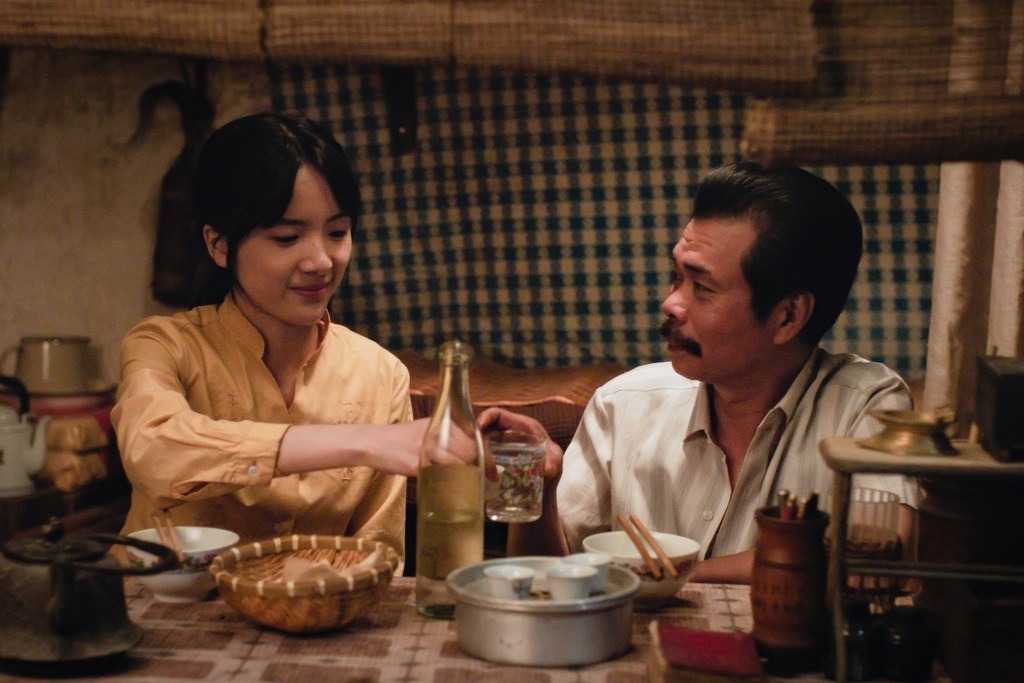
Another pillar of the film’s humanist approach is its humour. For a film so determined to make you cry, Dear You has its fair share of lighthearted moments: jokes between family members, carefree one-liners made by the older characters, and a surprising number of flirtatious innuendos. This humour doesn’t fall into the trap of taking away from the lasting impact of the film’s emotional moments, however. Instead, it strengthens them by fleshing out the characters as ordinary people, making their struggles and joys that much easier for us to empathise with.
Most important to the experience of the film, however, is its linguistic medium. I am not Teochew. Nor do I have Teochew relatives. I rarely ever hear Teochew in comparison to other dialects. But despite the lack of emotional attachment to this dialect, I can still say that to watch this film in its original medium heightens every aspect of it; the writing, performances, and impact of the film are all elevated by its authenticity.
This is also why the public outburst regarding the censorship of this film was so justified. When Dear You originally hit theatres, only two screenings of it in Teochew were allowed by IMDA, and the other screenings were to be in Mandarin. After a huge uproar about this, to the point of it being raised as an issue in Parliament, many more screenings in Teochew were added. The government has also recently done away with its cap on screenings of dialect films. Nevertheless, the question remains: to what extent are we willing to sacrifice part of our heritage to achieve commercial efficiency?
Dear You’s greatest strength is its relatability and authenticity. To dub it over in Mandarin would be to remove one of the factors that make it such a heartfelt and compelling movie. Having permanent evidence of policy intervention on screen as one watches the movie would erect a barrier between the character and the audience, a constant reminder of a wider social problem that drags the audience out of narrative immersion.
This is, of course, not to say that watching it in Mandarin makes it a bad movie. Dub or no dub, the film is still a heartbreaking and touching one; regardless, I highly recommend watching it in the original Teochew (screenings are still available at GV or Filmhouse!).
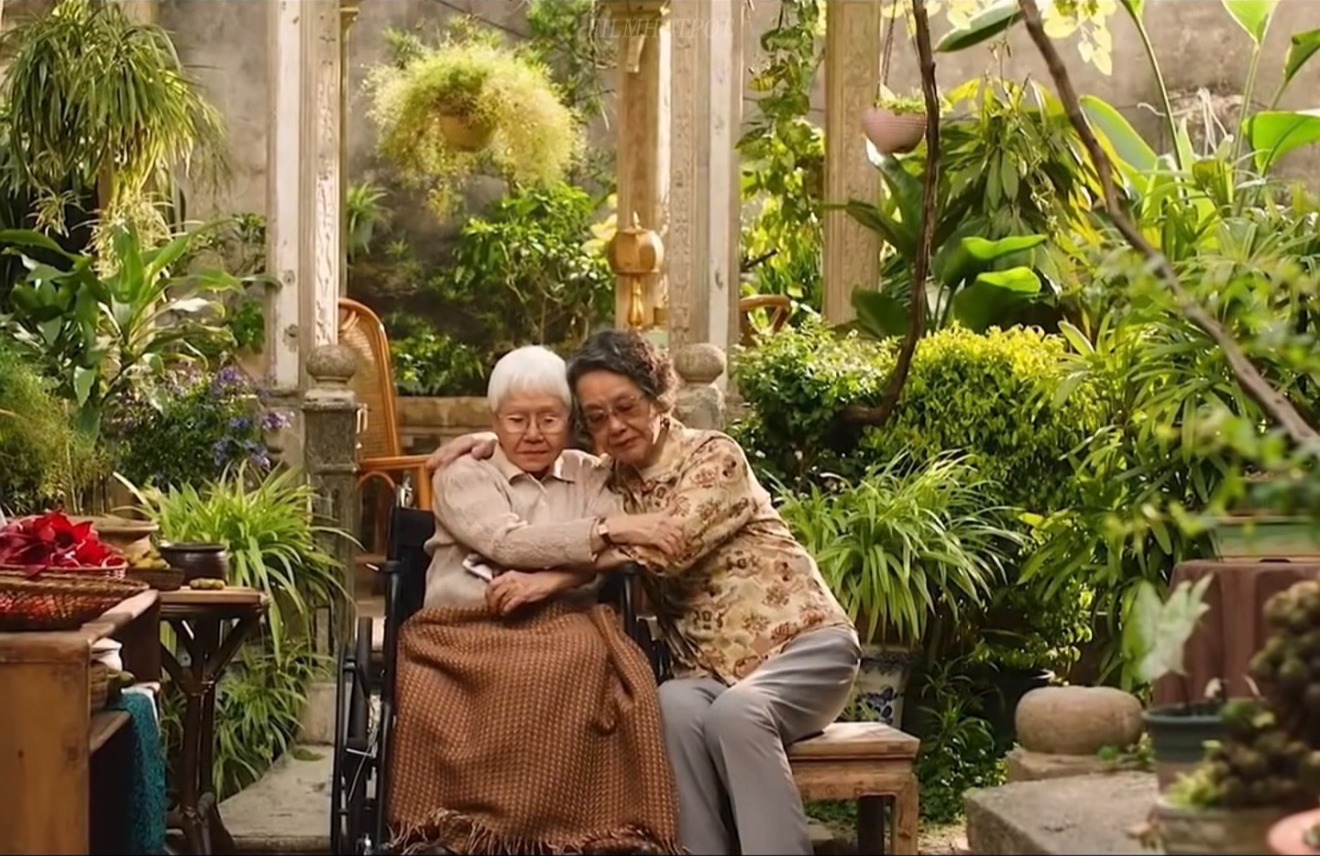
As the film draws to a close and the credits roll, we are met with a temporal panorama of our characters, as well as visuals showcasing some real-life qiaopi and detailing their importance, all as a Teochew song plays. The film, even after the end, refuses to let the audience go without emphasising its ordinary, yet valuable, historical and cultural setting once more. And that lesson, to hold on to these ordinary things, is perhaps the most important lesson Dear You teaches us.


