
By Dara Tan (27A01A)
They say, the pen is mightier than the sword. With exams coming up, we all have to begin preparations—including deciding which one will be our weapon of choice.
Continue reading “A Review of the Best Pens for Exams”
By Dara Tan (27A01A)
They say, the pen is mightier than the sword. With exams coming up, we all have to begin preparations—including deciding which one will be our weapon of choice.
Continue reading “A Review of the Best Pens for Exams”
By Harish Arun Prasad (27S05B) and Sean Loh (27S06I)
All photos courtesy of Grace Zhu Ziqi (27S06G) and Backiaraj Jai Poshika (27S06H) from Raffles Astronomy Club.
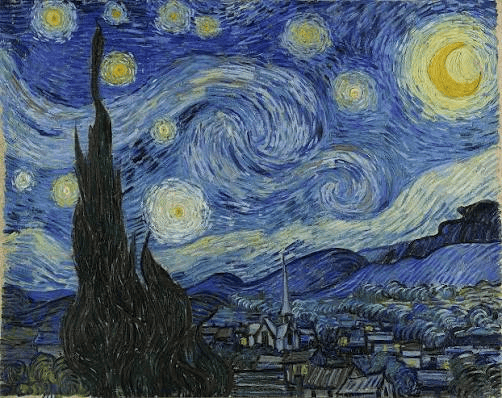
Vincent Van Gogh’s ‘The Starry Night’
As one of the world’s most renowned paintings, Vincent Van Gogh’s ‘The Starry Night’ depicts the simple yet profound beauty of the cosmos against the backdrop of a turbulent sky. Many have come to interpret these stars as a beacon of hope amidst dark times.
Yet, over a century after Van Gogh painted this scene, we now struggle to view such scenery in our night skies, a result humankind has brought upon itself. As the effects of light and air pollution escalate in our society, people growing up today are being further deprived of the ability to take in the view of a “starry sky”.
Continue reading “Astronite ‘26: Stardust”
By Joshua Gerrard Tan (27A01A)
For anyone who’s been keeping up with local arts news, Dear You (给阿嬷的情书)(2026) is a film that’s certainly crossed your radar. For the three months since its release, this film has sat at the centre of a renewed debate surrounding censorship, education, and the importance of Chinese dialects. Yet this film is deceptively simple in its premise—it is a story of lost letters, of separated lovers, of integrity, loyalty, and a white lie lasting over half a lifetime.
Continue reading “Dear You: A Love Letter to What We’re Losing”
By Prajna Girish (27S06O)
you ons for matcha x thrifting, girl?
Scroll through Instagram stories any weekend or holiday and chances are you’d see aesthetic, vintage-style digicam pictures blurred just the right amount, stickers in just the right places, and just the perfect song playing over a version of The Classic Friend Outing. A cozy afternoon at Orchard Road or Haji Lane. Stacks of photobooth strips. A movie to escape the sweltering heat. Lunch at a cafe, followed by iced coffee and a wander through thrift stores after mandatory pit stops at Yochi and Brandy Melville’s pre-teen cousin, Subdued.
It seems as though every Singaporean teen has gone through this ritual, or at least some part of it. Despite the constant wallowing over empty wallets and packed schedules, many of us manage to find the time to “speedrun” this itinerary with friends like a mapped cycling route, though any one of the aforementioned has the ability to break the bank.
Now, I’m not speaking from a moral high ground—when I hit the trifecta of good people, good food, and good pictures, I’m out the door in moments. One of the reasons these “genre” plans have become commonplace is exactly this—it’s a pre-packed, fail-safe model for a good time. But somewhere between the camera roll to prove we had fun and frigid fingers from holding that strawberry matcha, have we ever stopped to wonder why exactly it became the go-to outing formula? What else do we wish for when making plans with peers?
Continue reading “Why Everyone Goes to Yochi”
By Dara Tan (27A01A)
My name is Dara Tan.
Did you do a double-take? Did you think to yourself, “what an interesting name?” Or google the meaning of my name?
I have lived with the debilitating experience of first-time introductions for the entirety of my life. People have mispronounced, misspelled, misspelled and forgotten my name, while others have remembered me solely because of it. I have endured plenty of teasing as a child (“Dora, Dora, Dora the Explorer!”) and suffered through spelling my name out to confused teachers and friends.
But having a unique name can be fun and amusing, and it has its perks at times.
These are only some of the experiences of having a unique name.
Continue reading “The Unique Experiences of the Uniquely Named”