

By Georgia Ong (26S03O), Lerraine Neo (26A01A), Looi Ee Xin (26S03M)
What comes to mind when you hear “Joo Chiat”? Perhaps it’s the many cafes adorning the streets, or the Peranakan shophouses that are abuzz with tourists. Or maybe, you’re more familiar with Joo Chiat’s sisters, the neighbouring Katong and Marine Parade estates, with malls like i12 Katong or Parkway Parade.
Regardless, there’s one common thing that all these things share—the vitality they bring to the neighbourhood. When one thinks of mature, culturally significant estates, characteristics like TCM shops, playgrounds, worn-down buildings, wet markets and places of worship may arise, but that’s not the case for Joo Chiat.
Joo Chiat, Singapore’s residential Peranakan neighbourhood, has managed to pull off the unthinkable—effortlessly weaving culture with culture, past with present, allowing for a cohesive identity that remains culturally relevant even with the evolving times.
This is gentrification in Joo Chiat.
Ethnic Communities
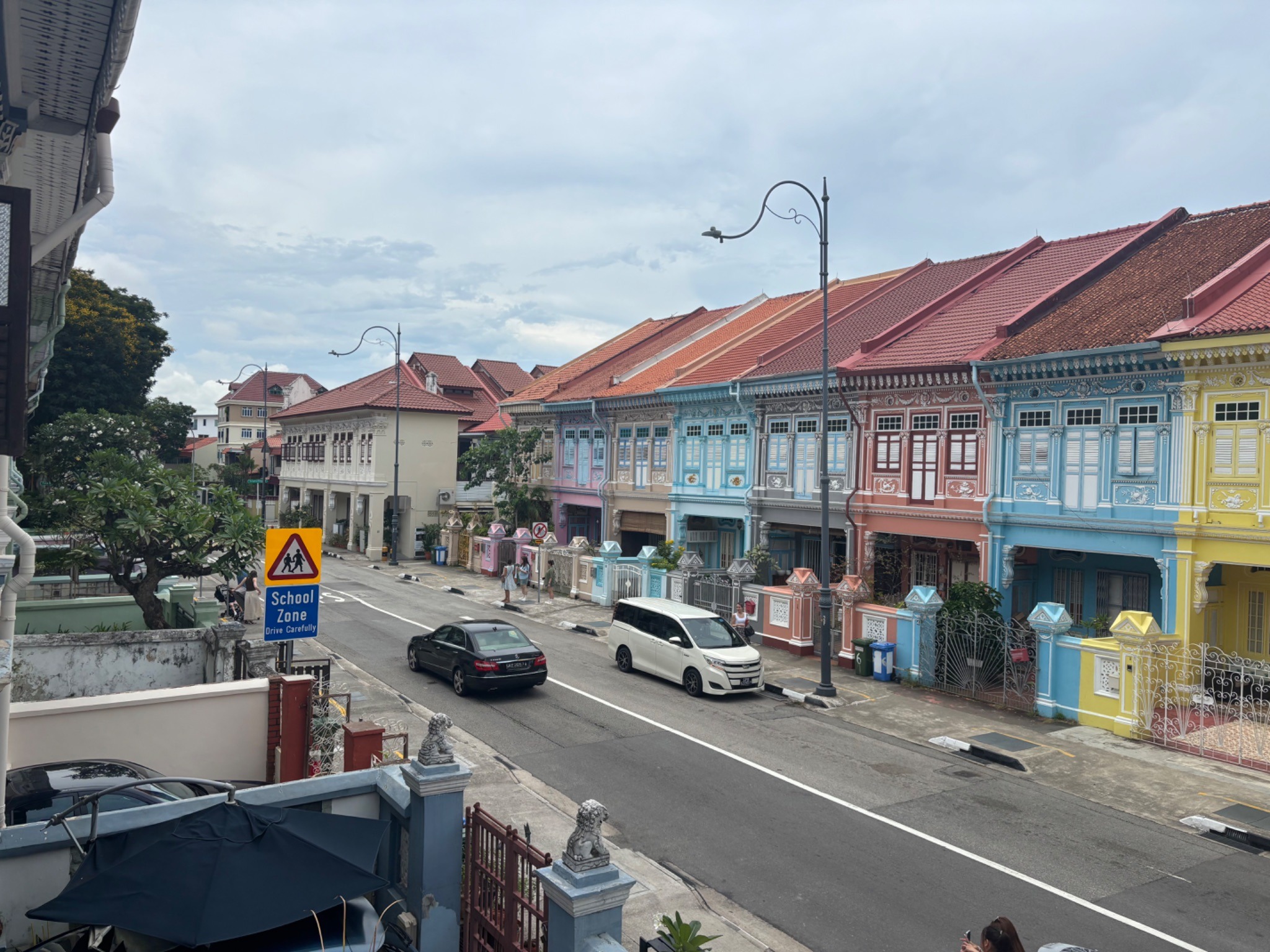
Take a walk down Joo Chiat Road, and you will marvel at the many Peranakan shophouses that line the streets, the finest reflection of Joo Chiat’s ability to weave together different cultures.
Joo Chiat’s original residents, the Peranakan Chinese, came about through the interracial marriage of Chinese immigrants with Straits’ Malays, forming a unique amalgamation of Peranakan culture. From their food to clothing to architecture, the Peranakan influence on Joo Chiat is visible everywhere you go.
Look at the shophouses—the impact of Chinese, Malay and Eurasian influences is evident. Carefully thought-out elements like dragons and horses with Chinese cultural significance adorn the shopfronts, ornate carvings of metals and tiles reflect the intricate Malay craftsmanship, and ceramic tiles and beautiful pastels tell the tale of colonial styles that influenced design choices.
But there is more to Joo Chiat than meets the eye. Beyond the critical acclaim of its shophouses and Peranakan background, Joo Chiat is also home to a multitude of different places of worship.
Go down Tembeling Road, and you’ll find Kuan Im Tng Temple, a Buddhist temple. On a completely different vein, if you were to venture inwards towards Katong, you would find different Christian denomination churches, from Toong Chai English Presbyterian Church, St Hilda’s Church, or Church of the Holy Family. Even more surprisingly, you may be surprised to find the Hindu temple, Sri Senpaga Vinayagar Temple, within walking distance of the various churches.
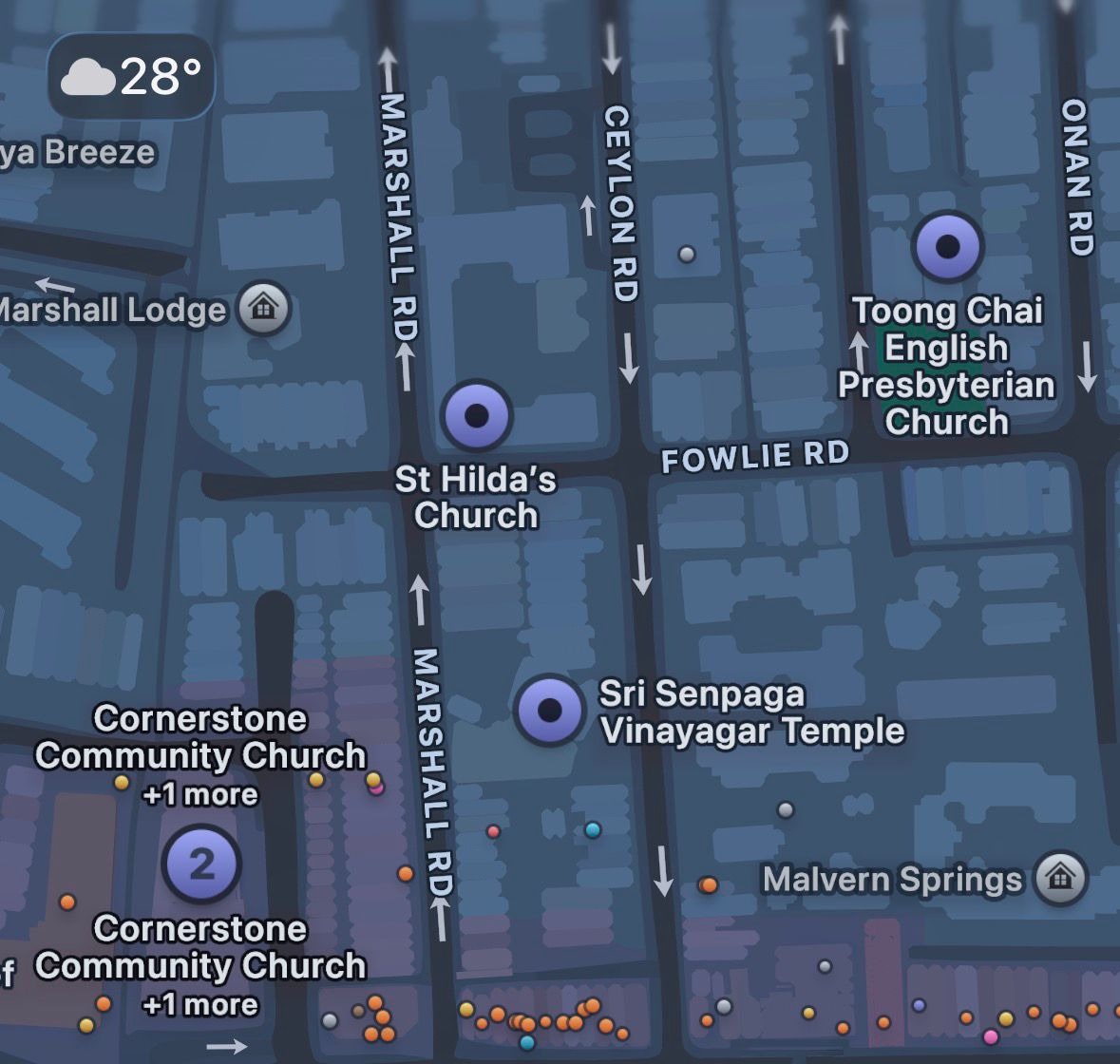
Joo Chiat’s multicultural landscape translates to a diverse religious scene. Its native residents adopted various religions; for many Chinese Peranakans, following the religion of the Chinese father was common, leading to many following religions such as Taoism or Buddhism. It was also common to see uptake of various Christian denominations, which arose with the influx of missionaries into Singapore.
Along the adjacent Ceylon and Marshall Roads, you’ll find an Anglican church, a Presbyterian church, and a Hindu temple. It may be surprising to learn that the two churches first comprised the church and a school, serving the community’s needs for education. In particular, St Hilda’s Church had a schooling section for girls, which served as an important space for young females to be educated, something particularly rare in colonial Singapore.
The grandiose Hindu temple, the Sri Senpaga Vinayagar Temple, is also a prominent place of worship in the area. The temple found its roots back in the 1850s, where Ceylon Tamils found a statue of the Elephant God, Lord Vinagayar, beside a Chempaka tree (Senpaga in Tamil).
Consequently, the temple’s architecture pays homage to its roots in its various stylistic elements. With a 21 metre high Rajagopuram, it was designed to signify and make space for royalty, such as the lords on elephants, to enter. Its structure is also adorned with Ganesha, the elephant-headed deity, statues, and people frequent the temple as a cultural site as well as a place of worship.
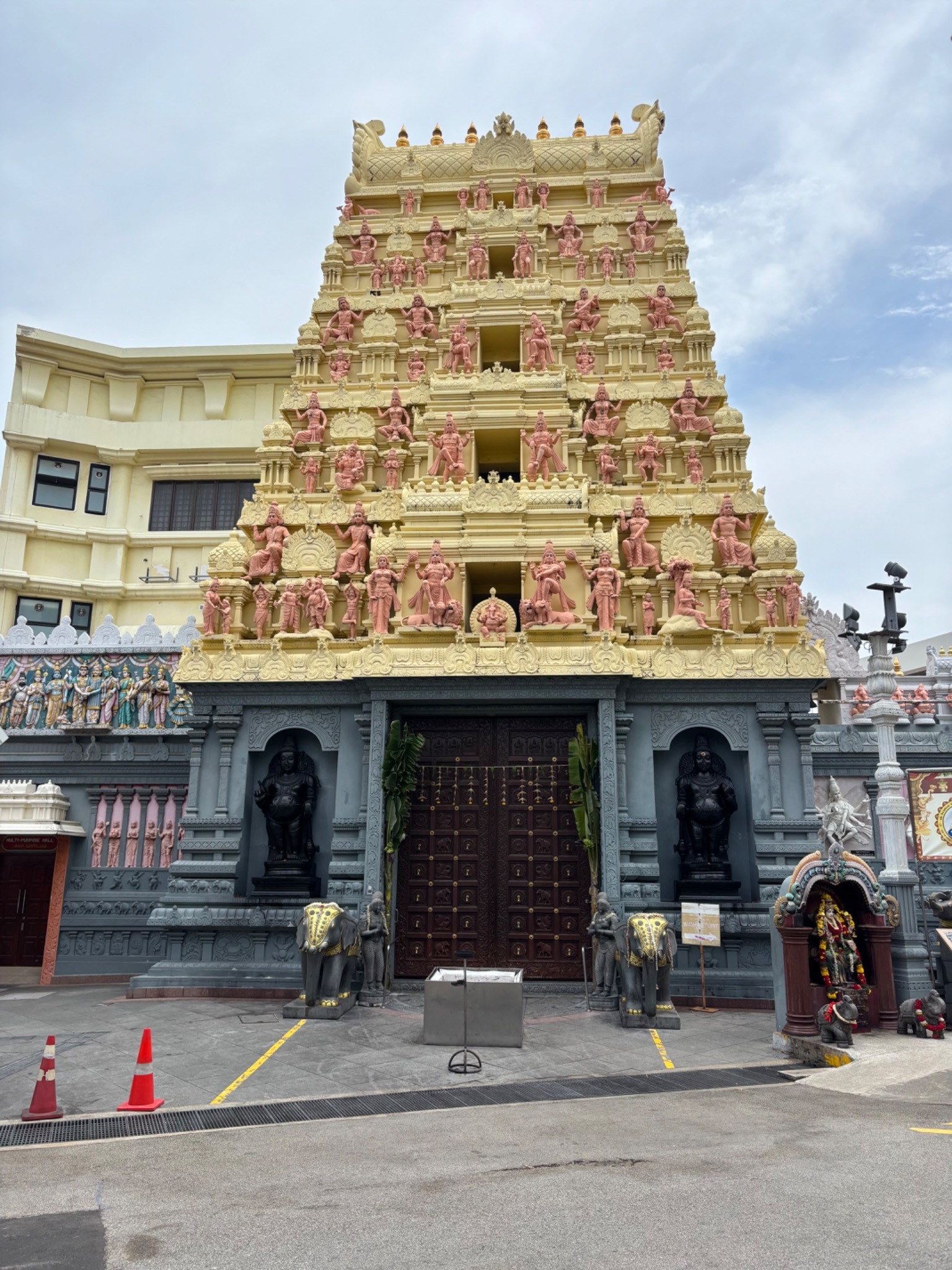
Joo Chiat finds itself home to a melting pot of Singapore’s various races and religions, and the careful preservation of these sacred areas has helped bridge a connection with our roots, reminding us of the important histories of the area as we welcome the modern developments.
Establishments
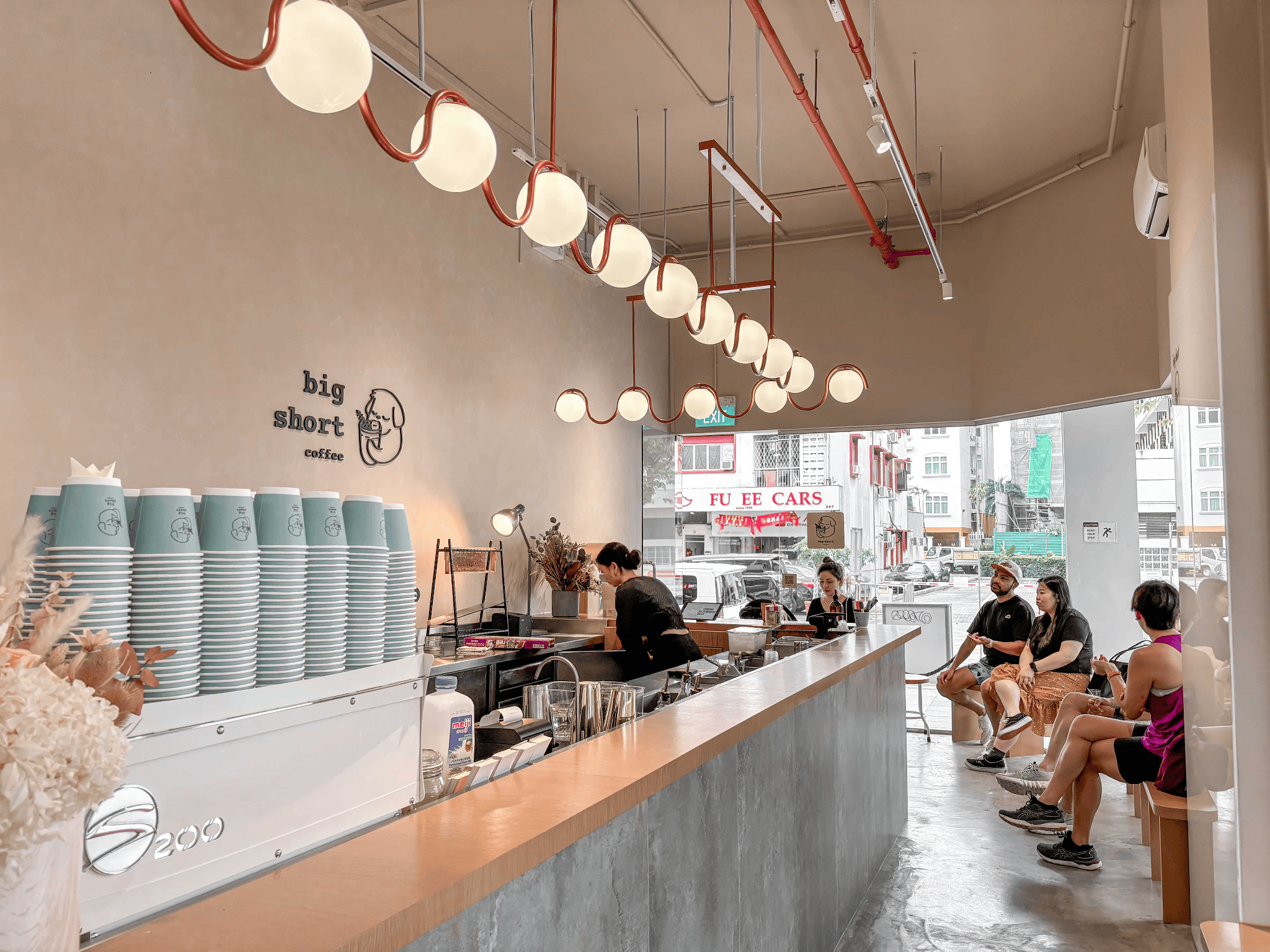
Besides the religious institutions that Joo Chiat has housed over the years, the street has been radically transformed, with new tenants moving in to revitalize the area. Now, Joo Chiat draws in a significantly younger crowd, attracted by the new cafes and novel shops that have opened in the area. In fact, a quick google search of Joo Chiat cafes will lead you to many articles on the different food establishments Joo Chiat has to offer.
Right at the front of Joo Chiat Road, one will come across Creo Customs, a motorbike shop that doubles up as a bar at night, with a friendly atmosphere that draws in visitors looking to have a drink with some live music. Just further down the road, Big Short Coffee Bar comes into view. A specialty coffee bar, with a rotating menu, has attracted a crowd with its cocktail-inspired coffee. Amidst these changes, Joo Chiat has drawn young entrepreneurs looking to reinvent one’s retail and dining experiences.
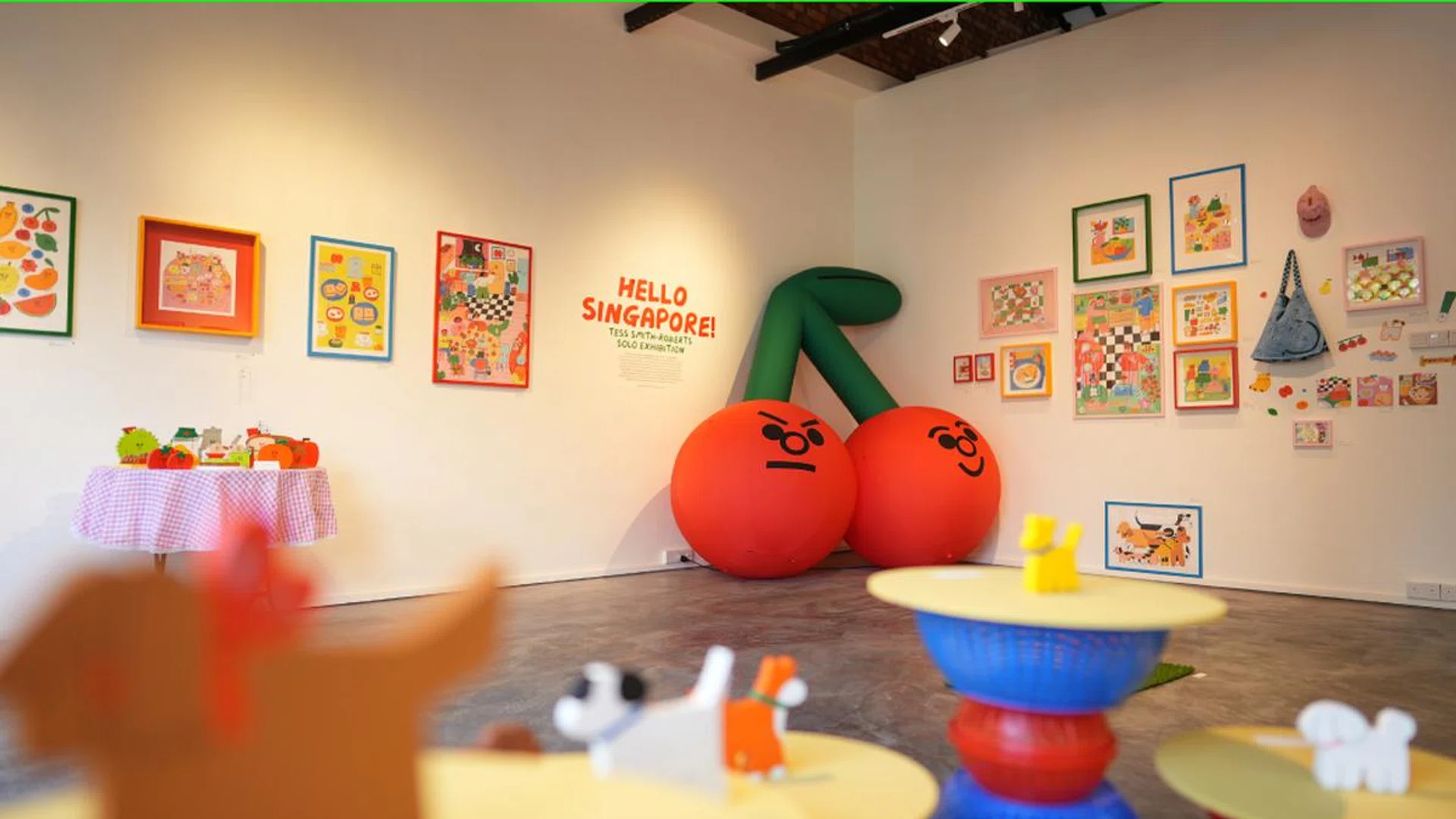
Not just dining establishments, Joo Chiat has made a name for itself in other shops, such as the famous Heartware Store & Gallery, which houses pop-up exhibitions for artists all over the world. Indie artists such as Tessa Smith Roberts’, “Hello Singapore!” and maitoparta’s, “Itadakimasu!” exhibitions have all drawn large crowds of Singaporeans, keen to browse artworks that are not found in traditional galleries.
With its current glamorous look, it is a far cry from its past reputation as an unofficial red light district. Once filled with KTVs and pubs, it was known as a sleazy district. With the efforts of the Save Joo Chiat Work group, residents of Joo Chiat lobbied the authorities, and within a span of a few years, were able to “clean up” Joo Chiat through a series of imposed rules on the area.
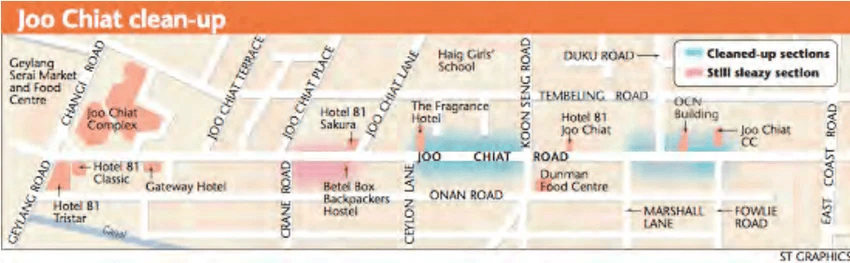
Traces of its past as a red light district still linger, with some KTVs and pubs still present in the vicinity serving as a reminder of its history. However, some older establishments have withstood the test of time, and are sparsely scattered amongst the many new cafes, galleries and shops.
Teong Theng Co, a rattan shop established in 1945 still stands, filled with an assortment of household furniture. Kway Guan Huat Popiah@Joo Chiat has been around since 1938, now organising tours and going strong. Chin Mee Chin Confectionary, a beloved bakery continues to attract crowds since its establishment in 1925, with long lines forming even before its opening hours.
Joo Chiat is also home to establishments who have found a middle ground between incorporating the modern and the new into older buildings, who have stood the test of time.
The iconic red building in the Joo Chiat area, was home to the Katong Bakery & Eatery before it was shut down due to safety issues. Now, it has been remodelled and now home to a new bakery, MicroBakery&Kitchen. 5 foot walkways can be seen dispersed throughout the Joo Chiat area, with the architecture of the shophouses retained, and many shops choosing to put their own spin on them. It’s heartening to see that the unique shophouses of Joochiat have been preserved, and that the architecture will not be disappearing anytime soon.
Street Art
Amidst the decades-old architecture, a more modern medium of art has found its roots.
A walk down any lane in the Joo Chiat area seems to yield an abundance of street art. The buildings are lined with murals and art, each painting a memory of older generations or new passions. Preserved in bright colours and bold lines, some are accompanied by heartfelt messages or wild greenery. And each is a love letter. To Joo Chiat’s history, its residents, to the buildings and air itself.
As we make our way down the winding streets, we find ourselves stepping off the cracked pavement and onto a rainbow. The laneway mural, situated at Joo Chiat Road, was a community effort. Borrowing the support of local business, residents, and friends of the community, the mural reflects Joo Chiat’s goal of being an arts precinct, brightening up the district with its vibrant colours and endless twists.
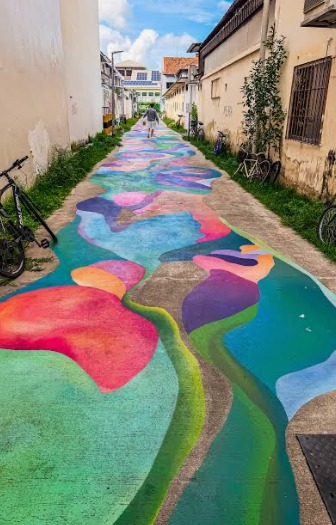
The mural goes beyond just paint on the ground. It transforms the road from a simple brick-and-mortar affair into a place residents are proud of, drawing locals and tourists alike for a picture. It was recently being extended at the end of this month, with a launch party taking place on 30th May.
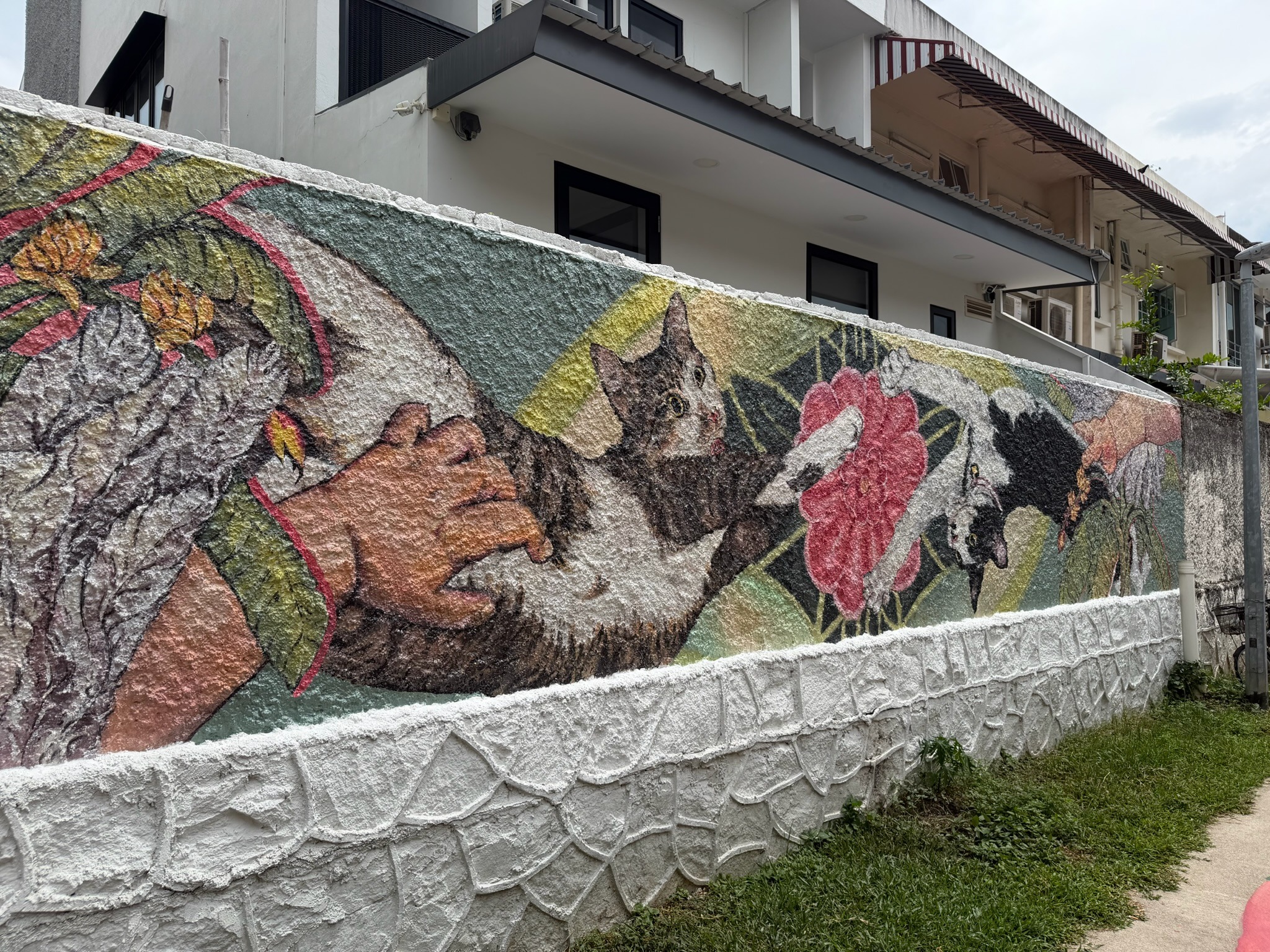
Just a few minutes away from the laneway mural, we came across a massive painting of two cats, stretching along the walls of someone’s private property. These, our guide explained, were commissioned by the homeowner, and depicted their pets.
We also came across another cat mural, this one depicting an array of colourful kittens and spanning the entire top floor of a building. And a few minutes away from that, a missing cat poster. And then a stray cat, and another, and another.

The community’s love for cats is evident,immortalised on its buildings for all to see.
There is one final type of mural we came across. They weren’t as flashy, with less vibrant colours and scattered more sparsely through the streets. But they were well cared for, and no less detailed than the others. These were the murals depicting Joo Chiat’s residents, old and new.
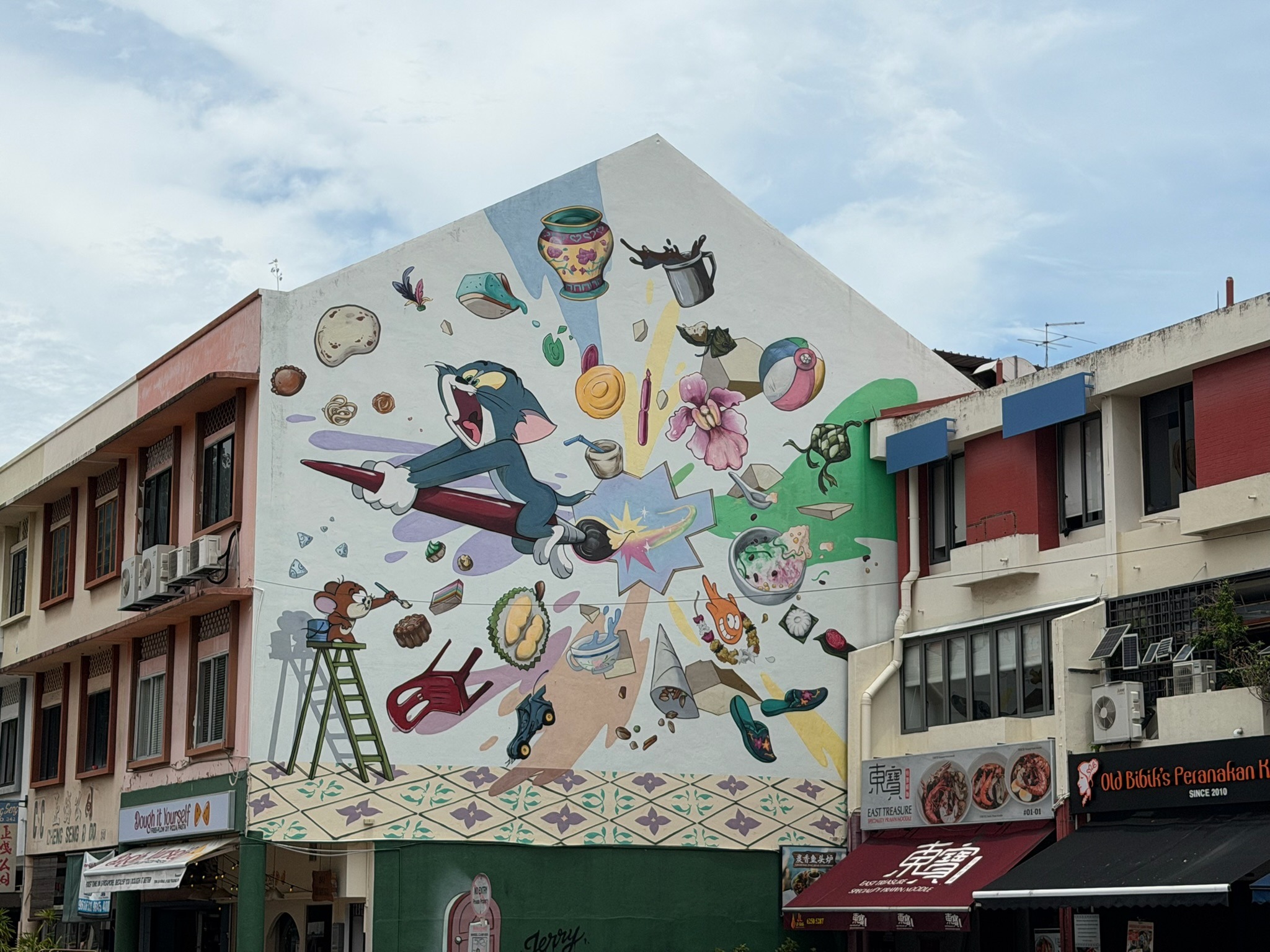
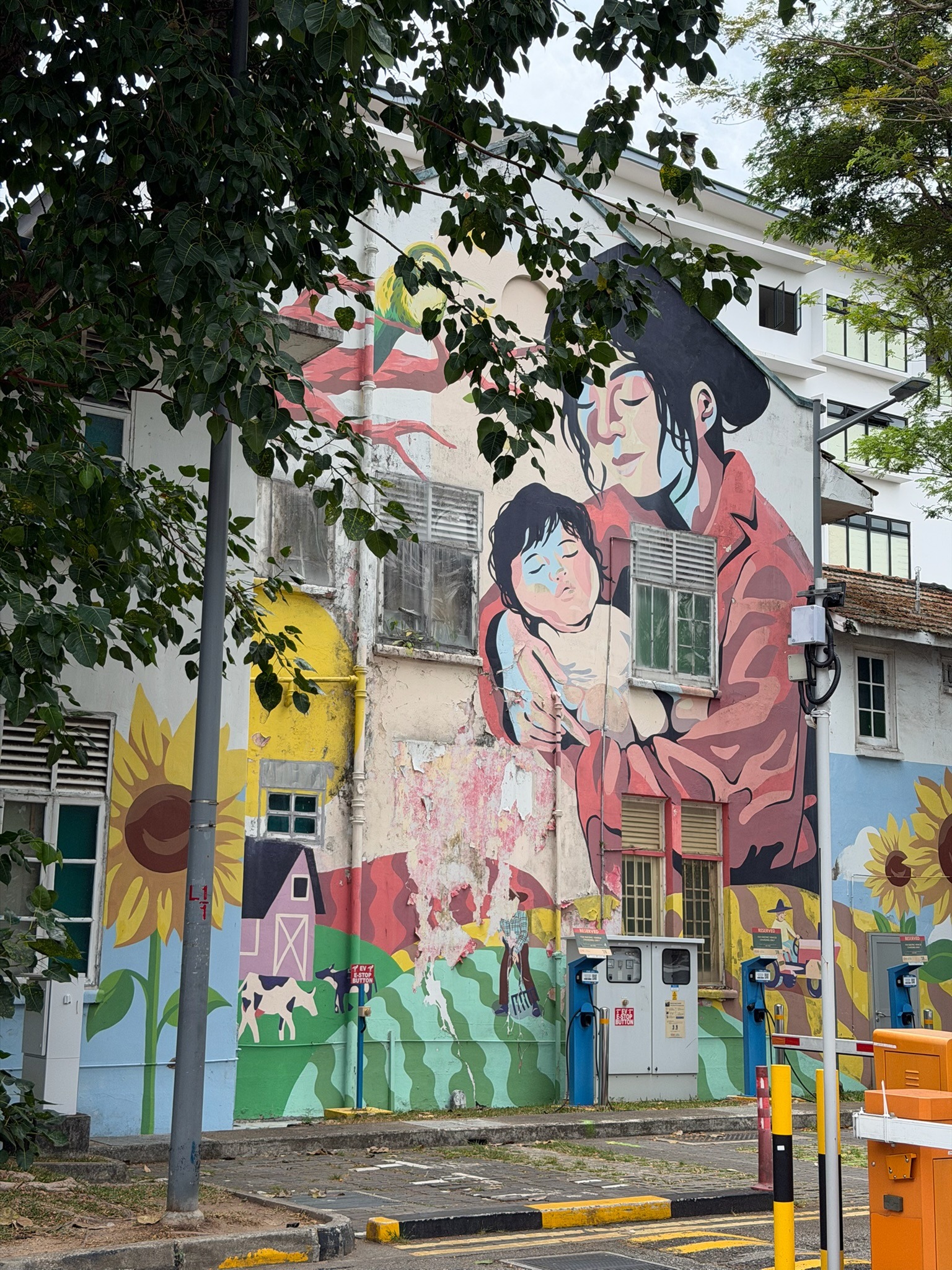
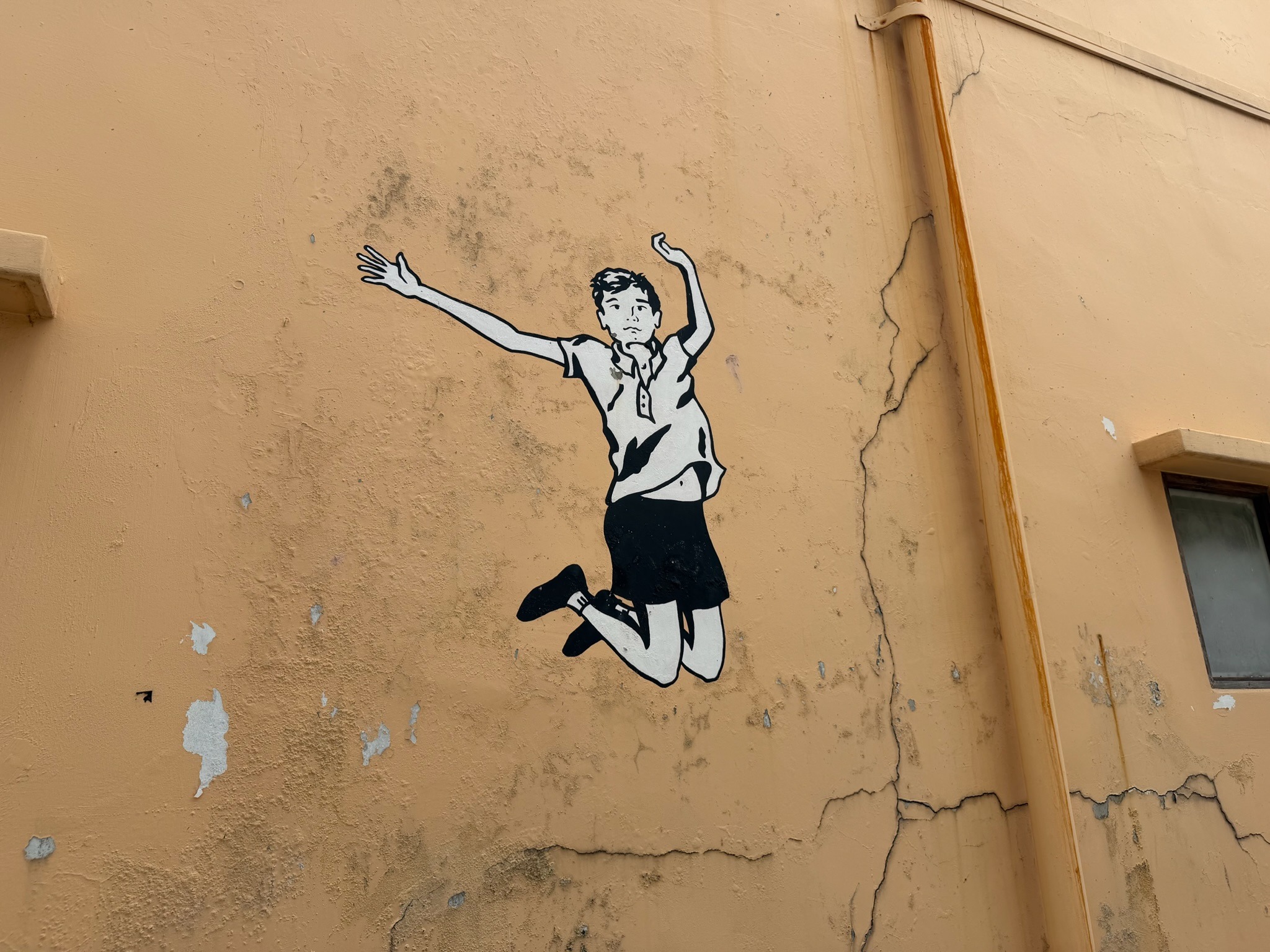
The murals were of everyday scenes, featuring men and women, children and adults going about their day. Some sat at the sewing machine, some raised wooden sticks in pretend-fights, some stood over a coal-powered stove, tending to the fire.
A few gave us a glimpse into Joo Chiat’s rich cultural past, with Peranakan women smiling at us from the walls. Their outfits, the traditional kebaya, were so similar to the ones we’d seen at the Peranakan museum less than an hour ago. The resemblance was more than just striking; it was a reminder that despite the fancy new houses and the newly-paved roads, the heart of Joo Chiat remained unchanged.
Perhaps in fifty years this district will look unrecognisable. The buildings we now call “gentrified” will be considered relics of a time past, old architecture that people gawk over for its cultural value and rich local history. And if that time comes, perhaps they will look at the paintings pressed into its walls, and know the residents and the love that once filled the precinct.


