

By Harish Arun Prasad (27S05B) and Sean Loh (27S06I)
All photos courtesy of Grace Zhu Ziqi (27S06G) and Backiaraj Jai Poshika (27S06H) from Raffles Astronomy Club.
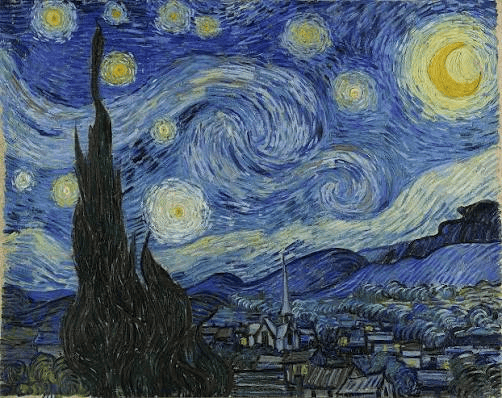
Vincent Van Gogh’s ‘The Starry Night’
As one of the world’s most renowned paintings, Vincent Van Gogh’s ‘The Starry Night’ depicts the simple yet profound beauty of the cosmos against the backdrop of a turbulent sky. Many have come to interpret these stars as a beacon of hope amidst dark times.
Yet, over a century after Van Gogh painted this scene, we now struggle to view such scenery in our night skies, a result humankind has brought upon itself. As the effects of light and air pollution escalate in our society, people growing up today are being further deprived of the ability to take in the view of a “starry sky”.
“We live in a city where we are so unaware of the universe around us…we experience less beauty of the world and I came to Astronite to experience that.”
Ong Tsz Xiang (27S06M), Participant
That’s why we, in the same vein, made the decision to attend Astronite ‘26: Stardust.
What is Astronite?
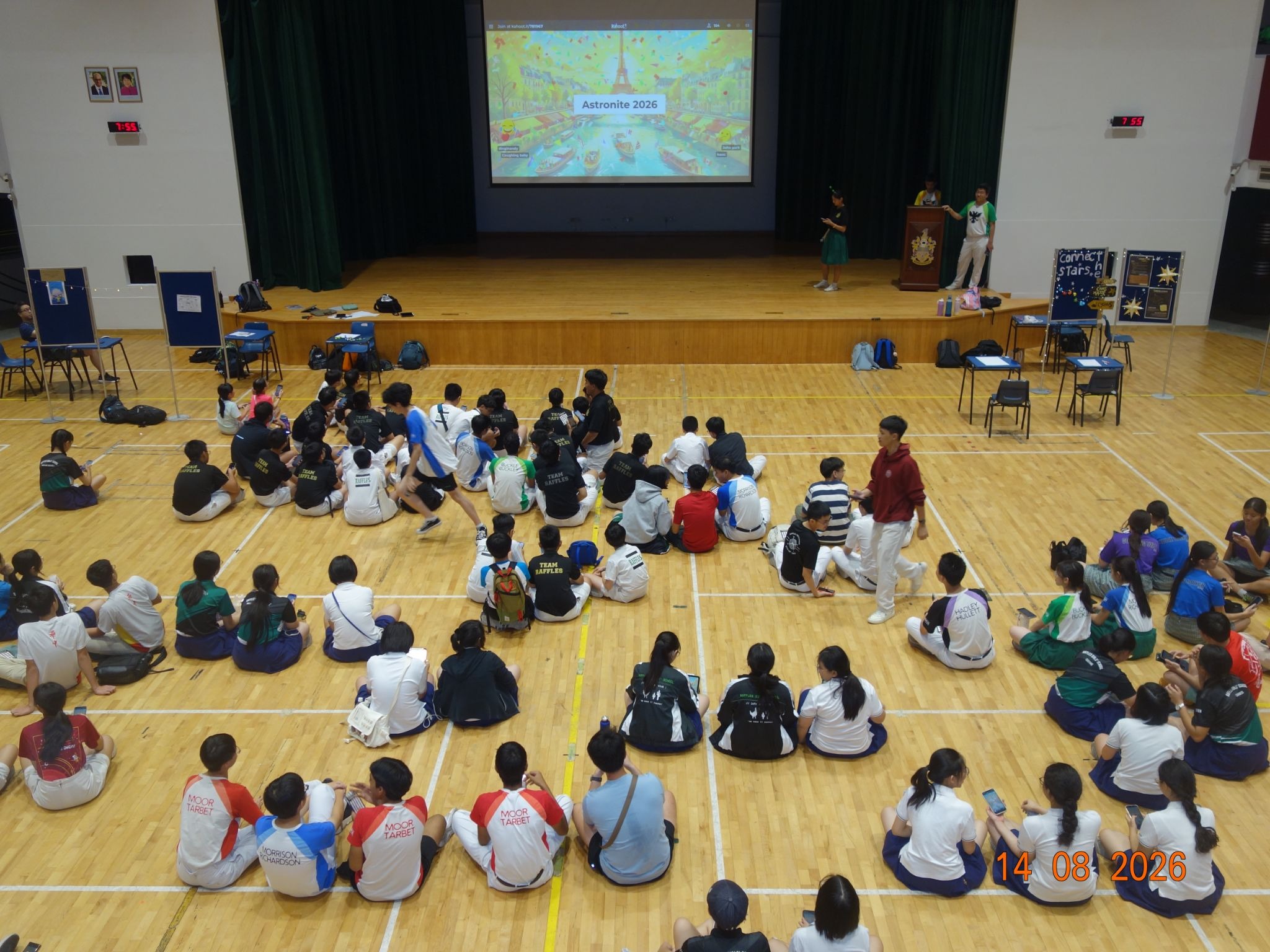
Participants gathered at the Multipurpose Hall for the Kahoot! quiz
Astronite is an annual event hosted by Raffles Astronomy which brings students from various schools together to connect over and develop their shared curiosity about our universe.
Raffles Astronomy hopes that through Astronite, other schools can be motivated to form their own astronomy clubs and, in turn, build on the increasing recognition of astronomy in Singapore.
This August, Raffles Astronomy hosted around 200–300 students from both Raffles Institution and other schools, including Hwa Chong Institution (HCI), NUS High School of Math and Science (NUSH), and Victoria Junior College (VJC), a significant increase compared to previous years’ turnout.
Astronite ‘26: Stardust
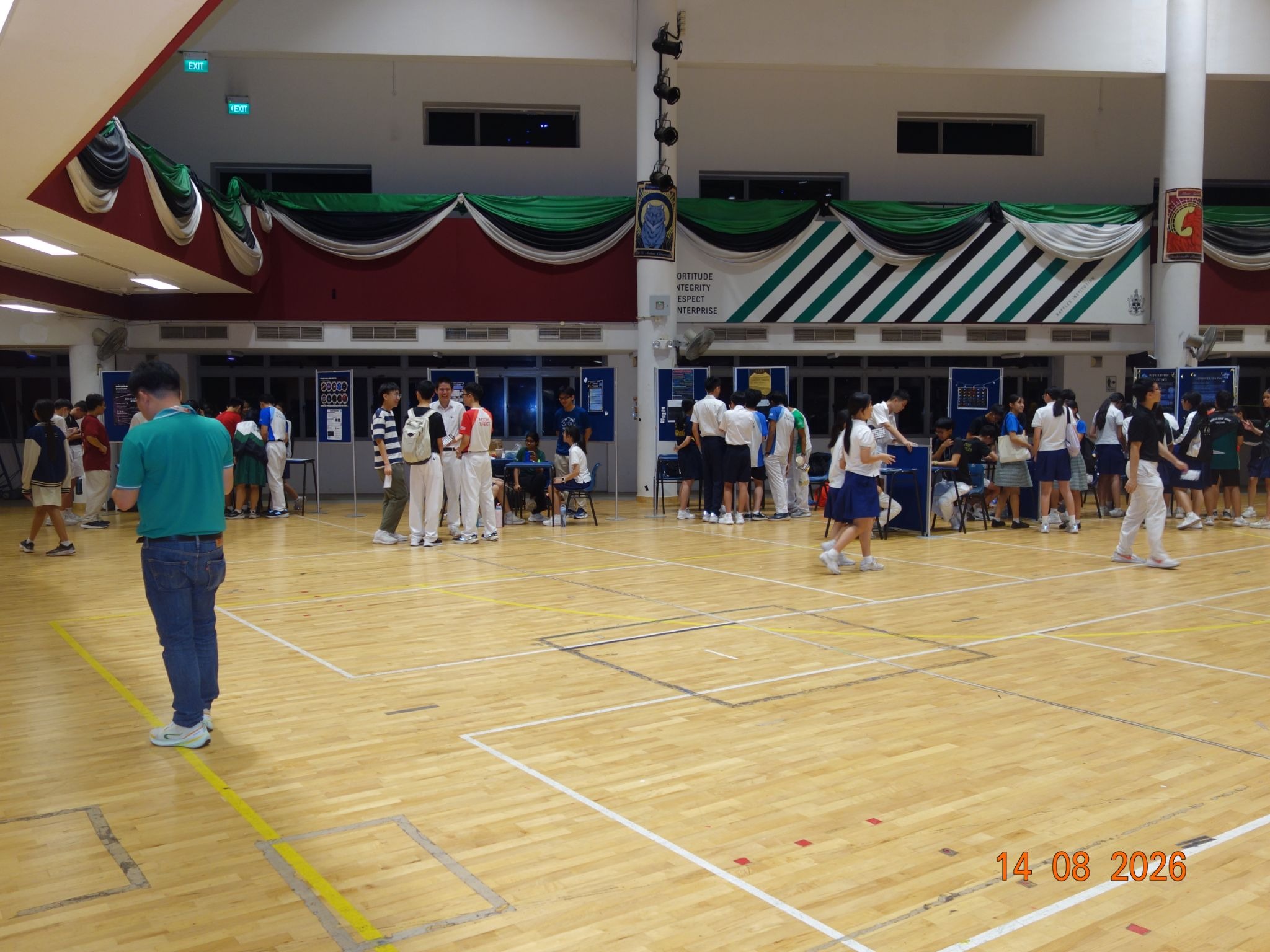
Participants taking part in the activities at the various booths during the free-roam period
Entering the hall, we were welcomed by students from guest schools eager to share about their games.
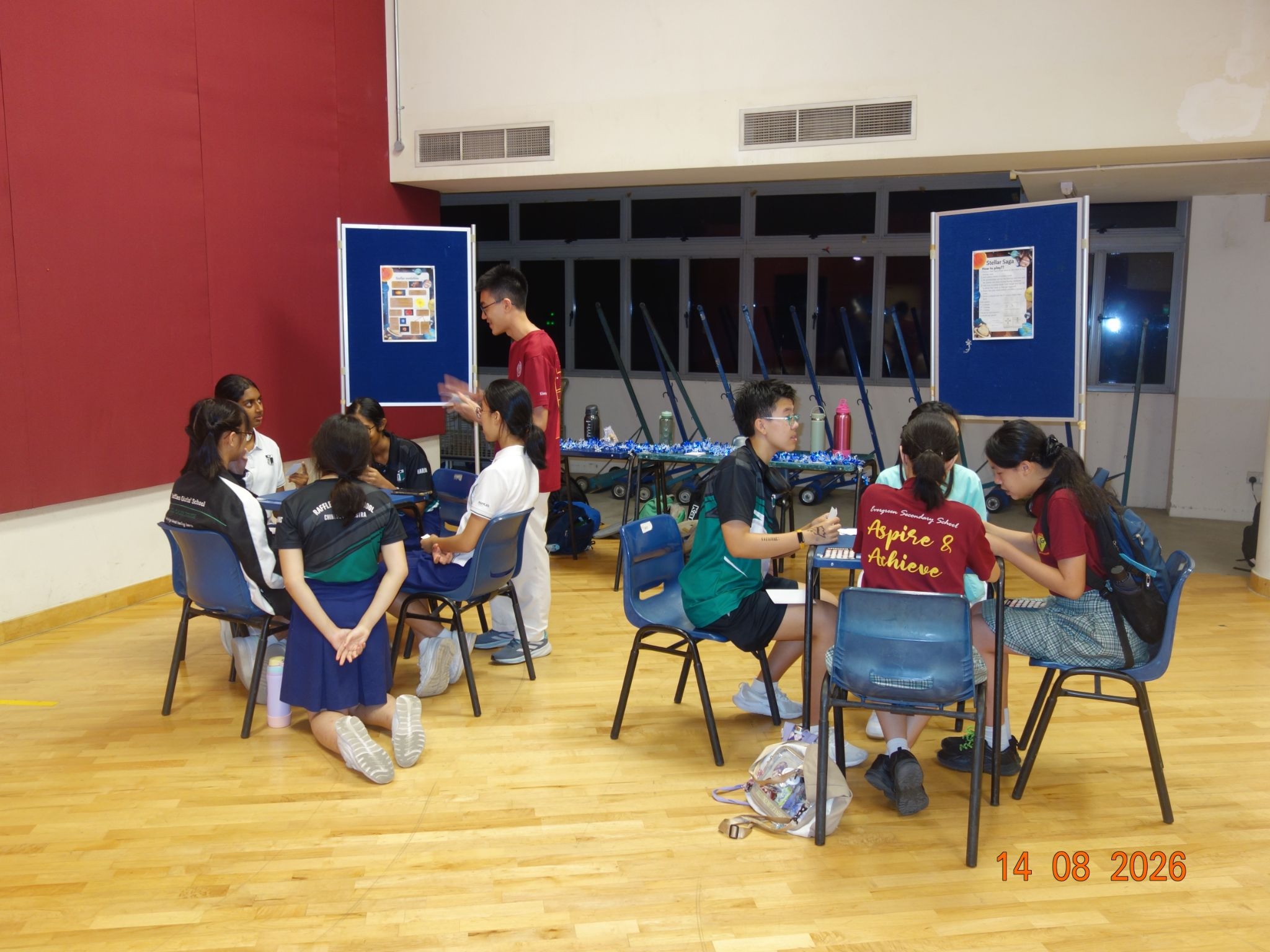
The card game booth prepared by VJC students
We made our first stop at a booth run by VJC students, who had designed a card game similar to Uno, while adding their own twists by linking them to astronomy. To win the game, players had to place their cards after the previous player following the order of the life cycle of stars.
Thanks to their inclusiveness and willingness to answer any of our queries regarding the game, we managed to grasp the concept of their activity quickly. Although it was a little awkward interacting with students from another school at first, we soon warmed up to one another and played the game together with enthusiasm, all while forging meaningful memories with our new friends from VJC.
Another highlight was an original game curated by students from RI Year 1–4’s Science and Astronomy Club (RISAC). Here, we had to choose cards based on the hints provided by the game master while avoiding the “black hole” cards that rendered an instant game over.
Despite the numerous unlucky rounds when we had picked the “black hole” cards on our very first turn, the laughter we shared and the interactions with our juniors turned this game into one of our Astronite highlights.
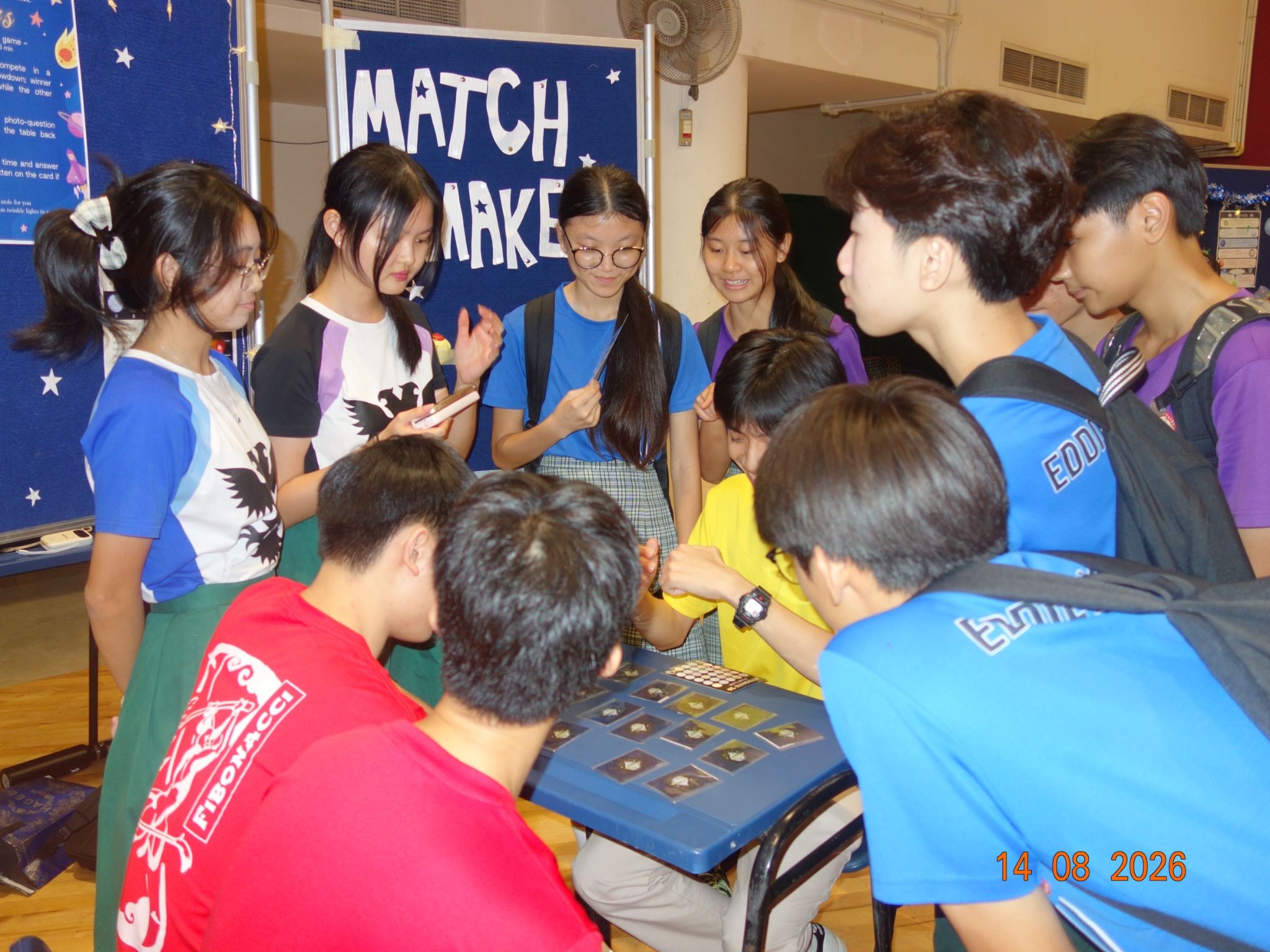
Raffles Astronomy’s memory game booth
Following that, we visited some other game booths, including one where we had to memorise various cards and answer a trivia question after successfully picking a pair of matching cards. Another one involved rolling balls into cups according to the order of the planets’ distance from the Sun.
“I enjoyed the booths which had been so meticulously set up. I have definitely left Astronite with more knowledge about the solar system that we call ours.”
Vidyuth Vijay Krishnan (27S06O), Participant
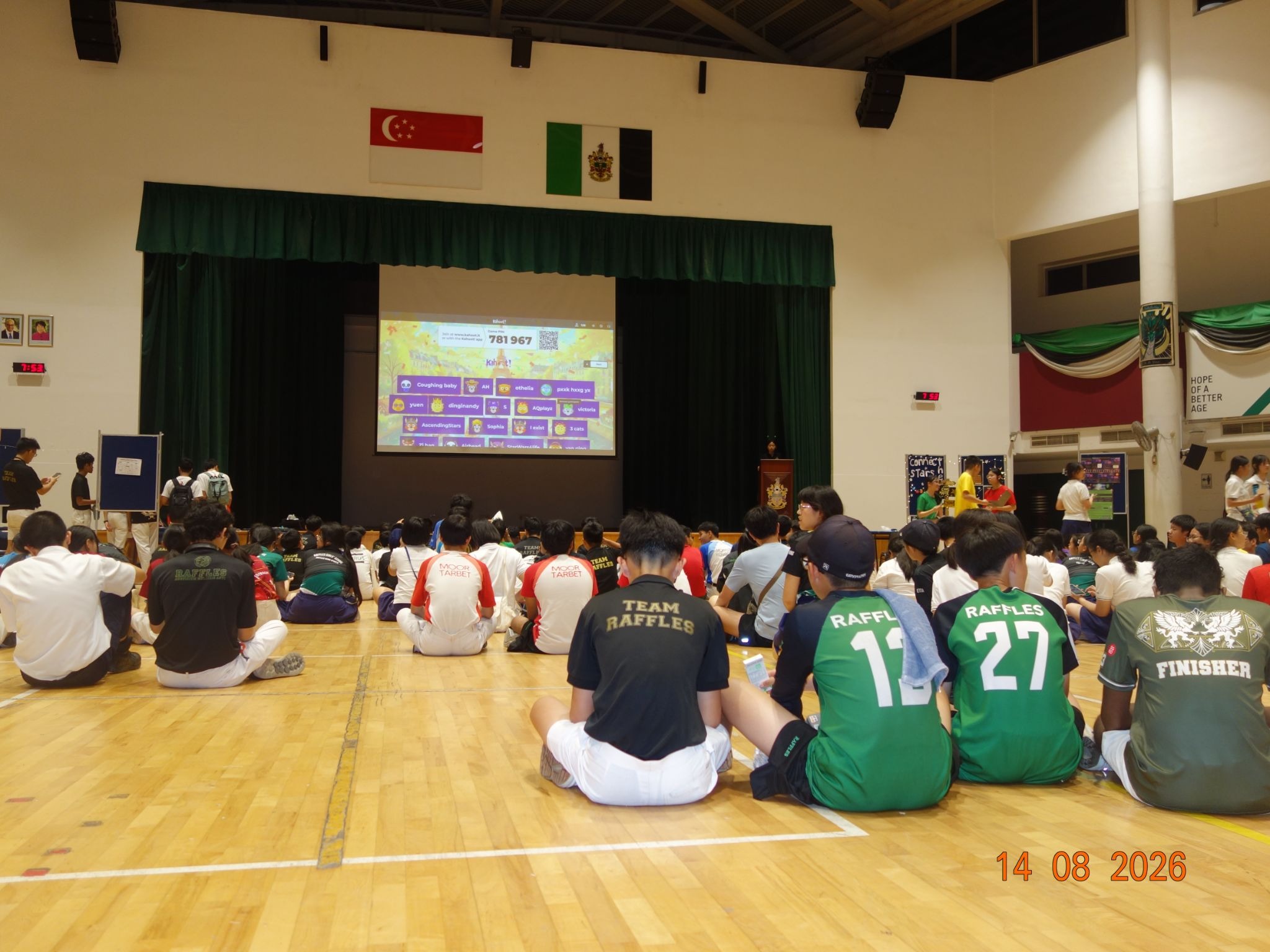
Right before the Kahoot! started
Soon enough came the mass Kahoot! quiz, which tested participants’ knowledge across a broad range of astronomy concepts, from trivia to complex applications of physical equations. Between the collective cheers with each correct answer and gasps with each surprise, a lively, competitive spirit was definitely rekindled.
Finally, Astronite reached its last and long-awaited stop at the Hockey Field, where participants could use telescopes and marvel at close-up views of various stars and planets.
Despite the cloudy weather, the stargazing experience was truly an unforgettable ending to Astronite as students found common ground in their shared wonder of the universe.
Galactica Unseen
The Raffles Astronomy CCALs were heartened by how Astronite turned out. The event has been taking place for over 10 years now, and they believe this year’s Astronite was a significant step forward in their multi-year journey to help expand the reach of astronomy in Singapore.
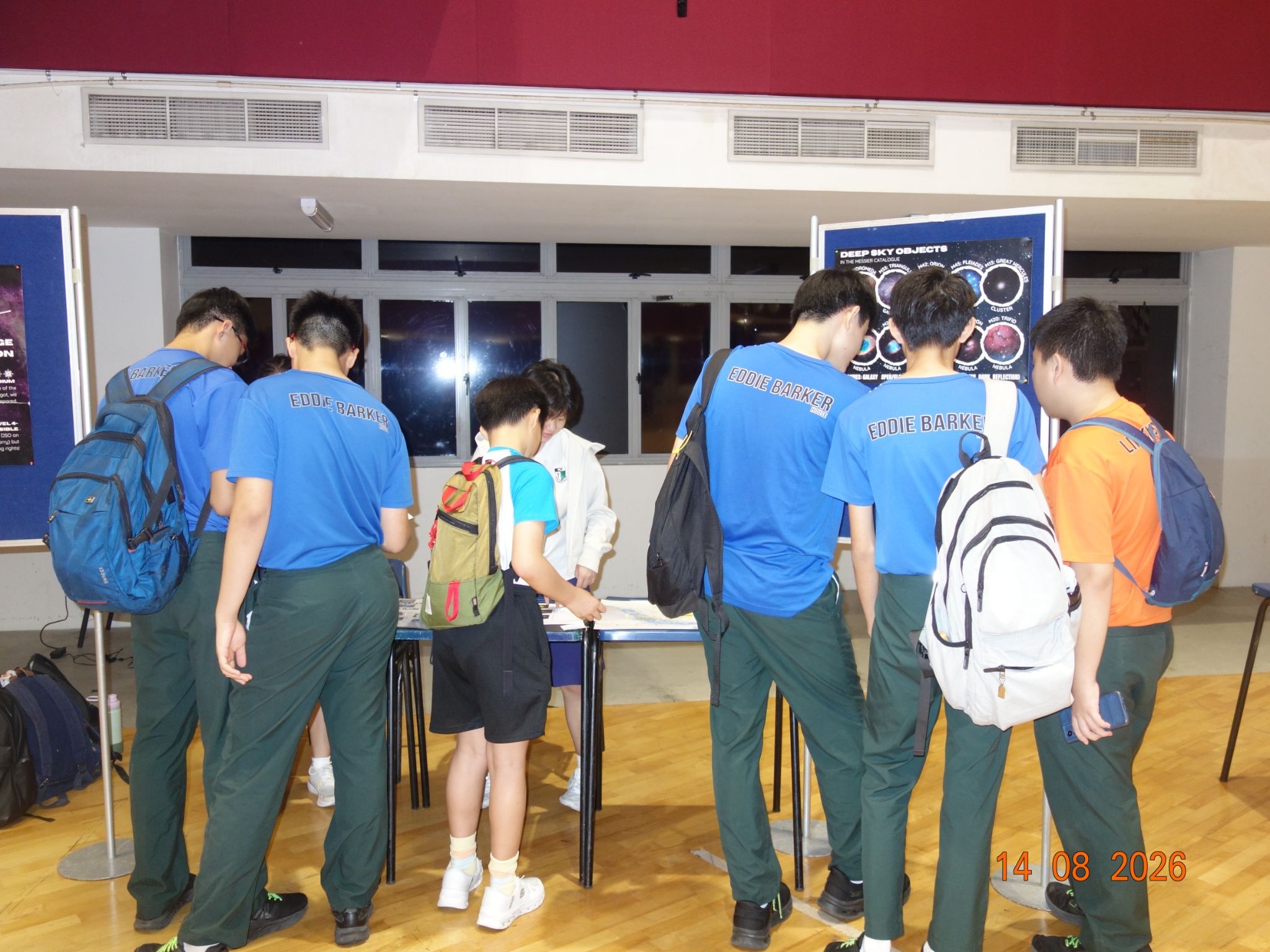
Evergreen Secondary School students engaging in booth activities
Raffles Astronomy was also pleased to invite newcomers such as Evergreen Secondary School and NUSH to the event. While they did not set up any booths for the event, they were able to familiarise themselves with the various booths, hoping to conduct their own booth activities for future years’ editions of Astronite.
“The biggest difference this year was the turnout. We saw 200–300 students from different schools turning up and the increase in numbers over the years shows how astronomy is gaining recognition in Singapore.”
Siew Bok Chong (27S06M), ACCAL of Raffles Astronomy
Together with the planning committee, Bok Chong worked to ensure that the Kahoot! questions were beginner-friendly, using simple content accessible to those without much prior knowledge.
Despite the many activities that tested the participants’ knowledge of astronomy, You Xuanxiang (27S06Q), another ACCAL of Raffles Astronomy, mentioned that he did not wish for the participants to be excellent when it comes to answering questions related to astronomy. More importantly, he hoped they would gain a genuine appreciation for the science, and be more willing to take up astronomy as a hobby.
Beyond the wider collaboration efforts, the EXCO was also especially heartened by the presence of students from RI Year 1–4. As the next generation of students within the astronomy community, they will eventually be the ones to carry Astronite’s vision forward.
For these students, experiencing Astronite firsthand, whether by attending the event or setting up their own booths, provided an invaluable opportunity to understand the spirit behind the event and gain precious experience to take part in future editions.
Besides the Astrigue competitions that are hosted annually, the ACCALs highlighted that the CCA is always open to starting novel activities.
Raffles Astronomy is also looking to work with not just intra-school CCAs, such as RI’s Alchemy Club, but also inter-school CCAs, such as the Astronomy Club in VJC, all in spreading exposure to astronomy among Singaporean students.
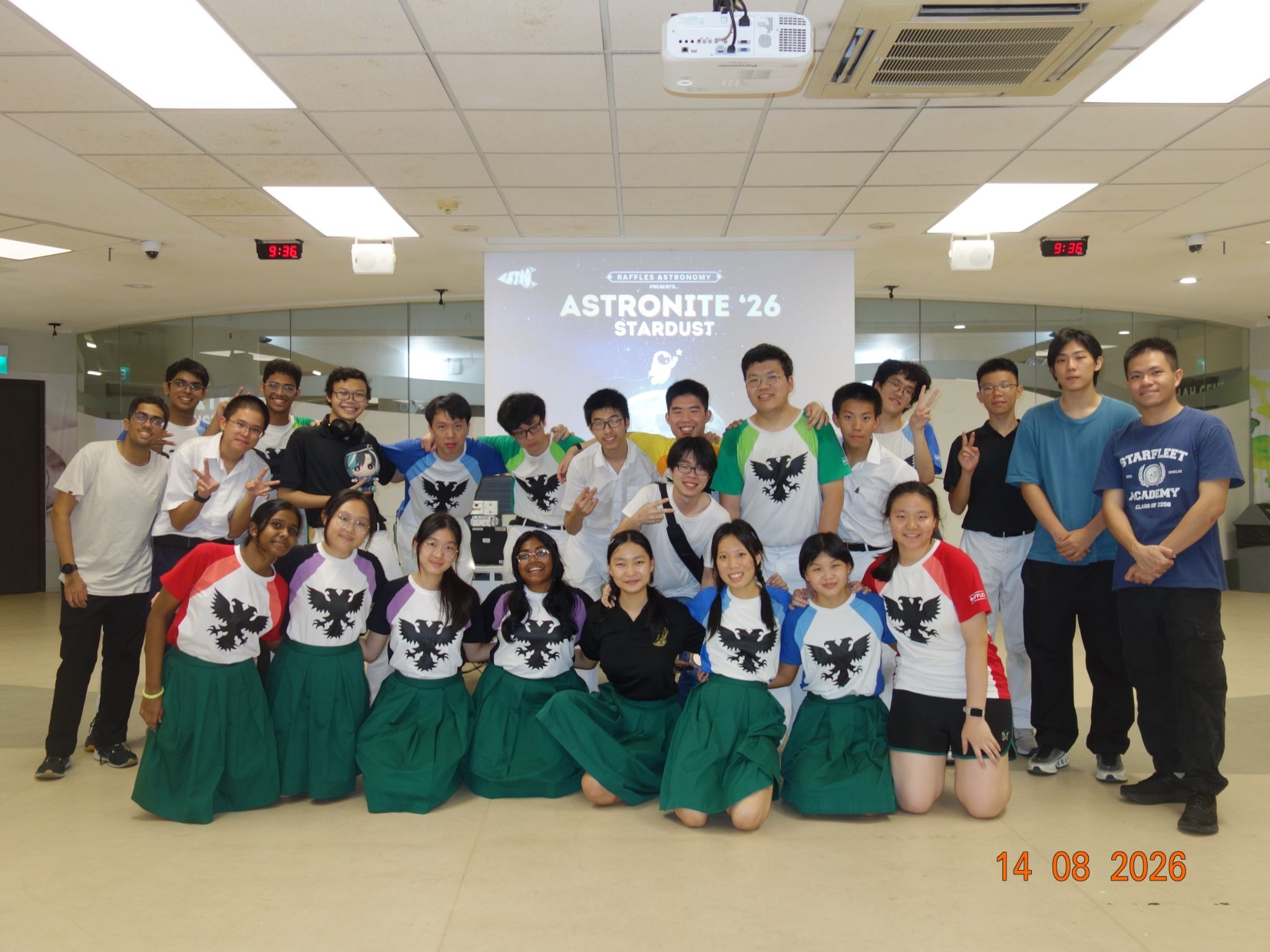
Raffles Astronomy celebrating the success of Astronite ‘26 with its alumni
Finally, Bok Chong and Xuanxiang would like to thank their teachers, CCAmates, schoolmates, and everyone else who came to Astronite ‘26: Stardust, as its success would not have been possible without their assistance and active participation.
The Final Light
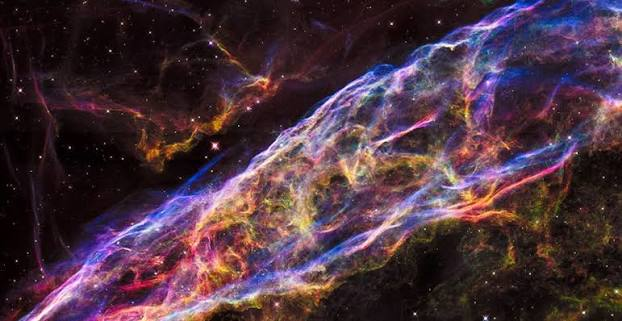
Stardust, formed from dying stars.
In times when the stars are being drowned out by layers of light and haze, Astronite offers more than just a glimpse into the cosmos. For one night, students were able to look beyond the lights of Singapore and towards something far greater than themselves. And as long as there are those willing to wonder and learn about the world around us, perhaps the stars will never truly disappear.
Maybe that’s the true meaning of Stardust: even when the stars themselves are unseen, the wonder they leave behind can continue to shine.
“The cosmos is within us. We’re made of star-stuff. We are a way for the universe to know itself.”
Carl Sagan

