

By Huang Han Cheng (26S05B) and Kunchur Bharat (26A01B)
Taking a walk in Joo Chiat, one might form a rather simplistic image of the area. Rows of mixed-use shophouses inhabited by chic cafes, a mishmash of restaurant options and inoffensive street art make for a pleasant weekend itinerary. Behind this quaint facade, however, is a neighbourhood which plays a larger role in Singapore’s history than many expect.
Joo Chiat might be best described as an architectural palimpsest. Like a parchment scroll that has been consistently scraped and washed for reuse, the neighbourhood has assumed many identities throughout history.
Originally a region of coconut and cotton plantations in the 1800s, the first traces of the iconic architectural style we see today emerged in the early 1900s, when wealthy families began moving east toward Katong and Joo Chiat to escape the congested city. As Chew Joo Chiat, the majority landowner at the time and namesake of the district, sold off his land to developers, the plantations were quickly replaced by ornate, multi-coloured shophouses and terrace houses, some of which exist to this day.
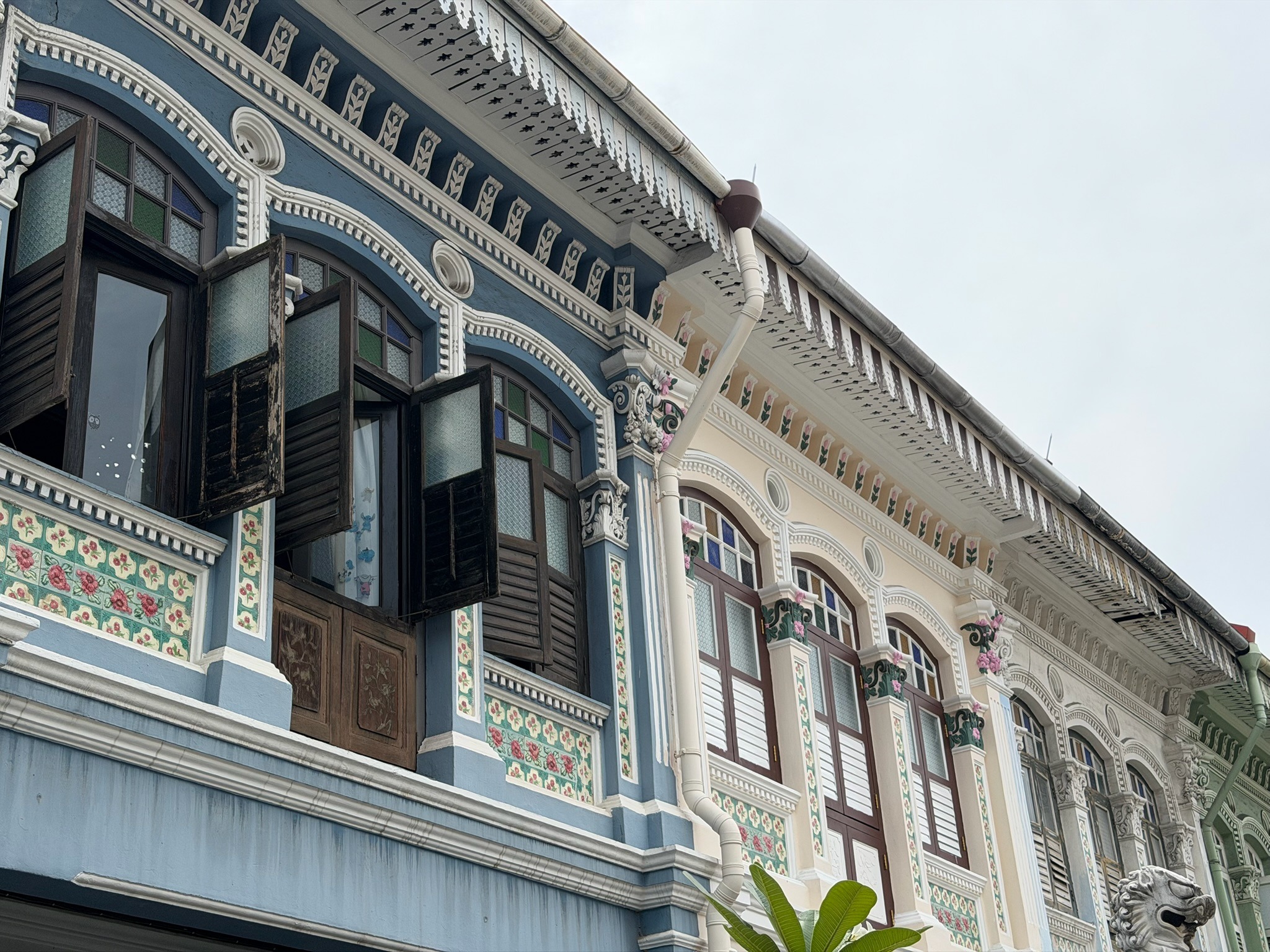
Most preserved shophouses from the 1900s to 1940s are built in the “Late Shophouse” style, which are characterized by their “Chinese Baroque” design. You see Chinese mythical creatures (dragons and phoenixes) alongside European Corinthian columns and Mediterranean-style shutters. It mirrors the Peranakan identity well, reflecting a blend of Asian and European influences.
Other than the Peranakan, Joo Chiat was equally shaped by a significant Eurasian population, who were drawn by the presence of Catholic churches and mission schools in the area. This created a distinct environment, where English-speaking professionals, often working in civil service or banks, lived alongside wealthy Peranakan merchants. From this synthesis, Joo Chiat became a hub for a more globalised Singaporean identity.
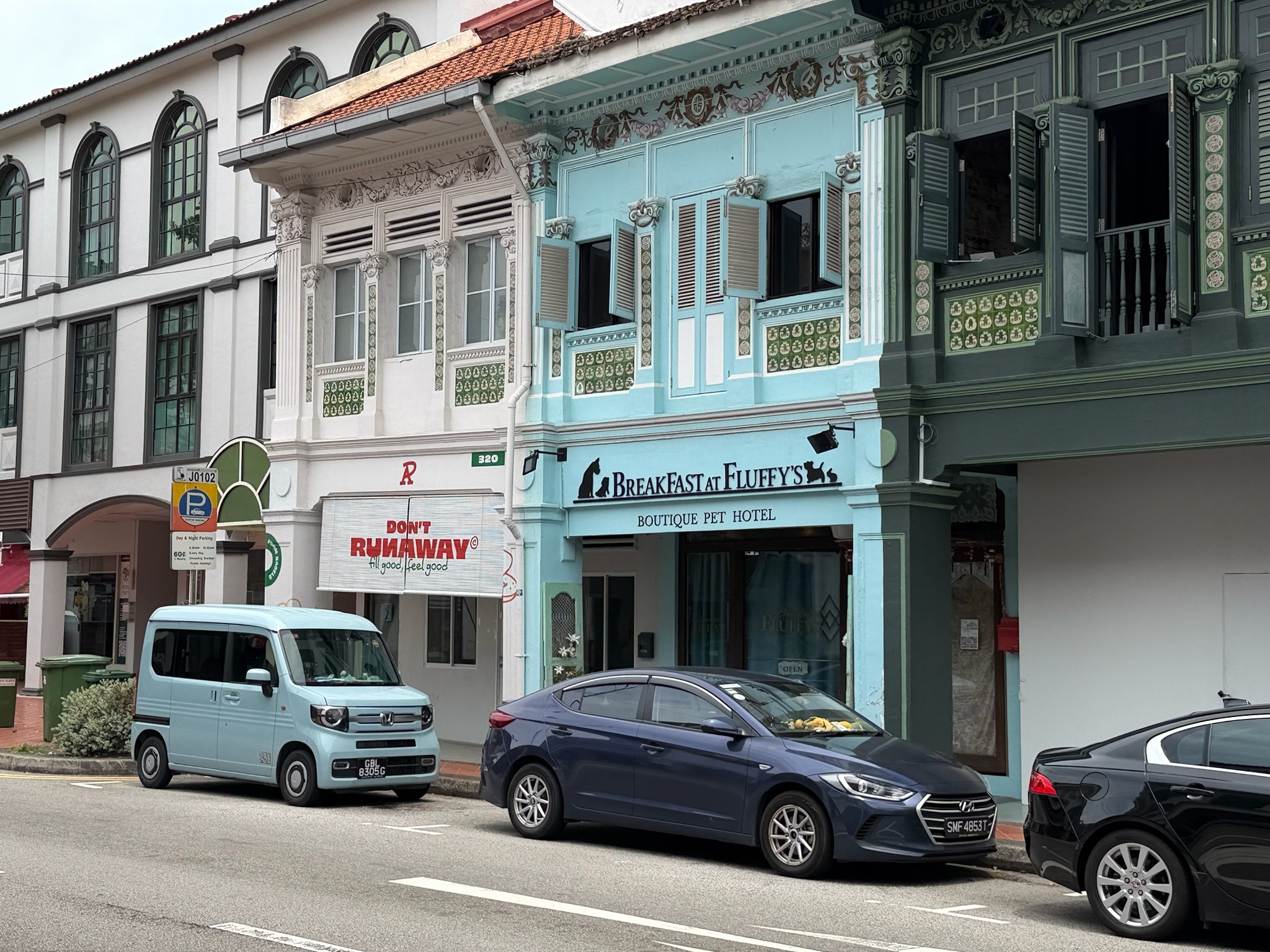
Right: Shophouse in “Late shophouse” style along Joo Chiat Road
Post-war, perhaps due to its cosmopolitan history, Joo Chiat transformed into a lifestyle destination. The Roxy Cinema, built in 1931, brought Hollywood directly to the neighbourhood, and the shophouses in this era transitioned from private residences to supermarkets and modern department stores.
Meanwhile, as international travel and shipping expanded, the “Streamline” Art-deco look, inspired by ocean liners, airplanes and locomotives, took over. The shift towards sleek lines and geometric shapes in buildings reflected a society looking towards the future.
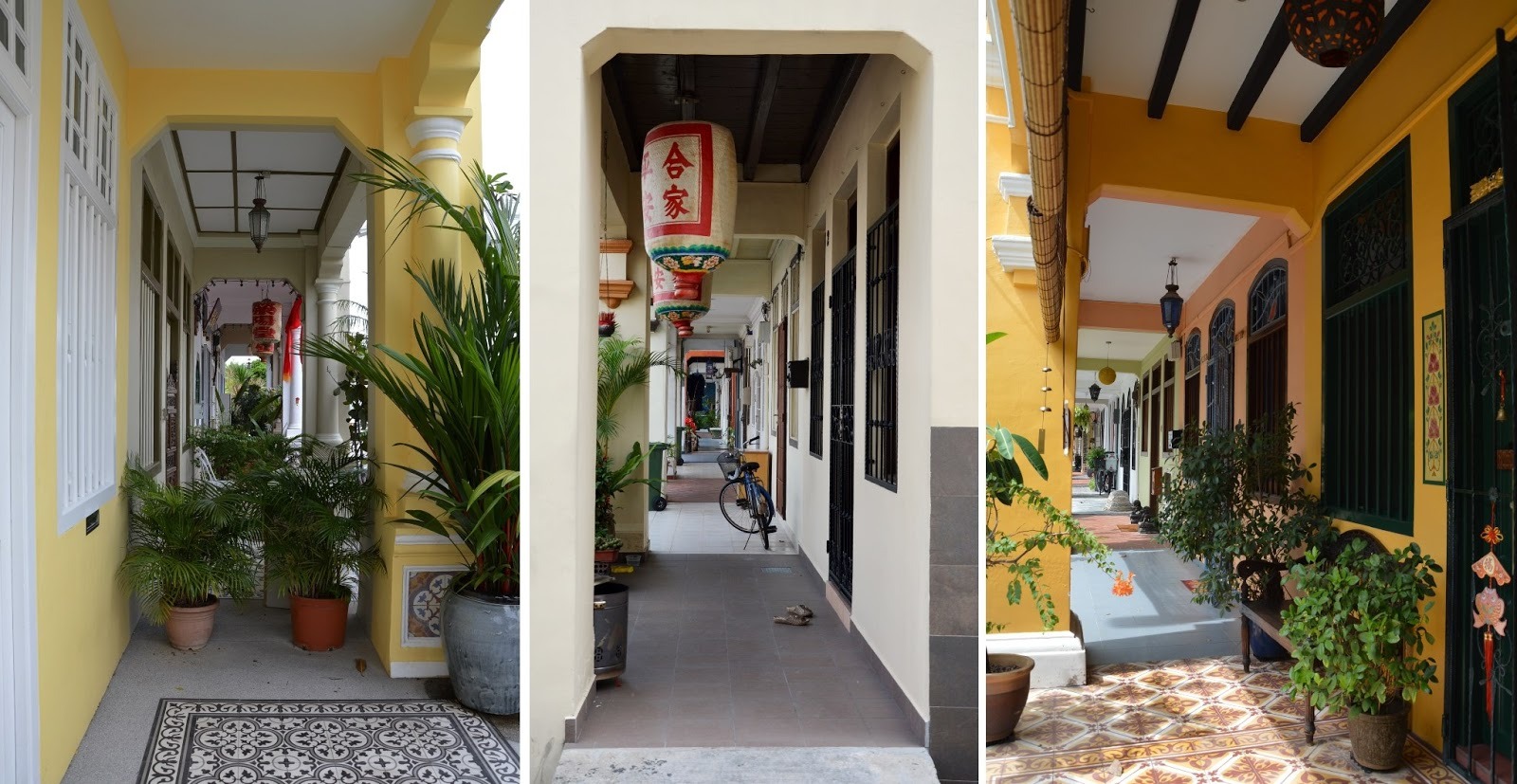
However, although the “skin” of these buildings have evolved, several unique features have always persisted. Possibly the most enduring attribute of the Singapore shophouse, the “five-foot way” has remained a legal and social construct since Raffles’ 1822 Town Plan. Every shophouse was required to provide a covered walkway exactly five feet wide for pedestrians, which gradually progressed into the primary site of neighbourhood interaction.
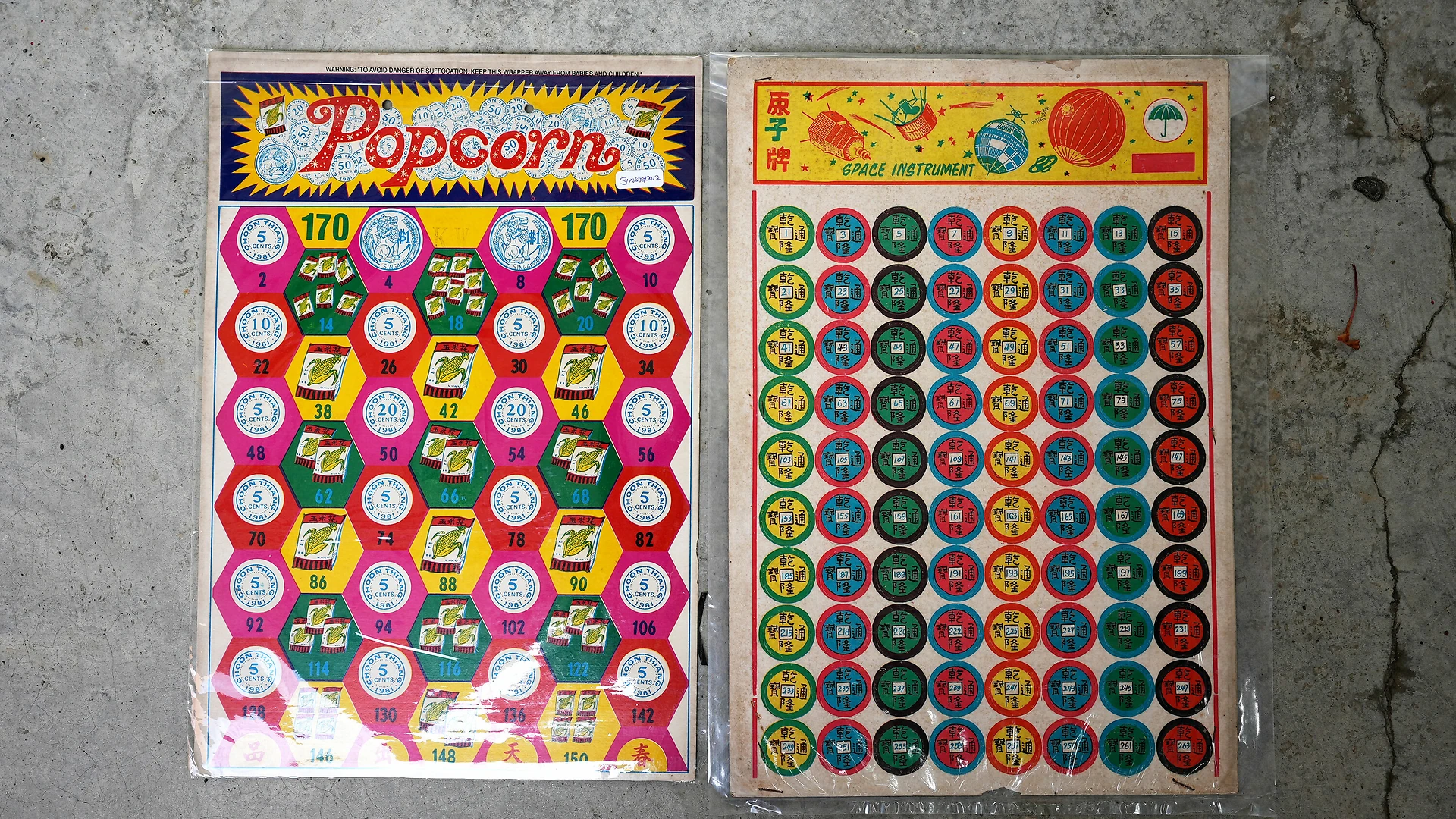
Even as architecture modernised, the five-foot way continued to accomodate the same activities: children playing, neighbors chatting, and small-time vendors (like the tikam-tikam toy sellers) setting up temporary stalls. Only when Joo Chiat shifted from residential to commercial use, did these features gradually fade out.
As Singapore rapidly modernised after independence, the physical and social landscape shifted. Extensive land reclamation along the East Coast in the late 1960s and 70s cut Joo Chiat off from its original coastal proximity, removing old landmarks like the Katong Jetty. With the departure of older families to newer public housing estates, rental prices dropped. By the 1970s, bars, pubs and cinemas (like the Galaxy and Taj theatres) began popping up to cater to a changing crowd.
In the early 2000s, this entertainment scene changed into something far seedier. At its peak around 2005, a single stretch of Joo Chiat Road packed in over 40 hostess pubs/KTV lounges, nearly 40 massage parlors, and numerous hourly-rate budget hotels. The neighborhood developed a notorious reputation as an illicit, red-light district characterized by public drunkenness, fights, and late-night vice.
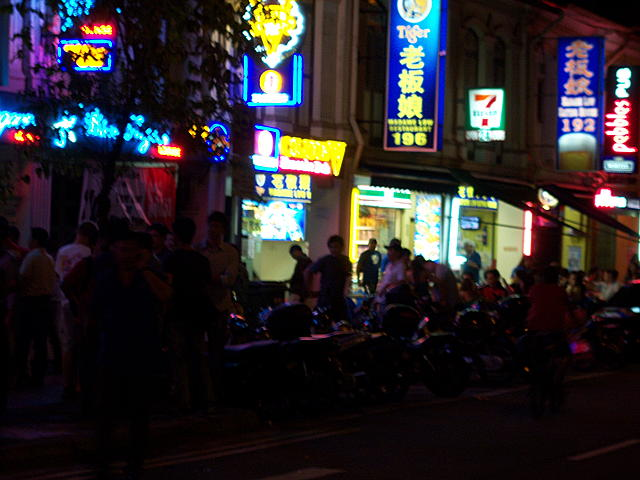
Residents, frustrated with the constant traffic congestion, street brawls, and open solicitation took matters into their own hands and formed the “Save Joo Chiat Working Group”, aggressively lobbying the government and demanding policy changes.
In response, the authorities stepped up police raids and implemented a strict moratorium on new licenses for bars, lounges, and massage parlors, forcing many shady businesses out of operation over the next decade. Landlords looking for stable income began leasing these historic shophouses to upscale, trendy businesses.
Within two years, spaces that once housed dimly lit lounges were rapidly replaced by artisanal bakeries, pet-friendly establishments, and third-wave coffee roasters.
This shaped what Joo Chiat has become today: one of Singapore’s trendy neighbourhoods, celebrated for its “East Coast” aesthetic. But despite its many transformations, Joo Chiat remains littered with remnants of tradition and history, which coexist today with its more modern characteristics.
An overlooked aspect of Joo Chiat’s architectural composition is the informal places of worship that coexist alongside the numerous temples, mosques and churches in the area.
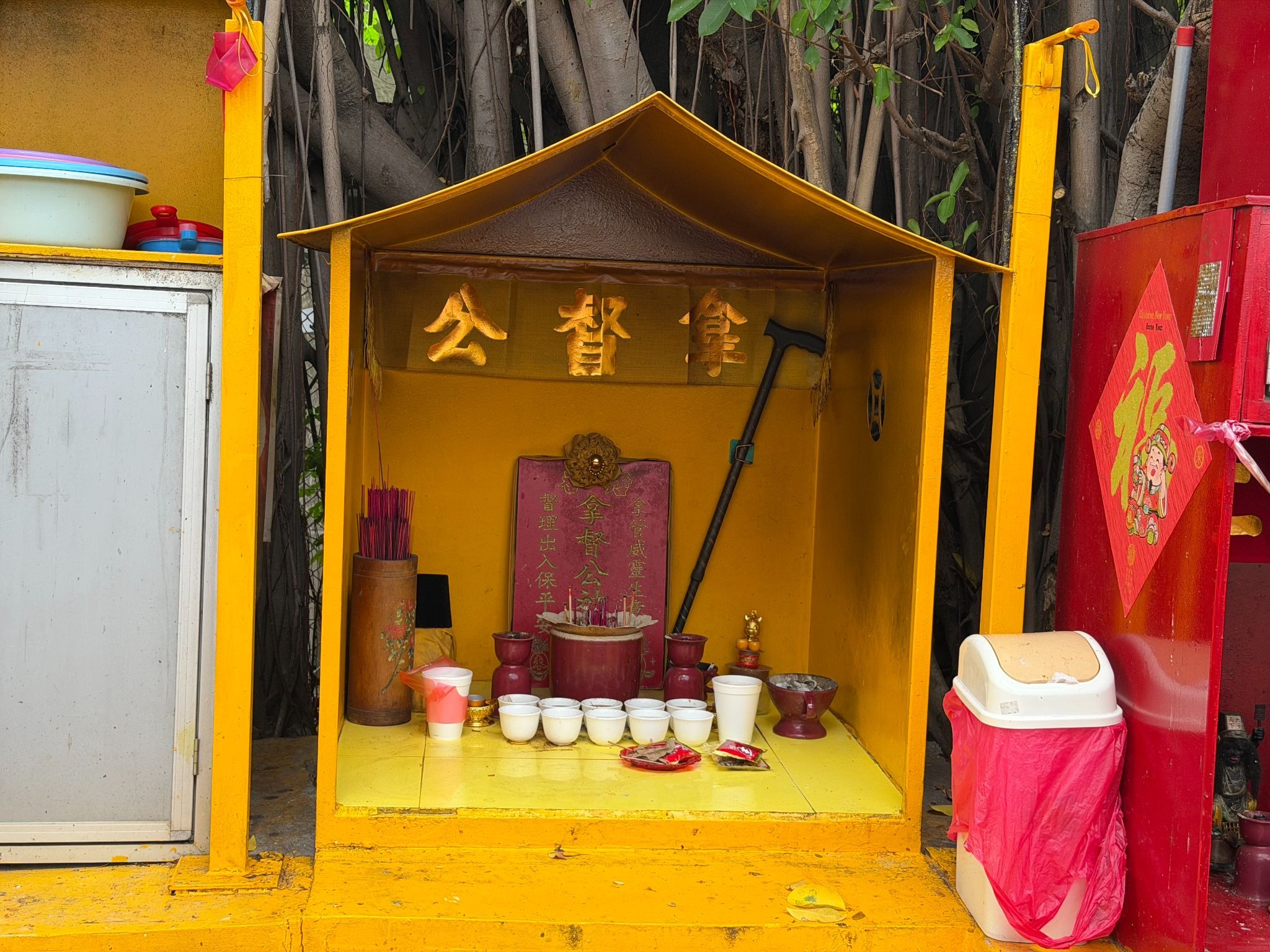
Unlike the formal places of worship, these are maintained largely on a voluntary basis by members of the community. This particular shrine is dedicated to Datuk Gong, local guardian spirits worshipped by overseas Chinese communities in Singapore, Malaysia, and parts of Indonesia.
Interestingly, this nomenclature unites the Malay honorific, Datuk, meaning ‘grandfather’, with the Chinese honorific Gong, as despite being a Malay Muslim spirit, it is worshipped by Malaysian and Singaporean Chinese. To most Malaysian Chinese, Datuk Gong is a local guardian spirit that resides in trees, ant hills, caves, riverbanks and in strange stone formations.
A Datuk worship usually begins after a person is granted a vision of the Datuk’s spiritual form. Common forms are a white tiger and the form of an old man dressed in white. A Datuk can also be “invited” to reside outside a family home for spiritual protection and luck.
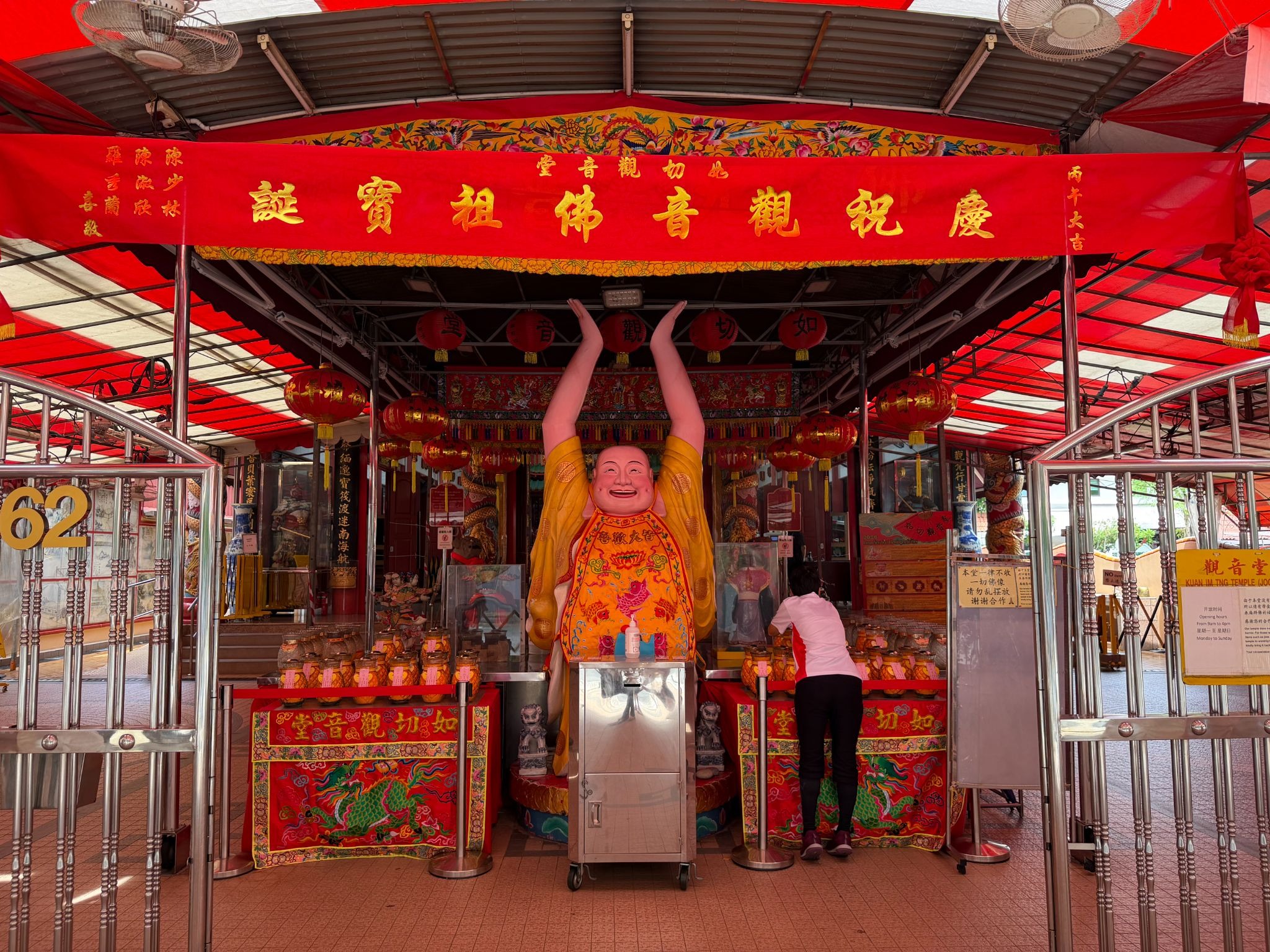
This particular shrine is located across the carpark of the Kuan Im Tng temple, dedicated to the Goddess of mercy, Guan Yin. It was shared that devotees and volunteers from the temple sometimes maintain this shrine, clearing up the ashes from the joss sticks and ensuring the area remains tidy.
The juxtaposition between the informal and formal spaces of worship as well as the enmeshing of different religious traditions in one neighbourhood is a defining characteristic of the area, especially in light of its links to the Peranakan people.
Further away at Geylang Serai, lies a stretch of community gardens outside a row of HDB blocks, that adorned the path to Joo Chiat.
Apart from contributing to the aesthetics of the area, they serve a practical function of growing (a limited amount of) food for the community; we personally observed garlic vines and numerous species of edible greens being grown in the area. The emergence of community gardens such as this signals an evolution of Singapore’s HDB estates. While in the past they were strictly utilitarian, today there is room for initiatives that bring the community closer in a sustainable manner.
Residents can apply to set up a community garden through NParks or approach the gardening group of an existing community garden in order to get started. Competition for these plots, due to their scarcity, is stiff and gardening groups are, naturally, required to ensure that their gardens are up to standard and remain visually appealing at the risk of losing it to other interested volunteers.
They certainly do not disappoint as we observed multiple beautiful varieties of orchids sprouted up at numerous plots:
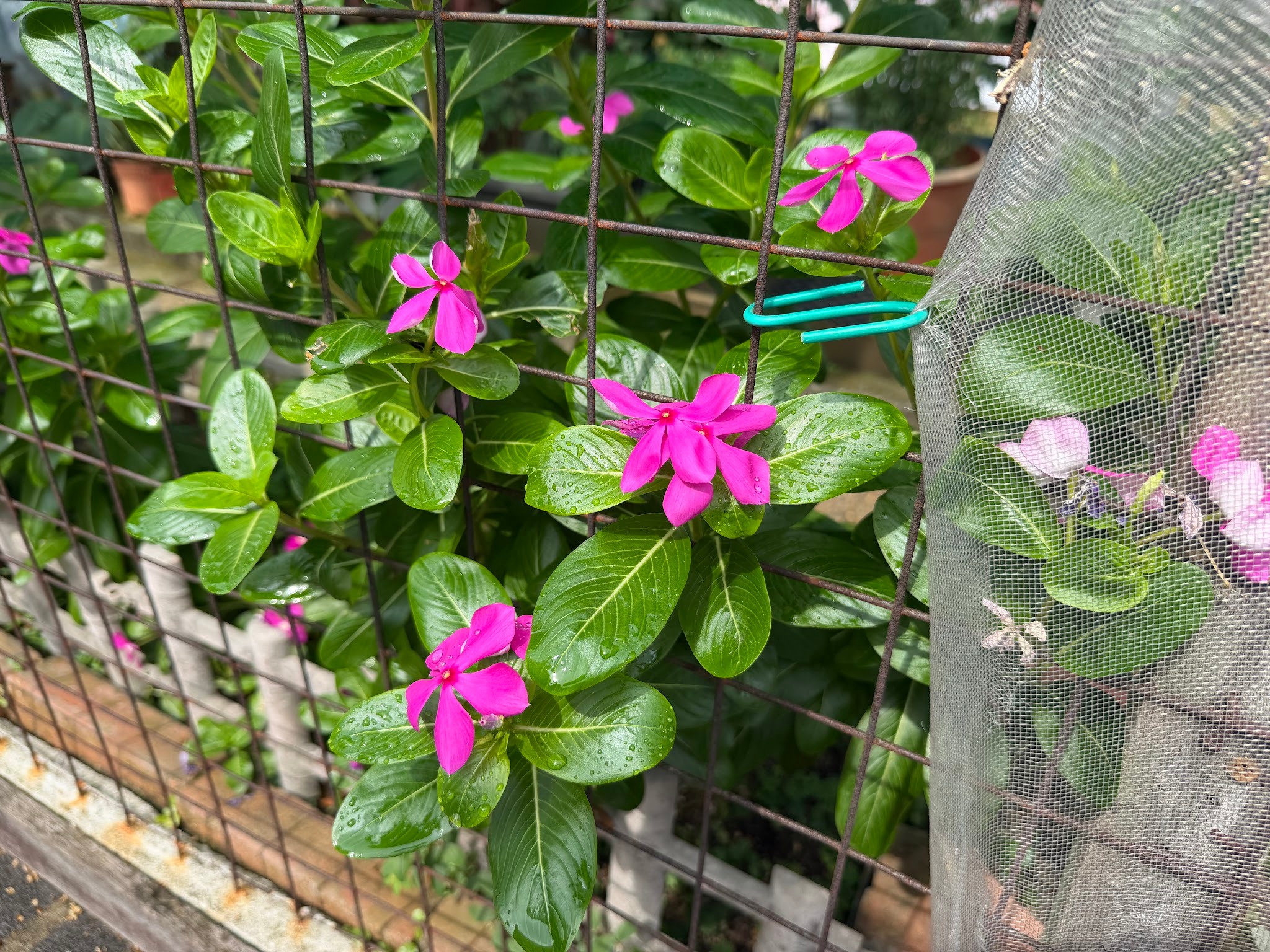
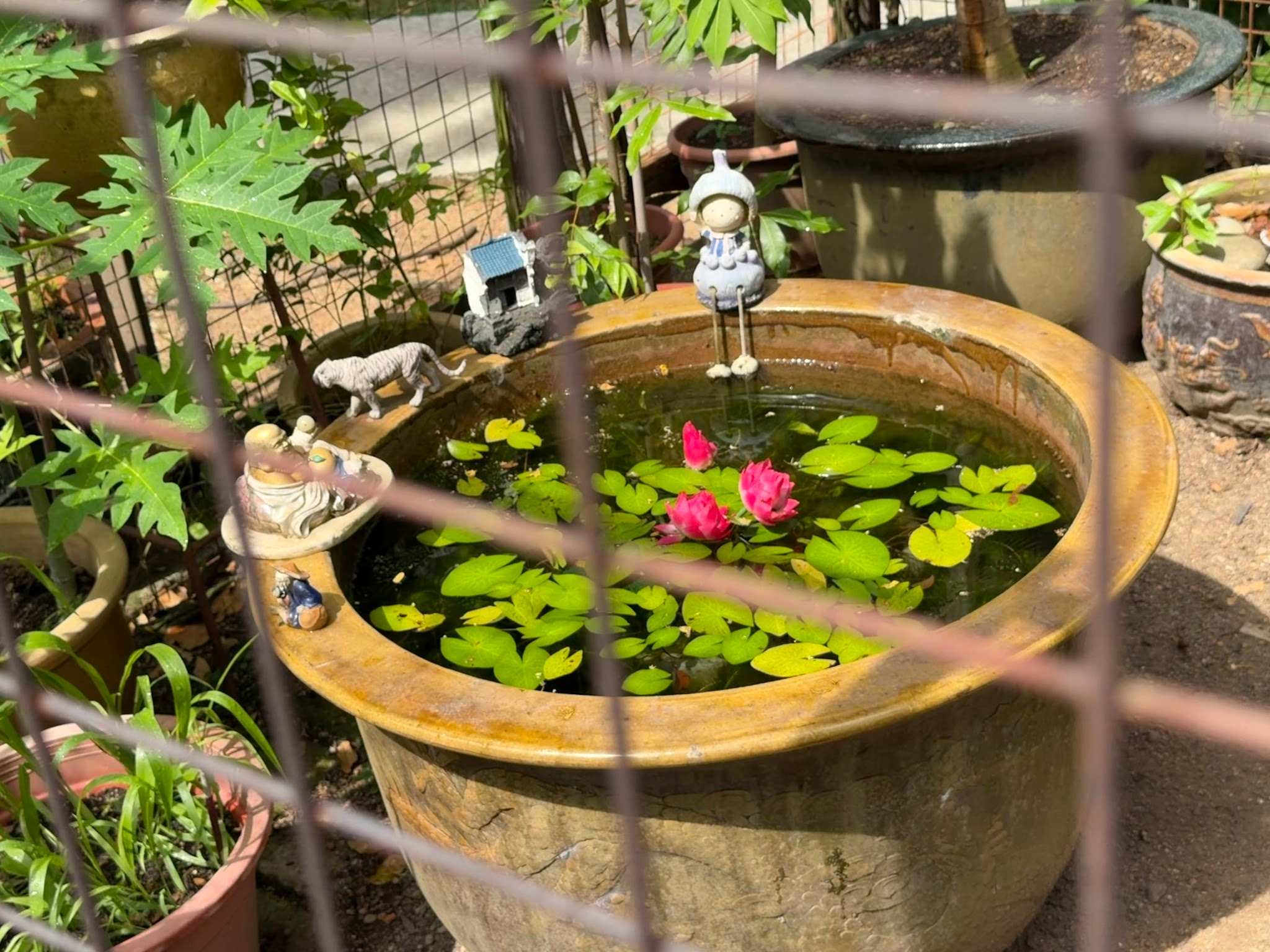
While often overshadowed by the more glamorous shops along Joo Chiat Road, these community gardens play a crucial role in retaining the Joo Chiat identity: one that values collaboration in building up the community and strong neighbourly spirit.


