

By Victoria Khoo Miin-Hsuen (27A01A)
This article is part of a series of revisions to Raffles Press’ Please Mind the Platform Gap, intended to refresh dated information while retaining the core structure. For our previous feature on H2 German, please click here.
This article does not necessarily reflect the views of RI’s academic management and should not be used as a substitute for formal academic counselling.
Why does making friends get more difficult as we grow up? Can you put love to a SWOT analysis? And how can working full-time still leave someone poor?
If the questions above sound like your cup of tea, H2 German might be worth a shot.
#WarumDeutsch
Should you opt to take German at the H2 level, be prepared to face the perennial question: “Why German?”
You might only find an adequate justification months after taking the subject, which can make studying German sound like a mighty leap of faith. There is no easy answer to what exactly about this language (rightly!) occupies a place of affection in your heart, and you can expect yours to change as the months fly by.
After all, H2 German is not quite what you might expect from a language subject. You will, of course, learn to write essays, deliver presentations and express yourself in a language that seems determined to put its verbs anywhere but where you expect them to be.
But you will also find yourself asking questions that have very little to do with grammar, and everything to do with being human.
Before You Say Ja
Interest is one thing, but committing your Wednesday and Friday evenings to a classroom in the MOELC is quite another. Before I wax lyrical about the transformative power of taking German in JC, a few practicalities are in order.
First and foremost, do you have:
- at least a B3 in O-Level German?
- two hours to spare on Wednesday and Friday evenings?
If you fulfil both criteria, it seems clear to me that du bist gut genug für H2 Deutsch!

Should the dates align with your schedule, it’s worth attending the Brückenkurs (bridging course) for a taste of what’s to come, especially since the course will likely be conducted by your tutor. Tutors generally accompany their classes throughout the two years of the H2 course, so the Brückenkurs also offers a glimpse of the classroom environment you can expect. More details about this bridging course will be disseminated by your Secondary 4 teacher in early January. (Note that attendance at the Brückenkurs does not secure you a place in the H2 programme!)
As mentioned in the 2017 article, lessons typically take place twice a week at MOELC (Bishan), on Wednesdays and Fridays, from 5.30 pm to 7.30 pm.

H2 German takes precedence over CCA commitments, which you should bear in mind when choosing your CCA. Some of my classmates have been able to work around scheduling conflicts by leaving CCA earlier and/or arriving at German lessons a little late, but these arrangements are considered on a case-by-case basis. If you anticipate a clash, do consult your H2 German tutor and CCA teachers early.
Another unfortunate implication of evening lessons is that you might be met with a strong urge to nap beforehand. (I, for one, am unfortunately not a particularly convincing counterexample.)
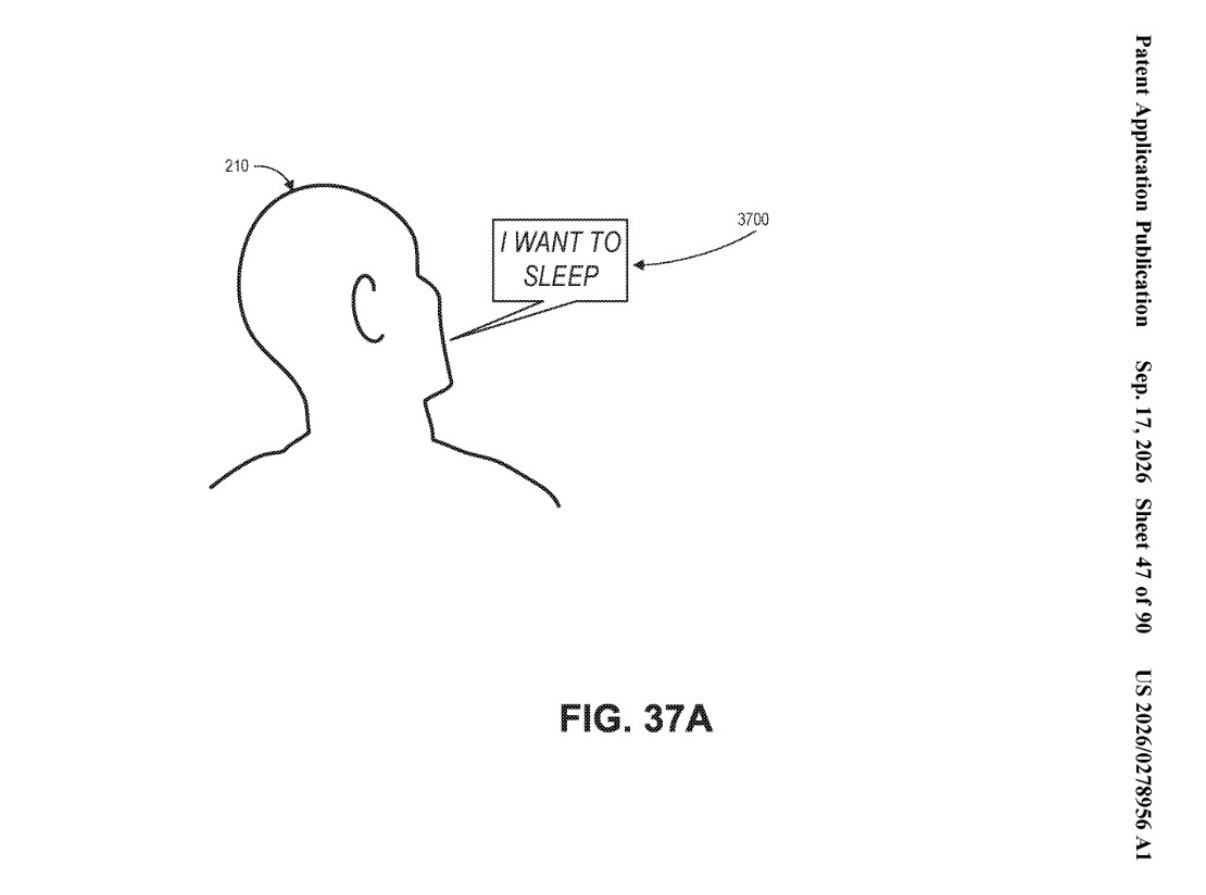
However, do not let this dissuade you. For all the logistical considerations, there is rarely a dull moment once the lesson begins.
So You Think You Can Deutsch (You Can!)
H2 German is assessed across several components, each testing a different aspect of your language proficiency. Do note that your Promotional and Preliminary Examinations will include the first four components listed below, and are usually held one to two weeks earlier than the rest of your papers (i.e. papers taken in RI, and not MOELC).
One more important consideration is the fact that there is, of course, no H3 German. This means that depending on your subject combination, taking German, instead of more conventional Humanities subjects (e.g. Economics, Literature, Geography, History), might limit your H3 options, such as H3 HSSR Geography, NUS Geopolitics or SMU Game Theory. Instead, German takers have a special Coursework segment in their syllabus, as detailed below.
Under syllabus 9736, the examinable components include:
- Leseverstehen (Reading Comprehension): Five different text types, with all questions in multiple-choice format.
- Hörverstehen (Listening Comprehension): Two short texts and two longer texts.
- Mündliche Prüfung (Oral Examination): An approximately three-minute presentation followed by two ten-minute conversations.
- Aufsätze (Essays): One functional-writing task and one argumentative essay.
- Kursarbeit (Coursework): A 1250-word research paper (for which you can research anything from quantum physics to snowglobes, provided that it is still relevant to a D-A-CH country).
This examination format will look familiar to anyone who has taken O-Level German, but the similarities only go so far. Grammatical structures become slightly more complex, and Leseverstehen demands a more nuanced understanding of texts, which are packed with minute details that are now easier to overlook. Hörverstehen is a considerable step up: whereas O-Level questions are predominantly multiple-choice, H2 requires more written responses, leaving you very limited time to process and synthesise information from the spoken passages. The argumentative essay is another new challenge, requiring you to construct and defend a coherent position in German.
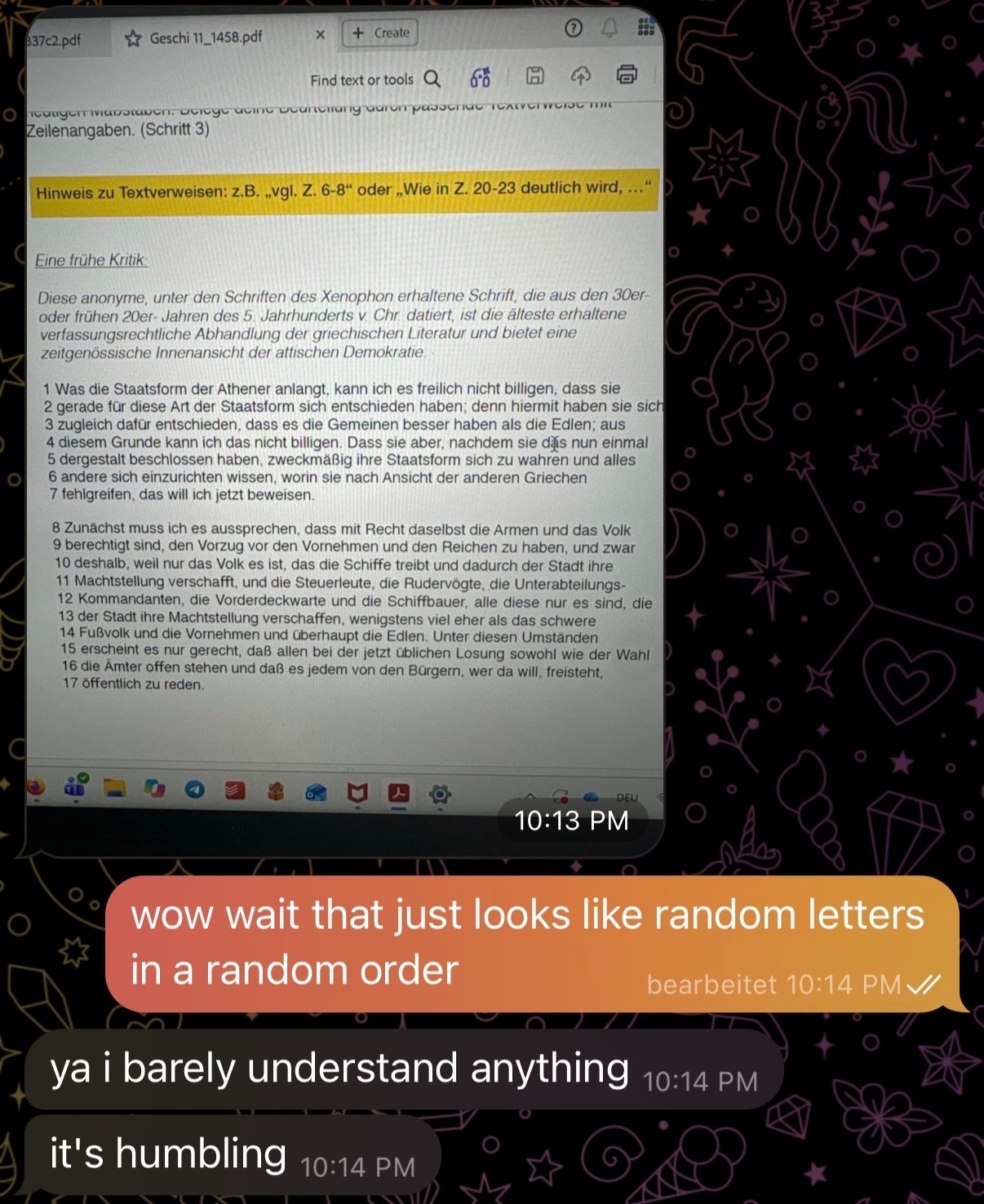
Because of this, you will get things wrong. You will encounter combinations of letters you’ve never seen before, misuse adjectives, and struggle to articulate thoughts that come oh-so-easily in English.
The good news? In MOELC, perhaps more than anywhere else, you are allowed to make mistakes.
I Only Understand Train Station
Thankfully, this is not entirely Greek to you. Chances are, you’re already fairly competent in German — which is precisely why H2 students no longer learn German so much as learn in German.
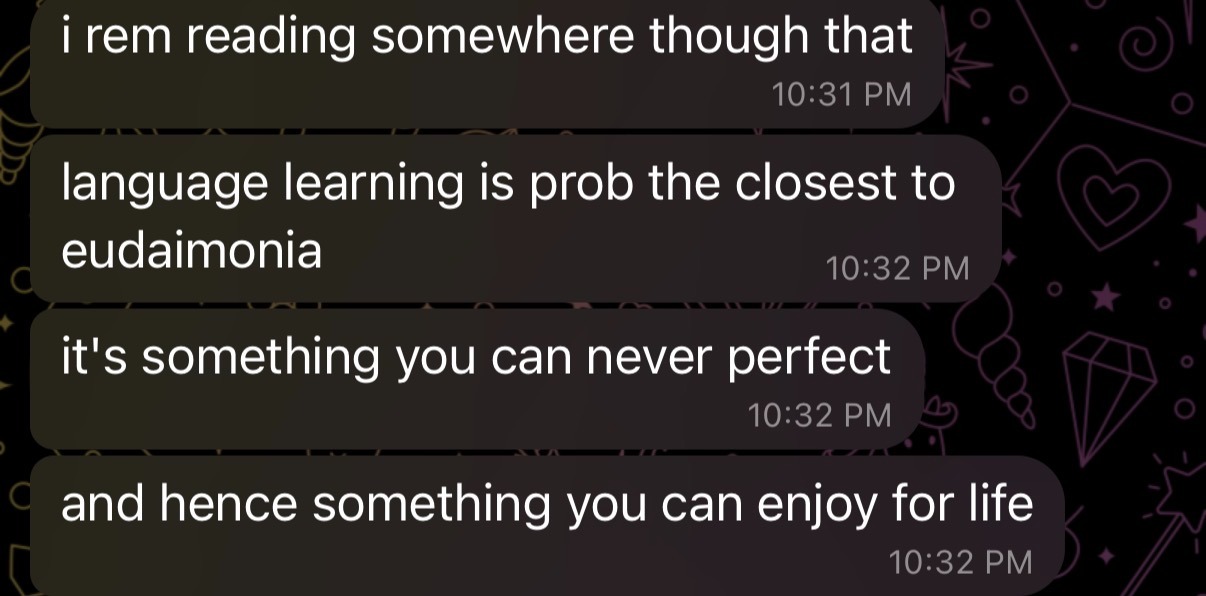
When I first learned about chiasmus, it was not in an H2 Literature lesson, but in MOELC. In that sense, the breadth of topics covered during lessons is one thing you can be certain of — it’s the best of all worlds.
“Die Kunst ist lang, kurz ist unser Leben.”
Goethe, Faust
Because of this, it’s not difficult to see how easily German lends itself to other subjects. The same frameworks taught in our unit on rhetoric (in preparation for the argumentative essay component) transfer readily to General Paper, while the identification of literary devices might carry over to the likes of Coleridge and Keats.
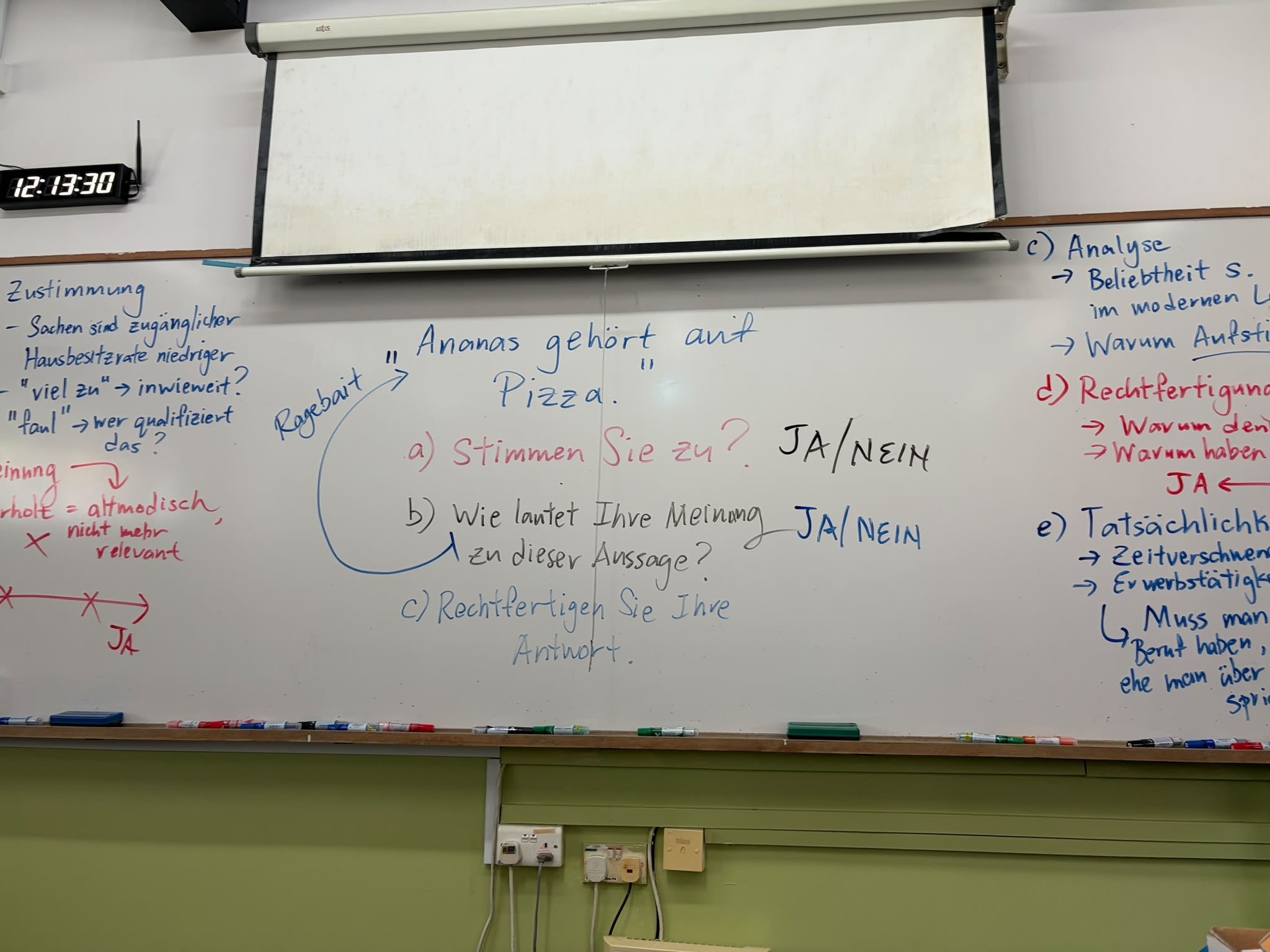
Learning German, in other words, doesn’t just give you another language in which to think; it offers you interdisciplinary skills that benefit the way you consider the rest of your subject combination.


This year, our JC1 syllabus covered Höflichkeit (as an introductory unit during the bridging course), Menschliche Beziehungen, and Arbeit und Freizeit. During the Promotional Examinations, we were assessed on the last two topics for the argumentative essay in Paper 3.
Though the topics may differ in the future, they will not be completely unfamiliar. What will be new, though, is examining relevant concepts in German. Learning to work through that difficulty is part of the point, especially during class discussions (during which students are highly encouraged to speak in German). You begin with something you do not understand, acquire the tools to make sense of it, and eventually discover that the process has taught you something beyond the original material.
How to Say ‘Armed Guerrilla Group’ in German
Perhaps the best part about H2 German is that your pursuit of proficiency is not limited to the classroom.
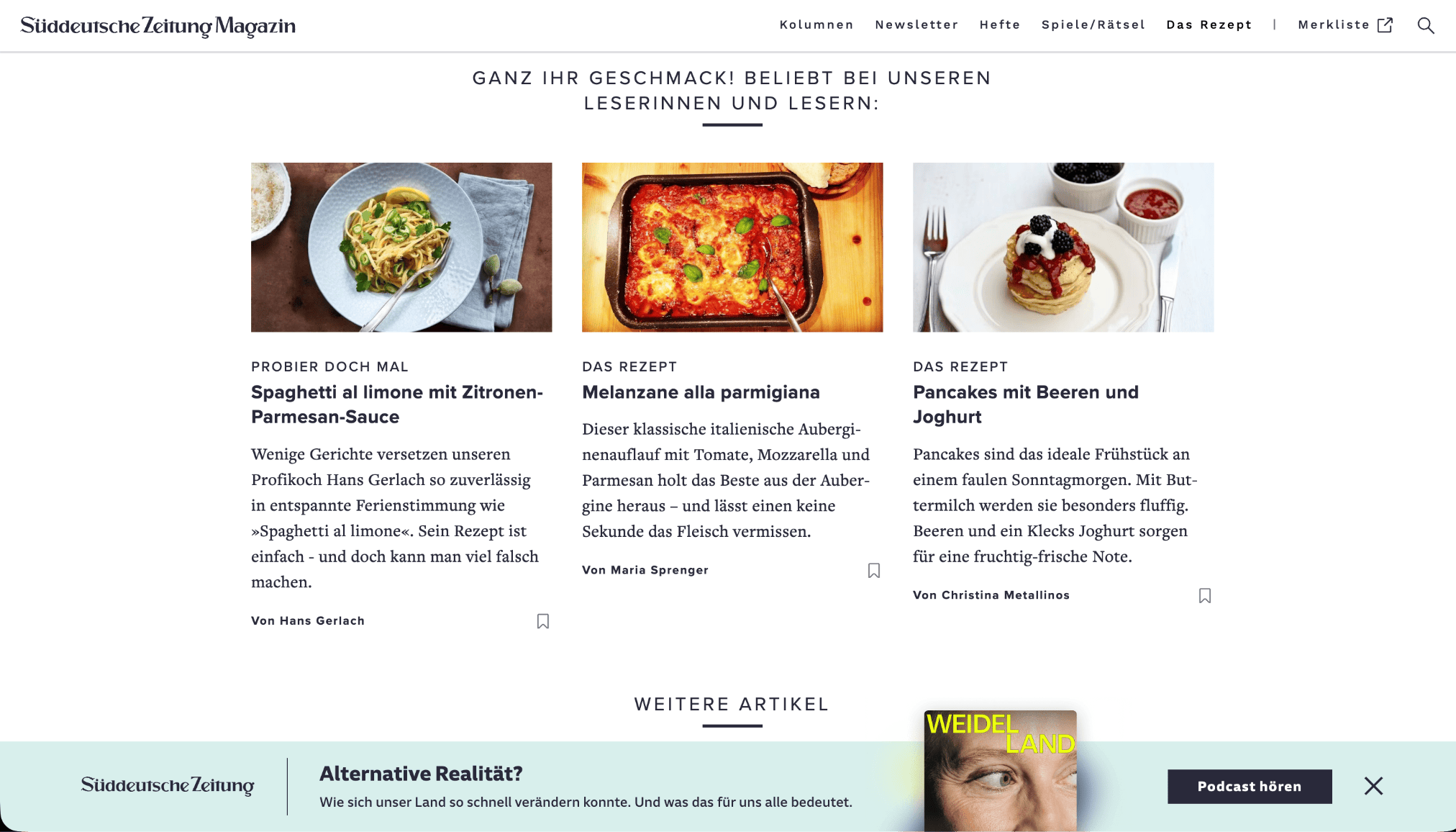
After a short break from lessons during Promos, we’ve started a new topic: Armut. In a slightly too-on-the-nose attempt to supplement my learning, I’ve taken to playing the browser-based simulator “3rd World Farmer” in German.

Whether this counts as productive revision or simply a particularly elaborate form of procrastination is, I think, a matter of perspective.

Events like the annual German Film Festival offer another way to extend your learning beyond the syllabus. And even beyond the formal curriculum, MOELC offers a boundless range of unconventional learning opportunities organised with partner organisations such as the Goethe-Institut, DAAD and the Konrad-Adenauer-Stiftung (KAS).
Just this year, the JC1 and JC2 classes visited the KAS, a think tank associated with Germany’s ruling party, the Christian Democratic Union (CDU), to engage in dialogue with German representatives on politics and contemporary issues.


You might not expect to find much use for German in Singapore, but opportunities to apply your classroom knowledge are closer than you think.

Operating On DB-esque Timelines
When it comes to language, to live is to learn, and taking a Third Language reminds you that there are always other ways to live.
Our recent exchange with the German European School Singapore (GESS) was one such instance, during which we were each paired up with a GESS student from the German section to attend lessons conducted in German (e.g. Mathematics, Economics, Biology), English (e.g. Physics), both German and English (History is taught and assessed bilingually in GESS) or neither (I had the fortune to sit in on a Spanish class!). Through such experiences, H2 German students have the exciting chance to get a glimpse into the everyday lives of their GESS friends, lives that are quite different from our own back in RI and that possess greater fidelity to the system in Germany.


But for those hoping to go further (literally), there are also opportunities for more sustained cultural immersion. Students on the German Language Elective Scholarship (GLES), for instance, may travel to Gießen towards the end of the year after hosting their German counterparts in Singapore earlier in the year. The PASCH programme by the Goethe-Institut similarly offers a youth course in Sankt Peter-Ording in June.
These opportunities are worth looking into early, particularly if you intend to apply for multiple scholarships. Although students may apply for more than one MOE scholarship, they can only accept one offer (which will come with its own unique stipulations).
If you do have the time and bandwidth for it, applying for GLES could help to clarify your intentions going into this subject. From what I heard from my friends, the interview (conducted in both German and English) ended up being a valuable experience, regardless of the eventual outcome.
However, as the different programmes operate on different timelines, some acceptance deadlines may fall before the results of other applications are released.
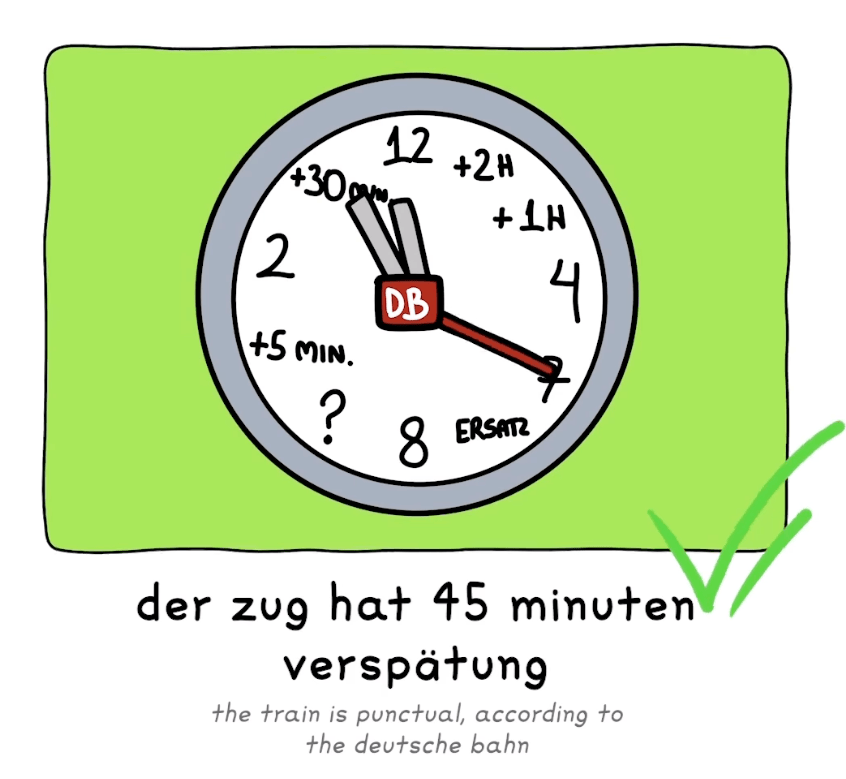
For instance, HSP interviews and results may arrive well before GLES results, leaving applicants who applied for both to decide whether to accept or decline HSP without yet knowing the outcome of their GLES application (Ach nein, Verspätung!). It may be useful to check the relevant timelines carefully before making a decision.
Not Sure If Duolingo Can Go On Your CV?
During my Oral Examination this year, before one of the many tangents I went on, my examiner asked me what I think self-actualisation looks like. I can’t remember my exact answer, but it was something parallel to how I think language acquisition manifests: progress that is often imperceptible while it is happening, until you realise one day that you can articulate yourself in ways once more foreign to you than the language itself.

If you’re contemplating whether to take German, your dilemma is probably one of utility. How useful is it, really? Will it help your grades, your career prospects, your future qualifications? These are very reasonable questions. But I think there is another one equally worth asking: how much do you actually like it?
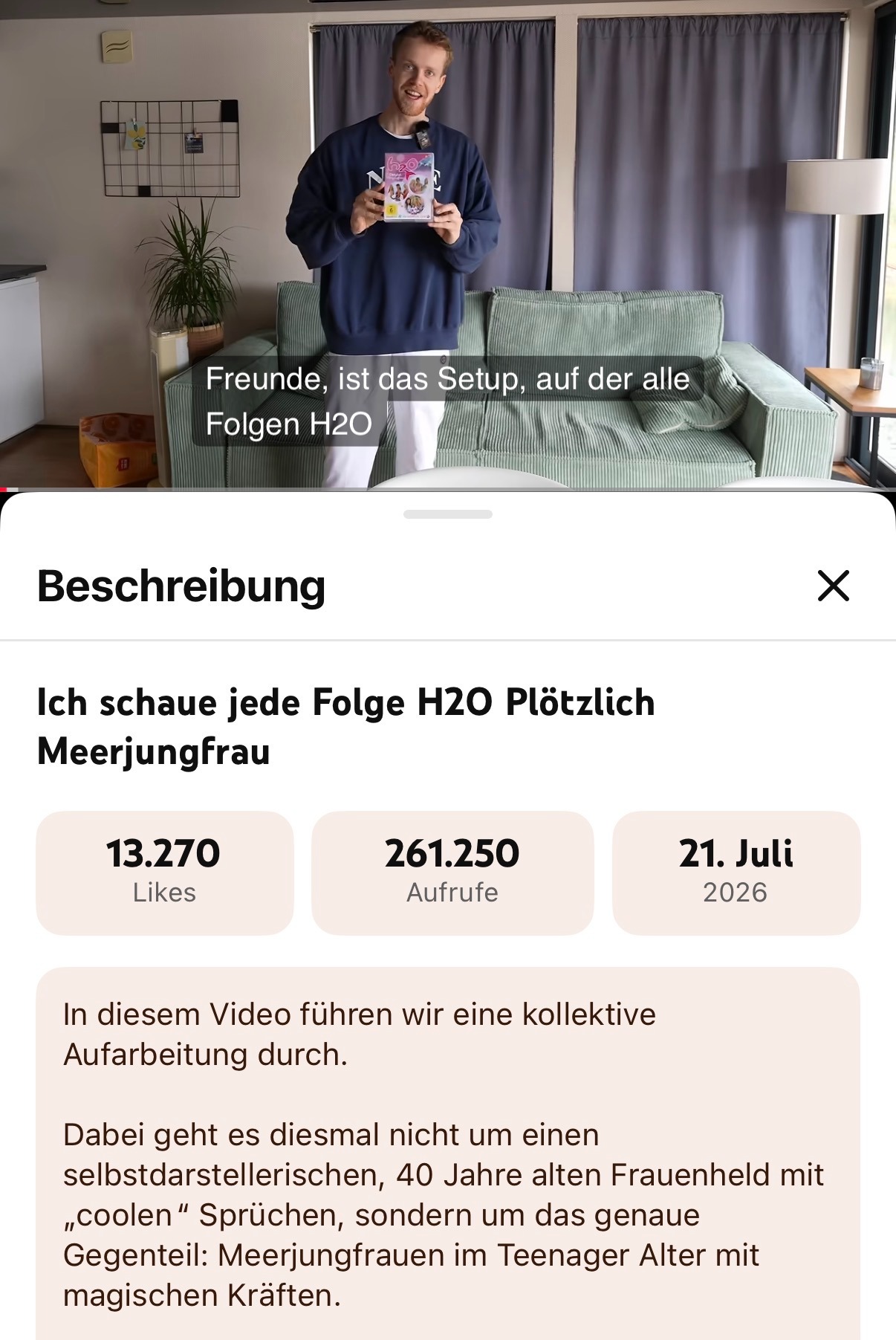
This is a truism, but if your concern is whether you can keep up academically, interest really does go a long way. You don’t have to be extreme in your learning, just consistent. Like any other Third Language, German rewards sustained exposure more than occasional bursts of motivation — even if that exposure comes in the form of some guy on YouTube posting about his experience watching every episode of H2O ever.
And if nothing else, you stand to gain a community outside of RI.

For all the talk about the value of German in and of itself, it’s human interaction that makes up a language. When the language gets difficult to parse, it’s your friends and teachers who give you a reason to continue showing up. I cannot promise that German will transform your life, or that you will ever need to discuss the German labour market outside an examination hall. But I know that learning it has given me people, experiences and ways of thinking that I would not otherwise have had.
“Deutsche Sprache, schwere Sprache”, it’s true. Yet challenging as it may be, German remains one of the most rewarding subjects offered at the H2 level. After all, there is something to be said for spending two more years with a language you are not quite ready to leave.
You don’t have to arrive at class already proficient (otherwise, you might as well sit for TestDaF C1.2 right now…), nor should you take it simply because you qualify.
If the language is something that moves you, give yourself the chance to find out what it might become. And if it doesn’t, the rest of the world is still your oyster.
Viel Spaß, viel Glück und viel Erfolg!
Additional Links
For more information about the 2027 H2 German syllabus, click here.
For more information about the German Language Elective Scholarship, you may wish to visit the MOE website at https://www.moe.gov.sg/financial-matters/awards-scholarships/programme-scholarships-pre-u/german-language-elective-scholarship.


