A day in the life of: A Swimmer

Reading Time: 3 minutes

This article is part of the CCA Previews for 2016.

By Jerome Kwang (16S06M), Chloe Wang (16A01D), Nathan Wong (16S03K) and Tricia Tan (16S07C), Swimming EXCO’16

What time does your day start? 6.30am? Try 5am. How does your day start? Washing up at home before travelling to school? Try a few kilometers in the cold, 6am water at the pool. That’s how the day of a Rafflesian swimmer might begin.

Swimming pushes us to our physical limits, and beyond our mental ones. As a sport which requires a high level of discipline, it teaches us how to prioritise our various commitments and practise good time management. Most importantly, swimming strengthens our willpower and trains our mental capacities, allowing us to better respond to stressful situations in everyday life. Sometimes, it can be hard to understand why someone would spend so much time on one activity. Swimming lap after lap, turn after turn, day after day – just to improve by a second, maybe two if we’re lucky. Perhaps that is why we have a team: so we can understand each other. There is a certain, very special thrill in competing in the water: against the water, against others, and against yourself. We all have a sense of ambition which pushes us forward, pushes us to train harder, to get stronger and faster. Sometimes, when life gets chaotic, being underwater suddenly becomes immensely calming. Maybe that’s why we just keep swimming.

image1_Post training celebration
Post-training celebration.

If you can relate to everything we have just said, then maybe you’ll enjoy Raffles Swim Team. Swimming is different from other sports, as our swimmers train with their respective clubs and coaches. However, we meet with the team once a week, alternating between training and bonding activities, such as birthday celebrations and administrative updates, as well as little catch-up sessions between the team members to foster a stronger team spirit within the squad. Our CCA community is very lively, sometimes a little rowdy, but we know to be disciplined at appropriate times, and of course, we know how to have lots of fun together. We have swimming camps to look forward to, and of course, our team dinners after finals!

image2_Swim camp
Fun in the sun at swim camp 2015!

Besides that, we also provide avenues for our swimmers to give back to the community, via community involvement programmes such as the Special Olympics. We help teach those with disabilities how to swim, boosting their confidence in water.

Most people think that swimming is not that hard and that it is “just about swimming laps”. However, we ourselves know what the regime is really like for a competitive swimmer. We know why we swim lap after lap, turn after turn, day after day. We as swimmers, know how crucial one second may be. Many may argue that in an individualistic sport like swimming, a team is hardly necessary, as building bonds with your competitors might not be the smartest move. But we beg to differ: it highly instrumental to have a good and supportive team to cheer you on in your lows, and to celebrate your highs. Maybe you would like to be part of this team.

image3_School Nationals
A full team photo after school Nationals 2015.

Click here to find out more about the 2015 National Championships!

A day in the life of: A Judoka

Reading Time: 3 minutes

This article is part of the CCA Previews for 2016.

By Gareth Edward Lee (16S06L), Boys’ Captain and Low Jia Qi (16S03O), Girls’ Captain

IMG_8311
The Judo family having fun! :)

Judo is a sport unlike any other. Originating from Japan, it is a martial art and combat sport that directly translates to “the gentle way” (rou dao). The main objective in the sport is to subdue the opponent using throwing or holding techniques. Competitive judo follows a score system, which consists of yuko (small points), wazari (half point), and ippon (full point). Each bout lasts from 3 to 5 minutes, and one can win and end the match immediately by scoring an ippon – which adds a sense of unpredictability to the sport. Anything can happen in a judo match …

Under the guidance of our coaches Mr Low Chee Kiang and Mr Tan Yi, judokas train at least thrice a week in the hopes of seizing the elusive Challenge Trophy for the pride of our school. Training typically starts with stretching and warm-up, followed by judo technique drills and some physical training. The most fun part of training that you can look forward to, however, is randori (free sparring). Randori is the time when judokas put what they have learnt into practice and pit themselves against other team mates. It is common to experience getting thrown by seniors, and beginners may feel slightly discouraged at the start, but eventually, you’ll realise that getting thrown is part of the sport. The art of falling is something unique to judo. It teaches judokas to accept failure and learn from it. This is, after all, the only way to overcome the fear of falling and improve as a judoka. Whether you throw or get thrown, randori allows judokas to understand what judo really is and challenges them to reach a new level of proficiency in the sport.

Furthermore, learning to accept getting thrown in judo has helped us come to terms with setbacks we face in other aspects of our lives. Judo has given us the courage to accept failures with an open mind and the mental willpower to persevere. We know that it is always within our power to get back up after we have taken a fall and that is part and parcel of growing up. Ultimately, this is the aspect of judo that we think is the most applicable to our lives off the mats.

While we train with the ultimate goal of winning a competition, what really brings us back to training every week is the sense of attachment we have to the judo community. Every training session gives us the chance to have fun with juniors, seniors and batch mates whom we hold dear in our hearts. It is through the toughest of trainings and the most daunting of setbacks that we forge the strongest of bonds and make the best friends that we have. The judo community is full of fun-loving juniors who never fail to crack us up with their antics, wise seniors who always have something insightful to impart, and supportive batch mates whom we can always put our trust in. Before training starts, it is no surprise to see judokas from all years lepaking on the mats (or lazing around on the trampolines. Shh.).

Judo will always be a family away from home that we’ll never get tired of, and we look forward to YOU being a part of it! :D

A day in the life of: A Gymnast

Reading Time: 4 minutes

This article is part of the CCA Previews for 2016.

By Callie Yap (16S06A), Rachael Lim (16S06H) and Nicole Neo (16A01C)

feature

It is 6pm, and the sun is setting. Students are leaving the school grounds, probably making their way to a good meal to end the long school day. Meanwhile, some students remain in the gymnasium. Having changed into training attire, they are warming up with some stretching. For them, this is when the day begins. This is a day in the life of a gymnast.

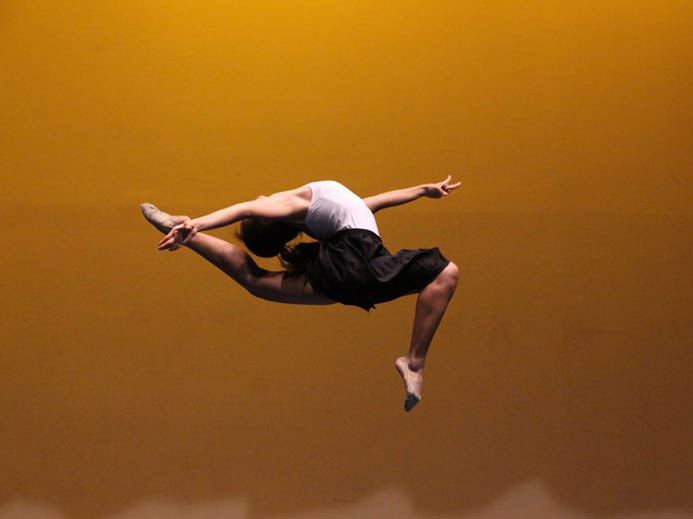
Gymnastic routines may look effortless at competitions, but a lot of hard work lies beneath the showy appearance. Gymnasts are only given a few minutes on the mat/trampoline, but hours, days and for some, even years have been spent on training for that short amount of time.

1

Trainings are 3 hours long, and begin with warm-ups, then physical training (PT). PT ranges from jumps and core workouts to rope skipping, and maybe even self-designed circuit training. It may be tough, but it is an essential part of helping gymnasts complete their demanding routines.

2

We then proceed to cool down with some even cooler stretching, which is done according to our individual flexibility for optimum results. The back bends and oversplits may seem daunting at first, but with personal determination and lots of motivation from batch mates, you’ll eventually achieve those feats with more ease and gain a sense of accomplishment!

3

For rhythmic gymnasts, the rest of training is spent on fundamental skills such as leg kicks, leaps, balances and pirouettes. Mastering the basics takes endless drilling and hard work, but will go a long way in helping us execute our moves with accuracy, grace and poise on the gymnastics floor!

4

This exciting buildup leads to the last (and most fulfilling and enjoyable) part of training – apparatus time! As we execute various moves with the apparatus, colourful ribbons, shimmery hoops, glitzy balls and handy clubs start to decorate the gymnastics mat. This is also the time when we get to unleash our inner creative genius as we choreograph and practise our competition routines, as well as learn new skills (that can be shared with friends and showcased on Instagram). :-)

5

As trampoline gymnasts, we spend the majority of training doing what most students are not allowed to – jumping on the trampoline! If you’re looking for a CCA that gives you an adrenaline rush every training, look no further. This is definitely a sport that challenges you both physically and mentally, but with the help of our experienced, caring, and (mostly) humorous coach, and the support and encouragement from your batchmates, your fear will instantly become excitement.

6

Trampolining is the closest we can possibly get to the feeling of flying; being able to flip and twist mid-air is always something we look forward to.

We begin with warm-up jumping to perfect our form and increase our jumping height, and if we’re in luck, sometimes while wearing weights!

7

The rest of training is spent working on our competition routine (the full 10 points routine for experienced gymnasts, or the 8.5 points option for beginners) from learning the basics, to mastering the individual skills, then slowly linking them together, to finally being able to perform the full routine on the trampoline.

(Fun fact!: Many of our current members had no prior experience in gymnastics at all before joining Raffles Gym, and they haven’t looked back ever since.)

If you are new to this sport and concerned about not being able to handle it, that is something you don’t have to worry about! Training might seem tough in the beginning, but with the willingness and courage to try new things, a lot of practice and the help of our amazing coaches, once you’ve mastered the basics you’ll be ready to flip and twirl with us in no time.

8

At the end of the day, we can’t promise that you will find Olympic-standard gymnasts, neither can we guarantee gold medals. Rather, what you will find in Raffles Gymnastics are gymnasts who are passionate about what they do. You will find a lot of fun and laughter even through the pain. You will find a family that is warm, encouraging, and supportive.

9

A day in the life of: A Hockey (Girls) Player

Reading Time: 3 minutes

This article is part of the CCA Previews for 2016.

By Wee Jieqi (16S03A), Captain; Sherrie Tan (16S03C), Vice-Captain; Nur Syahirah (16S03B), Vice-Captain; Kathleen Ooi (16S03N), Quarter-Mistress

feature photo
Raffles Hockey (Girls) team huddle

You walk out onto the pitch dressed in green-black-white, stick in hand, game in mind. Heart thumping in anticipation, hands clammy with perspiration. You zero in onto the ball set in the centre of the pitch as the whistle blows, and adrenaline kicks in. Game on.

Hockey is not a game for the faint-hearted; it calls for dedication and passion. Dedication that helps you pull through arduous trainings and unforgiving weather we play under, and passion for pushing your limits to be the best your team needs you to be. As a hockey player, you are a team member. Individualism is frowned upon here, and we all strongly relate to the saying, “Teamwork makes the dream work”. Sounds clichéd, but it holds true from experience.

photo_2
Phoebe Neo, captain of the hockey team, clearing the ball

A  typical training session on Tuesday or Thursday would begin with us gathering under the clock tower at the RI Year 1-4 side after school, waiting for that minute hand to strike ‘6’ on the clock face. A quick warm up around the rugby field and some stretching later, we gear up and grab our sticks, ready to take on what Coach Dahlia has in mind for us. Common drills include refining our basic skills, playing against our own teammates and learning new set pieces to be applied in a game. We continually work to improve our skills through a variety of drills, and the sounds of us cheering each other on resonate throughout the field. Though fatigue is inevitable, the sense of accomplishment you feel after a productive training session overrides everything else.

photo_3
Team photo after training

Beyond the technical details of the sport, hockey enables us to grow as individuals though the pain, sweat and tears that we leave behind on the pitch. However, our friendship extends beyond the pitch. For many of us, hockey is our family. We are more than just players coming together to achieve a common goal. Being a part of this tight-knit group includes going for batch outings or even studying together for exams. Family and camaraderie is what makes this journey so special and what pushes us on during training. Along the way, we learn to trust and depend on each other even more. As a team sport, we constantly ensure that we are there for one another and have each other’s backs. Nobody will be left behind.

Through your journey in hockey, you can expect to acquire new skills, play against various opponents, celebrate your wins and struggle through your losses together as a team. A hockey team is much more than just a group of players meeting a few times a week; the bond that forms will be evident through the constant teamwork that is displayed as you push each other on and cheer for one another through the ups and downs. Whether it is merely a practice session or a tournament, each win or loss will leave a mark on your life. Ultimately, hockey is a sport that will teach you about friendship, learning and achievement.

photo_4.jpg
The hockey girls are all smiles after winning one of their group matches this year.

Lastly, hockey is also a lifestyle, where one can stay fit and keep in shape. We are a passionate group of students that come together to continuously push ourselves forward and go beyond what we think we can achieve. So, if you are looking for a CCA where lasting friendships are forged and precious memories are created through our shared journey, come join us. Be a part of our family.

A day in the life of: A Floorballer

Reading Time: 2 minutes

This article is part of the CCA Previews for 2016.

By Floorball EXCO’16

IMG_5605
Raffles Floorball 2015.

Founded in 2006, Raffles Floorball is a relatively young CCA. Coached by Ms Jill Quek, Raffles Floorball has grown to become one of the most well-known local floorball teams.

Floorball trainings are conducted thrice a week on Mondays, Wednesdays and Fridays at the Indoor Sports Hall. Training usually starts with warm-ups, followed by court time with drills. Training then wraps up with matches. Physical training and conditioning are conducted weekly for the benefit of our players’ fitness.

Floorball trainings are never quiet. Here in Raffles Floorball, team-building is encouraged through cheering for one another, team talks and motivational talks by our coach.

Floorball will provide a variety of avenues for you to put your skills to the test. We conduct friendlies with other school teams, and take part in games such as NUS Tenses – no opportunities beneficial for the growth of our team are lost. Floorball season (National Inter-school Championships) usually takes place from March to May, and it is a very intensive period for both the guys’ and the girls’ team.

IMG_2506
Floorball girls at NUS tenses

Although Floorball is a gender-based sport, team bonding between both teams is still essential. We conduct many different activities such as batch camps, dinners and outings to bond the team and foster team spirit. Members are also encouraged to gather their friends and play in the Amphitheatre outside of training sessions. It is definitely a good way for you to de-stress and have some team fun amidst piles of schoolwork. With a bonded team, trainings truly become all the more enjoyable.

IMG_8811
Floorball Y5 2015 Day Camp

Interested in joining Floorball, but you’re not sure if you’re up for it? Well, Floorball is a sport for all – we even have members without prior sports experience. We encourage you to pick up this new sport to grow physically, mentally and emotionally while building long-lasting friendships. So come aboard and join us next year! We hope to share the joy we have with you :)