

By Janelle See Jia Xin (27A01D)
I always found National Day to be an enigmatic event. Every August, the whole of Singapore is decked out in red and white. In schools, we’d revisit the same old stories of Singapore’s long journey to independence and how we should take pride in being Singaporeans. However, all this time, I never really stopped to ask myself what it meant to ‘belong’.
THIS IS HOME, TRULY
It was just another school weekday, only made less mundane by our mandatory EL Week ‘reading session’ in the library. While browsing, I chanced upon a book tucked in the corner: This Is Where I Won’t Be Alone, a SingLit collection of short stories whose title explicitly references a lyric from the famous 1998 National Day song Home by Kit Chan. I didn’t expect to get hooked on it for the next hour or so, and found myself reluctantly parting ways with it at the end of the session.
Fate must have tied me to this book. A year later, the author herself, Ms Inez Tan, came down to RI to give an inspiring talk about intention versus objective to the Humanities Programme students. My curiosity renewed, I dug up and finished her book in one sitting. Upon which, I realised how local stories like hers truly seek to explore the boundaries of home and belonging. Here is why Tan’s collection is the perfect place to start reading SingLit.
WHERE I KNOW I MUST BE
This Is Where I Won’t Be Alone is Tan’s debut collection published in 2019 consisting of 13 varied short stories, exploring the ‘tension [between] the strangeness of displacement and a deep yearning for connection in [the] relentless search for who and what to call home’.
From the outset, it immediately struck me that Tan’s book was not restricted to local stories. Given Tan’s background in the United States, I found the inclusion of stories set in an overseas context a very unique approach in exploring the concept of home and isolation in the Asian diaspora.
‘Oyster’ is one such story where an oyster is granted human qualities as it charts its journey from its beginnings in the ocean all the way to a daughter’s fridge during her studies abroad in America.
While the story might be narrated from the oyster’s point of view, this everyday object is really just a plot device to subtly highlight the complexities in the mother and daughter’s relationship.
Ordinary acts of love and sacrifice on the mother’s part – cleaning up after her daughter’s mess, telling her to pack oysters on her studies abroad, insisting that the oysters had no smell yet still packing the oysters in two Ziploc bags – are ultimately realised by the daughter only when it is too late.
While the story initially paints the daughter as indifferent and unappreciative of her mother’s sacrifices, the end of the story reveals that deep down, she still cares about her mother.
However, by then, the miscommunication and emotional distance between the mother and daughter is irreparable, and eventually leads to the oyster’s tragic end.
While reading this, I thought of how easily we take our friends and family for granted. Leaving home for studies abroad is not uncommon for many of us, and has almost become an expected rite of passage. Yet however exciting going abroad may be, we shouldn’t forget the familiarity of home.
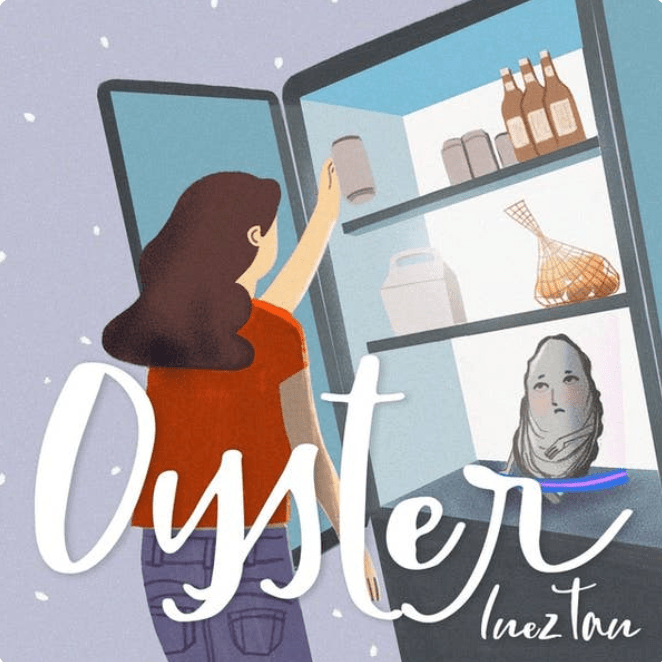
“In fact, the conversation was illogical. No wonder the humans themselves were so confounded by their interactions, the oyster thought. They spoke as though they expected their words to mean something, but they acted as though they did not.”
‘Oyster’
While ‘Oyster’ explores the lasting impact of long-distance relationships, most apparent in Tan’s collection, however, is the exploration of local identity.
The very first story, ‘Edison and Curie’, is told through the lens of two bright twins named after renowned scientists, studying in Stamford Junior College (does that name ring any bells?). The narrative centres on the relationship between the two siblings—Edison, the stereotypical top student, and Curie, living in the shadow as ‘Edison’s twin sister’, despite fighting to make a name for herself.
Complemented by Tan’s all-too-familiar descriptions of the cutthroat, academic environment in Stamford Junior College, the story hits uncomfortably close to home, showing us how easily we attach our belonging to our academic achievements rather than personal growth.
This familiarity is further juxtaposed with the climax of Edison unexpectedly breaking out of his ‘perfect’, stoic character to (trigger warning) brandish a penknife and cut himself.
The story particularly succeeds in shedding light on mental health issues candidly, even so far as to subtly mock the portrayal of schools’ attempts at teaching its students ‘Tips on Effectively Managing Stress’. Whether or not Tan intended for this to be a social commentary on the institutionalisation of mental health education in schools, the irony of these one-size-fits-all solutions for dealing with mental distress is clear, especially with how Edison’s case was handled. (to find out, do check out the book!)
Ultimately, ‘Edison and Curie’ suggests that even within one’s homeland, the relentless pursuit of success can make one feel emotionally displaced.
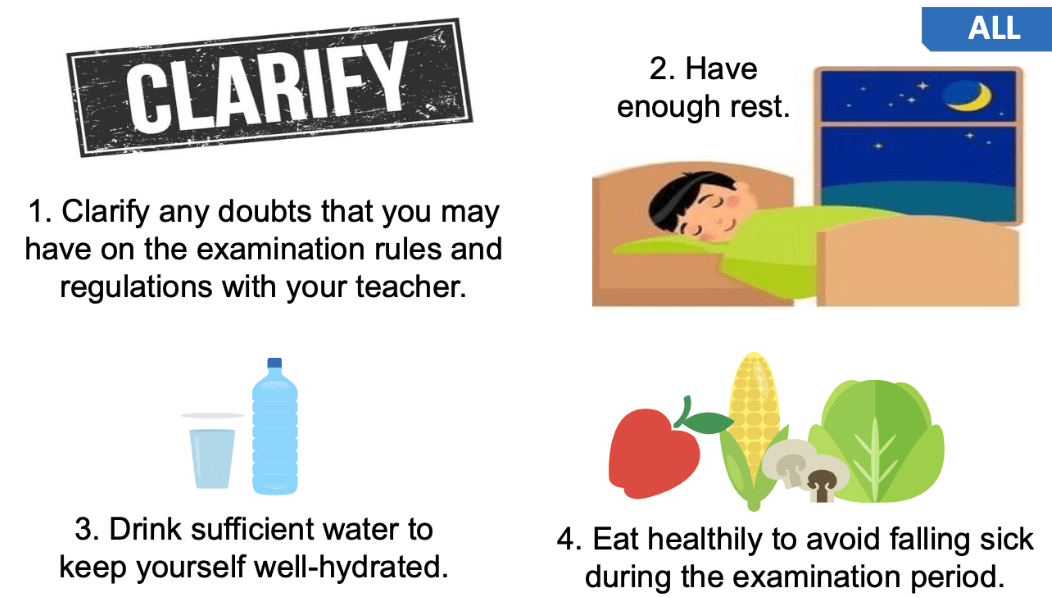
“Eat a moderate and balanced diet.
‘Edison and Curie’
Make sure you are drinking enough water.
Stay positive! Don’t Give up!“
On a more humorous note (or so it seems on the surface), ‘Lee Kuan Yew Is Not Always The Answer’ tells the story of a group of primary school students insisting that ‘Lee Kuan Yew’ is the only answer to any question asked of them (even for Mathematics and Science examinations!), while hyper-obsessing over and dramatically imitating his speeches.
This troubles their Social Studies teacher Cheryl, who reflects on how she would cut out photographs of important figures from her Social Studies textbook and paste them in her diary in her childhood. She had ‘always wanted to know the people who’d been here before [her], shaping the world [she] found [herself] in today’, and did not want to forget them.
To Cheryl, Singapore’s history was her pride and inspiration, as well as her only answer. She was born on the same day Lee Kuan Yew passed, which I felt cleverly framed her as a ‘reincarnation’ of Lee Kuan Yew, as manifested in the students’ continued obsession with him.
Just as Cheryl invites her students to reflect on why they felt ‘proud to be a Singaporean’, Tan attempts to explore the spectrum of pride and patriotism in shaping an individual’s identity. In this case, it is so extreme it essentially becomes the ‘only answer’.
Given our tendency to always need to have an answer to everything as Singaporean students, we are invited to take a step back and learn to find comfort in being in the ‘grey zone’.
WHERE MY DREAMS WAIT FOR ME
Tan does not forget to include fantastical stories like ‘The Princess and the Dragon’, which is mindful of those who may feel as though they do not belong. It could stem from something as simple as the belief that one is too different to fit in or that others perpetually misunderstand us.
Setting her story in a medieval kingdom, Tan weaves in the narrative of a dragon’s point of view as a feared creature. Themes of loneliness and isolation are evident in how the dragon coops itself up in the cave, doing nothing except waiting for the daily peace-offering meals of sheep offered by the kingdom.
The kingdom eventually resorts to sending their own children after all the supply of sheep had been exhausted, out of fear of aggravating it, rather than putting aside their prejudices to get to know the dragon personally.
It is finally revealed with a twist that the dragon was not born as it was, but rather a queen who did great evil. She had left and escaped her ‘family and homeland to seek [her] own way in the world’, and hence ‘returned in the guise of a dragon’. She deliberately wanted to be alone, but ultimately, she could not escape her origins where she truly belonged: back in the kingdom.
This, I felt, was encapsulated in the story’s final line with ‘once upon a time’, which should conventionally be when a fable begins. Instead of a happily-ever-after, Tan suggests that the search for belonging never truly ends. Even after wandering far from home, we can never truly let go of our own roots.
“Once upon a time, I thought my place would be elsewhere.“
‘The Princess and the Dragon’
However, what I believe best captures the idea of belonging and attaching identity to a sense of place would be the flash piece ‘Home’ that may also have been a reference to the collection’s title.
Centred on the McDonald’s at King Albert Park demolished in 2014 after 23 years of operation, the speaker reminisces about her childhood experiences in that very McDonald’s, exploring nostalgic longing for a place long gone while attaching this longing to her own failed relationship.
The last paragraph is what I feel is the essence of the story: ‘Where does a sense of belonging come from? A place? Who you were there, and who you were with? All the people I love and leave leave holes in my body, empty sites. You were the one who told me that home is something we have to make for ourselves. I picture myself looking into old buildings that aren’t there anymore. I can see us inside. A place we never were, as easy to imagine as a place we’ll never be.’
Perhaps this sense of nostalgia can be felt most pertinently from the school’s recent renovation of the canteen, Y56 Chill and demolition of the Hodge Lodge. These spaces have been part of almost every RI student’s routine, and while they are physically gone, our memories associated with them continue to live on.
“I never felt like the place belonged to me, but that doesn’t stop me from missing it now that it’s gone.”
‘Home’

THIS IS HOME, SURELY
Through diving into various aspects and interpretations of home and belonging in Tan’s collection, I have come to appreciate our local authors a lot more.
SingLit in itself is not just a collection of writings by our local writers. Rather, it is a powerful medium for preserving the little stories and culture that makes Singapore, well, Singapore. Tan’s This Is Where I Won’t Be Alone reminds us that home is more than just a physical space and is really about the people and emotionally significant memories that warm our hearts for a lifetime.
And so on this National Day, perhaps I will be spending less time pondering on the true meaning of ‘home’, as my senses already tell me that this is where I won’t be alone, for this is where I know it’s home.


