

By Jessica Zhu Yunjie (24A01E)
Unless you’re a die-hard theorycrafter (see: MatPat), chances are that you’ve skipped at least a few lines of in-game dialogue without much further thought. After all, video games are played for entertainment purposes—why bother taking them so seriously?
But what if there indeed is some truth to the claim that video games are the new literary medium?
Of course, as you’ve no doubt heard from your parents, it’s easy to dismiss video games as nothing more than a waste of time. Facing harsh accusations such as ‘causing addiction’ and ‘promoting violence’, the reputation that video games have garnered over the years is by no means a positive one. In fact, the recent rise of gacha games has only added ‘encourages gambling’ to that list of accusations.
Those statements may be somewhat valid, yes; but it’s undeniable that viewing video games through such a lens has resulted in us dismissing their significant literary value. Books seemingly command respect just by being published, while a game that ventures into complex narratives and literary themes gets discredited merely for its medium.
The widespread perception that video games are intrinsically shallow and superficial owes much of it to one-trick pony blockbusters, churning out mindless sequel after sequel. A closer glance, however, reveals that there is a treasure trove waiting to be uncovered in the world of video games.
A Childhood Classic: Minecraft

I know what you’re thinking: this is just a sandbox simulation game about blocks! On the surface, there’s certainly no deeper meaning to be found. Once you beat the game, however, you’re greeted with the iconic End Poem. It scrolls across the screen for about nine minutes, and its lengthy nature sets itself distinctly apart from the minimalist game.
Amidst the intense lore dropping, the poem actually gets pretty philosophical. It is through this poem that the game itself gets elevated, as it delivers an impactful message—touching on how games and reality can often blend together. It all seems oddly self-aware for a game that’s targeted towards kids, right?
But perhaps that’s exactly why Minecraft has remained a timeless classic, retaining much of its player base even as they reach adulthood. The End Poem has been tattooed on countless fans because they’ve found solace through it. You’ll find that the line ‘and the universe said I love you because you are love’ resonates particularly strongly amongst its community.
Ultimately, the End Poem is about why the player matters. It serves as a fitting ending to a game that has granted players unprecedented levels of creative freedom. In fact, the poem itself extends beyond the game’s premise, as the impact of literature has never been restricted to its work of origin.
The End Poem’s value lies within its interpretation of the player’s journey through the game. It then actively encourages the player to ‘wake up’ from the dream that is Minecraft’s world, such that they can go on to experience whatever comes next.
Surprised at all this untapped potential? But this is only the tip of the iceberg! While you may argue that the End Poem can still be separated from its source material as a standalone, the literary value of the following games are incorporated into the very gameplay experience itself.
Rise To Internet Fame: OMORI
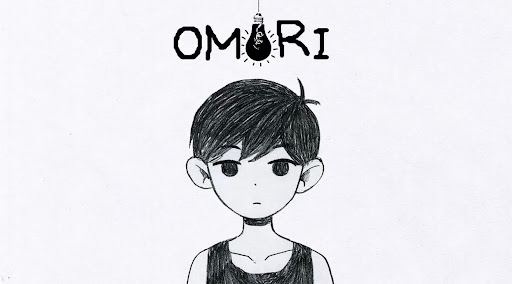
Admit it: you’ve probably seen the numerous playthroughs on Youtube.
Released in December 2020, OMORI is a surreal psychological horror role-playing game which promptly blew up. Renowned for its environmental design, OMORI provides the player with three aesthetically and symbolically distinct areas to communicate its themes of escapism and trauma.
The game’s reflection of real escapist behaviour is particularly immersive, as the player’s experience mirrors real psychological phenomena, such as that of avoidance and anxiety. This thus has the effect of allowing players to better empathise with victims of trauma, and OMORI’s unabashed focus on such a heavily stigmatised topic has raised significant mental health awareness.
Trauma is an unseen and nuanced struggle which people tend to brush off. As such, OMORI’s visual depiction of it contains elements of horror, making use of dark and distorted figures which help convey a sense of oppression. This is significantly more impactful and encourages players to reflect on their own perceptions of mental health.
Through games like OMORI, players are able to gain further insight into different perspectives and see the world around them through new lenses. If literature is meant to reflect humanity and help us better understand each other, then video games have certainly demonstrated their capabilities in doing so, too.
Honorary Souls Game Mention: Bloodborne
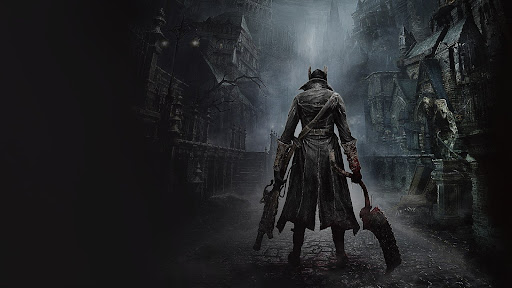
Even ‘mindless’ hack-and-slash games harbour their own significance.
Belonging to the Soulslike genre, Bloodborne is no less easier of a game to play, both skill-wise and thematic-wise. I won’t attempt to summarise its main message—many have tried, only to find more questions than answers. After all, the game draws upon topics ranging from feminism to blasphemy; all whilst presenting them through the narrative of eldritch horrors.
You’ll find that there has been no universally-accepted interpretation of its story, even 9 years after its release in 2015. The game has been deliberately left vague enough for every player to glean something different; a defining characteristic of Literature that has, no doubt, both delighted and frustrated many.
At its core, Bloodborne takes place in a dying and hopeless world, and even the player’s choices are unable to change that. It’s a game about “pain for pain’s sake”, with its charm revolving around pure adversity. Through countless resets of particularly challenging boss fights, players learn to find meaning in their own struggles.
As Cesar A. Cruz puts it, “Art should comfort the disturbed, and disturb the comfortable.” Perhaps that is precisely why Bloodborne, a game which seems to embody despair itself, has paradoxically led many of its players out of depression.
Hit Game: Genshin Impact

Notoriety has propelled Genshin onto trending social media pages, with new controversies seemingly arising every week.
Alas, it cannot be denied that the game has established a huge global audience—approximately 63 million players, as of time of writing. With this kind of reach, its cultural impact has been immense. Through incorporating traditional art forms such as lion dancing and Chinese opera in its cutscenes, Genshin has managed to facilitate an effective form of cultural exchange.
Players are exposed to cultural aspects that they otherwise might not have actively sought out. Now that their interest has been peaked, however, they find themselves more open to learning more, and gain a newfound appreciation for it. In fact, Genshin even went out of its way to hire a professional Chinese opera singer to voice the lines, ensuring that the art form is represented in the most accurate fashion to do it justice.
Its main storyline also revolves around travelling to different fantasy nations, all of which draw inspiration from real-life cultures. While there has been scathing criticisms of certain character design choices, such discourse has inadvertently fostered a community that is more respectful towards different cultures and intolerant of misrepresentation.
Minority voices are paid more heed when they express any concerns, and the general playerbase has shown greater willingness to learn cultural nuances. Case in point: pronunciation guides have garnered millions of views, directly challenging the status quo that non-English names are inevitably butchered.
Representation matters. It is only through such diversity that countless players were able to find stories which they identify with, and others which they learn something new entirely.
“If literature challenges us to explore human behaviour, relationships, morality, and the human condition more generally, then video games have emerged in the modern era as a platform as powerful as television, cinema, and books.”
GamesBeat writer Michael Zimm
Ultimately, video games serve as such an effective platform due to their sheer accessibility. They’re much easier to pick up as compared to the heavy analysis that seems expected when reading traditional literary texts. In this regard, video game lore may be considered “low art”, but I urge you to refrain from defaulting to such negative perceptions.
After all, would you shame a friend for enjoying pop music, rather than classical pieces? Would you berate the masses for flocking to blockbuster movies, instead of learning to appreciate indie art films? It’s clear that times have changed; nowadays, you’re more likely to be mocked for being overly pretentious if you express these opinions.
Since we’re capable of accepting such changing societal norms, it’s high time that we re-evaluate how we perceive video games as well. Perhaps their most revolutionary feature lies within how they aren’t just capable of narrating tales; stories are told through the players themselves.
As such, they serve as creative outlets for players to spin their own narratives, evidenced by the rise of Minecraft Survival Multiplayer (SMP) content. Complex worldbuilding and individual storylines are crafted, with the game merely serving as a medium, nothing more!
In fact, even if you aren’t an avid gamer yourself, the increasing focus on storytelling has seen separate spin-offs being developed. Take Arcane, for example—an animated television series based on the game League of Legends. It’s been critically acclaimed to have drawn in viewers who have never even played the game, and eventually went on to become the first streaming series to win an Emmy.
So…the next time you stumble upon a video game, it may be worthwhile to give its lore a chance. Who knows? You might just find your new favourite piece of literature.


