Great Expectations, Hard Times

Reading Time: 3 minutes

Better Ways to Save

By Sarah Yeo (13AO1E)

Everyone must be yearning for a first-period lecture these days—after all, the lecture theatres are the only places with air-con in the early morning (in fact, even the 4th floor of the crystal palace is not spared). A tutorial would mean sitting in a hot, stuffy classroom (the fans are not of much use, especially if the sun is shining right at you through the windows) and sweating through a shirt or blouse. Given this, turning off the air-con for the first fifty minutes of every school day isn’t really a fantastic way to save.

Here at Raffles Press, we’ve come up with a few better ways for the school to save.

1. Adjust the air-con temperature!
We don’t want to sound like a bunch of whiners, but some classrooms are freezing cold when the air-cons are turned on. That’s right, not just one, but TWO air-cons. With an average class size of about 20-odd people, there just aren’t enough humans to give off heat to offset the cold. Now, this would change if we were actually allowed to increase the temperature to an optimum of 25 degrees Celsius, in line with NEA’s recommended guidelines. For each degree increased in temperature, $25 is taken off the yearly bill. Multiply that by two air-cons in 62 classrooms (in Blocks A and B only), and we have savings of $3100. This will also save us the trouble of taking our jackets on and off. After all, what is air-con if no one enjoys it?

2. Reduce printing of school handbooks
Every year, all of us get new handbooks, regardless of whether you’re a Year 5 or 6. While there is a need for the Year 5s to familiarize themselves with school rules, the Year 6s don’t need two copies of the same booklet (which many people don’t read anyway). A Year 6, who declined to be named, said: “I’ve only flipped through [the handbook] in passing, it now permanently inhabits a corner of my room and I have no idea where it is”. Clearly, the online version on Stamford’s Resources is enough.

The handbook: sadly abandoned on the canteen table

3. Why the LCD screens?
The new LCD screens advertising school events haven’t gone unnoticed, but most people wouldn’t give it more than a glance while walking past. Having gotten most of our information on school events from Facebook, Twitter and even the projector screen in the canteen, the screens don’t really serve any purpose. A Year 6, who wished to remain anonymous, said: “I don’t find [the screens] to be particularly useful, but that could be because I never look at them. It would be more functional if it had a navigation function, but that probably wouldn’t help much in the way of costs”. A lot of money could have been saved if they weren’t installed.

Who looks at this anyway?

4. Revive Eco-Wednesday
Many people don’t know this, but the Team Raffles shirt day that we have now has its origins in what was previously Eco-Wednesday. Back in 2009 and 2010, the air-cons were turned off in tutorials on Wednesdays, and for that reason, became a dress-down day for both teachers and students. It was eventually scrapped as the air-cons had to be turned on during the Hungry Ghosts Festival to prevent incense smoke from getting blown into classrooms through the open windows. However, it’s a better way of cutting electricity costs compared to the current Eco-first periods. More money can be saved: As a huge part of air-con costs is the initial ramp-up to cool the room, switching off for one period doesn’t actually help much. With Eco-Wednesday, the air-cons are saved from ‘ramping-up’ for the entire day, and less electricity costs are incurred. Also, being able to wear the Team Raffles shirt means that students don’t suffer as much from the heat, and the teachers won’t mind having another dress-down day (on top of Friday). So, revive Eco-Wednesday!

5. Take a walk at Take 5!
The time spent queuing for the Sentosa Express could have been better used taking a ‘leisurely stroll’ or ‘experiential walk’ (as the Sentosa website puts it) along the Boardwalk. It has two-way canopy-covered travellators, features five tropical landscapes indigenous to Singapore, AND most importantly, costs only $1 to enjoy. This is considerably cheaper than the Sentosa Express, which costs $3.50. With the school sponsoring 5000 tickets, opting for the Boardwalk would help to save…a whopping $12,500! For those who aren’t keen on admiring the pretty flowers along the Boardwalk with thousands of people, however, a swim to Sentosa Island can be considered.

How to Spend your Monday Mornings

Reading Time: 3 minutes

By Rachel Tan (13S06D)
In this installment of Please Mind the Platform Gap, we guide you through the buffet of enrichment programmes that will last you through Year 5.

Monday Mornings.002

Service
If you enjoy seeing your labour bear fruit, service enrichment programmes might be your thing. Whether your ideal type of service is meeting the needs of the environment or that of people, both the International Service Learning Experience (ISLE) and EcoLit are excellent platforms for you to reach out to the community. But Y5s considering ISLE, take heed. Overseas volunteer work often involves exiting your comfort zone in order to step into the living spaces of people who survive below the poverty line. That includes fetching water from wells, sleeping in cramped quarters, cooking all your meals and subsisting on a few scoops of water for your daily bath, just to mention a few inconveniences. Those eager to serve the community should also be eager to expand their comfort zone at the same time.

Governance
“Give me liberty or give me death!” Rings a bell, anyone? The Raffles Public Policy Programme (RPPP) and the Governance and Civics Engagement Programme (GCEP) are the only 2 enrichment programmes that deal with politics and policy-making. Sessions often involve discussions that examine the thinking behind formulation of policies and factors that influence a nation’s political course, such as history and demographics. Although both programmes may sound similar, there are slight differences – while RPPP tends to focus on local issues, GCEP often involves extensions into other contexts. Moreover, both programmes offer divergent activities during the December holidays. Students in RPPP will experience an internship in a government ministry of choice, whereas GCEP pupils stand a chance to go overseas to observe different political structures in real life.

Leadership
Not a councillor or an EXCO member? Well, leadership doesn’t have to be limited to your CCA. Adventure Leadership Programme (ALPS), Leaders for a Better Age (LBA) and Leadership Through The Ages (LTTA) are programmes whereby different dimensions of leadership are thoroughly discussed and explored. For example, in ALPs, theory is put into practice and members have to endure a gruelling 2 week hike overseas. As Varun Moorthy (13S06D) puts it, “team building, taking initiative, being a role model…are all put to the test” as members live alongside each other.

Culture and Philosophy
If learning about the lives of people outside Singapore is your thing, you might want to consider Raffles Reflects, the Bicultural China Programme (BCP), Bicultural India Programme (BIP) or the Raffles Middle East Programme (RMEP). Raffles Reflects is the successor of the previous Raffles Renaissance Programme, and will cover the main areas of philosophy through articles and discussions. The latter two focus more on studying the political, economic and social factors that carve the lives of people, and offer trips to their respective countries. Be not mistaken, culture is definitely not all about history. Overseas trips promise an immersion into the current culture of the country in question as well as opportunities to interact with local governmental organisations and expatriate Singaporeans.

Olympiads
Biology, Chemistry and Mathematics may simply be subjects. But if they arouse passion in you, preparing for Olympiads may be how you want to spend your Monday mornings – that is, assuming that lectures within the normal curriculum aren’t sleep-inducing to begin with, and you are truly fascinated with how to classify cysteine residue reactions or the mating systems of Humboldt penguins. On a side note, Olympiad medals do add a whole lot of bling in that curriculum vitae you’re intending to send to Harvard.

Others
Not too interested in the above options? Specialised programmes are available to cater to interests, such as technology at Raffles INVENT, which partners with IDA Singapore to allow students to design and build their own technology product. Those interested in sports science can also do research with the E.W.Barker Institute of Sports Science Research Programme. Aspiring entrepreneurs can join the Business Leaders Programme (BLP), where they will be gain from workshops, visits to corporate offices, and an internship in a start-up during the June holidays.

Your bed
Of course, there will always be those of us who feel that spending less time with your bed after a late night’s worth of hard partying is far too great a sacrifice. If so, perhaps more hours allotted to self-discovery while deciphering the meaning of your dreams would work best.

Boon Lay Youth Club to Become an SIG

Reading Time: 4 minutes

By Regina Marie Lee (13A01B)

2013-02-06 14.23.28

After 10 years of activity, Boon Lay Youth Club (BLYC) was closed down as a CCA this year to become an SIG (Student Interest Group).

BLYC is perhaps best known for the annual New Year Countdown it has organised since 2003. It was started in May that year by a group of 5 Raffles Junior College students, after talking to Madam Ho Geok Choo, then the Member of Parliament for Boon Lay. One of the founders was Madam Ho’s son. Because the school was located in Ghim Moh, the group picked Boon Lay as it was a poorer constituency.

Since then, the club has been involved in grassroots activities there. They initiate, plan and execute events together with grassroot leaders. For its contributions to the community, the club won the Most Active Grassroots Organisation Award at the Boon Lay National Day Local Awards in 2009.

When asked about the decision to make the club an SIG, Mr Eng Han Seng, Dean of CCAs and PE said: “The key reason is that the workload of students is becoming heavier. Meetings and preparation for events sometimes go on very late at night, and because of the distance I think the students face a challenge (in this respect). Activities can end very late, past 11PM.” This sentiment is echoed by BLYC Chairperson Keith Yong. “RI was located in Ghim Moh when BLYC was started, and because Boon Lay was near, the travelling time was quite short.”

Where Boon Lay is located, as compared to the old campus at Ghim Moh and our current campus

Instead, the school now wants to focus on the local community. “It’s better for us to try to work within our community in Bishan and Toa Payoh,” said Mr Eng. Plans for a new avenue to work with grassroots in Bishan are underway, helmed by the Raffles Leadership Institute (formerly Raffles Institute for Experiential Learning). “RLI will look into forming a new CCA serving Toa Payoh and Bishan, and explore whether there is a need to start a new CCA or if it could be on other platforms.”

Could the public criticism that BLYC received from former Nominated Member of Parliament Siew Kum Hong, an Old Boy himself, have played a role in the decision? In 2011, in a commentary published in Today newspaper, Mr Siew called BLYC’s CCA status into question, and asked if it was “inappropriate for Ministry of Education and RI(JC) to officially sanction and endorse activities that directly or indirectly support any specific political party or politician”. Whether this assertion is valid or not, BLYC Chair Keith insists that this is “not a problem”. “All this while, we have been working with grassroot leaders and our stand is very clear that we are not involved in any political activities,” he said.

The decision to demote the CCA to SIG status was only communicated to the club in December 2012. When asked why the decision was made now, since the former RJC has been in the Bishan campus since 2005, Mr Eng explained, “(the school had) deliberated for some time…we found that maybe it’s time for us to move out of Boon Lay.” Instead of entirely shutting down the CCA, the school is “trying to transit slowly and also give Boon Lay constituency time for this transition”. Mr Eng also admitted that the school is “opening it as an SIG for students who stay near Boon Lay (where) it is meaningful for them to serve in the West. If there are still interested students and they want to continue serving in Boon Lay, then it is up to a year to year review (to continue as an SIG).”

Miranda Yeo, BLYC Vice-President from the Class of 2011, said: “I am personally very saddened by this decision because BLYC has been a wonderful training ground not only for me, but also for the batches of seniors who went before me. It was an avenue for us students to work alongside capable adult leaders and analyse problems at the municipal level.”

Fortunately, the leadership of BLYC have not given up, and still intend to allow new students to experience the benefits of grassroots service in Boon Lay. With 22 Year 6s currently, BLYC is hoping to recruit 20-30 Year 5s. Activities will be recognised through the CE-01 Community Education platform as a student-initiated service project. “There won’t be any CCA records or requirements to meet, and we will give opportunity for students interested to organise their own CE-01 project in Boon Lay based on their interest.” For example, BLYC recently organised Arts For Us, which brought various art forms to the community through performances and arts activities. “(This was) completely based on members’ interests and grassroot leaders helped them to achieve that,” said Keith. Instead of merely setting up a CE-01 project independently, Keith explains that “BLYC [has] the contacts of grassroot leaders who can help us and provide us with a lot of resources, such as financial resources when we tie up with organisations to fund our activities.”

Members at BLYC's booth during CCA Feste
Members at BLYC’s booth during CCA Feste

Having said that, Mr Eng remarks, “Batches of students (in BLYC) have been impacted positively, are more service-oriented and grew to have the desire and passion to serve the community. We want to continue that spirit. However, in terms of the structure, platform and location, we want to move it to a vicinity that is more meaningful and in our local community.”

Interested to join Boon Lay Youth Club? Find out more about the club at their website, and sign up here. Read the event coverage on Countdown @ Boon Lay here.

Opinion: Why Orientation Should Be More Than Fun

Reading Time: 5 minutes

by Jervan Khou

Aurora Photo

Aurora: What does it mean? Scientifically at least, it is a natural light display, caused by the collision of  charged particles in the atmosphere. It is also the theme for the orientation of the Class of 2014. Perhaps it was hoped that the collision of the supposedly brightest minds would spark off a brilliant, awe-inspiring display of beauty – one which would light up the sky.

Continue reading “Opinion: Why Orientation Should Be More Than Fun”

CCA Preview ’13: Soccer Girls

Reading Time: 3 minutes

by Choo Yun Ting and Kimberley Yeo
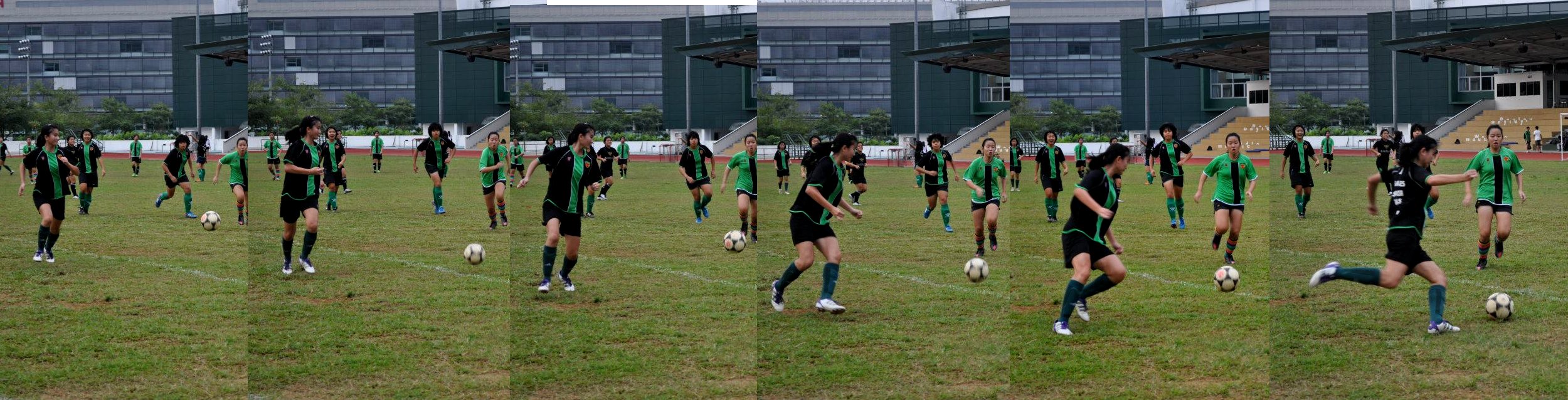
Do you dream of playing in the largest football stadium in Singapore under the floodlights and an expanse of AstroTurf under your feet? Jalan Besar Stadium has been one of the greatest motivations that Raffles Soccer Girls has drawn on since we’ve come into some prominence – much like an amateur club turning professional. We’re coming off our first National Schools title, and trying to create a legacy (and knocking some stalwarts off in the process).

620940_4336366964414_585701557_o

Soccer is a game usually associated with our male counterparts, and most of us come into the CCA barely having kicked a ball in our lives outside of PE lessons. But perhaps it is this new environment for all of us that brings us together. That, and having the best CCA teachers-in-charge, who always have food in arms – Mr Leong’s famous tins of biscuits! Raffles Soccer Girls has come a long way from our humble beginnings, from training irregularly in various unlikely areas of the school, to being one of the guardians of the main field.

We train thrice a week, one physical and two ball trainings at the field. As Mr Leong always says, the best bonding is done through PT. Requirements to join Soccer Girls are pretty fair – basic coordination skills, a good attitude towards training and soccer in general, and some sense with the ball. But really, all we are looking for are passionate girls! Many of us started out with zero experience and as one team, we continue to learn new skills.

celeste

Kicking a ball may seem counter-intuitive, but that’s the challenge! Come push yourself & do things you never thought you could. Dribble, trap, shoot – discover your affinity with the soccer ball. And, of course, soccer is the place to do it where we learn, make mistakes and perfect our skills together, all under the patient guidance of our coaches Mr Leong and Mr Man.

Above all, soccer is a team game. Individual skill can only get you so far – it is in the team spirit that brings out the beautiful game. Every ball training ends with a scaled down match where we learn to trust each other. We then progress on to friendlies on the full field which provides invaluable experience for the ultimate test, the National Schools Championships. Though our time together is short, the shared memories will stay in our hearts much longer.

Come join us! As our defender Wan Qi says, “I love soccer because balls are meant to be kicked!”, soccer isn’t all serious trainings and nothing else. As many of our players can vouch for it, soccer will be the best thing that happened to you here in RI.

BELIEVE, HARD WORK, DESIRE.

Read our match report about how Soccer Girls won champions for the first time, at Jalan Besar Stadium last year.