RI Cricket: Fighting Hard Till The Last Ball

Reading Time: 4 minutes

By Shikhar Gupta (15S06M) and Mustafa Siddiqui (15S06E)
Photos by Gabrielle Jeyaseelan (15S06A)

The cricket team
The Raffles cricket team before the match

Scorecard:*
ACS (I): 154/5 in 20 overs (Archit – 48, Prateek – 42, Utsav – 38) | (Chirath 3-22)
RI: 136/8 in 20 overs (Sidantha – 35 not out, Lakshan – 28, Vinay – 22 not out) | (Abhinav 2-22)

Coming into the final match at Ceylon Sports Club, the Rafflesian cricketers’ confidence was sky-high. Having steamrolled through their previous matches, including a previous meeting with ACS (I), the mood before the match was casual and relaxed.

The captain of the RI team, Chirath Gunasinghe, won the toss and elected to bowl first, anticipating a quick capitulation of the ACS (I) batsmen thanks to a superior bowling attack on paper, which mainly consisted of pacers.

Vaikunth Seshadri bowls a ball

Opening the bowling was Lakshan Srinivas, who was promptly hit for a powerful cover drive four on the first ball. Even with a rotation of many bowlers, ACS (I) kept the scoreboard ticking, hitting the ball past the rope multiple times before RI got the closest to destabilising the gathered momentum.

A mis-hit by ACS (I) opener Archit Goenka went straight to Harsh Kackar fielding at slip, however the ball slipped through his hands and raced away. It took the RI bowlers a while, but the wicket of the lethal Archit Goenka was finally claimed at 56 runs, but it seemed to hardly affect the ACS (I) gameplan. Utsav Rakshit simply took his place, and continued the scoring.

A series of further poor, short deliveries and misfields meant that ACS (I) had achieved a strong total of 78 runs at the halfway point of their innings.

Lakshan Srinivas applauds after the team claims an ACS (I) wicket

Towards the end of the ACS (I) innings, the Rafflesian bowlers managed to recover their form, restricting the opponents’ total to 155 as well as claiming wickets along the way – no mean feat, when it is known that the final 5 overs are when teams throw caution to the wind for maximum runs.

The RI coach, Mr Goh Swee Heng, simply cautioned the team against throwing away early wickets as the batsmen readied themselves, however, disaster struck on the very second ball of the Rafflesian innings.

Kaushik got run-out early due to a miscalculation, and this set the pace for the majority of the game. Chirath lost his wicket in the next over at a total of 8 runs, and the loss was made more bitter when it was revealed that the umpire had made an incorrect decision with the leg-before wicket (LBW) dismissal. With the first seven batsmen dismissed for sixty six runs, even a respectable loss seemed impossible.

Coming in at seven-down Sidantha, younger brother of Chirath, very nearly turned the tide of the game for RI. Sidantha batted sublimely, hitting five boundaries, and achieving a total of 35 runs off 24 balls. Vinay also stepped up when the team needed him the most, hitting 22 runs off an equal number of balls with a sweet slog-flick that went for 6 above the head of the fielder at square-leg. This sudden revival swept up the spectators in the euphoria, who commented that “even though [they] did not initially understand the game, the final overs were really exciting”.

This partnership added hugely to the tally, with the final three batsmen adding 70 runs to eventually end at 136 runs while giving away just one additional wicket; a respectable score by any standard.

Unsurprisingly, the whole RI team felt disappointed by their overall performance, with Mr Goh lamenting that they had “lost the game in the first few overs of [their] bowling”, having given away nearly 40 runs within 5 overs.

Captain of the team, Chirath was dissatisfied with the team’s performance. “Chasing down 155 was no big deal – we used to score 160 in group stages, but it seems like the pressure got to us today,” he said.

When asked about the partnership between the final three batsmen, he also added that achieving a total of 136 runs was really “impressive”.

Sidantha himself was humble about being the top scorer for the Rafflesian side. “When I came out to bat, I came out there to have fun, and I’m sure we gave them a good fight, but ACS was the better team today,” he said.

Second highest scorer Lakshan, a Year 6 player, was regretful that he could not cap off his final RI game with a win, commenting that the game was a “memorable” one. He will still be continuing on at the national level, however, as will many other RI players.

All eyes will be on the new captain, Sidantha Gunasinghe, for next years competition.

*Scorecard format: [School]: [Runs]/[Wickets], (Top batsmen – runs scored) | (Top opposing bowler, wickets claimed – Runs given away)


Soccer Girls Give Their All in the Finals

Reading Time: 5 minutes

By Marcus Tan (15A01A) and Nurhan Sufi (15S03C)
Additional photography by Isaac Siaw (15S03Q) and Hendrick Soh (15S03I)

Last year, the Raffles Soccer Girls clinched the bronze medal with a goal in extra time to seal a 1-0 victory. This year, extra time proved the curse for them as they fought to be champions for just the second time against VJC at the Jalan Besar Stadium. Beset by cramps and fatigue as the game headed into extra time, our soccer girls unfortunately fell to VJC 1-0 with the last kick of the game.

IMG_8527

It was never going to be an easy game, with RI having to battle a team which was technically drilled and more experienced, with VJC having contested 8 finals in the last 9 years and winning 7 A Division titles so far. The game started at a sanguine pace as 200 odd Rafflesian supporters converged upon the stadium, cheering the team on. Within eight minutes, however, the first shot had already been taken, with VJC sending a shot off target and a free kick from RI’s #6 Jane Ong being saved comfortably by the VJC goalkeeper. The first real chance of the game was not long to come, however, with captain Liza Tay (#13) chipping the VJC goalkeeper which beat the keeper but also beat the post. Both teams then started creating chances, with the VJC team coming close on a few occasions with dangerous cross-shots and set-pieces, but most of them came to naught. Our team sat back for most of the first half, defending deeply to combat the skilful and technically gifted VJC team. With two minutes to go in the first half, the game suddenly sparked into life, with a brilliant ball from Jane sending Louise Lee (#3) clear of the VJC defence. Alas, the offside flag was raised as the RI fans rose to their feet, although Louise hit the post anyway.

The second half started at the same frenetic pace which the first ended in, with VJC taking a long range shot just a minute after the game restarted. This would prove to be a recurring tactic over the course of the rest of the game, with the VJC team alternating between struggling to break down our stubborn defence and shooting from long range. In the 50th minute, this tactic nearly succeeded, with a long-range shot from a VJC player nearly creeping into the goal before a timely intervention from Jane on the line. The game started to become increasingly exciting, with end-to-end football as both teams sought to score the winner before extra time. In the 55th minute, drama ensued as another long-range shot from VJC crashed against the crossbar. Within seconds, however, RI swept forward in a rapid counter-attack which featured Jane going on a stunning Gareth Bale-esque run from her own half to dribble past five or six defenders. Alas, her shot also thundered against the crossbar before being cleared for a corner. The match then headed for extra time as the score remained 0-0.

Even amidst the tension of the game, the VJC captain still had the heart to help #6 Elizabeth Jane Ong stretch her cramped leg. Plaudits to her!

Extra time proved increasingly difficult for the Raffles team as cramps and injuries started to set in, with our brave team even playing with only nine players at one point because of the cramps. Yet, despite the tense nature of the final, there was still room for sportsmanship as the VJC captain helped to stretch Jane’s leg after she succumbed to muscle cramps on the field. This sportsmanship continued, with both teams doing their best to keep playing good football. It seemed as if the game would end with a penalty shootout, with neither team edging the other in a close game and the clock ticking down to the end of extra time. Yet, there was still enough time for a final twist; with seconds remaining in injury time (the time added to compensate for time lost in dealing with injuries) VJC won a free kick just outside the box following a foul to stop a mounting VJ attack. From the resulting set piece, the ball was stabbed home by a VJC player, who wheeled away to celebrate as our players crumpled to the floor in defeat. In the final minute of extra time with virtually the last kick of the game, our stubborn resistance had been broken by the more technically accomplished VJC players. The never-say-die attitude of the team continued, with Liza (#13) attempting to charge forward from kickoff to grab a goal back. Alas, it was too late for our courageous players who fought to the very end despite having all odds stacked against them.

When asked about her thoughts on the game, soccer girls captain Liza said: “It was heartbreaking, we’ve worked so hard throughout the year and to come short in the last few seconds of the game was really hard to take. But we left the field with no regrets cause we really put everything we had on the line.” Coach Mr Sulaiman agreed, saying: “Both teams played very good football. Beautiful football. The team performed awesomely and this is a bunch of beautiful girls.” Spectator Ryan Lim from 15S03E was similarly enthralled: “I thought it was a very intense game, we fought our hearts out but unfortunately we lost at the last minute. I felt that I’m very proud of the team and what they have achieved throughout the season.” Our team truly put in their all, coming close to winning several times in the game despite their more experienced opponents.

IMG_8826

There wasn’t just heartbreak in the tournament though, with our soccer girls having set the tournament alight with fantastic soccer, netting 28 goals en route to the final. Elizabeth Jane Ong was also named top scorer of the tournament, scoring an astounding fourteen goals in total.  Yet, despite scoring half of her team’s goals, Jane credited her teammates, saying: “I’m very honoured and very lucky also. Top scorer is just a title but actually the whole thing is as a team, because no goal was a solo thing. It was all an effort as a team and just shows how much effort we put in as a team to put in the goals. I just happened to be the lucky one who managed to finish it.”

IMG_8906
CCAD leads Rafflesian supporters in the Unite cheer

The soccer girls this year may not have won the title, but they definitely showed us how Rafflesians can unite together to fight through the sun, and through the rain. Even though they might not have lifted the trophy at the end of the day, the soccer girls truly won the hearts of their spectators that day.

Please Mind the Platform Gap: The Humanities Programme

Reading Time: 7 minutes

By Michelle Zhu (15A01B)
Photos by Bryan Chua (14A01A)

hp1

So, you’ve decided to take the road less travelled and plunge into the arts subjects. The next conundrum that most aspiring Arts students will face is whether to apply for the Humanities Programme. What is it all about really? If you missed the Humanities Programme Open House on 16/5, here is a (not so short) all-you-need-to-know guide about the Humanities Programme.

SUBJECT COMBINATIONS

The Humanities Programme has but one subject prerequisite — Literature, as required by the MOE. Literature is seen by both the school and the MOE as the core Humanities subject, therefore every student who is intending to apply for HP must offer Literature as one of his/her H2 subjects. If the prospect of spending two years analysing Shakespeare horrifies you, perhaps you should consider giving HP a pass and instead taking an alternative subject such as English Language and Linguistics in the Arts stream.

The HP student must also offer two other Humanities subjects, as well as one contrasting subject, usually Mathematics. For most, this would be either History or Geography in addition to Economics, but there are always brave souls who choose to take the less trodden paths of ELL, CLL, TLL, Music, Art or a modern language (Japanese, French, German). There is also the possibility of taking KI in place of GP alongside your H2 subjects or as one of your H2 subjects.

“Will I struggle in Lit if I did not take it in Y3-4?” Literature in JC is very different from Y3-4, being very focused on textual analysis rather than themes across texts. Many students in HP did not offer Literature as a subject in Y3-4, but are able to do equally well or even better than their peers that did. It does take a certain period of getting accustomed to literary terms and skills, but after the initial period, everyone is pretty much on an equal footing.

KEY DIFFERENCES

Arguably, HP and the Arts stream are not that different. The core content is the same, as well as having common teachers for certain subjects, notably Math, GP, PW, and Geography. Yet, HP offers a whole slew of differences, very notably having their classrooms in Block J, rather further away from the main academic blocks above the PAC. The HP classes have the benefit of their homerooms throughout the two years of JC, which double up as classrooms for most of their tutorials. Having a base to retreat to in the breaks between lessons is a definite perk, but one that inevitably comes with some degree of separation– Block J is separated from Blocks A and B, the main academic blocks where most classes have their lessons, by most of the Y5-6 campus.

hp2

HP also has a group of teachers devoted solely to the programme. This, along with the smaller class size (around 16-18), allows more personal attention to be devoted to each student, and also makes sure there is no chance of you sleeping in class. Lecture group sizes are small, with a batch of about 50-60, making lectures fairly interactive. HP classes also tend to have more spirited class discussions than even the Arts stream classes, whether because of the people, the environment, or the smaller class size, making lessons extremely entertaining and enriching. One HP teacher often gripes that “I never manage to get anything done in class, because you talk too much!”

Ultimately, the key difference between Humanities classes and Arts classes is the environment. HP students can be a fervently passionate bunch, and lunchtime conversation about whether Proust is pronounced proost or praost is not uncommon. If you are looking for an intellectually stimulating environment with like-minded individuals, you should definitely apply for HP. If, however, your only goal is getting the As at the end of the two years, perhaps you should reconsider– HP students perform admirably well for their A-levels year after year, but many of the perks of HP are nonetheless not essential or even directly helpful in doing well for your A-levels.

PERKS OF HP

hp3

The most well-known perks of HP would definitely be the trips. In June many of our students go for the annual summer school in Paris, jointly organised by SciencesPo and the Humanities tutors. There is also the Overseas Enrichment Programme sponsored by the MOE to any Asian country in November, as well as the Y5 class bonding camp at Mount Ophir. These are definitely hugely enriching experiences that let you see the world beyond the microcosm that is Raffles, that bring the class/batch together and that let you appreciate the unique cultures of different places.

Beyond the most exotic and glamorous bonuses, there are the discounted tickets to cultural events. Every year, each of us is offered the opportunity to go for at least one play, ballet, modern dance, opera, SSO concert, and Shakespeare in the Park at generously discounted prices. In addition, Humanities students have an extra lesson a week that goes by the somewhat prosaic name of Combined Civics. This is an hour and a half where both batches of Humanities students gather and listen to intriguing talks given by external speakers from all walks of life who come in to share their varied experiences– running completely contrary to its mundane name. Among the speakers we have had this year are Isabel Wilkerson, Adrian and Tracie Pang, Andrew Leci, TV presenter, and Antony Phillipson, British High Commissioner to Singapore. The last, in particular, was fascinating to the writer with thought-provoking, almost epigrammatic insights such as “Diplomacy is the art of letting someone have your way”.

In addition, having a specialised team of teachers and a tight-knit batch means that there is plenty of room for self-initiated projects, big and small. The Humanz Initiative (THI), a service project that has been passed down for batches is a student-initiated project, where we work with Toa Payoh Care Corner and the Riding for the Disabled Association of Singapore. Smaller initiatives are also common, such as our goodbye project to Aunty Mahes, the Block J cleaner who recently left for Malaysia.

Personally, this writer feels the real draw of HP comes from the people. Despite the stereotype of Humanities students being outspoken or elitist, the environment in HP is very welcoming and accepting (Lewis Caroll: We’re all crazy here!). It is a place where ideas can be exchanged freely between individuals with diverse passions, where you forge friendships and engage in riveting intellectual discourse.

COMMON MYTHS

MYTH 1: Humanities students are elitist and arrogant. HP students are a considerably privileged bunch, being given more resources and opportunity in pursuit of the Humanities. But as Phionna Teo (15A01A) aptly puts it, “Being elite in the sense of being given more opportunities doesn’t make us elitist — intolerant of others”. Humanities students are frequently reminded of the need to be down-to-earth, and constantly check ourselves for any undesirable attitudes. To the best of my knowledge, I don’t believe there is anyone who looks down on anyone simply because we are privileged, and the culture is most definitely neither exclusive nor discriminatory.

MYTH 2: Humanities students are very segregated from the rest of the school. This is true to a certain extent, mostly because of our geographical location in Block J. There is some contention about the privileges that we get, but on a more personal level, there is no segregation between Humanities students and their counterparts in the Arts or Science streams. Inevitably, your social circle will consist of mostly people you interact with on a daily basis, but it is up to the individual to forge and maintain bonds with friends outside of HP (be it through CCAs or other avenues)– most of us have close friends outside HP, this author included, that keep us connected to the wider school community.

MYTH 3: Humanities students are all geniuses with extremely high GPAs. This is assuredly/certainly not true. There are plenty of us with GPAs that are not what the average Rafflesian would consider high, and many of us achieved less than stellar grades in Math/Science subjects. The important thing is the drive and passion for humanities– aptitude in the humanities is of course necessary, but this is not just seen through grades. We are a varied bunch, and in any case, one quickly realises that one’s Y1-4 GPA is no indicator of how well one does in JC; there are also always extremely helpful and approachable teachers to guide you along if you are struggling.

MYTH 4: Humanities students are all very outspoken with loud personalities. This is far from true– there are plenty of quieter ones among us, and they are not looked down upon in HP because of that. As an introvert myself, I have found HP to be a very accepting and welcoming environment, and the less noisy ones do eventually open up and start speaking up more about issues they care about.

MYTH 5: There is a rift between those who got in through early admission and those who came in later through the MOE HS. Of all the myths, this is probably least based on fact. The teachers do not treat the people who have one, both, or neither scholarship differently– most teachers do not even know which students have the scholarship, and neither do your peers. Classes are not sorted based on the awards you get, and most of us are generally unaware or do not perceive each other differently because of it.

APPLICATION PROCESS

If you’re sure you would like to be part of HP, the first stage of applications runs from 28th May to 28th June for both RI and RGS. This year, there will not be scholarship money as part of the RHA, but early admission to the RHP will follow the same timeline. Selection and shortlisting will be in July, with interviews conducted from mid-July to early August. You will know if you have been accepted into RHP by mid-August. For JAE and DSA students, application for RHP will be in January during the January Induction Programme next year.

If you don’t make it through early admission or if you are undecided about whether to apply for HP, fear not! The second round of the application is in November for RP applicants, and February after O-level results for JAE applicants, through the MOE Humanities Scholarship. For the past few years, all applicants that are shortlisted for the MOE interview are accepted into HP, regardless of whether they eventually receive the scholarship or not, although this is determined partially by the quota. Details of the MOE scholarship can be found here. However, the MOE scholarship is only offered to Singapore citizens, therefore if you are a foreigner or a PR who is looking to join HP, you have to apply through the RHP early admission process which began on the 28th.

Ultimately though, being in HP is not the only measure of your aptitude or passion for humanities– there are plenty of talented humanities scholars in the Arts stream. That being said, if you are looking for an environment where you can be challenged and inspired by people similarly passionate about the humanities, HP may be the right choice for you. The life of a Humanities student in RJ is a stressful but enriching one, one that any devoted scholar of the humanities will enjoy.

A Little Less Than Kin, A Little More Than Kind…

Reading Time: 5 minutes

By Myko Philip (15A01B)

I distinctly remember one of the most touching scenes in Evan Almighty was where God, played by Morgan Freeman, talked about random acts of kindness to Evan Baxter whilst feeding his dog water. It’s a well-known trope in a generic feel-good movie, and something you’d not expect in real life.

As I write this, it is around 7.40 am on the last Friday of term before the June holidays and the skies are inauspiciously grey. For the first time in a long time, I arrived at the Marymount gate when it was still dark. I’d messed up my sleep cycle again and slept at 8pm only to wake up at midnight distressed and flustered. I had promised myself I’d do my International History term paper as soon as I could but ended up spending most of my afternoon reading Michael J. Sandel’s Justice and the early evening at a meeting. I stayed up from midnight and decided to get to school early in a desperate bid to get an hour of sleep before work. But this is what greeted me at 6:43am in the school canteen:

Continue reading “A Little Less Than Kin, A Little More Than Kind…”

The ‘AV Guy’: Mr Philip Lim – Appreciation Week 2014

Reading Time: 4 minutes

By Joyce Er (15A01A), Wilson Chan (15A01C) and Celine Liu (15A01E)

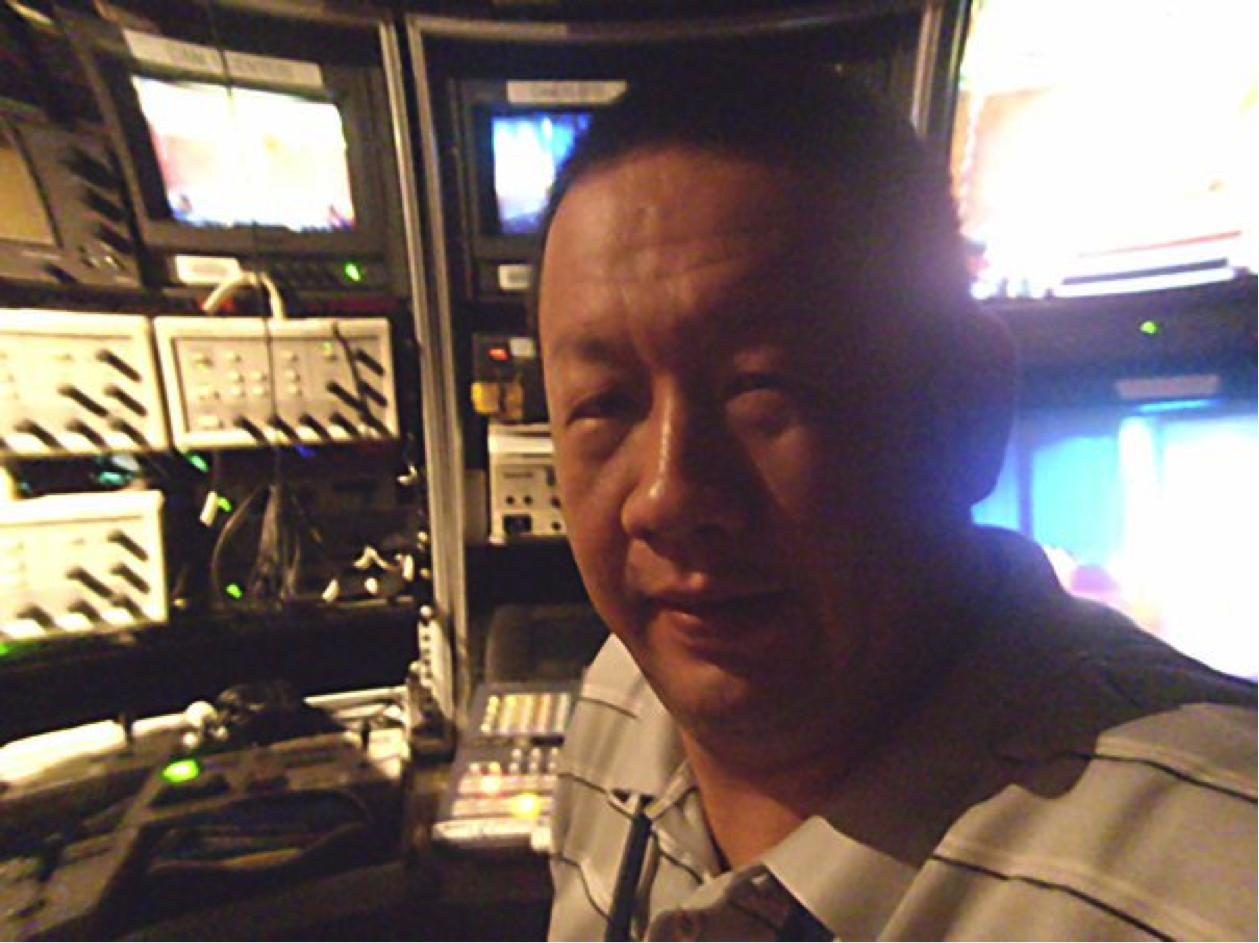
mr philip lim

It takes a special kind of person to maintain all the technology facilities on a campus as large as RI’s while running the lights and sounds at various school concerts and events. “It’s not easy,” shares Mr Philip Lim of the Estate (AV) department as he reclines in an office chair in the Estate office room. When we ask how work gets done in his department, his responses are measured and thorough. From the sound of it, his compact team has it down to a science. “There are seven of us in total, including the RI Y1-4 side. Replacing the projectors takes four years, it’s what we call the cyclical process of maintenance. This June we’re replacing the projectors on levels 2–4. In December we’ll change those on levels 5 to 7. Next June we’ll replace those in block J and the rest of the blocks, and so on…by the time all the projectors have been replaced, it’ll have been a four year cycle and we start all over again.”

Continue reading “The ‘AV Guy’: Mr Philip Lim – Appreciation Week 2014”