By Jedidiah Andrew (14S03K), Dong Yunfan (14S06B), Ong Dingjie (14S03D), Oh Qi Yuan (14S06O)
“Of Chess it has been said that life is not long enough for it, but that is the fault of life, not Chess” – William Ewart Napier
Indeed, chess is a lifelong passion, and rightfully so. The pleasure, excitement, and satisfaction gained from winning chess games have intoxicated many, and they altogether promise an experience beyond words. When you join the Chinese Chess Club, we promise you not boring weekly gatherings for a little more than a year but the mere beginning of a pursuit that will last a lifetime.
Because here we believe: Once a Chess Player, always a Chess Player.
We guarantee that if you see the mind-blowing beauty of chess hidden and intertwined with its complexities and intricacies, you will play it for a long time to come.
Here at the Chinese Chess Club, we offer you the chance to taste and experience this for yourself. There is absolutely no prerequisite in terms of skill level, all we are looking for are people who have the interest and a willing heart to learn. We warmly welcome all beginners; we are more than willing to share with you the rules and basics of chess, and of course some of the more advanced tactics later on.
R&R after an intense competition
We do have a coach during weekly trainings, and our trainings take place every Tuesday from 4pm-7pm. Trainings comprise a wide variety of activities, including coaching sessions by our coach, followed by chess puzzle solving and sparring games, as well as analysis either by our coach or by fellow players. Occasionally, we would also spar with our coach. Although trainings officially end by 7pm, many of us stay way past that time to play and chat.
As a CCA, we take part in numerous competitions throughout the year. There are individual and team Chinese chess competitions, where the former would comprise competitions such as the annual Char Yong Student Xiangqi Championships. Team competitions are an especially good way to strengthen bonds between our players, as we have to prepare and work together to win each match – every board, and therefore every player, counts. I wish I could capture snippets of moments of euphoria we have experienced during competitions, but unfortunately we have enjoyed these moments too much to capture them.
3rd placing at CJC Cup this year :)
With regard to team competitions, the Chinese Chess Club also organizes the annual Raffles Cup Chinese Chess Competition each year in June. This year, we hosted the 38th Raffles Cup. The competition features a team event as well. Need I say that we organize the inter house Chinese Chess competition too?
Of course, when you join the Chinese Chess Club we promise you more than a CCA. We promise you countless hours of excitement and fun in training sessions and numerous chess competitions throughout the year, late night gatherings, the occasional party, basketball games, long chats on the MRT ride back home, a good bunch of buddies, and most importantly, chess sets and clocks in the cupboard.
Will you join our family?
I know your journey here will definitely be made unforgettable by the three of us: me, you, and the Chinese Chess board.
“Time spent arguing is, oddly enough, almost never wasted.” Christopher Hitchens’ words are a reminder of why the Raffles Debaters exist: not merely to win trophies and medals, nor to prepare you for the infamous Oral Presentation at the end of your first year, but to provide a platform for individuals to share different viewpoints and discuss issues that our world faces today in greater depth. In doing so, we aim to inspire a genuine concern about these issues, and to kindle a lasting passion for the art of debating.
Raffles Debaters 2013!
Who are we? Founded in March 1886, we are the oldest CCA in Raffles Institution, with 128 years of rich history. The first motion the Raffles Debaters ever debated was about whether rickshaws should be abolished, a pertinent matter in the day – though rickshaws are rarely seen, much less debated about, now! This keen awareness of current social, economic, political, and cultural issues continues till today, and whether you attend each training as a speaker or observer, you’ll definitely come away with a broadened knowledge and a deeper understanding of whichever topic has been debated.
So why should you join us? Being a Raffles Debater presents you with a whole host of other opportunities outside the Raffles Programme curriculum. You’ll have opportunities to participate in nerve-wrecking but exciting inter-school competitions, like the annual MOE-ACJC Intercollegiate Debating Championship, and “open” tournaments which everyone can take part in, such as the SMU Hammers Debating Championship.
Raffles Debaters receiving their first-place trophies at the Dunman High School Debate Invitational 2013
You’ll also get to be on the organizing end of large-scale debating tournaments, like the Raffles Debate Academy Under-14 Debating Championship. This year, we also organized the second edition of the Prometheus Cup – a seven-day international debating tournament! (A video montage of the highlights can be found here.)
Club members after this year’s RDA U-14s tournament – tired but immensely satisfied!
Last but not least, you’ll have the opportunity to be part of an inclusive and welcoming debating family. Around March every year, we hold our annual CCA camp, where members get to know each other better and bond with one another over fun activities. We also have dinner together every Tuesday evening during training, and we try to go for lunch outings whenever we can!
When asked why he chose to join the Raffles Debaters in JC, EXCO member Samuel Teo replied: “Personally, I feel that there truly is something magical about debating. Every round in a competition, every training session and every speech you make is a brand new experience, no less enjoyable than the previous one, which keeps you always coming back for more and looking forward to every debating opportunity.”
Trainings are conducted twice a week by our experienced coaches. Most sessions involve full debates on various motions, where each team is given time to prepare their arguments before the speakers deliver their speeches. Motions can range from more ‘serious’ topics like social, economic, and political issues, to more lighthearted areas like pop culture and entertainment, so you can be sure that the same motion will almost never be debated twice during trainings! Time is also set aside for self-directed presentations, where members can read up on a pertinent or controversial issue in the news, or an area they are passionate about, and share their knowledge with the rest of the club. Last year, our members gave informative lectures on the Eurozone crisis, the Edward Snowden case, the US political system, and – closer to home – Singapore’s Population White Paper. These presentations will improve your general knowledge, which is definitely useful in debates, and they have also been empirically proven to be Generally very useful for a certain Paper. Need we say more? :)
Debating may not be everyone’s cup of tea, but if you give it a shot, you might just find that it’s the right CCA for you! If you have always been passionate about argumentation; if you’d like to try something new and perhaps (who knows?) discover the debating talent you never knew you had; or if you are the sort to relish the simple challenge and thrill of standing up and telling someone that they’re wrong – join the Raffles Debaters, and you’ll be welcomed with open arms.
Please don’t just skip over our section. We assure you that the next five minutes you spend reading our article will surely be worthwhile. It’s true that most of you wouldn’t even consider joining a martial art like judo as a sport, and we get that! All of us who are now in the judo team once stood in your shoes being highly doubtful of ourselves ever doing well in the sport. We completely understand that judo isn’t a sport that’s within the comfort zones of most students, but don’t be so scared of failure that you dare not try anything new, especially while you’re young and able! Else your school life be filled with ‘what ifs’ and ‘should haves’.
So, what do you picture when you hear the word ‘judo’? Burly savages in baggy white bathrobes throwing themselves at each other? Now, try to imagine yourself in the baggy bathrobe wrestling with an opponent. Embarrassing? Admittedly, at first, maybe. But as you progress to higher levels in terms of competency and as your belt colour changes from white to black, the “ugly bathrobe” will hardly be an embarrassment any longer.
Originating from Japan, judo is a martial art that aims to teach its students to subdue physically larger opponents by using minimal force. When judo players spar, they grab onto the bathrobes of their opponents and aim to best each other using a judo throw. Besides throwing techniques that are applied standing up, judo also comprises pins, chokes and locks that are applied while grappling on the ground. As you can see, judo is a practical martial art and a good form of self defence.
Now we know what you’re thinking, judo seems like a dangerous and painful sport. However, unlike conventional martial arts, there is no punching or kicking in judo, so don’t you worry about major injuries. We’re not going to lie, although there is no striking, there is still some risk of injury involved (just like any other sport). However, rest assured, for one of the first things that you will learn in judo is to break your fall. By reducing the impact of a fall, judo players can prevent pain and injury easily. So despite the loud thud from the fall, a throw is hardly as painful as it looks.
We’re not asking for those who are athletic and buff. You can be unfit and physically weak, because all we’re looking for is some commitment and dedication. Trainings are 3 times a week in the RI Gymnasium. Ultimately, all of our training training boils down to the National Schools Judo Championships, held annually in March/April, where we have consistently been a powerhouse, winning many golds and silvers and also producing many youth team players. If you are willing to put in the hard work, you might even one day pin the Singapore flag on your gi to represent the nation in international competitions overseas.
Finally, if you’ve pretty much skimmed through most of our preview, this is where you should start really paying attention. Although training hard and winning are important, what we all take away most of all from joining this sport far transcends any physical reward.
This may sound cliche, but learning about dedication, discipline and getting up after falling countless times are the intangibles that will last you for a long time to come. And you won’t be alone in this journey, for your teammates will be there every step of the way.
We hope that you’ve gotten a glimpse of what Raffles Judo is about and even though the bulk of you still wouldn’t choose judo as a cca, there’s no harm in visiting our booth during the open house. And who knows, you might just end up falling for us!
Our greatest glory consists not in never failing, but in rising every time we fall.
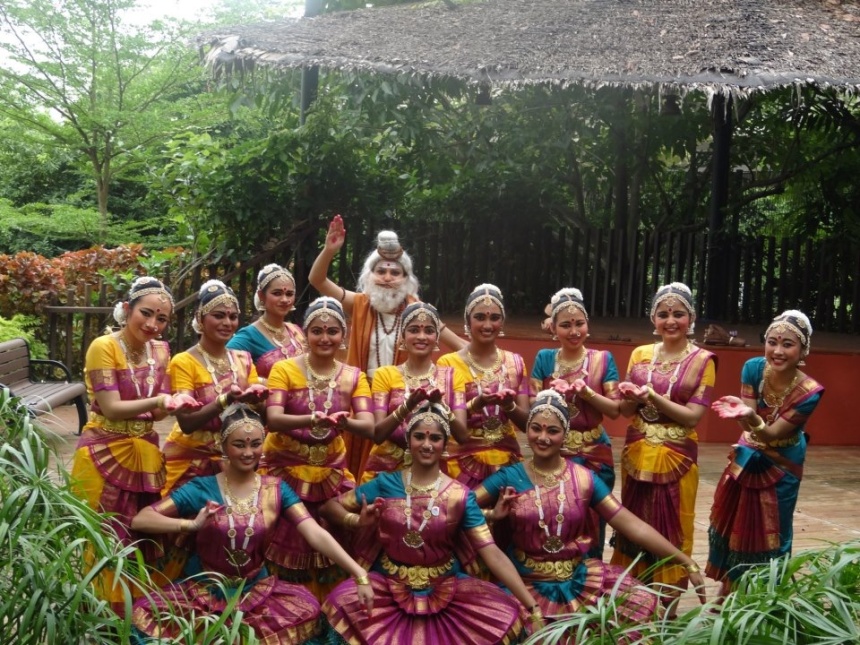
All these and more add up to form the one and only RI (Year 5-6) iDance.
RI iDance is a tightly-knit CCA that aims to inculcate love for dancing in its members and always ensure that every member play a vital role in the team. Having achieved distinction for the Singapore Youth Festival (SYF) this year, we continue to pursue excellence in all our performances, so that the CCA is able to reach greater heights.
No dance background? Not Indian? Fret not; these are all not issues you should worry about, if you are considering to join us. Today, we are here to explore some misconceptions you may have when considering to join Indian Dance, and what the realities actually are!
Many of you may have the misconception that RJ iDance is only targeted solely at Indians and only they are allowed to join the CCA. However, what the reality actually is that students from all races, languages, and backgrounds are welcome to join us. Our only prerequisite in joining iDance is to have, interest, passion, courage to try something new, and willingness to work hard and excel. If you are not Indian, don’t be worried that you can’t fit in. Not only do you have non-Indian seniors, the entire CCA is also always friendly, and in high spirits.
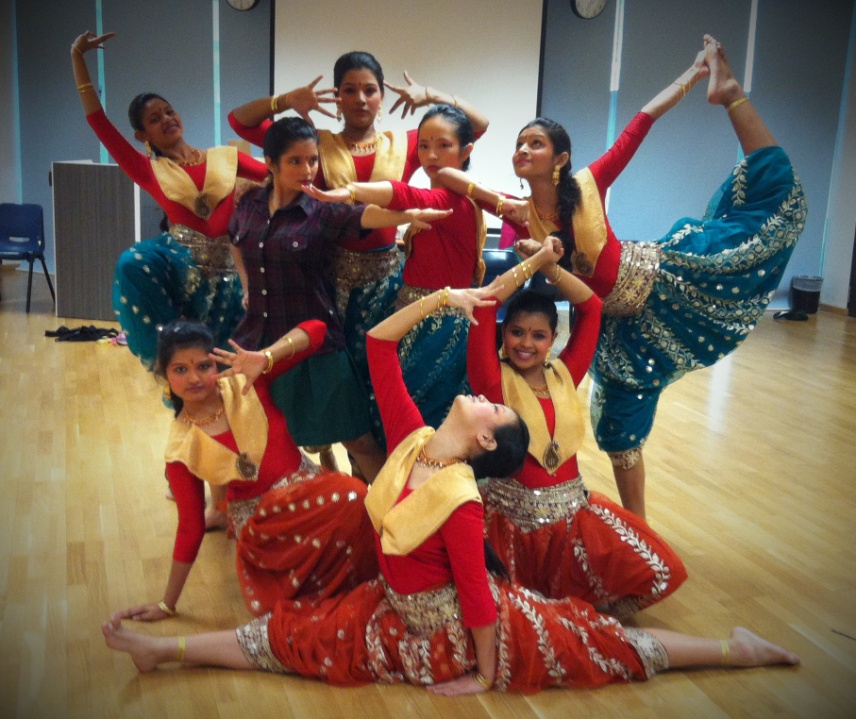
Not only that, some people have a false impression that iDance members are only taught classical Indian dance and dance around trees like what they see in television. However, we do explore various genres of Indian dance such as Bollywood dance and other forms of Indian dance as well. Moreover, we also incorporate other exciting styles of dance into our performances like ballet, belly dancing and African tribal dance, which is sure to get everyone excited, pumped up, and grooving along! As our member Arintha Adelina shares that “Learning the hand gestures was really interesting as it is unique to Indian dance. I also got to learn more about the different cultures. I have never regretted joining iDance as not only is it a learning experience but a fun one too”
There is also a mistaken belief that RJ iDance only comes together to perform during SYF and following that they do not do any performances. However, that is not true! We do have many opportunities to perform and showcase our talents in school like during National day and DanceFest as well as for external performances such as the performance we did during Tabla! Anniversary. With a very flexible training schedule, we practice on Wednesdays with more intensive practice sessions closer to our performances. Our members are provided with an opportunity to learn from our exceptional instructor, Mrs. Sreedevy Sivarajasingam, an acclaimed and accomplished choreographer and judge on a popular Vasantham Central dance reality show called Dhool. She is approachable and always willing to support and encourage us to do our best, and importantly, have fun.
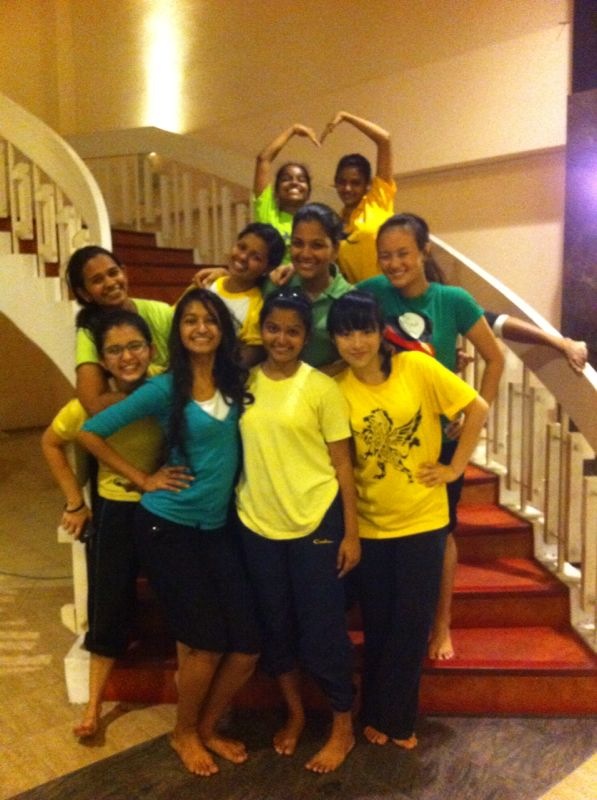
We are here not because of our race, not because of our dance background. We are here because of our passion for dance. We are here as a family.
How does one encapsulate all the joy and frustration, the stress and celebration of a year in Council, all in a simple, informative article? Admittedly, it would be unrealistic of me if I expected to paint a complete picture of what exactly Council is, and all that we do. After all, owing to the varying natures of our job scopes, each councilor’s one-year journey often differs greatly from another’s. Yet, for myself, herein lies the beauty of the Students’ Council: the convergence of uniquely different individuals with differing experiences, each one working together towards the common goal of service to the student population.
“That as elected representatives, we shall always consider the welfare of the students and the Institution…” (Photo Credits: Ashlynna Ng, 13A01B)
“Engage and care for all students so as to foster a sense of belonging to Raffles.” Our council’s main and primary purpose is to serve the student population, and it’s extremely important to remember that when considering whether or not to join Council. Humility is the key: recognising that there are needs to be served in the school, and giving of oneself, by utilising the skills and gifts you possess to serve and address these needs. “Lead by serving, serve by leading” – as oft-repeated and clichéd as this might sound, this really is the essence of what it means to be a councillor.
“As a councillor, you must always be aware of your overarching goal and mandate in everything that you do for council. For me personally, this was to serve with humility and sacrifice.” – Jia Yao, CCAD
Let’s get down to the basics first. Councillors go through a period of elections, which include nominations, interviews, and campaigning, before they are voted in by the school population. They can either nominate themselves or be nominated by their peers. After elections, the council elects go through the hallowed Council Camp, before being recognised as full-fledged councillors at the Students’ Council Investiture. Throughout the period leading up to the Investiture, each council elect will have a “buddy” from the senior batch, who will act as a mentor and familiarise elects with the general running of Council.
The Executive Committee is chosen after a second round of internal elections, and comprises the President, 2 Vice-Presidents, 2 Secretaries (Resources and Finance), Welfare, CCAD, and Communications (Commz’ D) Department Heads, and the 5 House Captains. The PresSecs (Presidents and Secretaries) form the ninth department, and they oversee the Council as a whole. Each councillor belongs to a department, or a House Directorate, and through the organisation of several events and initiatives, provides and cares for a specific area of student life in RI. Additionally, each councillor also belongs to one of 6 functions: National Day, Teachers’ Day, Graduation Night (for the Year 6s), Open House, Orientation, and Council Camp. For the 33rd Council, the Pre-University Seminar (a seventh function) was added; however, the incoming 34th batch will not be able to participate in this function. The functions will be led by 2 function ICs elected during the Internal Elections. Besides department work, councillors will also be expected to balance their function work and contribute equally to both. (More articles explaining each function and department will be coming up, so watch Raffles Press for more!)
Wolf Pack, One Call! – MR House D (Photo Credits: Jasmine Tan, 14S03C)
“Support one another and nurture strong and lasting relationships so as to work together as one.” Council’s also a place where we build new relationships – not just professional working relationships, but long-lasting friendships where we care for and support each other. It’s crucial for each councillor to not only focus on completing the task at hand, but to always be mindful of the fact that you’re working with unique individuals, all possessing talents and skills that you might not necessarily have. Unique individuals who provide not only logistical and technical support, but more importantly emotional and moral sustenance. You’ll get to observe and understand the working styles and preferences of the people around you, and come to love and respect your fellow councillors. Each council’s culture differs from batch to batch, but what stays constant are the friendships built and the emotional bonds forged. As Alynna (CCAD) puts it, “As cheesy as it may sound, we are like one big family. We have each other’s backs all the time and we enjoy the success of events together and (even) get scolded for mistakes together!”
The learning experience that comes together with one whole year of assiduous planning and of decisive execution, of continuous negotiation and of cautious deliberation, is invaluable. Through the planning and organising of events and initiatives of vastly different scales, one acquires unique skills and knowledge that prove useful in other aspects of one’s life. Furthermore, by interacting with such a diverse group of people and working together, you also pick up people skills and certain values along the way. It’s intriguing (at least for myself) to observe others’ preferences in a working context: some might have a predilection for artistic creation; others might tackle the administrative work head-on. Be it painting colourful banners, contacting (and negotiating with) suppliers, or understanding when and how to compromise during discussions, you’ll learn a tremendous amount through your one-year term.
Mega Mugging Madness (MMM) – an annual initiative by Welfare (Photo Credits: Raffles Parents’ Association)
Of course, being a councillor comes with several challenges as well. Apart from monthly General Meetings, we don’t have regular sessions like other CCAs. However, that doesn’t mean that the commitment level is relatively low – quite the contrary, actually. Department and function meetings are called at their own discretion, not to mention sub-comm meetings within each particular department/function. For EXCO members and Function ICs, this also means more meetings and discussions with teachers and school authorities. Peak periods for councillors such as Inter-House Competitions (IHCs) might mean a greater workload, and a tighter schedule, among other concerns.
“Time management is crucial. Take up council only if you’re sure of being able to balance your commitments well, so that you’ll be able to fully commit to the council work you take up.” – Jacqueline, Moor-Tarbet House Department
The key to all this? Effective time management and sensible prioritisation, coupled with the mental strength to push on. It’s vital that a councillor knows how to manage his/her time effectively, all the while not compromising on both schoolwork and council work. Juggling the commitments of academic work, Council, 2nd CCAs, other external activities, and relationships with your friends may be an ostensibly insurmountable challenge, but prioritising these commitments well and being disciplined enough to give the best you can in everything you do will serve you well throughout your Council term. Most importantly, however, is recognition of the fact that your fellow councillors are always there for you, and they’ll be more than willing to help you. I’ve come to trust and love my fellow 33rds for tiding me through storms and hardship, even when I faltered and stumbled.
Our Family of 33rds! (Photo Credits: Ernest Chin, 14S06H)
“There are various peak periods as everyone is holding different roles and responsibilities in their functions and departments. It is indeed quite stressful during these times and you may lose sleep and be unable to finish your tutorials but your fellow councillors will bring you through the hardship and in the end it will be all worth it!” – Zhi Peng, Bayley-Waddle House Department
In all, the culture of each Council (and consequently the experience of each councillor) largely depends on the individuals that make it up. It is true that the commitment level is pretty high, and sometimes the road can be stressful. Fundamentally, however, the Council is only as strong as its councillors are: if you’re willing to give of yourself for the betterment of student life, and if you’re looking for people who will stand by you and support you as you embark on your one-year journey with them, then the Students’ Council of Raffles Institution gladly and warmly welcomes you to our family to stay – it’ll be an experience to remember.
“I think the culture of council is what you want it to be. Definitely, there’s hard work involved, but honestly for me, it’s a lot of fun. I guess the culture you experience would be based on the choices you make. If you choose to not be so involved and what not then council work is just going to be a drag. But if you choose to give it your all and slog it out with the rest then you’re going to leave council feeling fulfilled and with many good friends by your side whom you’ve experienced thick and thin with.” – Ruthanne, Welfare