Month: February 2014

More Than Words: Kaleidos 2014

Reading Time: 5 minutes

By Celine Liu (15A01E), Michelle Zhu (15A01B), and Nai Jie Lin (15A13A)

Photo Credits: Raffles Institution Year 5 - 6 Orientation 2014 Facebook Page
Photo Credits: Raffles Institution Year 5 – 6 Orientation 2014 Facebook Page

Kaleidos – from Ancient Greek Kalos, meaning beautiful, and eidos, meaning form.

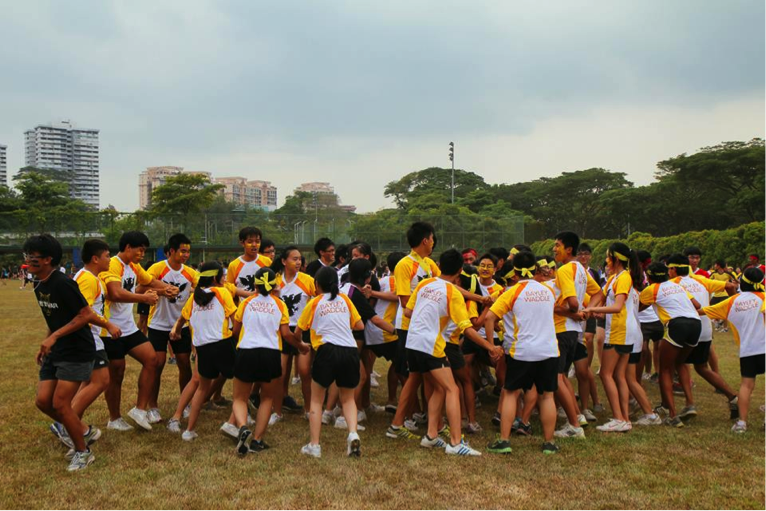
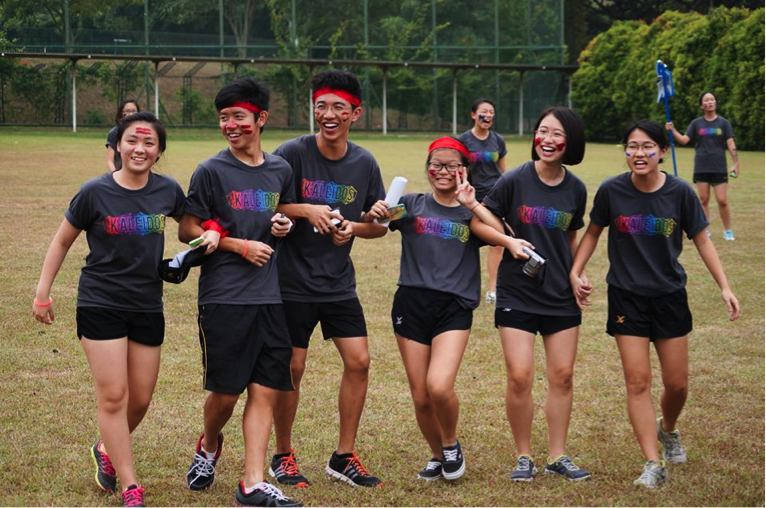
We are all aware of that which we call a kaleidoscope, a narrow, enclosed tube filled with beads and pebbles and other beautiful things all crammed and packed into a mangled mess of colour that, when observed, launches into a medley of brilliant light. Kaleidos 2014, a time once so woefully dreaded and eagerly anticipated, has come to a close after 4 short days and an even shorter weekend packed with new experiences, new memories and new friendships.

Or so that’s the plan.

Though to the casual observer orientation must have seemed a jumble of energy, excitement and light, for some of us more inconspicuous pebbles in the midst this was far from the case. Being surrounded by people seemingly on a constant, albeit rather artificial high- the energy can become exhausting, the excitement forced and the light- blinding.

What is an introvert?An oft-seen term that’s frequently tossed around and loudly (and ironically) claimed on the internet. Yet putting the ‘introvert pride’ debate aside,  an introvert is simply a person who gains energy by being alone, and expands energy when communicating and interacting with others. By that definition, orientation must of course seem like every introvert’s worst nightmare, when one is literally surrounded by strangers sunrise to sunset. But that does not necessarily have to be the case. While eliminating the socializing aspect of orientation may defeat the purpose of orientation itself, there are still many ways in which one may fulfill the aims of orientation, that is, initiation into a new community, without systematically excluding the needs of those who are not content with relationships formed over the span of 4 days and a lot of adrenaline.
3

Something that most may agree on, yet few dare to say, is that orientation can be rather superficial, a fact that can be ascertained by the sobering small number of OGs that manage to stay together throughout the two short years in JC. Despite the various OG ‘bonding’ activities and the copious amount of time spent together, it seems I’ve come away from orientation knowing absolutely nothing about anyone. And before an angry mob descends upon me in protest, I would just like you to stop and think for a moment about how much you truly know about your OG mates. What are their hopes, their stories, their fears, their loves? And no, whom they choose to shoot, shag, or marry doesn’t count. While we applaud the efforts of some OGLs to initiate ‘H2HT’s within the OG, the whole idea of forcing a connection can be rather oxymoronic.

Perhaps the real issue here can be put across by a Year Five, who commented that “I am more comfortable knowing a person before choosing to spend time with them because I know I will enjoy it, which is the opposite of orientation.” Personally, I have no qualms about being chummy with people I’ve only just met, but many people fail to realize that this may cause some discomfort amongst introverts who prefer interacting with people within their own comfort zone, and that comfort zone takes time to expand to accommodate new people – time which we don’t have.
2

In a period crippled with uncertainty and anxiety, trying to drown out your apprehension through fun and games and loud music may not appeal to everyone. Some may say that it all comes together with time, yet ought not the point of orientation to be to ease this process of transition? Perhaps some changes to enable better quality interaction with our peers may be at hand to benefit not just those who require deeper interaction to feel comfortable with people but everyone as a whole. While OGs may broaden your social circle and enable you to meet a larger variety of people, bringing 20 people together and then tearing them apart immediately after seems rather cruel, especially for those who already have trouble forming relationships quickly. Indeed, some introverted Year 5s admitted to intentionally distancing themselves somewhat from their OGs because there is little meaning in the superficial interactions that do not culminate into genuine friendships. Perhaps orientation should be geared less towards a focus on the OG alone and instead directed towards developing a passion and sense of identity with the school. The focus and emphasis of “socializing” with our OGmates is really only a fraction of the big picture, that is, providing a smoother transition into the school and its systems.

Even within the OG/House system, the large amount of physical bonding activities may not be the most effective in bringing people closer. Speaking candidly from an introvert’s perspective, team-building activities may even be a factor in widening the gap between introverts and extroverts; while extroverts derive energy and enjoyment from them, introverts tend to shrink and retreat, preferring more intimate one-on-one time with their OG mates instead. Activities like station games and war games may be a lot of fun, but some time could be set aside for more meaningful getting-to-know-you activities, instead of relying solely on OG dinners and downtime to really sit down and talk. This is especially so when you consider how these times usually end up occupied more by embarrassing dares and forfeits than anything more sincere. As a self-proclaimed introverted batchmate aptly put, “what brought us together as an OG were the times we sat together and ‘talked about strange things’.” True and heartfelt interactions were much likelier when the introverts feel comfortable with their fellow OGmates, possibly even with the slight nudges of their extroverted friends. To be plunged into team-building activities is a prospect that appeals more to the extroverts, and continues to prove itself intimidating and tiring to others.

However, as OIC Ruthanne so fittingly puts it: ‘Orientation doesn’t necessarily cater to any type, extroverts or introverts. Rather, it is dependent on how willing the individual is to participate; life is all about choices after all.’ It is easy to claim the short end of the stick, but rarely is anything moulded and pressed to fit precisely your form. Nothing stops you from making this your experience, be it as an introvert, extrovert, or somewhere in between. Proposals and planning can only go so far, but at the end of the day, the real stories and friendships you forge are of your own creation, and worth so much more than words.

The Importance of Equality in Practice

Reading Time: 6 minutes

By Lee Chin Wee and Jeremy Khoo (14A01B)

Additional reporting by Bryan Chua (14A01A)

RI Stock

“The human being is an unequal creature. That is a fact. And we start off with the proposition — all the great religions, all the great movements, all the great political ideologies say — let us make the human being as equal as possible. In fact, he is not equal — never will be.”

– Lee Kuan Yew

One wonders what our founding father thinks about the recently declared cuts to independent school funding. In private, he probably believes we are headed down the slippery slope of socialism. For someone who believed in policies like setting up dating agencies solely for university graduates, cutting back funding for top schools must be anathema. After all, it goes against the grain of the brand of economics that has defined Singapore’s success story — the best talent makes the best use of scarce resources.Today, however, as inequality soars, pressure continues to mount on the government to distribute resources more evenly. Perhaps we need to think about what is fair, not just what is efficient — we need to reexamine the meritocratic principles that we have grown to reflexively accept.

Therefore, the recent funding cuts cannot be viewed in isolation. They must be seen as part of a larger trend towards a more equitable spread of resources. Recent policy changes, like the introduction of a progressive wage structure for cleaners and the increased welfare benefits granted to the pioneer generation, have signalled a gradual shift away from the free market principles that the government used to espouse. To paraphrase an enamoured Foreign Policy correspondent, “At a time when big government is a four-letter word, Singapore continues to earn high praise for being run like a company. Its economic strategy reads like a business plan.” That was in 2011. Three years on, the government seems to have realized that the desk-bound everyman working for Singapore Inc. deserves a raise.

“The second major plank of the Budget has to do with our work to achieve a fair and equitable society.

We are driving important initiatives to help our lower-income families aspire for themselves, and enable every Singaporean to contribute to a better society.”

– Finance Minister Tharman Shanmugaratnam delivering the 2014 Budget Speech

In the same way that we are beginning to re-allocate economic capital to help the most financially disempowered, why not re-allocate educational capital to help students who are systemically denied the opportunity to maximize their potential? To fund better facilities and provide a diversity of educational opportunities to more students, it is only right to equalize the financial playing field for schools. We’ve been conditioned to believe that because Singapore is a meritocracy, the privileges we enjoy as Rafflesians are our just rewards. In order to understand why this does not tell the full story, we need to understand the distinction between equality in principle and equality in practice.

In principle, our education system is fair and equal. Every twelve-year old sits the same set of PSLE papers under the same conditions. Regardless of who his parents are or how much money they earn, he can still make it if he’s got what it takes. This is the meritocratic narrative offered by the government.

In practice, when John takes the PSLE, he has twelve years of accumulated privileges behind him. At the tender age of four, he was enrolled into a good preschool, giving him a head start in the educational rat race. At home, he was able to satisfy his inquisitive mind by delving into one of the many encyclopedias that his parents invested in. John’s parents signed him up for advanced chess classes to hone his thinking skills and drama classes to boost his self-confidence. By the age of nine, John was streamed into the ‘gifted’ programme and placed into an accelerated class. He was taught by some of the best primary school teachers, and was exposed to course material that thirteen or fourteen year olds were expected to handle. Unlike a vast majority of his peers sitting for the PSLE, John has benefitted from a uniquely privileged upbringing. Maybe anybody can make it, but John is far likelier to make it than many others.

If meritocracy is to mean anything in practice, the playing field has to be levelled so everyone gets a fair chance to compete. It’s only then that a meritocratic system is actually rewarding the best rather than those who’ve lucked out in the birth lottery. Yes, many, if not all, of us have worked hard to excel academically, but so have our peers in less prestigious schools. It’s indisputable that, for most of us, our being in RI has at least something to do with the circumstances of our birth. Not everything, to be sure, but enough to give us a host of structural advantages when it comes to academic success.

Thus, in order to make sure everyone is given an equal chance to succeed at every stage of their lives, government funding has to be distributed more equitably. Fact is, more funding directly equates to a better educational experience. And for schools which may not have strong alumni support or do not currently enjoy IP/GEP grants from the government, the pinch of tight budgets are felt most acutely. While we can afford to fund leadership institutes and subsidize overseas learning journeys, less privileged schools are forced to close down CCAs and trim enrichment programmes. We enjoy a remarkable range of privileges — think about the Gap Semester, the exchange programmes, the leadership camps, and the dozens of club and societies in RI. Perhaps taking away a few of these programmes and redistributing the money to ‘neighbourhood’ schools is the right thing to do. The more money a school has at its disposal, the less direct educational benefit can be reaped through additional spending. For instance, opening up yet another leadership programme might well give a few Rafflesian leaders a little more insight into the art of leadership, but the money could have gone to a government school instead, allowing them to enjoy some of the things we already have — like a dedicated leadership department.

The problem, though, is that the recent cuts to school funding don’t do enough, even though it is a step in the right direction toward a more equitable educational system. To quote a letter from the MOE, “[Out of the independent schools] three schools will see an increase in funding of about 5 per cent this year compared to last year, three schools will get between 1 per cent and 3 per cent more, and four schools will experience a reduction of no more than 3 per cent.” (emphasis added) In other words, although there is now a more equitable distribution of funds amongst the IP schools, this change doesn’t affect government schools, which are probably the schools that would make the best use of a budget increase.

On a related note, one wonders why independent schools have also been asked to limit any fundraising efforts for new facilities. On the face of it, it might look like a useful measure to narrow inequality within the education system, but the upshot of this policy actually seems to be that independent schools have less resources to work with without a commensurate increase in resources for government schools. By restricting an independent school’s ability to raise funds, the system is made more equitable, but only because there are now less resources on the whole. In short, this measure hurts independent schools without helping government schools, and seems to focus more on trying to make everything appear more equal. In fact, by forcing schools that want to upgrade their facilities to clear an even higher bar in order to justify the expenditure, we limit upward mobility significantly. If every school is to be a good school, we need to concentrate our efforts on making these ‘non-standard’ facilities and advantages a standard part of every student’s education, which will benefit one and all.

We do have one caveat: it’s important to acknowledge that there are some good reasons to allocate more resources to independent schools. While independent schools do receive grants for all IP and GEP students, they don’t just go towards funding new facilities. Within RI, for instance, the school budget provides for initiatives like the Humanities Programme and the Monday morning enrichment programmes (such as ISLE), which serve the important purpose of nurturing talent within niche areas. In these cases, it does seem as though some resources should be devoted toward helping talented students develop their potential. Shouldn’t education both serve as the great social leveller and help students achieve greater success? That’s why the government has spent taxpayer monies building up the Singapore Sports School, to help our most promising athletes develop in the best possible training environment. That’s why we’ve continually invested in niche schools like the School of the Arts, to equip aspiring musicians and actors with the specialized skills to help them succeed in the future, or even shine on the international stage. Only a minority of Singaporeans will get to use these facilities, but everyone’s taxpayer dollars are funding these programmes. Why? Because these programs serve other important national goals — encouraging interest in the Humanities, turning young sportsmen and women into world-class athletes and so forth. Whether you want to push the boundaries of modern economics or play football for the Lions, shouldn’t the education system also help you to realize these aspirations?

In principle, it is easy to say that we want an equitable distribution of resources. It is not much harder to elaborate the idea of equity — a comprehensive attempt to level the playing field so that everyone gets a fair shot at success in a meritocratic system. It is far harder to find answers in practice, when we have to balance the goal of equity against other worthwhile goals that require state funding as well. But the difficulty of finding the perfect answer does not stop us from trying to solve problems that we know exist. In the end, as the economist John Maynard Keynes might say, it’s better to be roughly right than precisely wrong.


The Practical Side of the Budget Cuts: Why We Should Be Concerned

Reading Time: 4 minutes

By Austin Zheng (14A01B)

12633474164_8acd45afb8_b

In recent weeks, MOE has announced significant budget cuts for several independent schools and a slew of restrictions on expenditures, prompting parliamentary questions and public debate. Concerned citizens have criticised the cutbacks in air-con use, the restrictions on building new facilities, and the limitations on alumni donations, noting that they hurt independent schools without benefitting government-funded ones. Others have lambasted the perceived opulence of the top schools. But the most pressing issues aren’t philosophical ones. These budget cuts will have a massive practical impact on the affected schools, which include RI.

What, from a three percent reduction, at worst? But we should not be complacent.  Consider that an overwhelming portion of the school budget has to go towards non-negotiable expenditures, such as staff wages, utility fees, and maintenance costs. If we assume, optimistically, that discretionary spending is about one-third of the total budget, a three percent reduction would mean a 10% cut to items like funding for CCAs or enrichment programmes. Suddenly, the picture seems a lot bleaker. In addition, MOE’s figures are calculated to account for ‘total resourcing’ – which means that the real cuts to government expenditure on independent schools like RI are much deeper, possibly along the scale of over a million dollars a year. This is a crucial distinction, because the 1823 Fund is mainly used for bursaries and community service projects, not CCAs or enrichment activities, so a reduction in government funding cannot be entirely mitigated by alumni donations. In other words, an apparently innocuous three percent budget cut could have serious implications for the very programmes that are closest to our hearts. We have every reason to be concerned.

Some Rafflesians, however, remain dismissive. Surely it is unfair to pass judgement about the budget cuts when we don’t even know their effects? But it will simply be too late to respond when we do. Principal Mr Chan Poh Meng has stated that the budget cuts are ‘an opportunity for us to relook everything’. With such a grand commitment, the school administration will presumably and understandably be reluctant to relook everything again after it has rebalanced its budget. The appropriate moment to provide student feedback, then, would be when the administration is in the process of reevaluating its priorities – that is, now.

CCA funding tops the list of student concerns. That’s unsurprising, given that budget cuts in this area will affect literally every student in the school, with potential effects ranging from fewer overseas trips to less coaching. Smaller CCAs in particular could be crippled by budget reductions. The current chairman of HISSOC, Darren Teoh, reflected that HISSOC cannot run with a smaller budget, and that the CCA already has to source for external funding to sustain itself. Thus, if the school absolutely must reduce CCA funding, it should review the budgets of larger CCAs and examine if there are any excesses, instead of unwittingly threatening less established CCAs with extinction.

Similarly, the school could reconsider potential cuts to funding for enrichment activities. This refers both to enrichment programmes like RP3 or ISLE, and activities such as class camps or overseas cultural trips. Such activities, after all, provide students with an invaluable opportunity to broaden their horizons beyond the confinements of the classroom. Jian Hui from 14S03F hence opined that enrichment activities should not be scaled down, as students would then lose the opportunity to expand their learning. Jin Jie from 14S07B furthermore pointed out that students from lower-income households could be disproportionally affected if the budget cuts extend to financial aid for such programmes and overseas trips. While RI may ultimately have no choice but to largely restrict overseas programmes to Asia, it would be unfortunate if students lose the opportunity to gain global exposure.

Conversely, despite the disproportionate focus on air-con cutbacks in the mainstream media, students seem confident in their ability to withstand the heat. Adriel Ang from 15S03D moreover supports reductions in air-con use, observing that the air-con had been left on for long periods of time after lessons at the Year 1-4 campus. This flippant wastage suggests, worryingly, that some Rafflesians have taken the school’s facilities for granted. On the other hand, one should pause before doing away with air-conditioning entirely, since the classrooms are not designed with ventilation in mind. A notable example is the curious presence of large metal sheets outside the windows of certain classrooms, which block any wisps of wind.

Nevertheless, it is clearly unreasonable to expect everything to go on as before with a shrinking budget. It would be highly desirable however, if the school left funding for CCAs and enrichment activities untouched, and focused on feel-good events that have little tangible benefit for students. Jian Hui cites Take 5 as a prime example. Yes, it may be immensely fun, but does the school really need to spend thousands of dollars on monorail tickets? To go even further, does it really need to book an entire beach? Darren also feels that education should always be prioritised over school tradition or celebrations. It would be quite ironic, for instance, if the school commemorated the handover of CCA leadership with flowers and fanfare while students wonder if their CCAs would survive till the next Prometheum Day.

In the end, no matter what direction the school takes, the greatest mistake we can make is to be apathetic. Even as we are challenged to respond to wider questions of equity in society, we should not forget that we also have to respond to practical questions in our own backyard as a school community.

[Please Mind the Platform Gap] Let’s talk about Houses

Reading Time: 4 minutes

Written by: Kimberly Chia (14A03A), Kunal Katarya (14S06C), Yeo Jon-Hann (14S06G), Dadi Santosh Amoghraj (14S06M), Simon Ang (14S03S), Thiviya Kumaran (14S06L)

Hey there! Hope you enjoyed reading about the departments of the Students’ Council in our last article.

Today, we’ll be introducing to you our 5 House Directorates, or House Ds for short! The 5 Houses in RI (Year 5-6) are: Buckle-Buckley, Bayley-Waddle, Hadley-Hullett, Morrison-Richardson, and Moor-Tarbet.

House in Year 5-6 promises a different experience from what one would have experienced in secondary school. The context in which House operates is markedly different – in Year 5-6, there is greater emphasis on academics, and students are generally busier. With such a busy and at times stressful environment, Year 5-6 House aims to get students to look beyond and realize that there is more to these two years of their school life than academic pursuit and “grade-chasing”. Despite each House Directorate and House having its own unique identity, colour, flag and set of cheers, we all aim to create opportunities for new friendships to be made, and foster that sense of community.

Each House Directorate is made up of 7-8 Councillors, and led by a House Captain, regardless of gender. Every House Directorate is also supported by a House Committee (House Comm) of non-Councillors, who help out in the execution of their activities, although this is on a voluntary basis.

1
BB BEASTS! – BB House D Photo Credits: Kunal Katarya, 14S06C

All, if not most House events are conducted by the respective House Directorates. Our main commitments include coordinating the Inter House Competitions (IHCs), helping out with the House-related segments of major school events such as National Day or Open House, and to plan for House Hour and OG bonding during Orientation. The House D may also choose to distribute merchandise or organise House parties, and may even have House pages on social media platforms like Facebook or Twitter, to foster House spirit and build up the House community.

2
ANONE! – BW House D Photo Credits: Matthew Yeo, 14S03G

By and large, House Ds have the freedom to create and suggest ways to build House Spirit. For example, we can choose to change how House Parties are conducted for our House – or not have them at all. With such autonomy also comes responsibility, and a challenge to make our initiatives unique. The identity of each batch is determined by the events and initiatives that the House Ds choose to have, so the choice yours!

3
HUTALU! – HH House D Photo Credits: Ernest Chin, 14S06H

We also want to be Houses with heart. Hence, we’ve introduced more welfare-oriented initiatives for our Houses. Examples include how HH House D and their House Comm stuck encouraging post-its on all HH lockers during the heavy ‘mugging’ periods of Prelims and PW (Y6 and Y5 respectively), and the A level study packs created to encourage seniors during that trying period.

Picture 4
WOLF PACK, ONE CALL! – MR House D Photo Credits: Jasmine Tan, 14S03C

Leadership opportunities are spread out amongst House Directorate members. Each House Directorate member is made the I/C of an event, or a general long-term task such as publicity. We believe in supporting one another and helping out in any way even if we are not the I/Cs, especially as things can get very tough near big events. The work is hard, but the friendships we forge are truly unforgettable. Be it during the events themselves or the preparatory phases, we make sure that everyone has fun and learns something along the way…even from seemingly boring or tedious tasks!

Picture 5
MT PREDATOR, BRED FOR WAR! – MT House D Photo Credits: Ernest Chin, 14S06H

House Directorates are the face of the House and play a large and pivotal role in the building of house spirit. Being in a House D also involves stepping up to lead your House, mustering the courage to try something new, and being full of that House spirit you want to see in your House. It means putting your House members at the heart of what you do, and valuing the effort and determination of all our members over mere house standings.

So if you want to lead an army of BB BEASTS, shout ANONE at the top of your lungs, make the ground shake with the HUTALU cheer, are part of the WOLF PACK answering that ONE CALL, or are a PREDATOR BRED FOR WAR – joining a House Directorate may be just the thing for you!

5 Houses, One Raffles.

Picture 6
Caption: Our House Captains and their Ladyboss. Photo Credits: Matthew Yeo, 14S03G

So that’s what our Vice-President Kim and our 5 House Ds have to say :) Hopefully their sharing gave you a greater understanding as to what House Ds do! If you’re interested in finding out even more about Council, do talk to your seniors and OGLs who are in Council – they’ll be able to provide you with even greater insight and share their personal experience with you too! Watch out for our final article on Functions, coming up right here on Raffles Press!

If you would like to apply for Council, simply click this weblink and submit your application form.

Being a JAE in RI – Just Another Environment

Reading Time: 5 minutes

By Jayne Chan (14S03D), Sushma Pai (14S03R), Divya Muthiah (14S06C)

At the start of every new year, 300 brave O level survivors will enter the realm of the Raffles world, facing excitement, apprehensiveness and awkwardness in equal measure. All around them, they will see green, black and white, and unfamiliar faces huddled together in groups, chattering away animatedly. This is how JC life typically begins for a JAE (Joint Admission Exercise) student. Life in RI will definitely be very different from how it was in a non-Rafflesian secondary school – intimidating even – but most JAE students find themselves blending in perfectly well by mid-year. With a few tips to guide you and the clearing up of some misconceptions, we hope to ease and quicken a JAE student’s adjustment into the Rafflesian family.

RP (Raffles Programme) students are snobbish.

False! This is one of the more common rumours a JAE student would hear about RI, but in actual fact, most RP students are friendly and accepting – it would be unfair to generalise all RP students as snobbish. With that said, every JC has its fair share of arrogant kids and of course, RI is no exception. Even if you do face such negativity, learn to take it in your stride. There can’t always be nice people out there in the world, and there’s no harm in learning how to deal with it earlier in life.

RI is a very competitive place.

Competition is an inevitable feature of any education system, but in RI, (due to the nature of the student body here) competition will be more intense. Then again, it’s all part and parcel of the RI experience. However, we would like to stress that it’s healthy competition, and not just pure cut-throat competition. Most students are more than willing to rally around to help their fellow schoolmates, so you don’t have much to worry about.

RP students are higher achievers than JAE students.

A person’s academic capability is absolutely not linked to whether they are from JAE or RP. In fact, there are many JAE students whom the writers have witnessed outperforming their RP peers (though this is sadly not true of the writers themselves, who happen to be JAE). Ironically enough, since JAE students have just been mugging their hearts out for O levels while RP students have been taking their lives relatively easier, JAE students are expected to get into the swing of JC academics faster. Many claim that they’re supposedly more well-prepared to sit for a major nationwide exam than their RP peers, whose last such experience was, well, PSLE.

Rough Seas and Rocky Shores

“A ship is always safe at the shore – but that is not what it is built for.” – Albert Einstein

Here we discuss some of the issues you’re likely to deal with in your first few months in a new (and sometimes terrifying) school environment.

1. Intimidation

Being in an unfamiliar environment with millions of questions flying through your mind can be unsettling, especially if you’re one of the select few who entered RI alone without your fellow secondary school peers.
Most JAE students agree that Orientation is the best time to get to know people, so treasure that opportunity and make full use of it. Even though Orientation is now over, take the time to hang out with your OG before the bulk of your workload catches up with you.

Remember that most RP kids are as eager to make friends as you are. While they may already have a bunch of close friends, practically everyone’s more than willing to get to know more people. However, friendship is a two-way effort! Don’t expect to make many friends if you don’t bother to start a conversation or say hello to the people around you. It can be as simple as grabbing any other student and making small talk (What CCA are you in/are planning to join? Do you like the school uniform?). Just take a deep breath and plunge into it. Once you get over that initial fear, everything else will fall into place.

JAE Heroes
Your friendly JAE heroes are here to help you get used to your new school environment!

2. Making Decisions

Since JAE students enter the school later than RP students, decisions have to be made fast. You might struggle to cope with it all at the start. Immediately after Orientation, the IHC seasons begin and then CCA applications/trials come along, followed by enrichment programme applications, and then student council and EXCO applications, after which you have a break in June that leads up to CT1s. And before you know it, half of JC1 is over. Sounds overwhelming, doesn’t it?

When you do feel lost here, don’t fret! There are lots of people you can approach for help. Counsellors, your OGLs, CCA seniors, or even your friends can help you out. Most of them are very willing to share their opinion on how things are run in RI. There are plenty of helpful seniors and students who would be happy to answer queries. If you have friends in RI/RGS, say your classmates, who would’ve entered the school earlier for JIP, do talk to them and ask them about the information they have received about various enrichment programs/introductory lectures/etc. It pays to do your research early, rather than walking into school on the first day completely unaware of what’s going on.

3. CCAs and Enrichment

One of the best things about RI is the wide variety of enrichment programmes and CCAs available. There are about 70 CCAs and 17 enrichment programmes, each as impressive as the others – you’ll be spoilt for choice! If you choose the ones you’re truly passionate about, you’ll probably be able to keep yourself well-occupied throughout your two years, and will be presented with many unique opportunities. You might have the chance to participate in overseas CIP trips, bicultural programmes, national competitions, or even research programmes. Despite so, here’s where the tough part about being a JAE student comes in. As would anyone looking to choose the right CCA and enrichment programme, you will have to do plenty of research. Issue is, this is trickier if you’re a JAE student with fewer seniors and friends to consult, especially at the start of the year when you’re faced with many important decisions to make. If you have any doubts, don’t hesitate to check with your peers or seniors.

4. Academics

While you may have been the top of your cohort in secondary school, it might not be the same here. As long as you pay attention during your lectures and tutorials, do your work on time and actively consult your teachers, you should be able to manage (take heart in the fact that countless students before you have managed it). However, to do better than the average student, arranging to meet up with your teachers and doing extra practices will help. A lot. We have some of the best teachers right here in RI, and your teachers are more than willing to help clarify any doubts!

Joining the Rafflesian Family

Every JAE student is a cross between a non-Rafflesian family and a Rafflesian one, so a JAE student will turn out as a unique hybrid who’s able to adapt to the changing environment. As a newly minted Rafflesian, don’t be too intimidated by all the rumours you hear! By the end of your two years here, you might realise that coming to RI might’ve been the best decision of your life.