By Marcus Tan (15A01A) and Nurhan Sufi (15S03C)
Additional photography by Isaac Siaw (15S03Q) and Hendrick Soh (15S03I)
Last year, the Raffles Soccer Girls clinched the bronze medal with a goal in extra time to seal a 1-0 victory. This year, extra time proved the curse for them as they fought to be champions for just the second time against VJC at the Jalan Besar Stadium. Beset by cramps and fatigue as the game headed into extra time, our soccer girls unfortunately fell to VJC 1-0 with the last kick of the game.
It was never going to be an easy game, with RI having to battle a team which was technically drilled and more experienced, with VJC having contested 8 finals in the last 9 years and winning 7 A Division titles so far. The game started at a sanguine pace as 200 odd Rafflesian supporters converged upon the stadium, cheering the team on. Within eight minutes, however, the first shot had already been taken, with VJC sending a shot off target and a free kick from RI’s #6 Jane Ong being saved comfortably by the VJC goalkeeper. The first real chance of the game was not long to come, however, with captain Liza Tay (#13) chipping the VJC goalkeeper which beat the keeper but also beat the post. Both teams then started creating chances, with the VJC team coming close on a few occasions with dangerous cross-shots and set-pieces, but most of them came to naught. Our team sat back for most of the first half, defending deeply to combat the skilful and technically gifted VJC team. With two minutes to go in the first half, the game suddenly sparked into life, with a brilliant ball from Jane sending Louise Lee (#3) clear of the VJC defence. Alas, the offside flag was raised as the RI fans rose to their feet, although Louise hit the post anyway.
The second half started at the same frenetic pace which the first ended in, with VJC taking a long range shot just a minute after the game restarted. This would prove to be a recurring tactic over the course of the rest of the game, with the VJC team alternating between struggling to break down our stubborn defence and shooting from long range. In the 50th minute, this tactic nearly succeeded, with a long-range shot from a VJC player nearly creeping into the goal before a timely intervention from Jane on the line. The game started to become increasingly exciting, with end-to-end football as both teams sought to score the winner before extra time. In the 55th minute, drama ensued as another long-range shot from VJC crashed against the crossbar. Within seconds, however, RI swept forward in a rapid counter-attack which featured Jane going on a stunning Gareth Bale-esque run from her own half to dribble past five or six defenders. Alas, her shot also thundered against the crossbar before being cleared for a corner. The match then headed for extra time as the score remained 0-0.
Even amidst the tension of the game, the VJC captain still had the heart to help #6 Elizabeth Jane Ong stretch her cramped leg. Plaudits to her!
Extra time proved increasingly difficult for the Raffles team as cramps and injuries started to set in, with our brave team even playing with only nine players at one point because of the cramps. Yet, despite the tense nature of the final, there was still room for sportsmanship as the VJC captain helped to stretch Jane’s leg after she succumbed to muscle cramps on the field. This sportsmanship continued, with both teams doing their best to keep playing good football. It seemed as if the game would end with a penalty shootout, with neither team edging the other in a close game and the clock ticking down to the end of extra time. Yet, there was still enough time for a final twist; with seconds remaining in injury time (the time added to compensate for time lost in dealing with injuries) VJC won a free kick just outside the box following a foul to stop a mounting VJ attack. From the resulting set piece, the ball was stabbed home by a VJC player, who wheeled away to celebrate as our players crumpled to the floor in defeat. In the final minute of extra time with virtually the last kick of the game, our stubborn resistance had been broken by the more technically accomplished VJC players. The never-say-die attitude of the team continued, with Liza (#13) attempting to charge forward from kickoff to grab a goal back. Alas, it was too late for our courageous players who fought to the very end despite having all odds stacked against them.
When asked about her thoughts on the game, soccer girls captain Liza said: “It was heartbreaking, we’ve worked so hard throughout the year and to come short in the last few seconds of the game was really hard to take. But we left the field with no regrets cause we really put everything we had on the line.” Coach Mr Sulaiman agreed, saying: “Both teams played very good football. Beautiful football. The team performed awesomely and this is a bunch of beautiful girls.” Spectator Ryan Lim from 15S03E was similarly enthralled: “I thought it was a very intense game, we fought our hearts out but unfortunately we lost at the last minute. I felt that I’m very proud of the team and what they have achieved throughout the season.” Our team truly put in their all, coming close to winning several times in the game despite their more experienced opponents.
There wasn’t just heartbreak in the tournament though, with our soccer girls having set the tournament alight with fantastic soccer, netting 28 goals en route to the final. Elizabeth Jane Ong was also named top scorer of the tournament, scoring an astounding fourteen goals in total. Yet, despite scoring half of her team’s goals, Jane credited her teammates, saying: “I’m very honoured and very lucky also. Top scorer is just a title but actually the whole thing is as a team, because no goal was a solo thing. It was all an effort as a team and just shows how much effort we put in as a team to put in the goals. I just happened to be the lucky one who managed to finish it.”
CCAD leads Rafflesian supporters in the Unite cheer
The soccer girls this year may not have won the title, but they definitely showed us how Rafflesians can unite together to fight through the sun, and through the rain. Even though they might not have lifted the trophy at the end of the day, the soccer girls truly won the hearts of their spectators that day.
The arrival of May, for many other sports CCAs, meant that their competition seasons were over. For the badminton team, however, it meant that the most intense period of their competition was yet to begin. With the girls and guys teams having given their all in their trainings and preliminary rounds, it came as no surprise that both teams qualified for the Grand Finals, held on the 21st of May at Bedok Sports Hall.
The boys team faced-off against ACS(I), while the girls’ team was up against River Valley High School, both of which have been long-time opponents of the teams.
For the teams to clinch the gold medal, they required to win a minimum of 3 out of 5 matches to claim the gold.
GIRLS ‘A’ DIVISION
For 8 consecutive years before this the girls team had brought back the Gold for Raffles, and this year was no exception. After months of intense training, the girls emerged victorious.
The singles winner and Team Captain, Chong Fui Jin, went against a strong competitor from River Valley High School. The intensity of the match was evidenced by the fact that the points were never too far from one another – supporters of both sides were kept at the edge of their seats. The first game was taken by Fui Jin, edging the opponent out by a score of 21-19. Unfortunately, a fault was found in the flooring of the court and the match had to be disrupted, with the girls having to wait for another court to be freed up. Fui Jin refused to let this faze her, however, and did not let the second game go down without a fight. She won the second game 21-17 and thus the match as a whole, getting the ball rolling for the girls team on a high.
Both doubles teams, comprising Lee Shuzhen & Kelly Tan, Joy Teo & Chiu Jingwen did us proud as well. They showed dominance in their respective games and maintained great control of the shuttlecock most of the time, beating their opponents with flair. For the first doubles game with Shuzhen and Kelly, it was clear from the beginning that our girls were a force to be reckoned with. The first game was a thrashing with the Raffles players taking the game 21-4. However, RV did not back down and bounced back in the second game, putting their all into their defenses. Ultimately, Shuzhen and Kelly could not be beat and took the second game 21-17.
Joy and Jingwen were nothing short of brilliant as well, with powerful offences and smart defense allowing the pair to take the lead in both games. The first game kept on-lookers nervous as the scores stayed an inch away from one other. Eventually, our supporters heaved a sigh of relief a our girls took the game with a score of 22-20. The second game was close as well but Joy and Jingwen pulled ahead strongly to take the match 21-16.
Joy and Jingwen Celebrating a Point
One of the most intense matches for the day was by Marissa Ng and her opponent. Marissa started strong with the score of 8-3, but her tough opponent caught on, pressurizing with tricky passes and proceeded to win the first game. However, not being bogged down by the initial disadvantage, Marissa entered the second game with a strong fighting spirit and returned powerful strokes, overtaking her rival towards the end of the game and emerged the winner by 5 points. She went on to the third set and put up a strong defence; however, her opponent won the game marginally at 21-19 and thus won the last match, taking home the last win for the day. Despite that, Marissa’s remarkable determination was felt and her match was nothing short of memorable.
Third singles player Rene was fired up for her match and played the first game amazingly, beating her opponent 21-10. Unfortunately due to the lack of time, she was unable to complete her match. Well done to Rene regardless for giving her all!
At the end of the day, the team can be nothing but proud of themselves for everything they’d achieved both on and off court. Vice-Captain Joy Teo sums everything up nicely; that despite seemingly insurmountable obstacles including injuries, “this season has been the most memorable yet…our team really had the heart and the perseverance to pull through together and we did! All that we went through made our victory so much sweeter. We are glad to have contributed to the 18 years of champions for girls badminton.”
Congratulations, badminton girls!
BOYS ‘A’ DIVISION:
Muhammad Imran Khan, captain of the Boys’ Team, was unfortunately not able to play due to an elbow injury. However, we salute him for all the hard work and spirit he has put into supporting his team every step of the way.
Nigel Siew, first singles representative of RI kicked off the finals on a high, staying consistent throughout. While the opponent from ACS put up a tough fight, Nigel’s deftness and skill throughout both sets meant that he was clearly the dominant player in this match, eventually winning by a fair margin for both games: 21-14 and 21-12.
Nigel Siew Returning a Shot
The first doubles match, played by Li Zheng Xi and Qi Xue Qian, was unfortunately not as successful as Nigel’s. The match was an extremely tough one, with ACS(I) proving to be a difficult opponent throughout. Strong offences on the side of ACS(I) and lightning-quick responses to our attacks meant that defending was an uphill battle for Zheng Xi and Xue Qian. Trailing behind 21-18 in the first game, the pair fought back under the encouragement from the supports above and kept the scoreline nail-bitingly close. Unfortunately, ACS(I) edged us out with a second win of 21-16. Nevertheless, a resounding Kudos to Zheng Xi and Xue Qian for fighting their hearts out and doing us proud.
It was a nerve-wracking, challenging time for the second singles played by Daryl Ng as he went up against his opponent from AC. It was clear that Daryl was nervous and under immense pressure and the opponent was especially strong on the offence, with powerful smashes often catching Daryl off-guard.This consequently led to Daryl falling behind in the first game with a scoreline or 21-9. However, Daryl never once gave up. He kept going and took on the second game with a vengeance, this time more deliberate with his plays. Despite ultimately losing to ACS(I), he bounced back in the second game with a score 21-17, his perseverance and grit an inspiration to all who were there to witness the match.
The second doubles match played by Jackie Tan and Donovan Mui was equally tough and it was nail-biting for all supporters to watch – the results of this match could either lead ACS to victory or move the players into a tie-breaking third singles. The first game was taken by ACS(I) by a mere 2 points, ending at 21-19. Tension and excitement could hardly be contained in the second game, with the score being incredibly close throughout. So close, in fact, that the game concluded only at 24 points. Both sides put up an awe-inspiring display of teamwork and finesse, exchanging skilled passes and working strong defenses. However, ACSI pulled ahead to claim the match 24-22.
It was a heartbreaking moment for Raffles as it came to light that it meant the game was over for the boys’ team – ACS(I), having won 3 out of 5 games, took home the championship title and Eng Chin An was not required to play his third singles match. Regardless, the battle fought by the boys, with matches described by supporters as “intense”, showed us that you don’t need the gold to be an inspiration to others. To quote Jim Courier, “Sportsmanship for me is when a guy walks off the court and you really can’t tell whether he won or lost, when he carries himself with pride either way.” The boys fought hard to get to the finals – an achievement that should not be undermined at all – and strived on till the very end. Neither should this lessen the greatness of what the girls achieved either – they were amazing indeed. But at the end of the day, we are simply proud of both teams; of their tenacity and teamwork, of the heart and soul they pour into the sport. We know that they will come back next year more prepared for the challenges than ever before.
By Tan Yi Chern (15S03N), Katrina Jacinto (15A13A), Wahid Al Mamun (15A01A)
Photos by Rachel Tan (15S03N), Yany Chan (15S06E), Jessia Khalis Tanujaya (15S06N) of Raffles Photographic Society
Over two consecutive evenings, Raffles Jazz captivated at their annual concert, this year entitled Take My Word For It. If any concert goers had any misconceptions that jazz was simply “boring elevator music”, they were quickly proven wrong. Instead, audiences were offered an exciting array of soulful jazz music – from swing to funk and everything in between – that amazed and entertained, regardless of whether they had the musical chops to fully “appreciate” it. And if it didn’t, the hilarious skit interwoven with the second half of the concert, a feature unique to Raffles Jazz, surely did.
Impressing from the get-go, Raffles Jazz opened their set with a lively, energetic performance of “Always There”, catching the attention of the audience and drawing them in. The piece had a distinctly funky vibe, with interesting two and three-part harmonies and highly technical runs by the soloists, which got the audience pumped up and eagerly anticipating the rest of the concert. This upbeat mood was carried over into in their second piece, “Cantaloupe Island”, which showed off the technical ability of the two soloists, Andrew Chia on the soprano saxophone and Quek Qian Yi on the trumpet, who pulled off elaborate runs throughout their solos. Of note, too, was the strong rhythm set by the piano, bass and drums, which set the pace of the song and held the piece together remarkably.
Vocalist Melody Kang with her impressive rendition of “A Felicidade”
If the first two pieces were full of energy, the third song, “The Girl Who Fell From The Sky”, was a more laidback, dreamy song which allowed the audience to relax in their seats and lose themselves in the music. The flute, played by Shao Yinuo, was a welcome addition to the already heartfelt song, lending an ethereal quality to the performance. In contrast, the next piece, “A Felicidade”, was more sensual, with vocalist Melody Kang pulling off the challenging Portuguese lyrics beautifully. However, technical issues plagued the performance, muffling the guitar solo such that the audience could not fully appreciate the guitarist, Lin Qi’s, skillful work.
Next up, Raffles Jazz performed “Recorda Me”, which mainly revolved around a question-and-answer between Andrew on the saxophone and Louisa Huang on the guitar. The song allowed both soloists to show their considerable expertise on stage – including a trill by Andrew which wowed the audience. The next song, “Sir Duke”, immediately got the attention of the audience with an enigmatic entrance by the performers, who all donned sunglasses. This piece was incredibly catchy, and the two vocalists, Sarah Tham and Sonia, had no problems getting the audience to clap along. Musically speaking, it was yet another hit, as the the two showed off their vocal prowess by reaching the extreme ends of their registers with relative ease. They also proved to be extremely seasoned performers, commanding the stage with a presence and confidence that some of the other, less experienced performers lacked.
Finally, to round off the first half of the concert, Raffles Jazz performed “Take Five”, widely considered to be a mainstay in jazz canon. The song, performed in an unconventional 5/4 meter instead of the traditional 4/4 meter, was among the most challenging pieces of the entire night. However, to the delight of the audience, all the members clicked well on stage and were able to do justice to this classic. Not only that, but the vocalist, Sonia, delivered her parts exquisitely, despite the high range and rapid rhythm of the song. On that delightful note, the concert broke for intermission.
Mitchell Kwong and Xu Chengyin as Victor and Jenna
Upon returning, the audience members were surprised to find five chairs set in a semi-circle in front of the PAC stage. Baffled, the crowd reassumed their seats, expecting more musical mastery for the next hour or so. Instead, they were treated to an entertaining skit by the Y5 Jazz members, centred around the failing relationship between Victor and Jenna, played by Mitchell Kwong and Xu Chengyin respectively, after Victor fails to meet Jenna’s expectation on a date. In an attempt to salvage their companionship, Victor attends a Lonely Hearts Club meeting, where he joins four other men in bemoaning their love lives (or lack thereof) and seeking counsel from the club’s enigmatic founder, played by Erica Ngiam, to solve their problems. In something of a self-help group parody, each club member briefly shared his troubles with the audience, punctuated, at the end of each “sharing”, by a different song.
The songs were clearly chosen to reflect the nature and character that the skit was taking on. For instance, right after the breakup scene between Victor and Jenna, the group performs an outstanding rendition of “Cry Me A River”. In particular, Saaradhaa’s powerful vocals and extensive range evoked a heartbreaking melancholy, which was complemented by Yinuo’s equally emotional flute solo. Other notable pieces from this section were “Pedestal” and “Four”. Pedestal, composed by local musician Charlie Lim, was a sensuous crowdpleaser, though its borderline-pop tone made it an almost incongruous piece in the whole jazz lineup. However, it was still an excellent song, with Stefanus Phan, the sole male vocalist in Jazz, blowing the audience away with the blend of technicality and soul in his voice as well as his impressive vocal riffing. It was also aided by the electrifying chemistry clearly present between all the members of this set-up, which made the piece stand out amidst the other performances of the night. “The Third Song” also piqued the attention of the crowd with its happy-go-lucky vibe, due to the chemistry between the instrumental parts.
However, despite the clever humor and endearing characters, the skit’s repetitive structure eventually took a toll on the audience, as the weariness of having to cycle through all five stories caught up with them. Furthermore, the sheer amount of props and sets utilized made transitions unnecessarily long and, at times, rather awkward.
The encore by Raffles Jazz
Nonetheless, when the curtains eventually closed on the finale of the play, in which Victor and Jenna get back together, the audience yearned for the night of enchanting music to continue. In response to numerous calls of “Encore!”, the whole of Raffles Jazz came on stage, bedecked in snapbacks and shades, as they led the entire PAC in a hip-hop singalong to the song “American Boy” by Estelle.
“Take our Word for it” was undoubtedly a memorable night of music and entertainment that will be remembered fondly by both audience and performers alike. This year’s jazz concert departed somewhat from the usual repertoire, with performers dabbling with songs that are not typically classified as jazz but were nevertheless crowd pleasers, described by J3 senior Yue Ling as being “very refreshing”. Marcus Peh, another alumnus of Raffles Jazz, also gave testament to the effort involved in putting the performance together, sharing with us how they “exceeded expectations and improved really fast.” Even Jazz instructor and alumni Seow Yi Zhe expressed how inspired he was by the expertise of the jazz members, especially for their ages. Evidently, Raffles Jazz did not disappoint with this year’s unique display of musical talent and artistry; on that note, we wish the club all the best in continuing to spread their love for jazz in the years to come.
By Christopher Liew (15S06E), Celine Liu (15A01E) and Mustafa Siddiqui (15S06E)
Photographs by Michelle Ang (15S06Q)
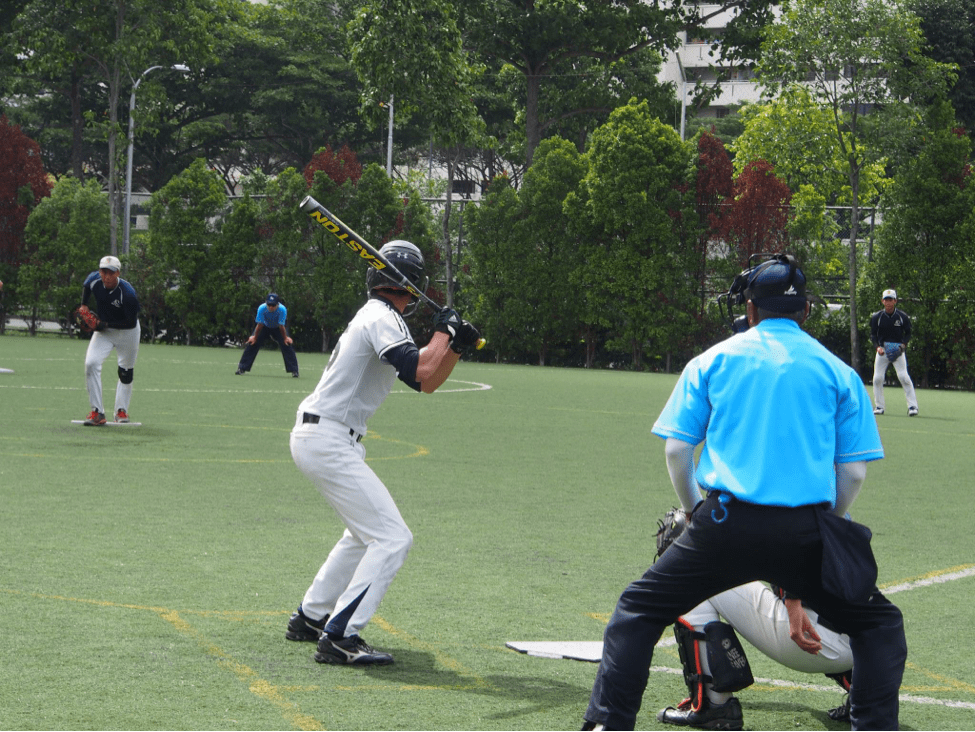
With five wins and no losses under their belt, the Gryphons looked poised to win it all at the final stage in Bedok. The boys softball team has come off with yet another stellar season, with a blitzing 10-0 win in the opener against TPJC, and an 11-5 victory against ACS(I) to send them straight to the finals. The landslide victories in both matchups against ACS(I) during the regular season and in the playoffs built up the team’s confidence for the final showdown. And they did not disappoint, with a 3-0 victory against their rivals to claim their position as champions for the fourth year running.
The relatively calm atmosphere of the finals was punctuated by loud strings of cheers from both sides, as supporters attempted to rally and rile their teams up for the game. The game, which consisted of five innings, proved to be a nail biter. ACS(I) initiated a late comeback in the fourth inning in an attempt to pull an upset, but eventually came up short.
The line-up for Raffles Institution’s A Division Softball Boys consisted of Captain Daniel (#3), Shamus (#22), Schuyler (#71), Malcolm (#46), Joshua (#61), Howe (#52), Brian (#4), Yun Fon (#42), Andrew (#15), Edward (#54), Ki Hyan (#65), Hugo (#17), Thiviya (#56), Vignes (#80)
With one game left in the 2014 season, it all came down to the last five innings. The Gryphons played with vigour and passion, propelling them to a solid start. This manifested in their strong play in the 1st inning, where Shamus and Andrew had back to back ground rule doubles, where the offensive players are awarded two bases, scoring three runs against ACS (I), to put them up 3-0. Behind all of this were the unyielding cheers of our councillors, the softball girls and even Schuyler’s family, who boosted the team’s morale and provided an impetus for the scoring run they embarked on. This 3-0 scoring run in the first inning would serve to be pivotal for their eventual success at the finals.
The ACS(I) team held up a strong defence, with several hits but no scores for the RI side for the rest of the game. RI pitcher Schuyler was remarkably strong, carrying the entire team forward with no-hitters up till the 3rd inning. Yet tensions were high as the opponents stepped up their game, breaking their no-hit streak in the 4th inning and putting two men on the field. The anxieties proved to be unwarranted, however, as two strikeouts quickly ended the inning without a chance for them to score. The final inning, and the last chance for the rival team to catch up, was fraught with apprehension, but after many nerve-wrecking foul balls and near-misses, Schuyler emerged the star of the game pitching three consecutive strikeouts, leaving ACS(I)’s last batter Niels to crumble in the dust.
All in all, the hard work, sweat and passion of our softballers bore fruition as they went on to win by three points, holding their opponent ACS(I) to a scoreless game. Despite another great performance put up by the Gryphons, team captain Edward still felt that they were not on point this game, stating, “We weren’t performing at our best but we still managed to get the victory.” In the world of sports, winning seems to mean everything, but that was not all that mattered in the minds of our Gryphons that afternoon in spite of clinching the gold. Putting it in the words of Edward, “Although I didn’t play much, I’m still very happy for my team… especially for the J2s since it’s their last year playing softball.” He also seemed fairly confident when questioned on next season’s prospects, assuring us that the team would not disappoint.
On that note, we look forward to an even more outstanding season next year from our softball boys as they look to defend their title as the ‘A’ division champions and scale greater heights as a team.
by Martin Lim (15A13A), Kang Yi Xi (15S03N), Chew Sher Mein (15S03H)
Photos by Michelle Zhu (15A01B)
A flurry of wildly moving, iridescent disco lights met our eyes as we entered the concert venue, LT2 – a place normally bathed in an aura of strictness and gravitas. In stark contrast to most other concerts held in the school, which tend to feature performances revolving around a single aesthetic domain, CultuR Shock! promised to be an event that would showcase a myriad of artistic talents. Additionally, as Organising Committee member Liu Fangzhou said, “We’re hoping to use this CultuR Shock! as a platform to promote the website CultuR, where we’re basically trying to give all the different arts and arts groups in RI a chance.”
It was not long before the curtains parted and the emcees, former Council President Ashlynna Ng as well as Lawrence Ora, welcomed the crowd with cheery dispositions and puns aplenty. Mr. Kenneth Kwok, a former Deputy Principal of the school who had a stint working for the National Arts Council, was then invited to kick off the event by sharing several anecdotes about his colourful history with the local arts scene. In a surprising revelation, he recounted how he had performed with Emma Yong – who later became a member of the locally-renowned musical cabaret group, the Dim Sum Dollies – during his time in RI.
Without further ado, alumni band Branranaway (comprising Chris Loke on vocals, Wenwei Chionh and Alex Yeo on guitars, Gordon Kang on drums and Stephanie Yeap on the keyboard/guitar/vocals) started the concert on a high note with ‘Jenny Was A Friend Of Mine’, a song penned by the ubiquitous rock band, The Killers, and ‘Arabella’ by the Arctic Monkeys. The guitar riffs against a backdrop of thundering drums, coupled with the impressive vocal chops displayed by Chris, galvanised the crowd into spontaneous clapping to the rhythm of the music, with the songs ending in roaring applause. Sustaining their momentum with Paramore’s iconic ‘Crushcrushcrush’, Stephanie took over Chris as the lead vocalist. Despite struggling slightly with the first few notes of the song, she soon got her act together and her rendition of the Paramore song had the audience tapping their feet to the rhythmic repetitions of the lyrics. With their next song, ‘My Body’, by Young The Giant, the band managed to keep the audience’s anticipation running high as Chris took over once again, ending the song with a single high pitched note that showed off his range. Upon hearing calls for an encore, the band’s set ended with one of their trademark set list songs: ‘All These Things That I’ve Done’, another widely acclaimed hit from The Killers. With the conclusion of their enthralling set, it was clear to the audience that the subsequent performers would have much to live up to.
The crew of Branranaway engaging in a gripping cover of ‘Arabella’
The next person to take the stage was a face familiar to all. Edward Kim was aptly introduced by Lawrence as the “Student Council president with good grades, hot body, and pretty girlfriend”. That night, he added another talent, beatboxing, to his repertoire. Edward led off with a short but nonetheless rousing number in which he evinced his aptitude at recreating the sounds of a drum kit. This was merely a prelude for a much more intriguing performance featuring the usage of looping (done via an iPad application), a technique that enables one to layer multiple soundtracks on top of one another to create a musical piece. Despite technical problems being rampant through his performance, with plenty of mike-adjusting and speaker-screeching, Edward managed to pull off commendable renditions – complete with instrumental sound effects and soothing harmonies – of the OneRepublic song ‘Apologize’ and the rhythm and blues classic ‘Stand By Me’ by Ben E. King, both of which were met with resounding applause and catcalls.
To the crowd’s surprise, the next performance was not by a student, but by Mr. Koh Say Yong, a teacher in the PE and CCA Department who has been playing the guitar since his secondary school years. Trading his usual track shoes and sports shirts for an acoustic guitar, he launched into the heartwarmingly romantic covers of the Beatles’ White Album classic, ‘Blackbird’, and Cyndi Lauper’s popular love ballad, ‘Time After Time’. The melodious, elegant tunes produced by his instrument as well as his distinctive country twang and sensitive, soulful voice gave the LT a rustic atmosphere and also served as a well-timed contrast to the previous two electronics-heavy performances.
Liu Fangzhou, a Writer’s Guild member, then made the mood in the auditorium more serious with her recitals of two rather sombre and thought-provoking literary works: a self-composed poem titled 21122012 and an untitled prose piece by Catherine Hu. Notably, the former piece had clinched a merit award in the prestigious Foyle Young Poets competition. The lyrical, expressive compositions were definitely engrossing to listen to and well worth reflecting upon. Those who missed the performance may find the poems in the anthology ‘Love, Death and Some Things In Between’, which can be purchased from Writers’ Guild at $6 along with a free copy of ‘Compositions’, a collaboration between Writers’ Guild and the Raffles Photographic Society.
Next, Lim Wei Khai took the stage and proceeded to regale the crowd with a self composed poem about a monstrous boogeyman-esque creature. He was promptly followed by Aaheli Tarafdar, who told a similarly grisly narrative about a family’s deadly outing to the zoo. Both narrated their stories in ironically exaggerated, jocular tones of voice, and the tales were also chock-full of black humour, making for a decidedly mirthful and enjoyable listening experience.
The boisterous peals of laughter the storytellers managed to elicit from the audience faded away as Feng Yu Chen and Clevereno Dairini from Raffles Chordslingers played the introductory notes to a mashup of ‘Counting Stars’ by OneRepublic, ‘Timber’ by Pitbull ft. Ke$ha and ‘Wrecking Ball’ by Miley Cyrus on two majestic grand pianos, lulling the audience into tranquility. Raffles Chordslingers is a self-initiated piano interest group not unlike RI’s Chamber Ensemble, and comprises Year 2-3 RI boys who arrange their own music and perform their own covers. A well coordinated duet between two pianists is no mean feat, and Yu Chen and Clevereno, with their relatively smooth rendition of the band’s hit single, successfully managed to surmount the considerable challenges inherent in executing such a performance.
The well-positioned stage lighting gave the performance a mystical, haunting quality
Legendary amongst actors and non-actors alike within RI, J3 alumnus Shrey Bhargava’s stand-up comedy routine was, without doubt, a much-anticipated performance for many of the attendees. As it turned out, ‘boring’ is the last word one would use to describe the talented thespian’s act. Shrey’s stage presence and overwhelming confidence had the audience in guffaws and applause throughout his performance, despite it being only his second attempt at stand-up comedy. His performance included imitating various witty versions of accents and national stereotypes from around the globe, and he touched on features such as the ‘small mouth’ effect of Russians and the ‘politely violent’ undertone of Japanese accents. His interpretation of Indian accents was met with especially uproarious laughter, and so were the hilariously unsuccessful attempts of the three volunteers he had invited onto the stage to learn from his ‘tutelage’.
Actor Shrey Bhargava doing a particularly expressive accent impression
The emcees then informed the audience that the next performance was about ‘Slam Poetry’; this was a strange-sounding concept many of us viewers were unfamiliar with. All queries were quelled when Wahid Al Mamun, Naresh Manoj and Gabriel Ng each carried out a trenchant, captivating recital of their self-penned poems, which bravely grappled with difficult topics such as alcoholism, depression and the nature of love. The quality of their poetry was indeed commendable and symbolism was rife within their works.
The three aspiring poets are, as Naresh revealed, part of a community called Burn After Reading Poetry (BARPo) – a spoken word poetry interest group. Naresh related how he had found poetry “way too inaccessible” until he had spent an eye-opening time with the branch of BARPo located in England while on his Gap Semester trip. Upon his return, he and a few other like-minded peers came together to form a Singaporean offshoot of the programme. “We plan on an anthology soon and recently had our first performance at Artistry Cafe, which was exciting,” he shared. Clearly, Naresh’s participation in such extracurricular activities, like that of so many other Rafflesians, is indicative of his unalloyed passion for his chosen field.
Wahid Al Mamum deeply absorbed in reciting a poem about one’s ruminations on love, ‘The Horoscopes are Lying’
The rather pensive atmosphere generated by the poetry recital was immediately broken by the appearance of the popular performing arts group Raffles Street Dance, who performed to a pulsing, energetic remix of the OneRepublic hit ‘If I Lose Myself’. Their perfectly synchronised hip hop choreography and visually stunning formations against a backdrop of radiant, flashing strobe lights created an eclectic effect that channelled the spontaneity of street culture with the grace and elegance of dance. Such was the quality of Street Dance’s performance that Ernest Chng from 15S03H praised it as his favorite performance of the evening. The arresting performance, made even more impressive by the fact that it was the J1’s debut performance as a batch by themselves, certainly could not have been pulled off without much hard work and enthusiasm on the part of the dancers. As member Lim Kai Bing Danson said, “We spent quite a lot of time cleaning our movements for that set of choreography…we were also extremely excited and hoped that our audience could feel our spirit and energy.”
Next was Yeo Min, one of the top-eight finishers in the 2013 Campus Superstar competition and a multi-instrumentalist who can handle the cello, guitar and piano. She first started her two-song performance with the song ‘魔鬼中的天使 (Angel Devil)’ by Hebe Tien; the intermingling of her voice and the soft chords of the piano created a near-perfect rendition of the Mandopop hit. Displaying the musical virtuosity and flexibility that had carried her so far into the competition, Yeo Min followed this performance with a stellar rendition of the classic and heartrending love song, ‘Love Me’ by Collin Raye, which told a story about a couple’s journey in love through the years. The song featured poignant vocals and melancholic piano playing that tugged on the heartstrings of many amongst the crowd, the authors not excluded.
Yeo Min serenading the audience with her vocal prowess and refined piano-playing
Though it flourished nearly a century ago, in the Roaring Twenties, the audience’s spirited response to the Raffles Jazz team’s set made it patently evident that jazz music remains relevant to many in the present day. Their first song, Canadian singer Nikki Yanofsky’s ‘Bienvenue Dans Ma Vie (Welcome to My Life)’, was defined by powerful, evocative vocals from Faith Ng and first-rate musical accompaniment. Stefanus Phan then took the microphone for a lilting, rousing performance of ‘Pedestal’ by Charlie Lim, during which the audience became so enlivened that they started clapping of their own volition. The finale, a purely instrumental piece named ‘Strasbourg/St. Denis’ by Roy Hargrove, marked a consummate showing of the Jazz team’s proficiency at their genre of choice. Bassist Zhu Wei Jie, who had little experience with performing prior to RIJC, remarked that in her time in Jazz this year she had learnt to “enjoy the time standing on stage and make music as a conversation with audience, instead of getting stressed.” With that, CultuR Shock! concluded amidst fervent applause from the audience.
Overall, we found CultuR Shock! to have been a greatly entertaining and unforgettable experience. Though their sets were only 15 minutes long at the most, it was clear that all the performers had passionately invested considerable amounts of effort into preparing for their brief appearances under the spotlight. More importantly, though, CultuR Shock! was an arts buffet that showcased the sheer diversity of Rafflesian talents, while opening our eyes, ears and minds to a diverse variety of individuals and art forms that, owing to a lack of awareness, we had never really appreciated before. Credit must also be given to the organisers, who had planned the order of the performers such that different genres of performances were evenly spaced out throughout the concert – the musical performances alternated with the literary ones – and this meant that we never felt overloaded by a single type of performance and paid rapt attention throughout.