

By Sonia Chang (26A01A)
(Spoilers: I would say there are worse people.)
Across twelve chapters, The Worst Person in the World traces our protagonist, Julie, drifting through her late twenties and early thirties in Oslo as she hits the dead-end of dream after dream – moving restlessly through careers, lovers, and versions of herself. Directed by Joachim Trier, this film is both a buoyant romcom and a millennial Bildungsroman, as airy and effervescent as it is existential.
Trier tells Julie’s story like a novel: in twelve chapters with a prologue and epilogue that follows her across distinct phases. On some level, this imposes a sense of order onto the whirlwind of Julie’s life. Yet some chapters span years, while others a single night. Time is not linear but contracts and dilates under emotional experiences. And this formal instability extends further to scenes where even reality unravels. The psychedelic sequence, in particular, disrupts the film’s otherwise naturalistic texture, wherein Julie’s consciousness and unconsciousness spill out onto the screen.
On Self
The film’s title is a direct translation of a common self-deprecating expression in Norwegian: “verdens verste menneske”. Indeed, Julie is abysmal at following the traditional scripts of adulthood. A montage of Julie’s female progenitors highlights a pattern of marriage and motherhood by the age of 30.
Julie is the outlier, chronically unsettled in all respects. Her constant reinvention and propensity for flight leaves a trail of aborted ambitions and forsaken lovers in her wake. Her greatest achievement is a viral argumentative essay that sets off a “lively Facebook debate”. It’s easy to call Julie a rudderless low-grade narcissist who has spent her adult life doing nothing but subject others to her avoidant attachment style (no offence to some). Yet the film handles her with much more nuance that lends a strikingly human tenderness.
Sartre’s notion that existence precedes essence suggests we arrive in this world with no pre-defined identity, and thus beget our own. In principle, this empowers Julie with the radical agency that her fickleness seems to operate on. In practice though, Julie is often stranded by this very freedom—oscillating between the excesses of choice.
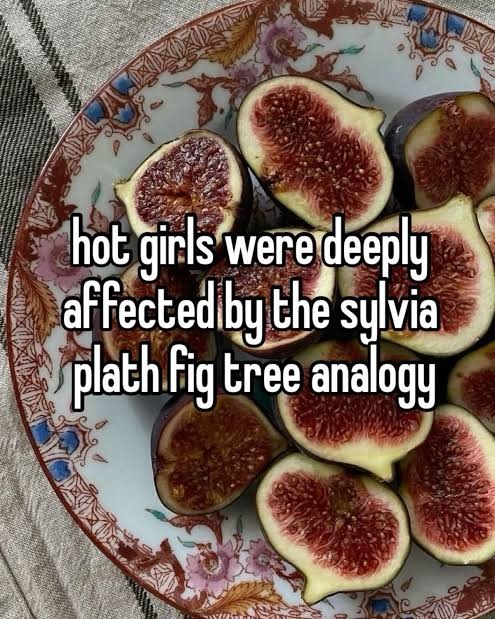
Much like Esther Greenwood from Sylvia Plath’s The Bell Jar, Julie stands under the metaphorical fig tree. Each fig represents a different life path – all are tempting yet irreconcilable, and there is no way of knowing which will ultimately make her the happiest. To reach for one fig means watching all others rot away. To choose one life means burying all others unlived.
Julie’s lover, Aksel, acutely observes that she always seems to be “waiting for something to happen”. Perhaps she merely longs for some revelatory event—catalysing the arrival of some nebulously “truer” self—to take her by the hand and whisk her away from the fig tree. What she is waiting for, really, is a kind of certainty that can never crystallise and absolve her of the unbearable weight of being.
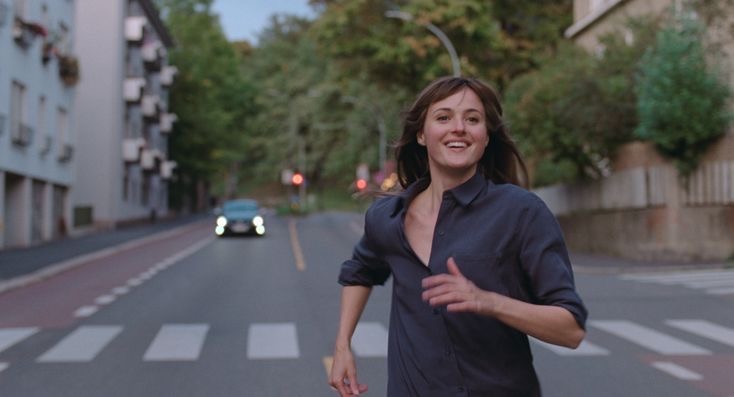
In a fantasy sequence, Julie flips a light switch, the world freezes, and she sprints euphorically to the man she fell in love with outside of her relationship. Was she on the cusp of flying or fainting? At last, she could move without friction and consequence. The scene externalises her longing to be able to choose without loss and commitment. TO EAT EVERY SINGLE ONE OF THOSE SWEET, SWEET FIGS (and also be free of unwanted laxative effects).
Yet for all of Julie’s famous indecision, it’s quite ironic that she actually makes several enormously daunting life decisions in the film: leaving medicine for psychology and then photography, leaving Aksel for Eivind, and choosing not to become a mother. Julie spends much time trying to stumble upon revelation. But ultimately, she always takes the leap of faith when she must.
To soar, she had to accept that there might not be a soft place to land. To open one door, she could not look into the innumerable others that were shut. But as Kierkegaard famously wrote, a life can only be lived forwards and understood backwards. Only the leap will engender revelation.
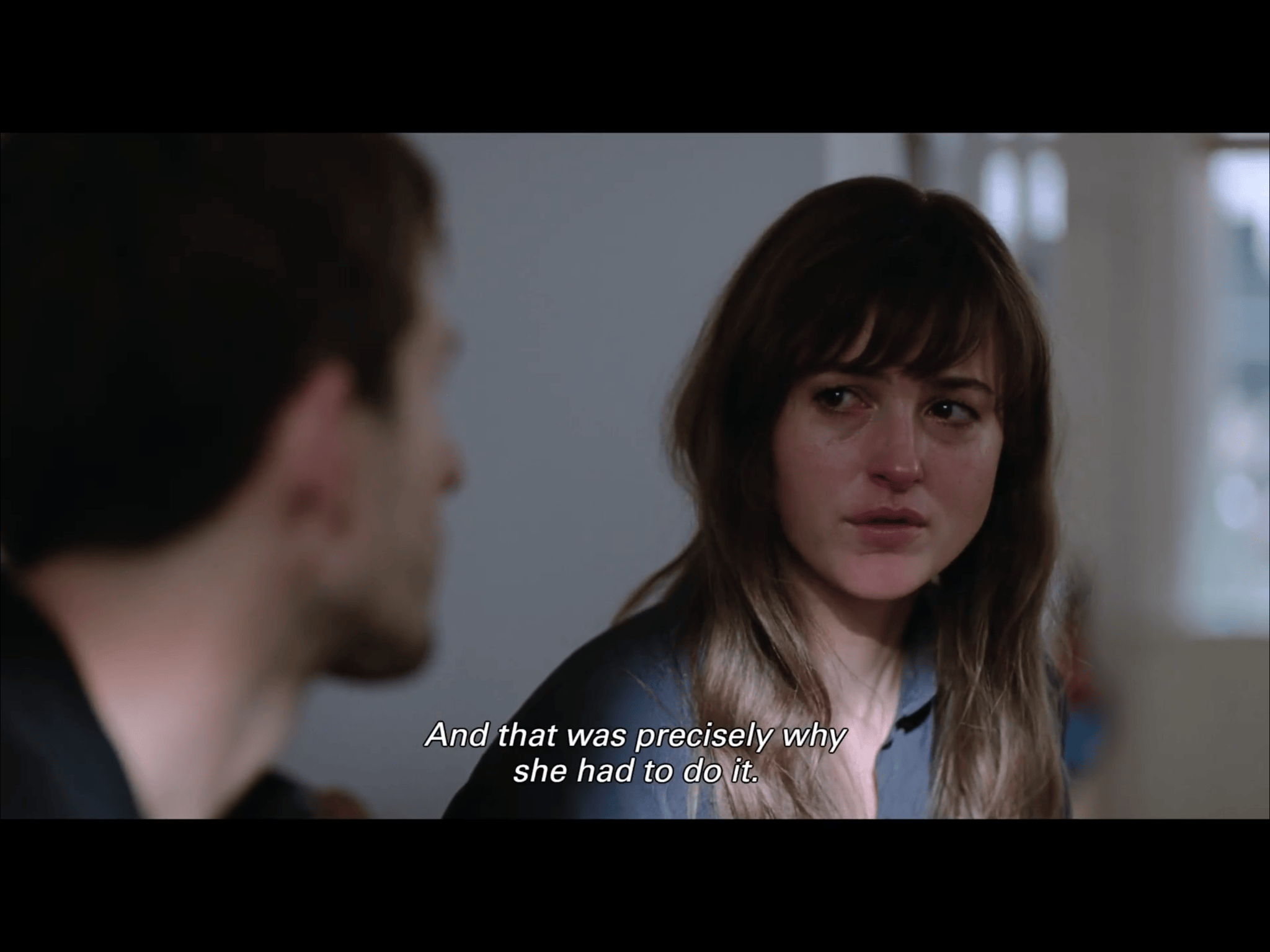
Through tears, Julie tells Aksel as she ends their relationship that she knows she’ll be like “Bambi on ice” without him—though she must act anyway. In writing, a Kierkegaardian leap of faith sounds magnificent, audacious, romantic. But in life, it is frightening—as it is essential.
On Love & Memory
My favourite line from the film is when Julie visits Aksel in his final days of illness. “Your voice has stayed in my head,” she tells him, “we still have great conversations”. How we live in the afterglow of love, how it goes with them as it stays with us. The most sonorous of reverberations always comes from the heartstrings.
Perhaps what makes love and memories so enduring is its irreplicability. Love and memory is bound to specificity: to a particular self, a particular person, and a particular configuration of time and space. Julie and Eivind’s first electric night crackles with such giddy erotic charge that nothing comes quite the same after, even their later adventures (and misadventures).
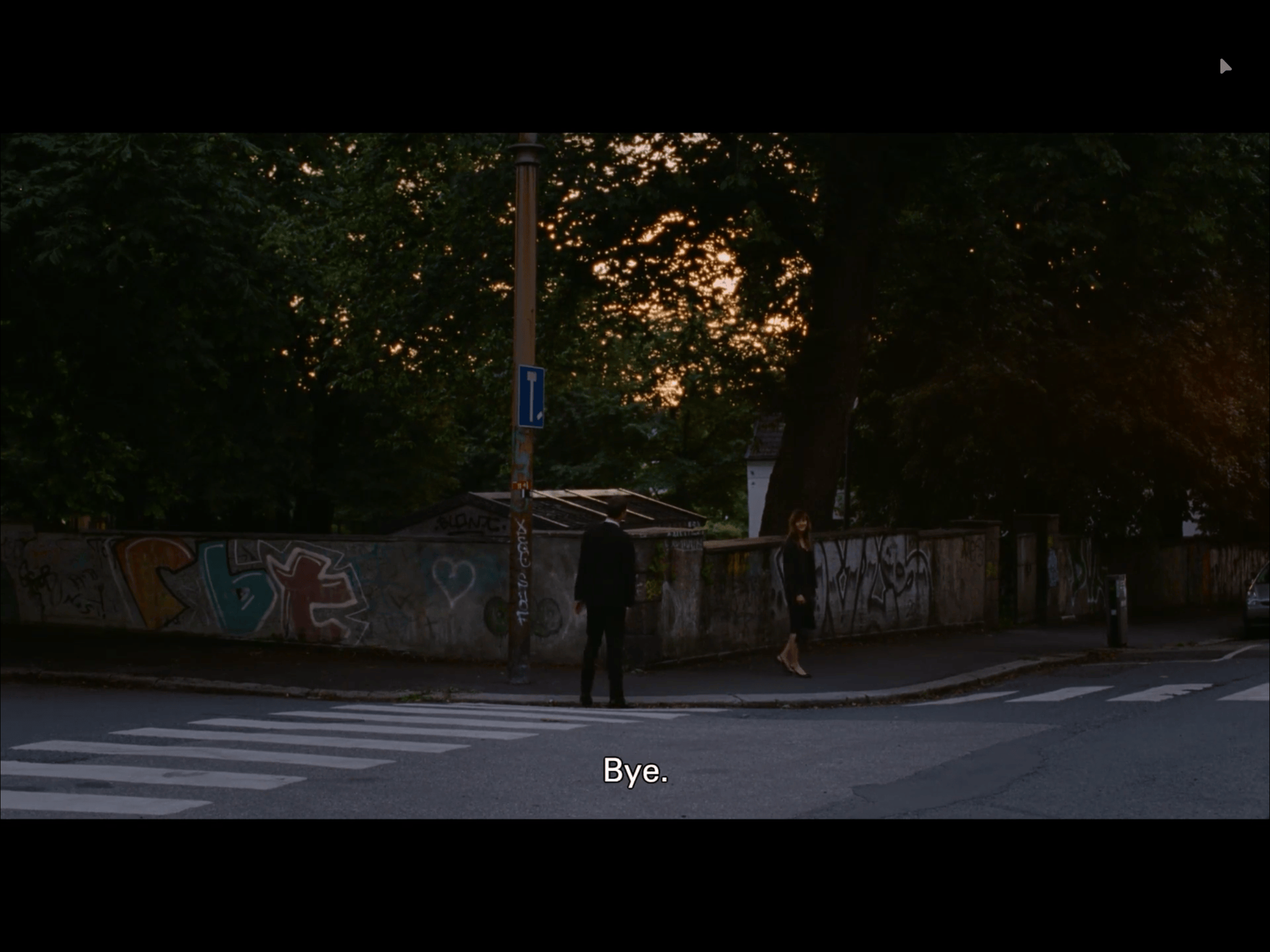
Aksel tells Julie, “When I’m gone, all the things I know about you will go with me”. It’s funny how we spend so much of our lives trying to know ourselves, yet so many versions of us exist in the minds of others. Everyone’s eyes refract our light a little differently.
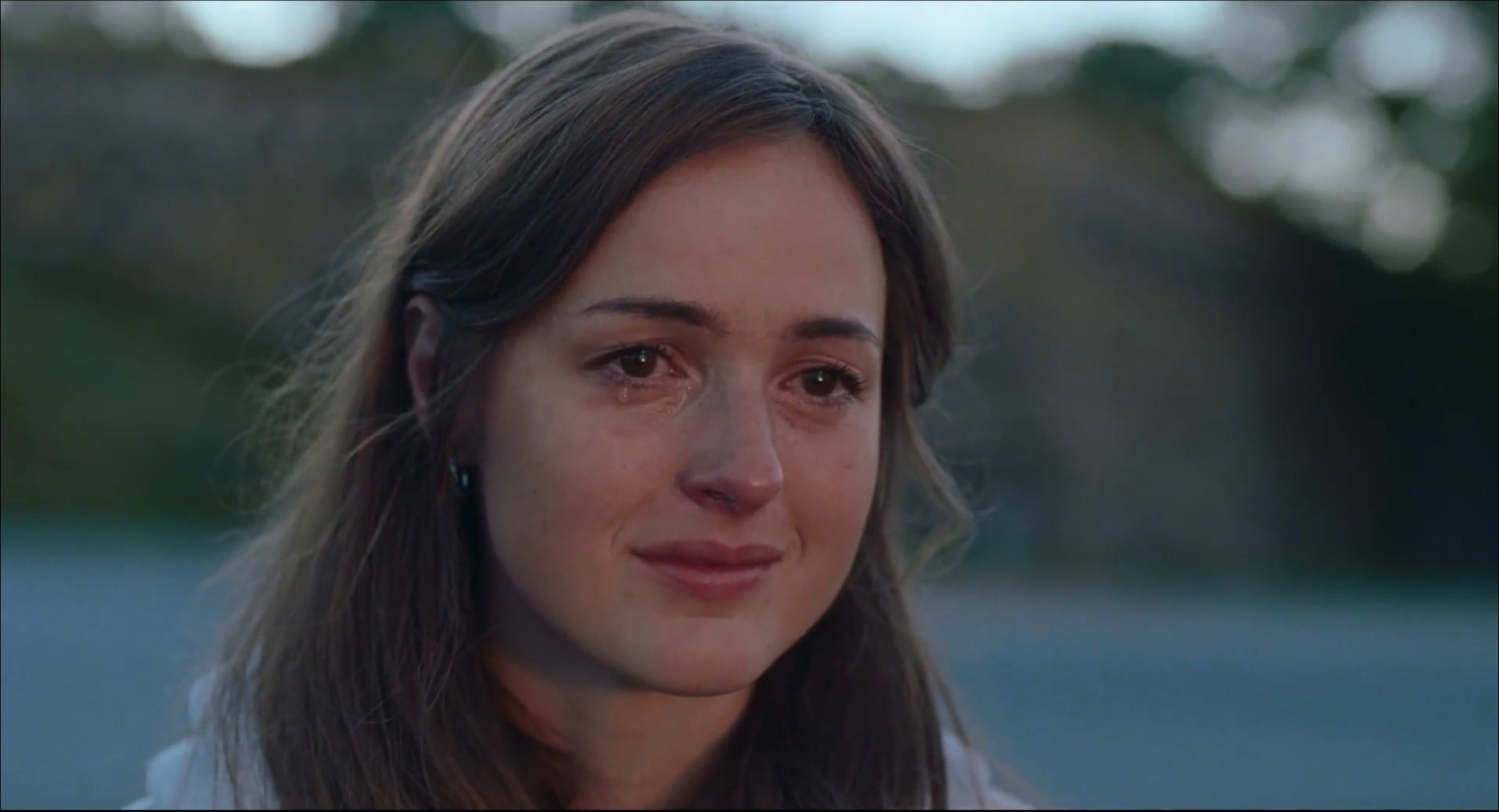
As Julie spends the night drifting alone through the streets of Oslo grappling with Aksel’s death, dawn finds her sitting by the sea. When the first light of day cradles her face, she begins to cry – the knot in her heart unravelling into the softest gasp. As if Aksel had just come around to say goodbye, that all his pain had dissolved. In its place is morning. Julie smiles.
On the Ending
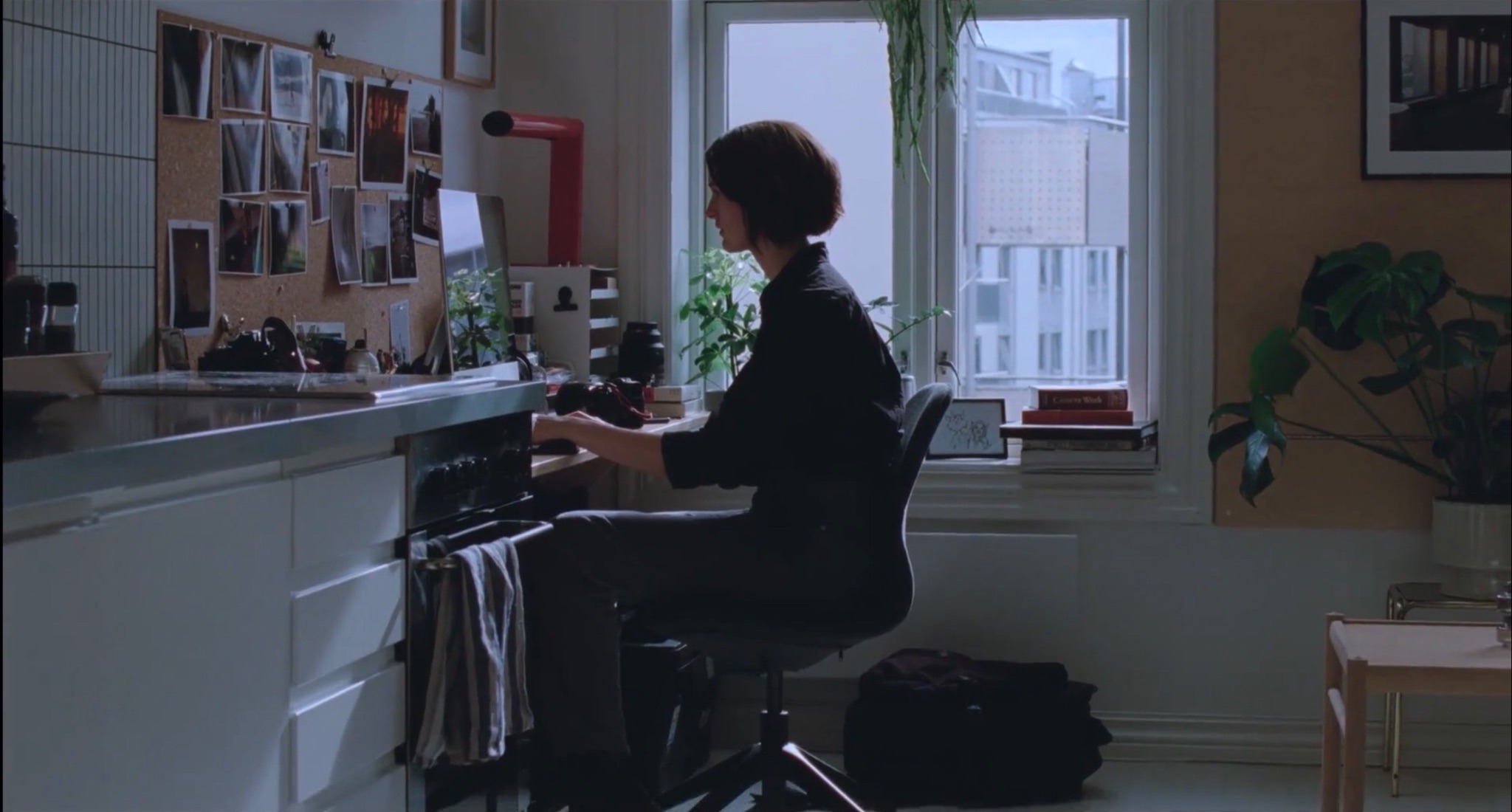
The final scene shows Julie alone in her apartment, quietly working as a photographer. Quite literally, this recalls Virginia Woolf’s A Room of One’s Own. In Woolf’s formulation, the “room” is not just a physical space in which a woman is independent and intellectually free, but also represents the conditions for self-definition and creation.
The film had been overwhelmingly preoccupied with Julie’s personal and romantic life. Professionally, she had existed in obscurity—quitting medicine, doing menial work at a bookstore, and feeling dwarfed by Aksel’s achievements. Now, Julie has picked up the camera again. She inhabits her very own space. She is a professional in her own right. She has work to do. Bambi has found its footing.
Over this scene plays Art Garfunkel’s “Waters of March”:
A stick, a stone, it’s the end of the road
It’s the rest of a stump, it’s a little alone
It’s a sliver of glass, it is life, it’s the sun
It is night, it is death, it’s a trap, it’s a gun
The oak when it blooms, a fox in the brush
The nod of the wood, the song of a thrush
The wood of the wing, a cliff, a fall
A scratch, a lump, it is nothing at all
It’s the wind blowing free, it’s the end of a slope
It’s a bean, it’s a void, it’s a hunch, it’s a hope
And the riverbank talks of the Waters of March
It’s the end of the strain, it’s the joy in your heart
The foot, the ground, the flesh and the bone
The beat of the road, a sling-shot stone
A truckload of bricks in the soft morning light
The shot of a gun in the dead of the night
A mile, a must, a thrust, a bump
It’s a girl, it’s a rhyme, it’s a cold, it’s the mumps
The plan of the house, the body in bed
And the car that got stuck, it’s the mud, it’s the mud
Afloat, adrift, a flight, a wing
A cock, a quail, the promise of spring
And the riverbank talks of the Waters of March
It’s the promise of life, it’s the joy in your heart
“Waters of March” resists a straightforward narrative. Instead, it unfolds through images, sensations and associations, and Art Garfunkel sings it so devoid of frill that it sounds meditative. The song almost feels like the experience of consciousness itself—fluid, restless and alive. And with March poised liminally between winter and spring, the song beckons towards a sense of renewal.
In many ways, these sensibilities mirror the film’s understanding of identity. If The Worst Person in the World arrives at any central insight, it’s that there is no final and coherent version of self waiting for us. Fragmentation, contradiction, instability—that is the condition of being. And here the film brushes against the idea of amor fati—to embrace life in its totality, both the good and the bad, the certainties and unknowns.
By the end, the title reveals its own irony. Julie is not the worst person in the world. In fact, she is quite extraordinarily ordinary. And it is then that she is something of a heroine of our times. Aksel’s regret that he failed to show Julie “how wonderful she is” sums it up sweetly. The tragedy is never imperfection, but our inability to extend grace to ourselves while searching for impossible coherence.
Ultimately, The Worst Person in the World ends on a note that is neither forlorn or triumphant. It does not resolve Julie’s story so much as to release it—leaving us to wonder if happiness will ever get its way with her, maybe even the state of her eternal soul.
But there is permission, always there was permission—to be unfinished, to live wholeheartedly despite. And there is this thrumming sense of expansiveness, this knowing that Julie has a long open road ahead. And she will be fine. We all will be.
It’s the promise of life. It’s the joy in your heart.


