

By Koh Shin Robbie (26A01A) and Tok Kai Xue Traven (26A01B)
In 1959, Singapore saw the first of many key developments to its education system: a bilingualism policy. Its premise was simple—English, as the language of international business, would be mandated to be taught in all schools. Alongside this, the study of one’s mother tongue (namely Mandarin, Malay, and Tamil) would also be made compulsory to ensure students did not lose touch with their cultural roots.
In an instant, dialect languages were taken out of official usage. Radio stations switched to purely official languages, and an entire Speak Mandarin Campaign was launched with vigorous dissuasion of dialect use.

Text in the background translates to “Speak Less Dialect”.
For Mandarin, however, this line of reasoning proved rather ironic. In the face of institutional pressures to adopt Mandarin as their home language, what would happen to the dialect-speaking households which relied heavily on Hokkien, Teochew or Hakka to communicate on a daily basis? How would the precious, dialectal tongues which served generations upon generations of ancestors manage to maintain their relevance?
Indeed, it is today where we see the cultural consequences of Singapore’s bilingualism policy. To lack the linguistic capabilities to understand—let alone speak—one’s dialect is a common issue many Chinese-speaking youths face.
With the shift towards English as the primary medium for everyday speech, this has led to a frustrating intergenerational language barrier between the youth and the elderly, where communication is tragically reduced to vague gestures and simple phrases. How then can familial intimacy survive, when cultural estrangement renders these simple conversations a daily struggle?
Reclaiming the Mother Tongue
It is thus these challenges that Raffles Dialects aims to address. Founded in 2021, Raffles Dialects is a CE01 which helps to equip participants with the basic foundations of various Chinese dialects, hence providing them with the adequate tools to converse in these languages. Lessons are taught by a core team who are fluent in their own dialects, consisting of Cantonese, Hokkien, Teochew, and Hakka speakers.
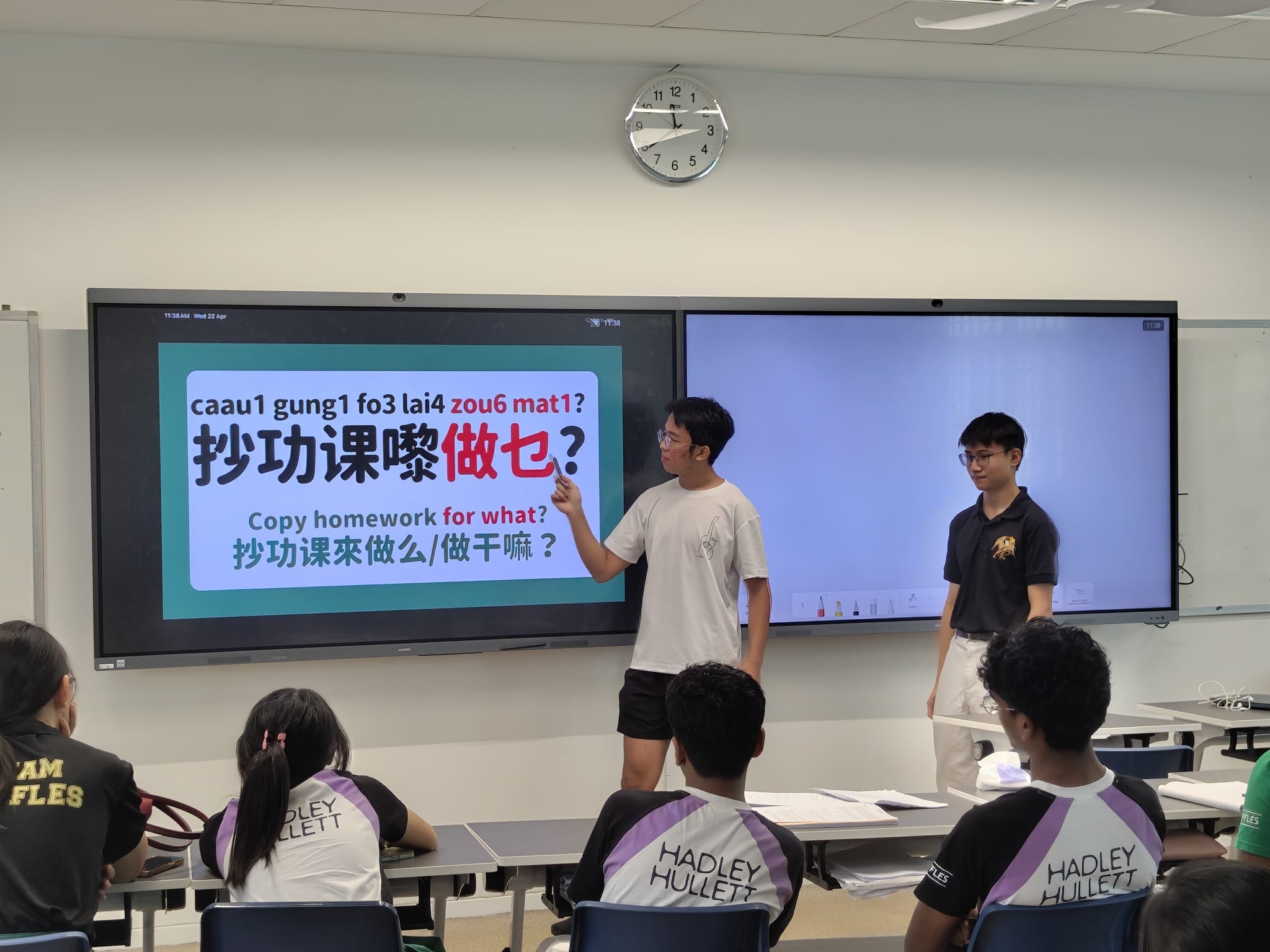
Lesson structures vary greatly on a case-to-case basis, highly dependent on the differing needs of their collaborators. When collaborating with Raffles Interact, for instance, lessons had to be more informative and dense given the limited timeframe (one hour!) for teaching. Thus, key concepts such as pronunciation, syntactical structures, and elementary vocabulary were condensed into these sessions while also ensuring they were engaging.
Students were also given an opportunity to practise what they had learnt through skits. With the help of some given phrases and pointers, students had to come up with a 2-minute skit which showcased the use of their dialect in everyday life.

Beyond these conversational skills, the pedagogy also includes lessons on the historical context of these dialects. In an interview with Preston Ang (26S06B), one of the key leading members of the interest group, he echoed the importance of learning the history behind these dialects as a way to strengthen one’s appreciation and understanding of them:
“It enables them to connect with the language easier. Rather than learning the language in a vacuum, its applications are instead contextualised. […] They are not learning words for the sake of it, but instead so they can channel the cultural relevance and history through these languages.”
Thus, on a broader scale, Raffles Dialects also occasionally structure their lessons around Chinese historical culture. They have been invited to secondary schools to host workshops to promote the appreciation of Chinese culture—lessons consisted of topics such as the immigration of mainland Chinese to Singapore, and the varying occupations which different dialect groups took up in the early 1900s.
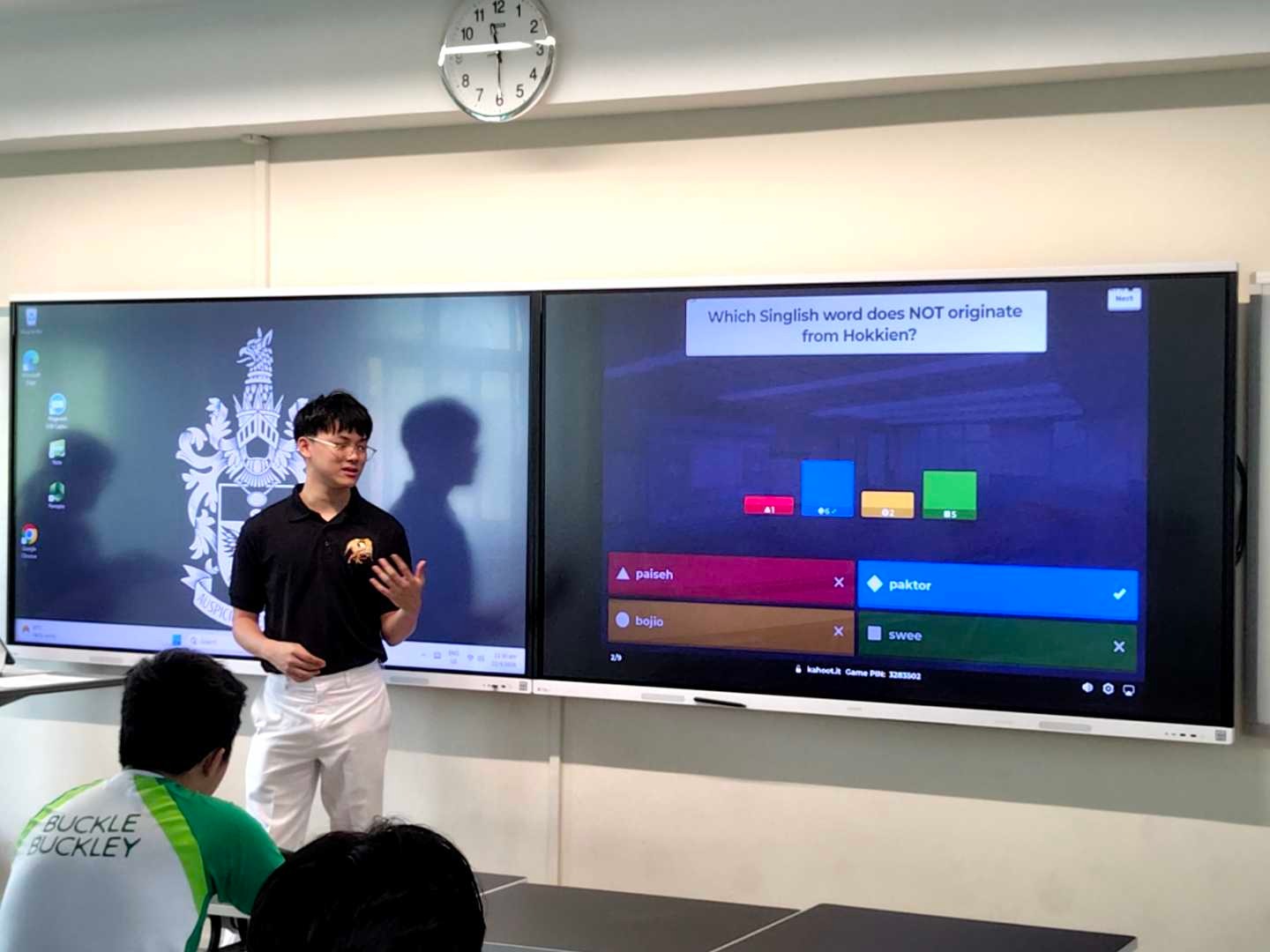
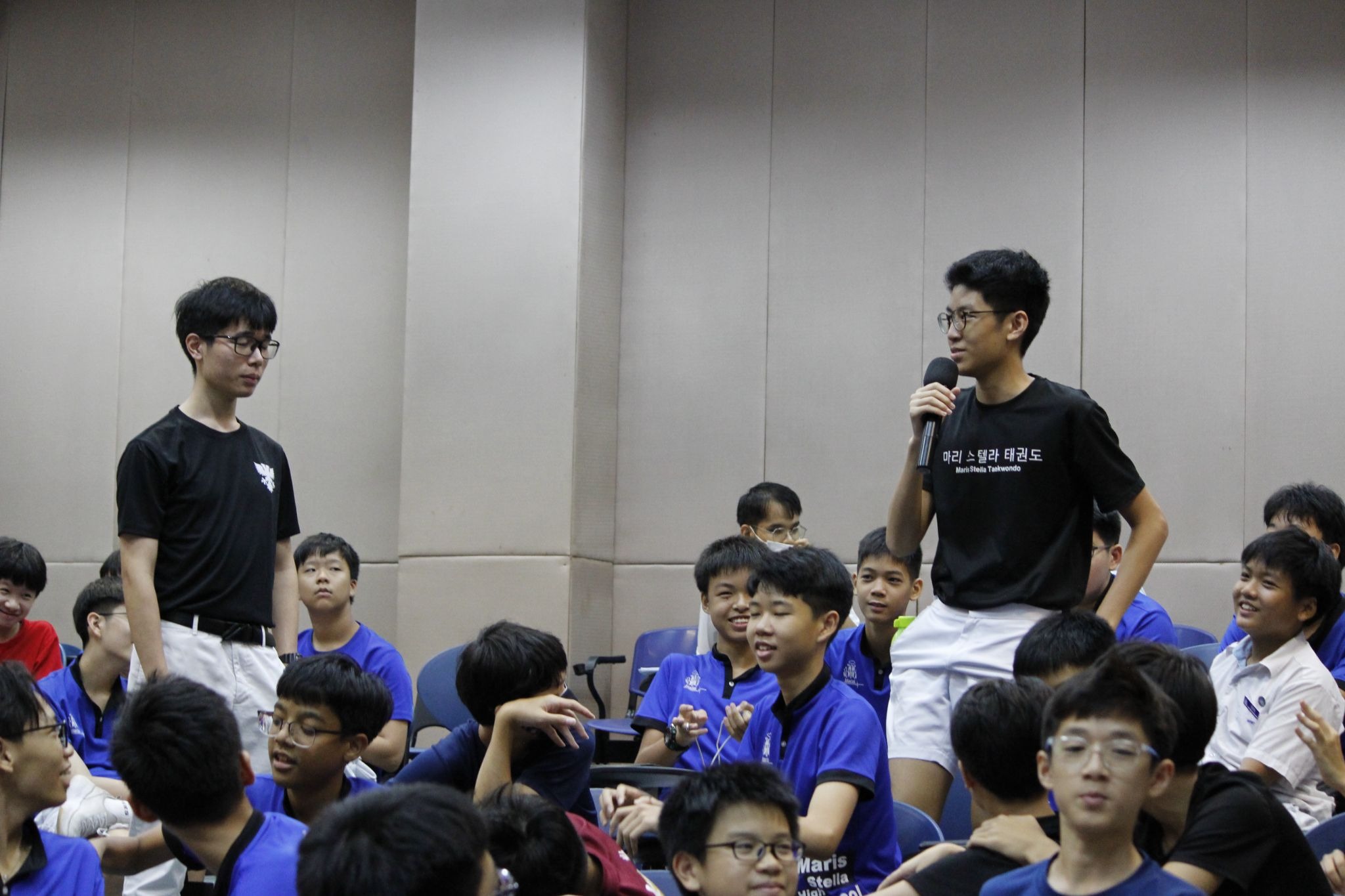
Beyond independent and in-school sessions, Raffles Dialects has also extended their reach to nearby community clubs. Lesson structures here are a lot more relaxed, given the longer timeframe they are provided with. Their audience, surprisingly, consists mostly of the elderly.
“They want to find places to speak dialects, and seeing youths speak—and even teach—dialects is actually very heartening for them. […] A lot of them feel that dialects are dying out, […] so when they see these children being interested in something that is so close to them, it makes them feel very happy,” Preston laughed, “They join [these lessons] to troll us, to laugh at us, and have fun.”
It is this wholesome irony that flips the script in these sessions. The ‘students’, in this case, are actually more proficient in their dialect compared to their instructors.
“The Chinese-educated elderly who are already fluent in their language […] they sit there and correct any mistakes the teachers might make. […] It’s like having a proofreader in the audience.”
Perhaps, then, these sessions still manage to bridge the aforementioned generational gap between the youths and elderly—though through a more unorthodox medium. These dialects, ironically, are passed down from student to instructor, and lessons give elderly the linguistic authority and space to share languages they hold dear to their hearts.
The Bigger Wins
When asked why he decided to join Raffles Dialects, Preston shared an experience common among his peers: the persistent struggle to navigate the language barriers that divide them from their grandparents.
“At home, my grandma and grandpa were extremely unproficient at English and Mandarin, so it was not easy to communicate with them,” he shared. For Preston, joining Raffles Dialects thus seemed like a solution to bridge that disconnect, allowing him to “expose [himself] to more use of Chinese dialects while brushing up on [his] own skills.”
“I think one of the key principles that has allowed me to be better at Chinese dialects is learning by teaching,” Preston continued, “since I am in charge of the academic section of Raffles Dialects, […] it has put dialects actively in my conscience.” Indeed, being a member of this interest group has allowed Preston to become more proficient in his own dialect, and by extension, share it with others who have similar aspirations.
Jade Yeo (26A01D), a member of Raffles Interact, similarly echoed the importance of these efforts to spread awareness of Chinese dialects:
“It is important to be aware of these dialects,” she shared, “if not, we risk losing these languages. […] I feel that knowing just a little bit of these dialects will help you to connect with any elderly out there in Singapore.” Indeed, she pointed out how knowing a simple greeting would facilitate cultural connection between communities, bridging the social gaps between youth and elderly.
Isaac Lee (26A01D), the chairperson of Raffles Interact, further highlighted how this social disconnect is an issue that Raffles Dialects has effectively addressed— “I think what they are doing is really good—they are bringing the culture of many Singaporeans back to them, after many decades of detachment [from their own dialects].”
Regardless of background, it is apparent that Raffles Dialects has awakened youths’ consciousness of their dialect heritage. Proficient or brand-new, it provides a platform not just to hone such skills, but learn through experience by joining the team. More so, it anchors its pedagogy less on technical knowledge, but more on real-life application, preserving bonds through shared language.
Moving Forward: Navigating CE01, Growth, and More
Several years in, Raffles Dialects is met with yet another critical turning point. Having had years of operation in Raffles Institution, Raffles Dialects has garnered a steady presence among our many student groups. Beyond this, consistent efforts by generations of members have led to tangible recognition on a national level.

This newfound recognition has lent considerable strength to the organisation, propelling it to partner with new stakeholders. On a youth outreach level, Raffles Dialects has partnered with student groups in CHIJ St. Nicholas Girls’ School and Anglo-Chinese Junior College, expanding its network of dialect-speaking youths. On a community service end, they have also curated opportunities for youths to put their dialect skills to the test, partnering with Ling Kwang Home to hold interaction sessions.

Behind the organisation’s successful push at branching out, though, lies the unseen process of making such collaborations possible. Speaking with the core team, they shared that external collaborations were more challenging to establish as CE01s due to the need for official approval. As the current generation of Raffles Dialects begins to hand over to yet another batch of leaders, the team remains uncertain on how readily the organisation would be able to expand its external network under the given CE01 system.
Premised on the principle of empowering and connecting youths to awaken community awareness, a system that presents difficulty in bringing together youths beyond Raffles would prove limited in truly equipping participants with the connections and opportunities to exercise their dialect heritage.
Speaking with Cantonese team member Brendon Mak Tsun Ming (26S06H), the team is presented with yet another challenge. As an organisation that covers Hokkien, Teochew and Cantonese services, the team is spread across the three wings based on their existing proficiency.
The thing is, simple statistics would quickly leave the Cantonese team struggling to achieve sufficient manpower, as Cantonese stands as the smallest dialect group among the three and by a considerable margin. As a result, Raffles Dialects’ Cantonese team has co-opted Hong Kongers, equally proficient in the Cantonese dialect, to join them in teaching the language.
Taking us through minor linguistic differences between Singaporean Cantonese and Hong Kong Cantonese in day-to-day interactions, Brendon shares that despite such differences, the experience of learning Cantonese from Hong Kong speakers like himself can prove equally enriching.
The heart of this lies in the richness of Hong Kong’s media scene, where Cantopop and Cantonese film plays a critical role in pop culture, even spreading to Singapore. Strategic employment of Hong Kong culture as part of his Cantonese teaching content has thus been pivotal to better engaging Cantonese learners, by helping them connect the dots between what has been learnt and what they heard on their grandparents’ Hong Kong television channels.
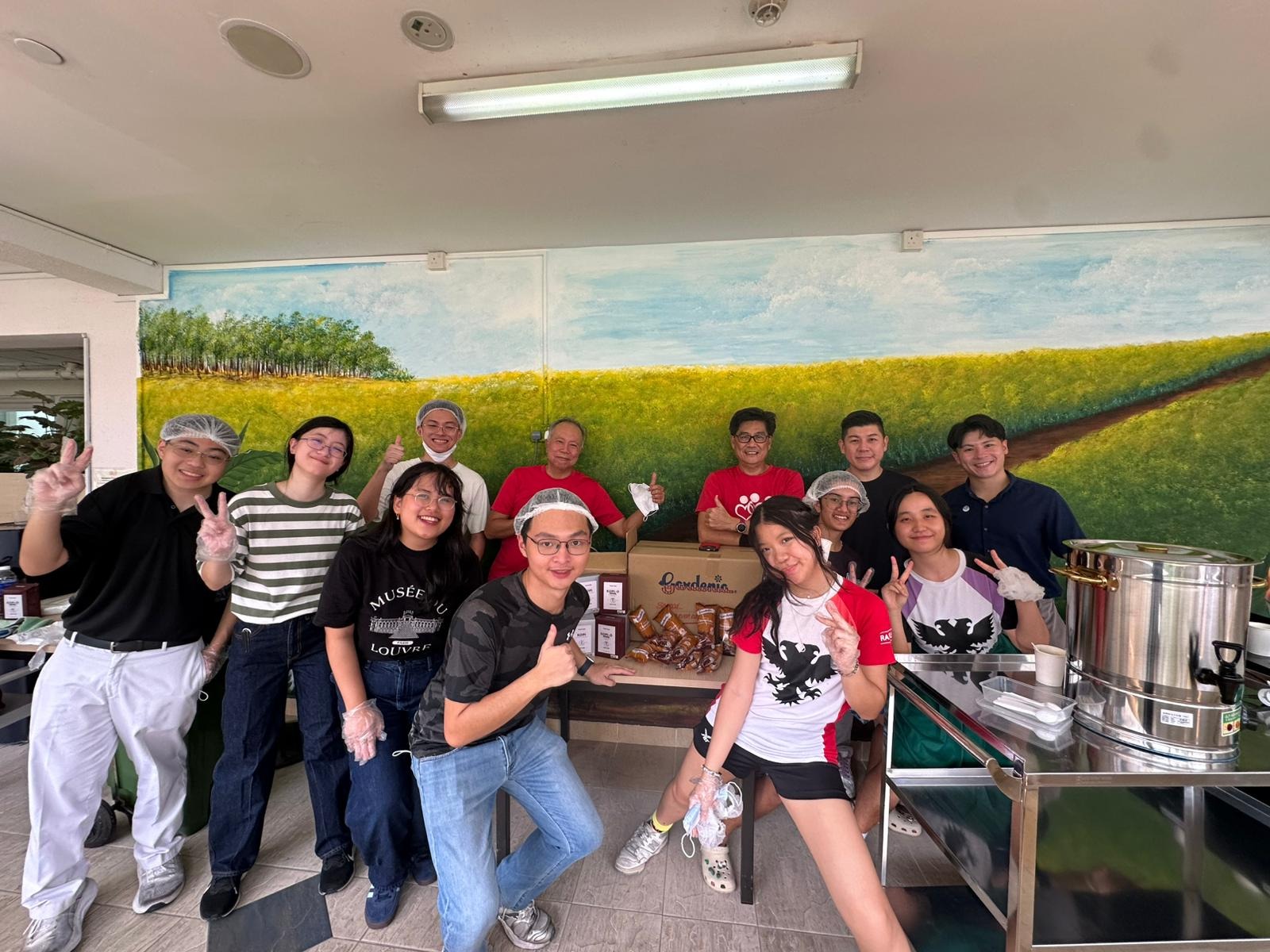
As the session came to a close, members in various classrooms would conduct after-action reviews between members. Watching the seniors provide feedback for their junior counterparts in each classroom, it was truly heartwarming observing their patient guidance, the juniors’ eagerness to improve their skills, as well as the overarching shared drive to offer the best experience for the programme’s participants.
To this regard, Raffles Dialects’ process of handing over to the next generation of leadership premises heavily on how its seniors pass down this intense passion and connection to the Y5 members, before training them to infect fellow youths with similar affections.
Closing Thoughts: Dialect in a Gen Z Singapore?
After our insightful session at Raffles Dialects’ workshop, we walked away with an itching fascination towards rediscovering and embracing our dialect heritage. Thinking back, we realised how little phrases like “jiak ba buay” or “have you eaten” were pivotal in characterising the warmth Singaporeans showed each other, engendered by our unique cultural contexts.
Today, dialects continue to exist indirectly in our jargon through insertions into Singlish (think phrases like “buay tahan” and “walao”). Once considered crude, Singlish was often feared to impede young Singaporeans’ mastery of the English language.
Yet today, as English has by far become our primary language, the fear of Singlish obscuring our clear and proper language use has been put to the question, as we are more cognisant of when and how we choose to make the deliberate codeswitch to Singlish.
In fact, the use of Singlish has proven to be an artful one today, as Singaporean poetry has seen a reintroduction of Singlish lexicon, for instance in Cheng Him’s poetry anthology “Bo Beh Zhao”, where the dialect title translates to “Can’t Run”, a reflection of the speakers’ struggles in navigating his life as a Singaporean youth.
As youths in our generation rediscover our heritage through embracing dialects, such a change’s sociocultural impact goes beyond mere conversation, serving also as the basis for a vivid future of expression and belonging.


