

By: Gladys Koh (26A01B)
“We Ain’t Ever Getting Older”
Now playing: Closer – The Chainsmokers ft. Halsey
Palm trees are swaying. The sky is a vibrant purple-pink. The Chainsmokers’ latest hit crackles through the radio.
You have just entered Primary School. You and your friends sit in a circle, making Rainbow Looms. Fidget spinners lay beside. A parent heads over to take a picture for your group, and all of you dab simultaneously without saying a word.

2016 in a snapshot
Scroll long enough on social media, and you will inevitably meet the refrain: “2026 is the new 2016”. Captioned alongside nostalgic photos of oversaturated colours and uncontrollable laughter, 2016 has been dubbed the last hurrah of simpler times.
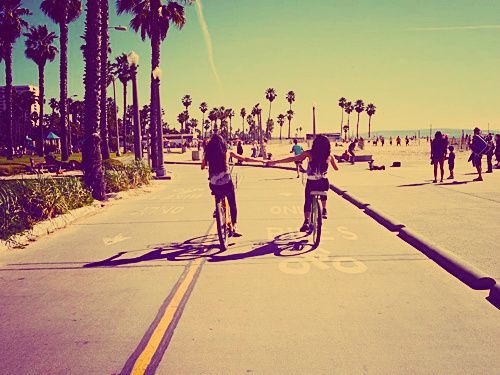
The colours of a decade ago
When Times Were Simpler
A decade on, the world has become increasingly politically fraught. Identity politics now runs deep within everyday life. Meanwhile, the ubiquity of technology has only served to amplify inflammatory rhetoric, often rewarding extremity with virality. Social media platforms such as TikTok and YouTube rely on recommendation algorithms, promoting provocative content to trigger strong reactions — outrage, humour, or shock.
Within this binary framework, nuance is eclipsed. Reductionist interpretations of identity construct false dichotomies whereby recognition of one perspective tends to negate the legitimacy of another, causing conflict to intensify. On platforms that prize polarisation over genuine connection, empathy is stretched thin and tolerance shrinks. As the scope of our feeds narrows and our communities grow increasingly insular, we gradually stop coexisting as a united collective.
The very systems that intensify polarisation also drive homogenisation. Today, expression is paradoxically freer, yet more constrained. The plethora of social media platforms has enabled us to post and generate anything. However, such freedom exists within hyper-optimised systems driven by algorithms that prioritise viral content. Popular sounds, trending hashtags, and choreographed dances entrap us within a gilded cage. How often have we seen a trending TikTok dance and called our friends to post our own version? We lean into it willingly, even enthusiastically. Such an act, though seemingly spontaneous, leads to subtle homogenisation, especially when multiplied at scale. It is then that our individuality begins to erode.
The impact of easily generated AI media, too, cannot be understated. AI has further blurred the line between performance and authenticity. When an AI-generated image won the creative category of the Sony World Photography Awards in 2023, only for its creator to later reveal it had been produced using artificial intelligence, it underscored a sobering reality: traditional markers of what makes a production truly human, have now become indistinguishable from those of cold, non-sentient machinery. In a culture primed for replication and virality, authenticity slips even further from our grasp.
In contrast, ten years ago, the meticulous curation of Instagram feeds was unheard of. Half-eaten meals, blurry selfies, and messy laughter were spontaneous — markers of human nature. Expression felt comparatively unrestrained. Everything felt lighter then, more vibrant and less calculated for social media. Childhood existed in the unmediated freedom of being fully present, with our worldview not yet shaped by screens and algorithms.
“Everyone’s just so performative now”
Anonymous, Year Six Student
2016 sits at a threshold. Certainly, technology was prevalent, with wired headphones and grainy cameras being the norm. However, it was not all-consuming. Digital life did not serve as a replacement for physical presence like it does today; instead, it felt like a conduit for the latter, facilitating genuine human connection. The Pokémon GO craze embodied this dynamic, sending everyone spilling into parks and streets, all in shared pursuit of a couple of digital creatures. Instead of confining players to their screens, technology propelled them outwards.

The Pokémon GO craze in July 2016
Today, we look back on these times and reminisce. Often, it is said that nostalgia mostly occurs during periods of loneliness, stress, and uncertainty, acting to alleviate psychological strain. In this light, “2026 is the new 2016” has been our attempt at anchoring ourselves amidst a world increasingly defined by unpredictability. We don rose-tinted glasses, we selectively remember the brighter moments of that year, we plough through camera rolls for a glimpse of ‘the best year’. Yet, we also concurrently gloss over the massive shifts that had already begun taking shape in 2016, that of which would continue to mark the years to follow.
The Irony: 2016 Was the Beginning of the Present
“Brexit: Europe stunned by UK Leave vote”
BBC, June 2016
“Planet at its hottest in 115,000 years thanks to climate change”
The Guardian, October 2016
“Donald Trump Is Elected President in Stunning Repudiation of the Establishment”
New York Times, November 2016
The year we romanticise was hardly tranquil. These headlines swamped news outlets towards the end of 2016, signalling the world’s pivot towards an increasingly unpredictable future. Brexit reflected a surge in populist sentiment, sending shockwaves across the globe and foreshadowing massive implications for Europe’s future. News of the globe’s rising temperature would set the tone for a decade defined by climate crisis urgency and mounting opprobrium towards environmentally unsustainable practices. Meanwhile, Donald Trump’s victory in the United States elections was a testament to the growing influence of identity politics, forces that undeniably continue to shape the present.
Faced with such marked global change, it is difficult to reconcile our yearning and nostalgia for 2016. Today, the global market, alongside trade relations, has grown increasingly volatile. Political polarisation has become more normalised, fuelling identity-driven debates. Meanwhile, climate change, first highlighted with prescient warnings in 2016, now manifests today in record breaking temperatures, raging fires and extreme weather patterns. In 2026, the world is both familiar and unrecognisable: the same forces foreshadowed ten years ago now operate with heightened intensity. Although widescale global events are often a result of various intersecting forces, it is impossible not to draw similarities between the events of 2016 with the ones ten years later.
Such a realisation hence begs a question: why have we romanticised 2016, a year clearly fraught with imminent trouble and tension?

Users on social media depict ‘the worst day in 2016’ as one with vibrant, nostalgic scenery, denoting happiness
What was 2016 to us?
“2016 was the year my parents taught me how to ride a bike”
“I remembered memorising all the Taylor Swift and Chainsmokers songs”
“I played catching everyday with my friends during recess”
Politics and technology aside, perhaps, the straightforward explanation is that it was the year of our childhood. I was eight years old, getting comfortable with my friends in Primary School, having fun in my CCA, Arts and Crafts Club every Tuesday. Life back then felt simple, because we were still children. Ask friends what they miss and their answers are rarely political:
We did not debate populism. We talked about our favourite lesson in school. We did not read headlines about trade volatility. We raced to be the first in canteen queues. Back then, happiness came easily. It lived in the little moments: the slow chime of the school bell signalling the end of school, the satisfaction upon completing homework, the fun we had at a friend’s house (we used to call them playdates, remember?).
Days did not drag on. Life felt fuller. The world had always been unstable, but we were simply too young to recognise its instability. We had not yet grasped the full extent of life’s hardships, which soon arrived in the form of national examinations, uncertain futures and the prospect of looming adulthood.
Perhaps, the change was not the world, but in us. The simplicity we long for was never about the year itself, it was about the version of ourselves who lived within it.
Now, your finger hovers over the ‘story’ button of your 2016 throwback. In your mind’s eye, you hear a child’s distant laughter, the same one you once heard an eternity ago. Suddenly, you feel your heart swell full, a feeling not experienced in a long time. A deep ache settles within your bones.
The realisation is stark: 2016 will not return. Life has resumed its frantic pace of haunting moments that must be gripped tightly for fear of losing them: you now clench them in your fists — they threaten to spill out. Beyond the trends and neon filters, we yearn for something deeper, the feeling of being unburdened, of living each day fully without fear of its passing.
And yet, there is nothing inherently wrong with nostalgia itself. A moment back in time can ground us and sometimes even evoke joy. But wallow in your melancholy, linger a little too long and the past begins to steal from your present.
Living in the Now
Nostalgia, when grasped too tightly, only continually eats at you, till all that is left is a desiccated shadow. The present slips past you. Your future grows increasingly distant. Still, you remain paralysed in discordance.
No, there’s little beauty in remaining shell-shocked, haunted by what was once. But, there is beauty in a brand new day.
A year has turned over into two, three, then ten. Enough thinking of what-used-to-be, instead of what-now-can-be. Heartache makes morticians of us all, but there’s no reviving childhood. From now on, you can only live in the now, living unabashedly.
Gently draw the sheet over your arrested yearning. One day, the ordinary rituals of the now: walking to Y14 Chill with your friends to get waffles, rushing assignments with classmates, CCA training under the unforgiving sun, will too, be ones you muse about. Remember this feeling, though in softer rays as the days lag on, and feel the sun’s glow on your face. These are the adolescent days we will one day look back on and call “simpler times”. 2026 will not remain 2026 forever. Soon enough, it will become “the new 2026”, remembered for the moments of serene laughter, albeit experienced less often than your younger self.
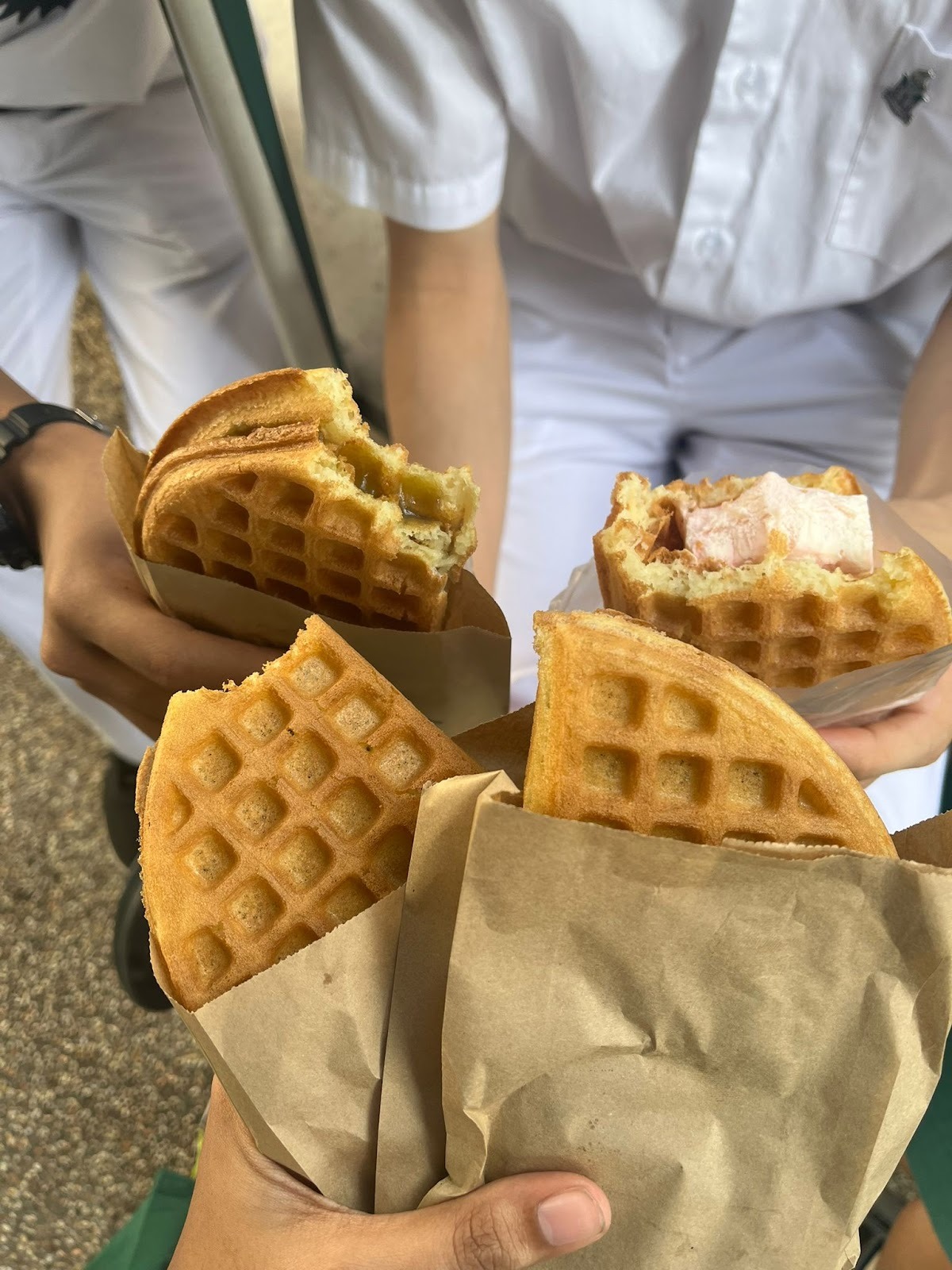
A typical ‘waffle-run’ to Chill at Y14
We must be brave enough to treasure 2026 while it is still here. The joy of today belongs to us — but only if we choose to notice it, to claim it before it fades into tomorrow’s nostalgia. Only if we hold these moments close, will 2026 belong entirely to us.
So, loosen your fists, ease your heart. Let go and breathe.
Ten years from now, when we look back again, we will not just remember what we lost.
We will remember that we truly lived.


