

By Koh Shin Robbie (26A01A) and Tok Kai Xue (26A01B)
Stepping into the newly renovated Singapore Oceanarium (previously the SEA Aquarium), visitors are greeted by a splash of colour: sea jellies of all shapes and sizes adorn the entrance of the expanded marine arsenal.


But in the midst of learning more about species such as the iconic fried egg jellies at each tank’s refreshed graphical exhibitions, a giant mop would soon plunge into their waters.
It was cleaning and feeding hour at the Oceanarium, and the sea jelly team of marine biologists were beginning the process of caring for their blobby friends. Coincidental as it was, this was the prelude to our upcoming experience—the “Animal Spotlight: Sea Jellies” package.
What is the “Animal Spotlight: Sea Jellies” about?
The package costs $28 per pax, and entails a guided tour around the sea jelly labs, allowing visitors to learn more about the biology behind sea jellies and witness the caregiving process in action.
Those who have visited the previous SEA Aquarium may remember passing by these labs and glancing inward through the small window panes along one part of the aquarium walkway. This time, we were behind the glass panes, following a group of parents and children in their exploration of the labs.
Led by our guide, Terrence, we were introduced to the various stages of the sea jelly life cycle in extensive yet clear detail, and were able to see each stage up close through tanks and test tubes.
As the tour went on, it was heartening to see the children present express strong interest in the labs and the biology behind everything. Regardless of their prior knowledge on sea jellies or marine biology in general, they were all able to quickly pick up a thing or two from the sharings nonetheless.
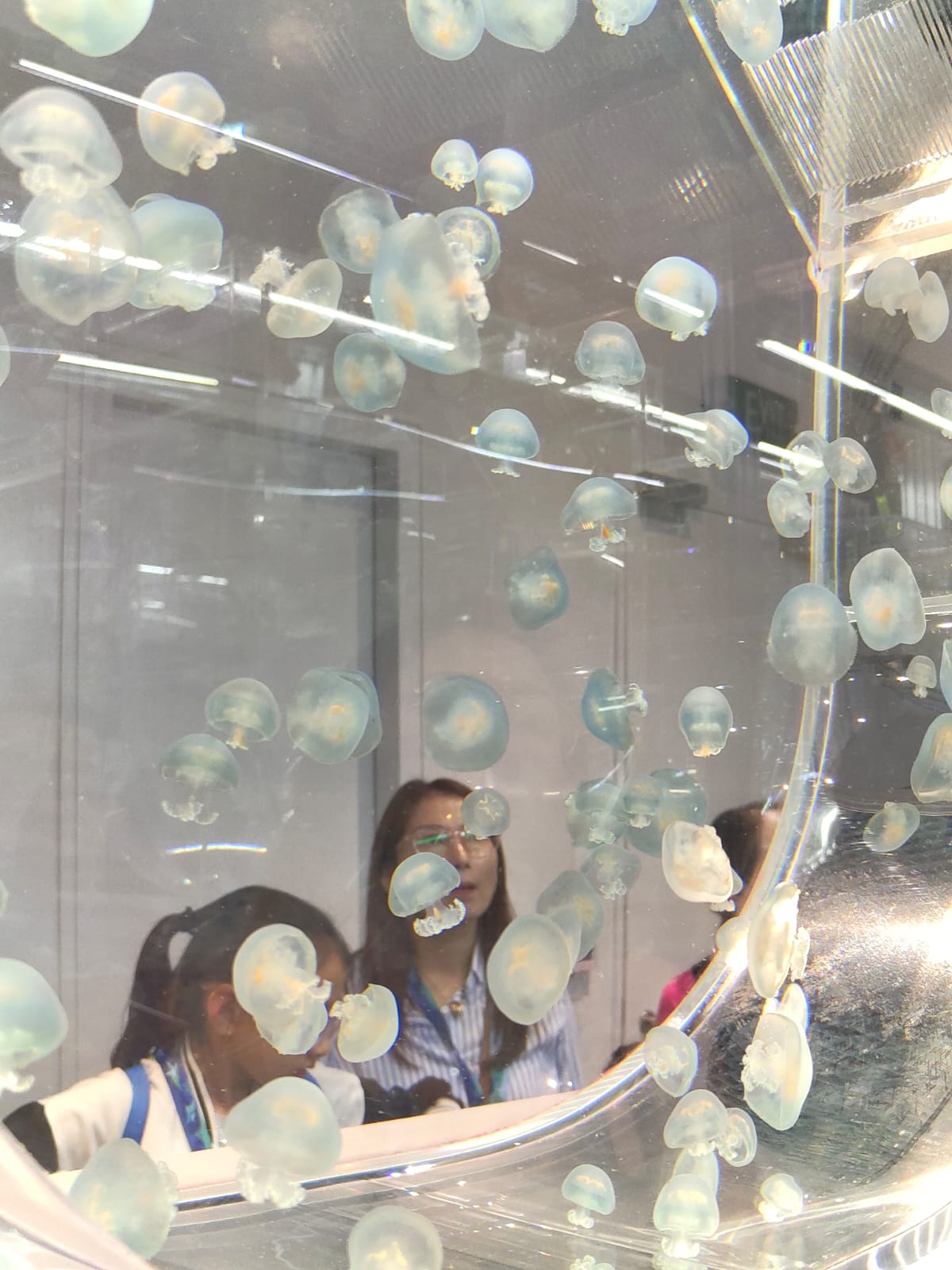
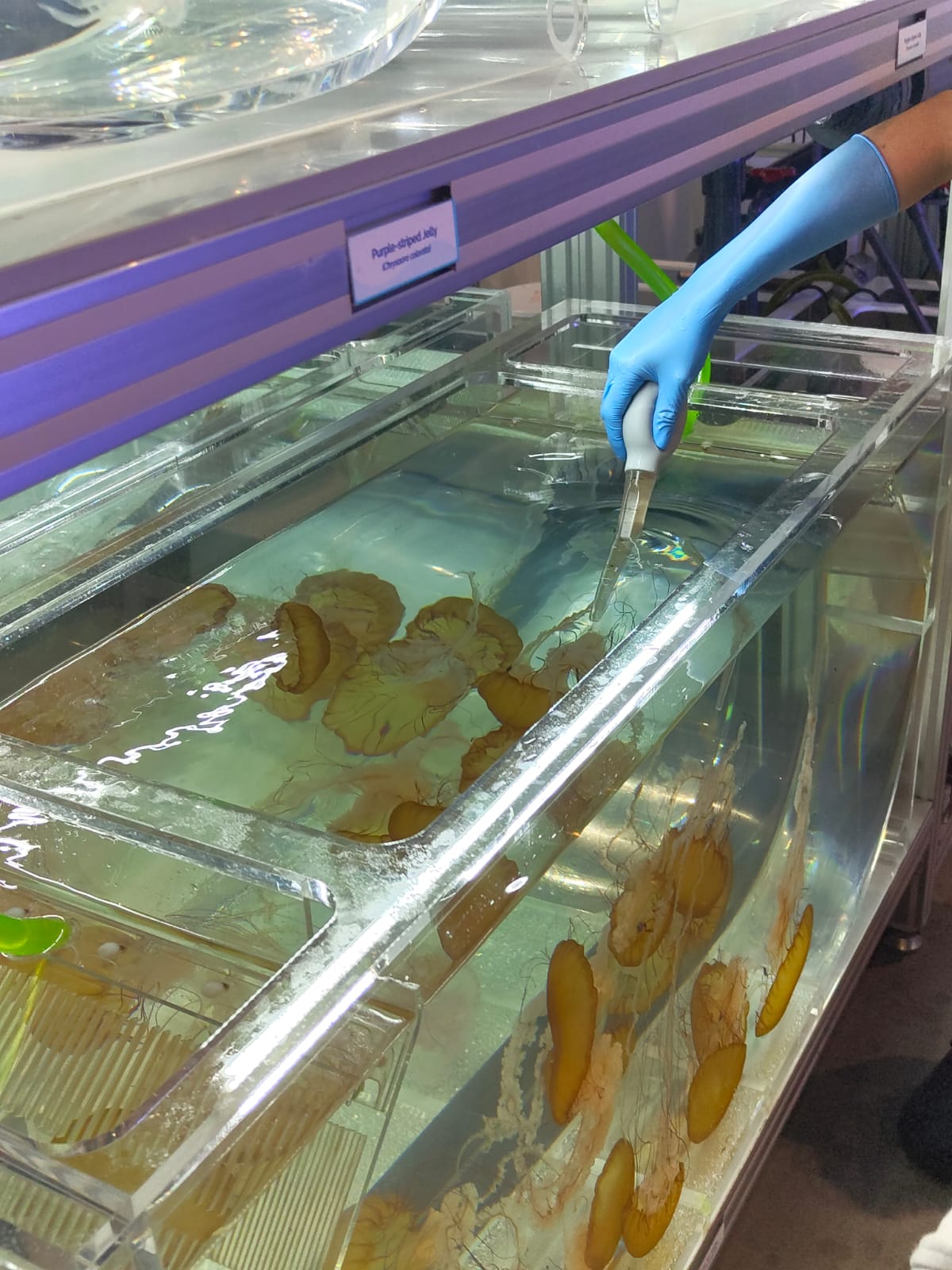
Terrence brought us through the many stages of sea jelly breeding, which consisted of various processes demanding meticulous attention. Not only was there daily feeding (as well as the breeding of the shrimp), but the team was also in charge of replacing the water in the tanks every so often. This meant they had to take out each individual baby sea jelly (which were extremely miniscule) from their tanks one by one, which to us, seemed like dauntingly tedious work!
Terrence himself mentioned how it would take him several hours just to clear out a single tank, much to the shock of us tour goers. Yet, for the experienced sea jelly breeders at the Oceanarium, they revealed that they only needed 10-15 minutes per tank. Indeed, they all were well-equipped with the swift and nimble hands needed for the job.
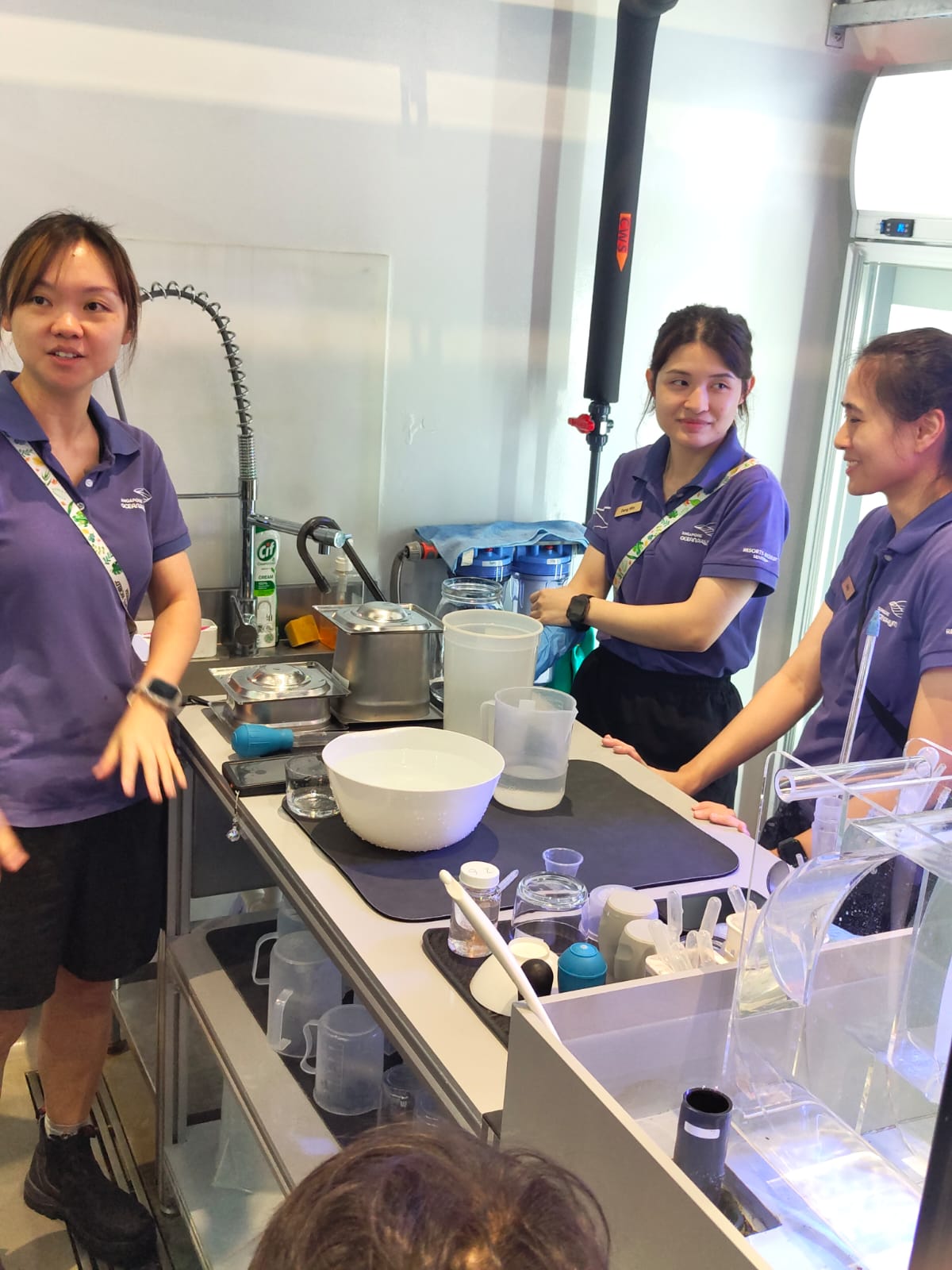
Conversations with Terrence after the tour would reveal another interesting fact about the Oceanarium’s team. With his level of knowledge and confidence in engaging with the children, it was easy to assume he had a background in marine biology or seniority in the job. Yet, we were astounded to learn that he was an intern specialising in education!
This changed our perspective on the tours significantly, as we looked back on how the tour emulated the learning experience through interaction with audiences of ranging ages and proficiencies.
After the tour, we were introduced to another intern, Ki Tong, who presented us yet another perspective into the tour process. Entering from a course related to community engagement, she shared with us about how the content adjustment process involved developing a keen understanding of the various communities at play in the Oceanarium, be it children, seniors or adults.
To both Ki Tong and Terrence, it was the process of allowing everyone to enjoy the tour and walk away with new knowledge acquired that made the job worth it. Interestingly, this philosophy would intertwine with their takeaways from the job too, as the process of finding beauty in the mundane would lead them to a common appreciation of the simple yet long-living sea jellies.
The Sea Jellies Behind the Glass: Money Well Spent?
Now, for us consumers, a more pressing question lingers—is such a tour worth paying for? An additional price tag of $28 on top of the Oceanarium’s entrance fee of ~$40 may seem hefty for many visitors of the aquarium, but it is undeniable that there is an intangible value through these tours.
When we interviewed Ms Kang and her Primary 6 son, they revealed that their decision to go for the tour stemmed from the sheer novelty of sea jellies. When placed alongside the vast array of sea creatures which proliferate our oceans, such species may often be overlooked as compared to the more iconic sights of the Great White Shark or the Blue Whale.
As a result, she thought it would be worthwhile to participate in the tour out of curiosity – a form of casual exposure as the pair learned more about our world’s marine ecosystems. Indeed, throughout the tour, not only did the children frequently pipe up to ask questions about the jellies, but many of the adults did too, including Ms Kang.
Perhaps, the tour’s value stems from the opportunity for individuals of all walks of life to learn and appreciate the inner workings of the Oceanarium. Sure, one might be at awe seeing the masses of sea jellies outside the lab and think such an experience is sufficient, but the tour offers an invaluable glimpse at the hard work and dedication required to manage these marine life, beyond their fantastical displays dotted across the aquarium.
There is so much to be learnt about the jellies – their biology, how they breed, how they consume food, and how they grow up to become the magnificent creatures we are all familiar with. Such little tidbits of education may also ignite—or maybe fuel—a passion for marine biology in children, which only makes the experience more invaluable.
As the tour came to its end, we left the lab with a newfound appreciation for the colourful splashes of sea jellies which decorate our oceans. Beyond just their stunning visuals and sky-high displays, they came alive in a new way – one shaped by individuals willing to invest time and patience to nurture and showcase an important part of our marine ecosystem for many to see.


