

By Sonia Chang (26A01A) and Tan Yan Qi (26S06M)
“What will our future look like if the ocean comes closer than we ever imagined?”
A Home Reimagined: A Submerged Reality
The opening of the Singapore Oceanarium on 24 July 2025 highlighted a focus on marine conservation efforts, with the addition of the Research and Learning Centre, and environmental sustainability, as the first in Asia to be certified Green Mark Platinum Zero Energy.
In its rebrand, the Oceanarium faced the challenge of attracting visitors as a tourist spot, while also achieving its goal of spreading awareness on the realities of our marine ecosystem. Throughout the trail, however, one could see the efforts made to make this enormous goal easier to digest for the casual viewer.
For the learner seeking to take away something new from the journey, you will be in for a ride. From the story of evolution and the history of sea expeditions, to ocean-inspired art and folk tales involving marine animals, there is something for everyone to enjoy.
Unsurprisingly, a good portion of the exhibition is dedicated to highlighting the global issue of climate change and the impact of human activity on marine life. It doesn’t take a lot to notice the emphasis on environmental conservation, with walls dedicated to problems such as the garbage patch, water pollution and shark finning.
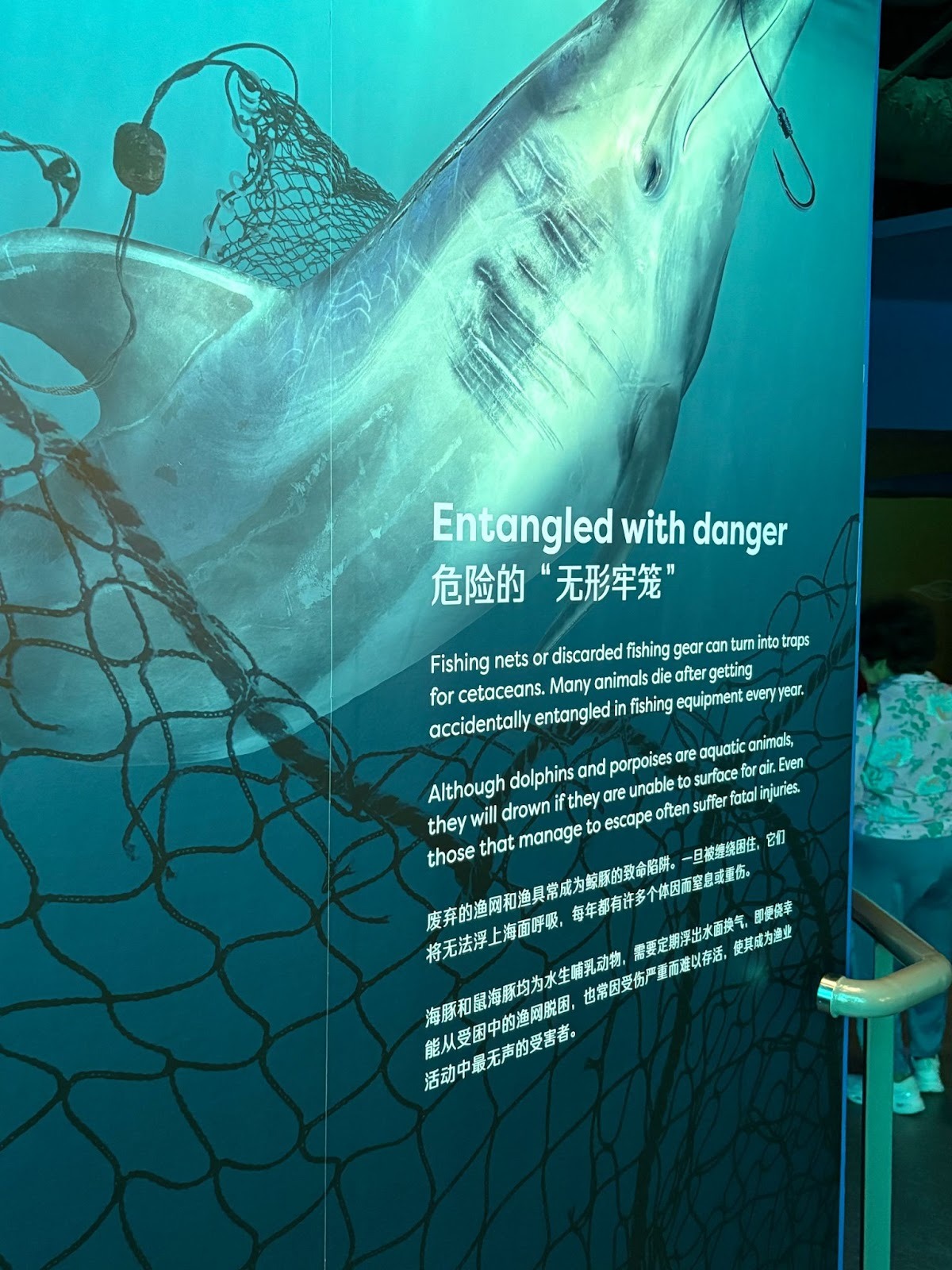
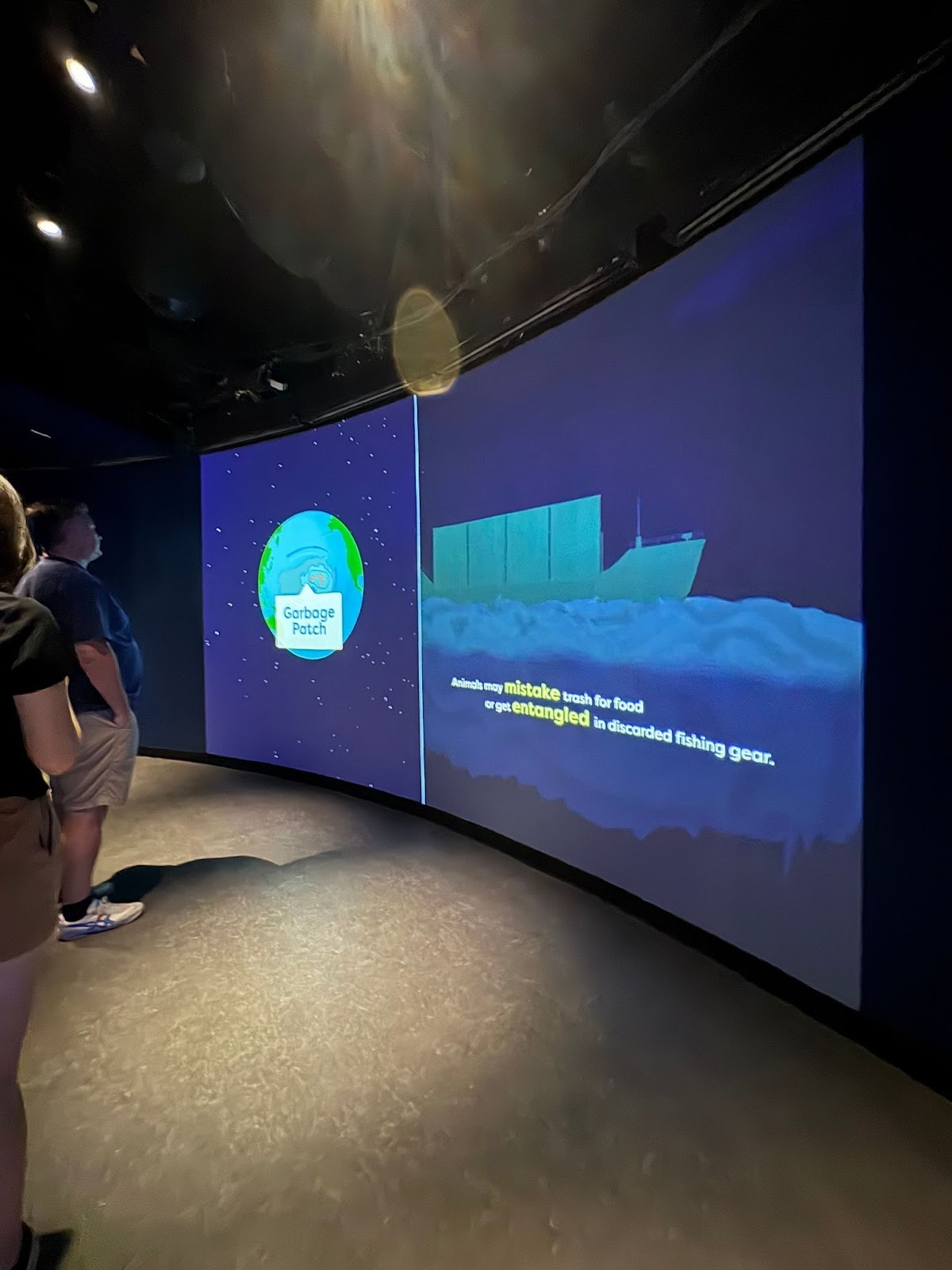
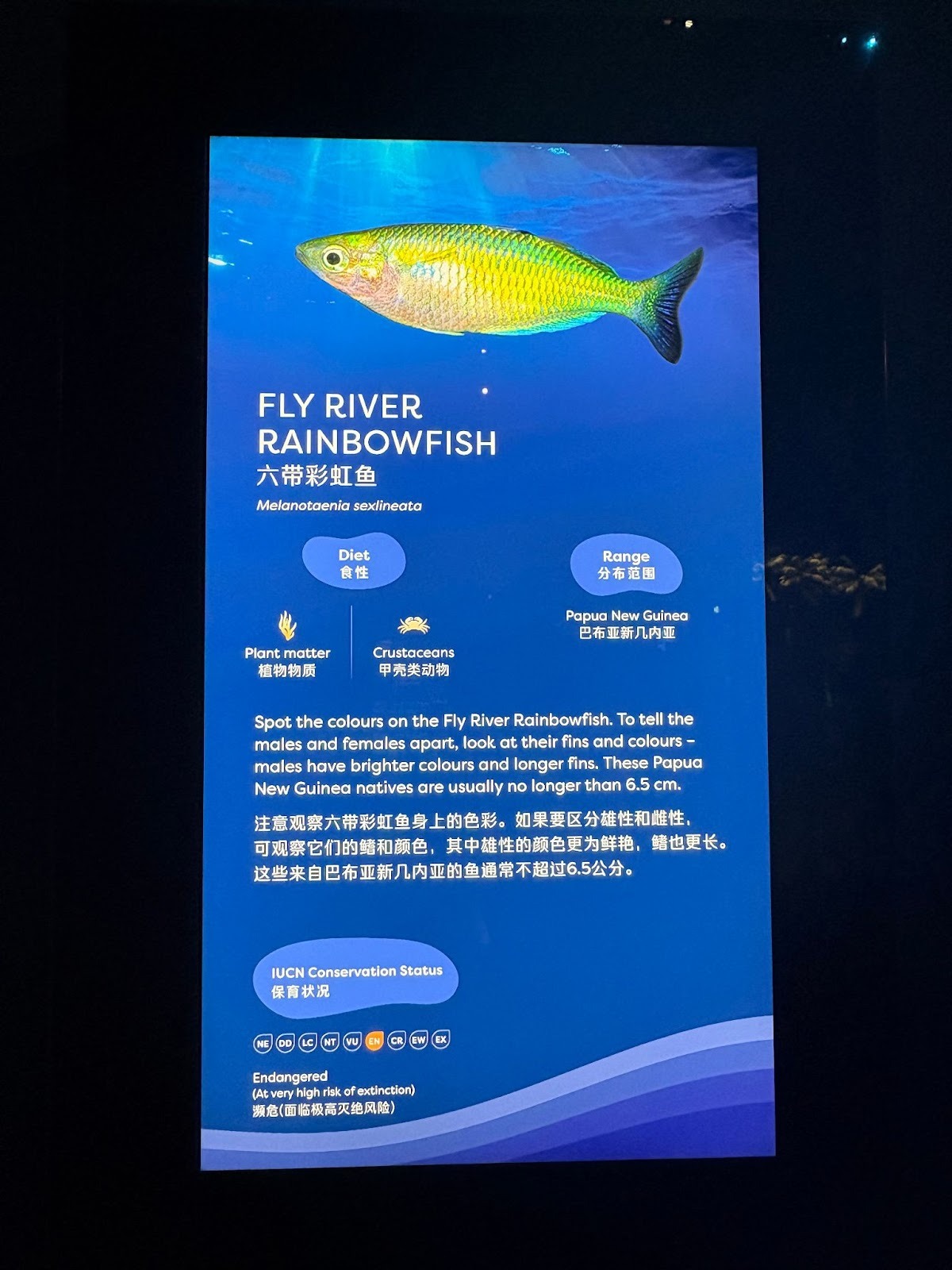
While you enjoy your journey throughout the Oceanarium, you are constantly reminded of the dangers that the marine life in front of our eyes face: every information panel introducing each marine species includes its IUCN (International Union for Conservation of Nature) status.
The plight of our oceans isn’t exactly new to everyone, however. How then does the Oceanarium seek to present this information in a fresh, eye-opening way? The answer lies beyond the seas—in the form of art, technology, and more.
Art Pieces
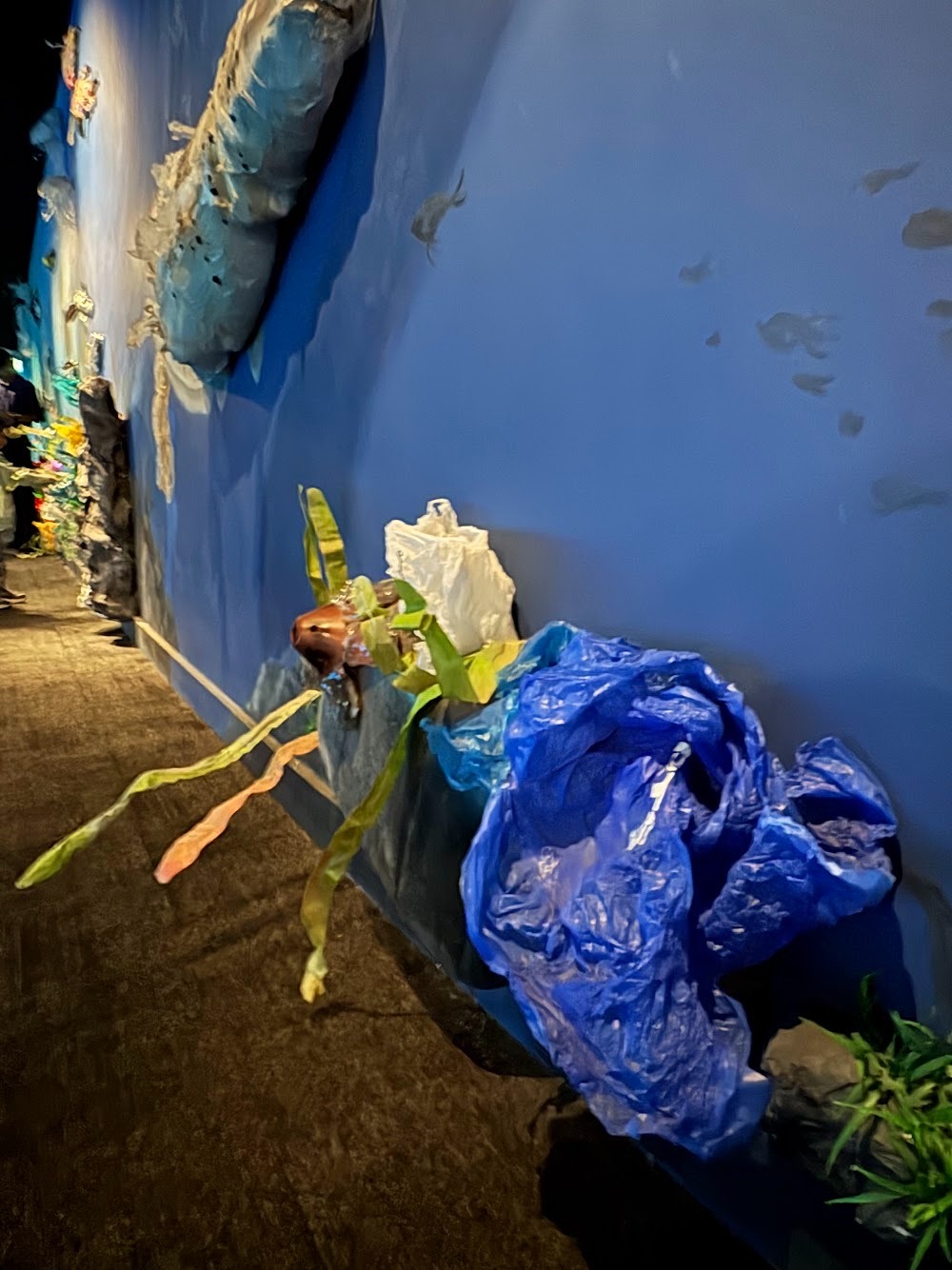
At the Open Ocean stands a mural titled “Between Wonder and Waste”. The mural unfolds in three sections—opening with a flourishing ocean scene bursting with life and colour, then gradually transforming into a bleak, dystopian seascape choked up with man-made waste. What makes this piece even more unique and powerful is its use of real debris—bottles, plastic bags, nets, fragments of rope—picked up from local beach cleanups. There is a disturbing weight to the mural that elevates it from a mere aesthetic piece to a sort of moral checkpoint, imploring visitors to reckon with marine pollution’s uncomfortably tangible reality.
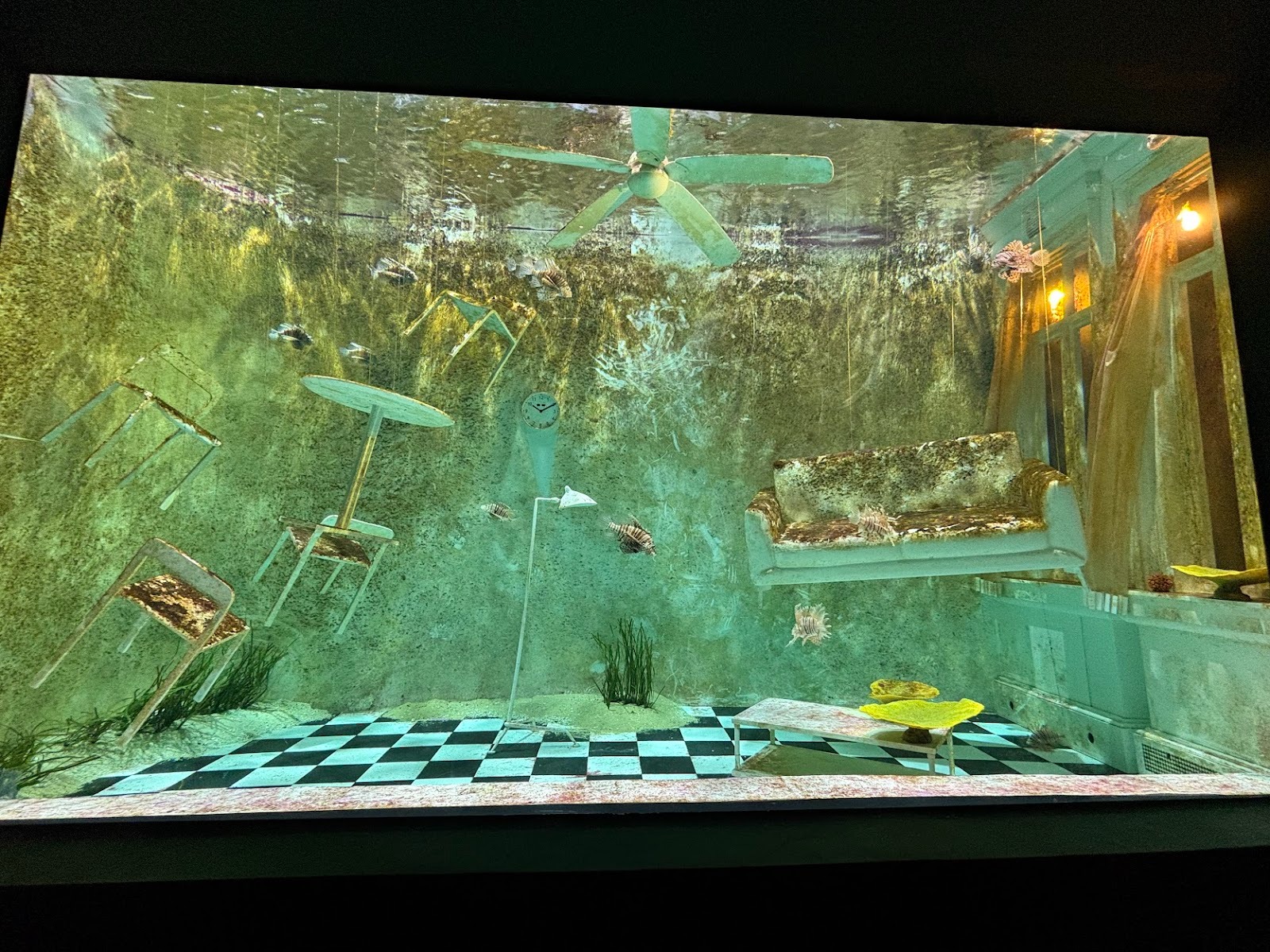
“A Home Reimagined: A Submerged Reality” is another haunting installation. The faint, familiar outline of domestic life now sits entirely underwater. Moving through this eerie stillness are red lionfish. Though beautiful, their presence is disquieting upon closer inspection. They are living in ecosystems far from where they naturally belong, a reminder of how warming waters and human interference has disrupted the ecological balance. Here, among the drowned remnants of a home, they almost appear too comfortable. This entire installation feels like an apocalyptic vision that invites unsettling questions: How will climate change alter the daily lives we take for granted, irreversibly? How will our choices today shape our tomorrow?
Interactive Elements
The most visibly new elements of the Oceanarium are the digital elements present throughout the zones. From augmented reality (AR) and virtual reality (VR) views to interactive displays, this new feature heightens the viewer experience by blending in entertainment and education.
For those intending to visit the Oceanarium, do consider downloading the Singapore Oceanarium App beforehand for a more enthralling experience!
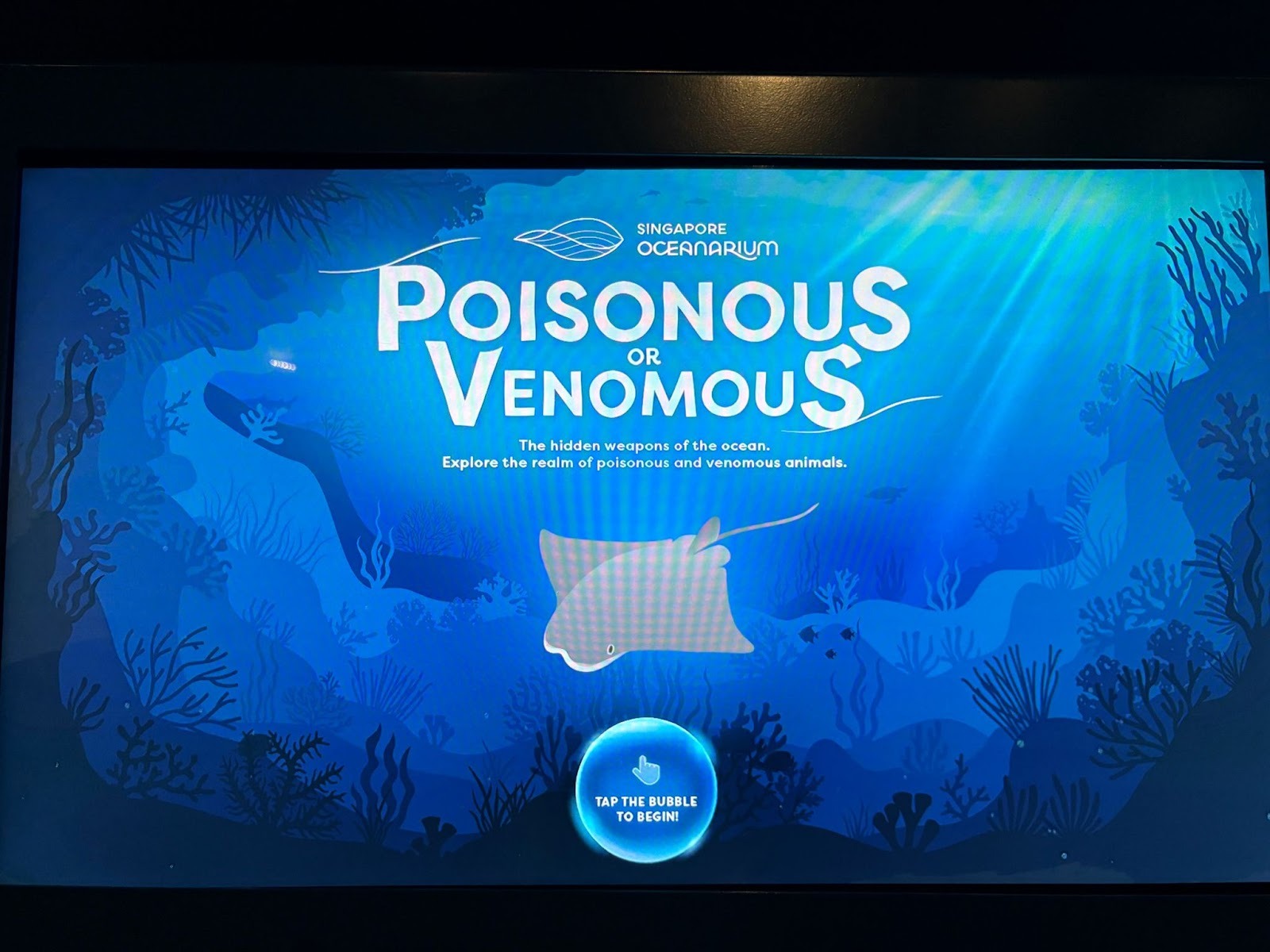
As you walk through the zones, mini interactive games reinforce the educational infographics found on the walls of the Oceanarium, teaching us how to differentiate between poisonous and venomous animals, and how coral breeding takes place within their labs.
For a tourist attraction, balancing the beam of education and entertainment is a difficult task. There is a lot of information to absorb—from the get-go, you’re faced with walls and walls of texts and marine animals, seeking to explain the depths of an environment still yet to be fully explored by mankind.
The inclusion of interactives helps to break up the enormity of the task into smaller, more digestible chunks, reinforcing learning through play. During our trip, we were surprised to see a group of pre-schoolers on their learning journey at the Oceanarium, and it is safe to say that they were certainly intrigued by the gamified learning methods.
But the use of technology doesn’t end there. Integrating technology into art, the display titled “A World on Thin Ice” presents to us the near-future reality of our Earth.
What appears to be a still, peaceful image of icebergs surrounded by the sea quickly morphs into a shocking destruction, throwing us into the rocky waves of our future. It acts as a much-needed reminder that the beauties of marine life we enjoy now are in danger of becoming extinct.
Oceanarium Efforts
Beyond being a place to encounter marine life up close, the Singapore Oceanarium positions itself as an aquarium-based conservation institute. Their work goes far beyond exhibition—they contribute to advancing marine science, support sustainable populations, and work to protect and restore biodiversity. Scientists take care of the marine residents and carry out breeding and conservation efforts like coral growing, among other roles.
The oceanarium’s efforts also extend into the community, regularly organising volunteer programmes that invite the public to help play an active role in conservation. Initiatives range from the Docent Programme where passionate and knowledgeable individuals can help educate guests at the Oceanarium, to the Citizen Scientist Programme where people can assist marine scientists, and to the Ocean Advocates Programme where people can take a more hands-on approach to marine conservation.
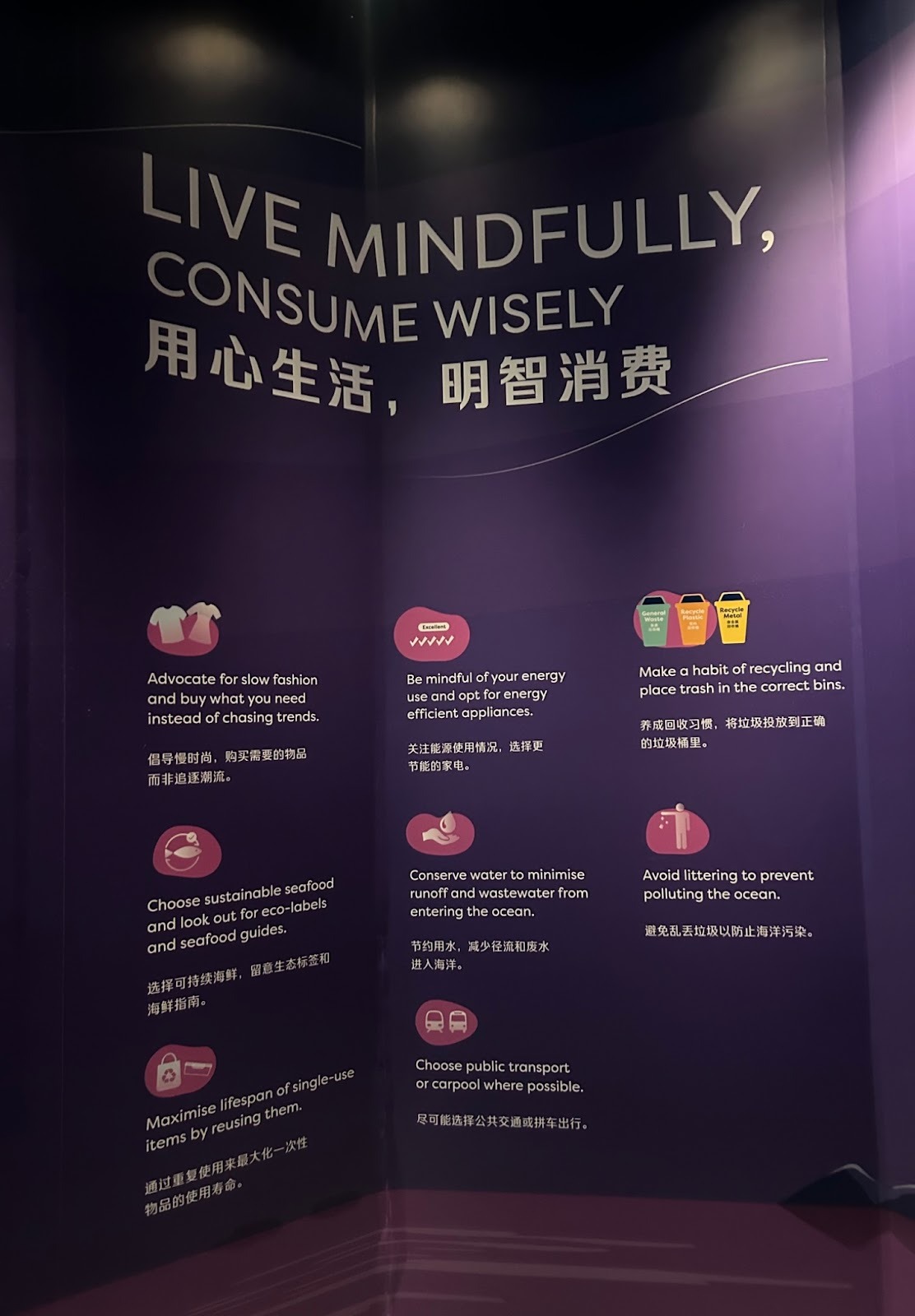
The message is simple: everyone has a role in protecting our oceans. As readers and visitors, we can do our own part by reducing our usage of single-use plastics, avoiding littering, and choosing sustainable seafood etc. There is a lot we can do! And it all makes a meaningful difference.
In bringing science, education and community action together, the Singapore Occenarium reminds us that conservation is not just a mission for experts and scientists—it is a shared duty of humanity.


