

By Chen Ying (25A01C) and Ng Dawin (25A01D)
According to popular lore, your quintessential modern-day romance story goes something like this: Girl meets guy, girl and guy fall in love, girl loses guy, girl gets back together with guy.
There may be some variations to this plotline—such as girl meets guy on a boat (Titanic), girl meets guy in a school (every teen romance) and girl meets guy who is a vampire (Twilight).
The core story has been this way since the 1800s (or even earlier), when a revolutionary female writer wrote a book about the courtship between an intelligent lady and an aloof yet heart-meltingly affectionate nobleman.
But this is not true. Most of the time, the guy has nothing “conventional” to add to the story. Ironically enough, the cliché that actually stands at the crux of modern-day romance is that the most attractive men are the most extreme—the more dysfunctional, emotionally unavailable and disinterested the guy is, the harder the girl will fall for him.
1. The Bad Boy
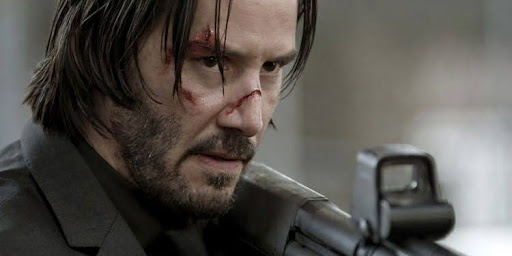
Have you ever found yourself drawn towards someone rebellious, anti-authoritarian and hot-headed? What about a guy whose reputation precedes him (notoriously)? Like most people, you’ll probably quarantine yourself from him. However, romance doesn’t work according to real-world logic.
In fact, traits that are considered “red flags” in the real world are the very reason why such guys become so fawned over in romance. Just think about all the “romantic” or “attractive” things that a male lead in a romance book has said/done to the female lead that would probably earn him a restraining order in real life.
Bad boys become irresistible heartthrobs because their concept is built upon a simple idea: Prince Charming exists, albeit in a slightly off-putting way. The bad boy is crass, tests the limits of others’ patience and openly disregards societal norms—except for the female protagonist, where he resorts to every (yes, every) means possible to profess his love for her.
Yet, the bad boy is not a bad person at the core. He may stir trouble wherever he treads, but he doesn’t act out to hurt others. He acts out because he’s edgy and troubled. This is where the “good girl” swoops in to be his emotional fixer, which develops an unbreakable attachment between both characters (whether this is healthy or not is up for discussion).
Additionally, the bad boy needs socially desirable values for the audience to root for him. Maybe he’s a hopeless romantic or good with children. Perhaps he secretly runs an orphanage or animal sanctuary. However, he won’t display these traits freely — he’s far too self-absorbed to care about what others think of him.
Bad boys are mistaken for hooligans. Both of them might ride dirt bikes into assemblies or get into fist fights in public, but the difference is that bad boys have K-drama looks. Also, hooligans don’t act out to impress a girl.
It always helps if the girl starts off disliking the bad boy (looking at all of you who like the enemies-to-lovers trope). He’ll fall for her, but she will always refute his advances as his reputation is far too questionable and she’s supposed to be “good”.
Then, tragedy will strike the girl, and the bad boy will save her. The girl will proceed to fall in love with the bad boy, just like clockwork.
2. The Soft Boy
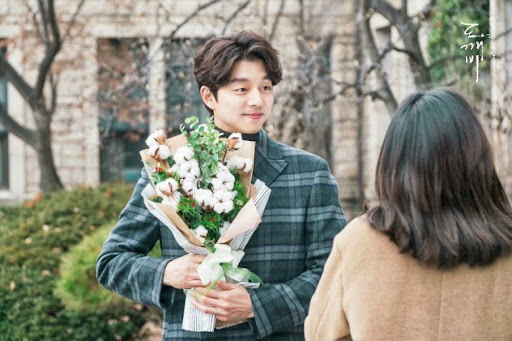
Let’s be real… Bad boys might drive you crazy over their hair tosses and laissez-faire attitude towards social norms — but they won’t make good boyfriends in real life. They are way too unpredictable (and toxic).
That’s where the soft boy comes in.
The soft boy is essentially the perfect boyfriend, with good looks and an even better personality. He’s charismatic in an uplifting way, diffuses positivity like an air freshener and places absolutely every other person’s needs above his own, especially for the female lead.
Now, you may be asking, what’s the difference between a soft boy and a gentleman? Aren’t they the same thing? You can think about it this way — the soft boy is a gentleman turned up to 11. He’s a caricature of human goodness and exudes golden retriever energy who never leaves the female lead no matter what.
Unsurprisingly, the soft boy’s two-dimensionality makes the trope rather unpopular (at least compared to other types of male lead tropes) in romance. It is rare to find a story with the soft boy as the only focus. They are considered too bland and perfect.
Take Mr Bingley from Pride and Prejudice, for example. He is devoted to Jane Bennett and follows her around like a golden retriever, tending to her every need. Yet, of the three male leads in the novel, he is the only one without a Wikipedia page (Justice for Mr Bingley!).
Cadres of writers have added nuance to the soft boy’s role in the story to make him more compelling. Typically, the soft boy is part of a love triangle which he almost always loses; other times, he is used as a plot device to catalyse the heroine’s romance with the actual love interest (who is most likely his direct opposite, the bad boy).
Needless to say, despite being mistreated in fiction by authors (for the plot), everyone needs a soft boy to lighten their lives and spread positive vibes.
3. The Rich Billionaire CEO

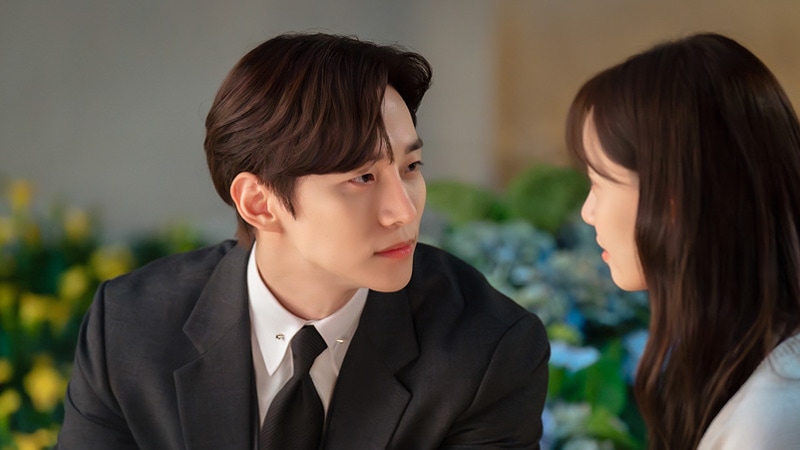
Unless you have been living under a rock, chances are that you’ve seen this character archetype before. This trope can be observed in multiple forms of romance media (e.g. the Tiktok famous Twisted Love by Ana Huang), but is most prominently found in Korean Dramas, such as in the popular series of “What’s Wrong With Secretary Kim?”, “King the Land” and “Business Proposal”.
This character type can be portrayed in varying degrees of ‘problematic’, or turn out to not be problematic at all. Sometimes, they might not even be a CEO! However, one thing that remains common across all the stories that this trope features in, is the endless number of zeros in their bank account which qualifies them for the name “Rich Billionaire CEO”.

Popular depictions of the Rich Billionaire CEO feature cold, egotistic, hyperintelligent “alpha” males who are completely detached from reality. They do nothing but meet clients, yell at others on the telephone, and attend even more important business meetings.
However, their meaningless existence is transformed when they meet the female protagonist, who makes them feel human again and wonder if there is more to this dreary, capitalistic life.
More often than not, these heroines in question happen to be their secretary, or they live in a small town that the Rich Billionaire CEO is forcefully trying to develop (you know what books and shows I’m referring to).
Every story has to have a “conflict”, and the main one that features in this trope of stories usually involves the heroine leaving her Rich Billionaire CEO for all kinds of personal differences, perhaps involving disparities in class or status.
It also frequently ends with Mr. Rich Billionaire CEO using his copious amounts of money to win her back, even when no substantial change to his personality has been made.
After all, as the saying goes: the only size that matters, is the size of their bank account (and not the size of their heart).
Jokes aside, it is impossible to deny the sheer popularity of this character archetype.
With many successful series spotlighting it, and even book series dedicated just to this character type (read: the Dreamland Billionaires series by Laura Asher), perhaps it is time to stop questioning the realism or practicality of such a story, and to just appreciate the dollars and the diamonds which make it such an elusive and attractive romance story.
Whether you are consuming media with a bad boy, soft boy, or a rich billionaire CEO, you are practically guaranteed a Happily Ever After, which is a staple of the romance genre. Try to keep an eye out the next time you watch a drama series or read a book, and you just might spot these male leads in their natural habitats!



This is one of the best ones I have read, I don’t usually comment but trust me, my very soul was compelled to say this: this is perfect like literally, all knowledge but the humor is still there.