

By Seah Jin Kuan and Mr Jason Teo (Fencing Teacher IC)
Picture this: you’re facing your opponent, waiting for the referee’s call. Your body is coiled like a spring, with every muscle primed and ready to go as soon as the round begins.
“En garde, prêts, allez!” You’re already exploding into motion as the final word hangs in the air, capitalising on your quick start to score an early lead. You lunge forward, with instinct guiding your blade as you parry your opponent and strike directly at their now-unguarded chest. Point to you. Beneath your mask, you’re smiling with satisfaction, already mapping out new plans for the next time you cross blades.
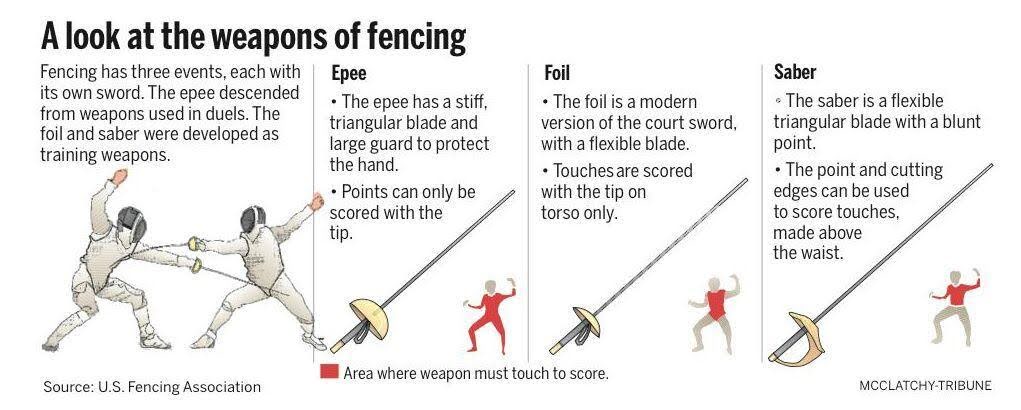
There are a surprising number of details to fencing that not many people know about. Raffles Fencing consists of three weapon groups: the epee, foil and sabre, each with their own set of rules and blade types.
The epee and foil are more similar in that they revolve around scoring points with the tip of the blade, while the sabre extends this to the entirety of the blade as well. Foil and sabre involve specific target groups, with what we call “priority”, which determines which fencer receives the point if a near simultaneous pair of hits occur. The epee, sometimes considered the simplest weapon group, includes the whole body as a target, which can result in some incredibly amusing foot hits. Of course, we still train together, and sometimes switch weapons to mix things up and fence more people.

Normally, we train at the Multi-Purpose Hall on Tuesdays and Thursdays, from around 4.30 to 7. From 2024, our training venue will move to the MPH at Y14. During competition seasons, we will hold additional training sessions to brush up on our skills and tactics.
A usual session lasts about two and a half hours and comprises physical training and warm-ups, some basic bladework or footwork drills, and finally specific sparring drills. All training sessions end with at least twenty to thirty minutes of free fencing, which is eactly what it sounds like.
It is not as exhausting as one might think, but it is still definitely intensive both physically and mentally. After all, fencing is a sport that is half-won before the match even starts, and quite a bit of strategy goes into every single point.
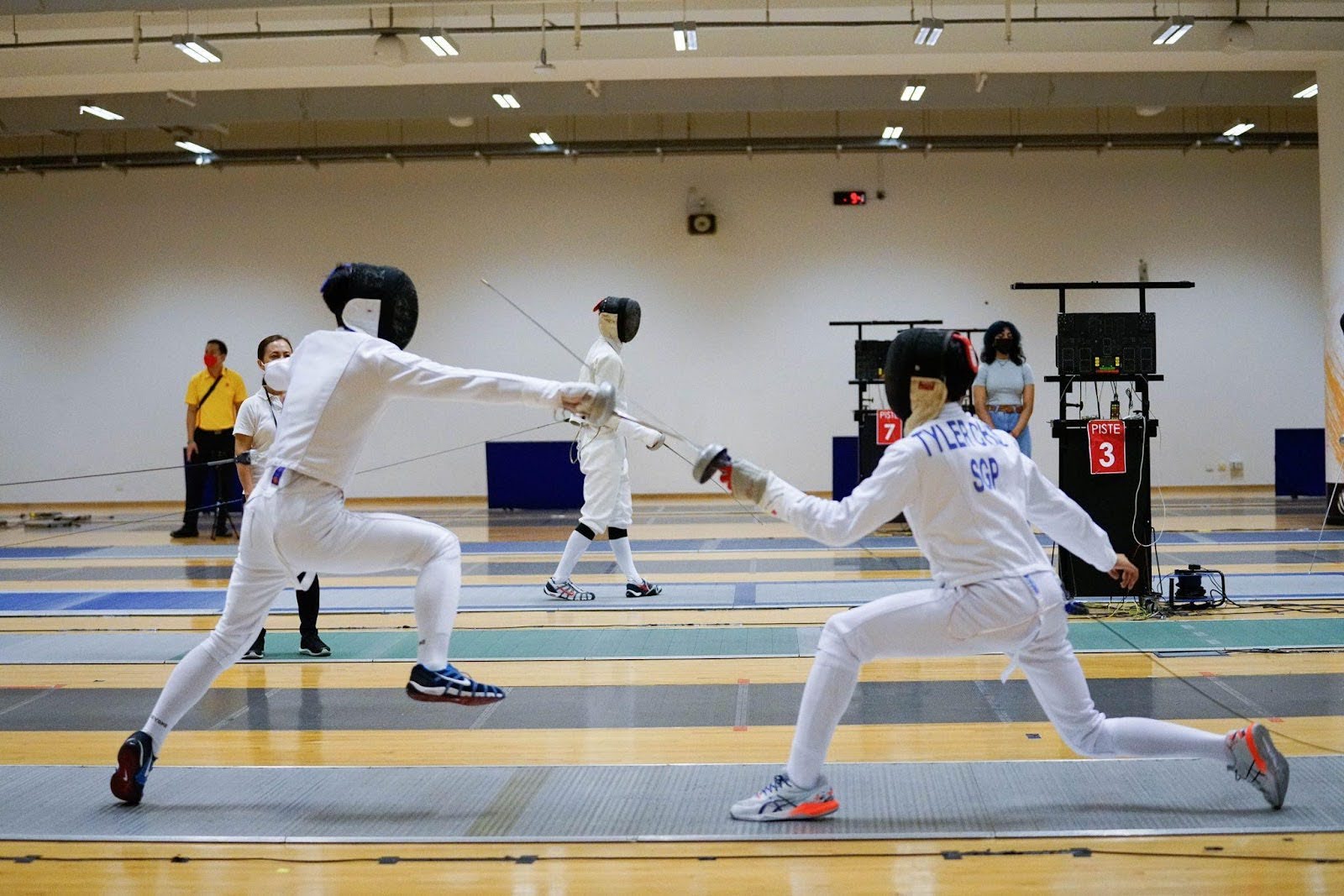
As for competitions, apart from the annual National School Games, there are a multitude of other opportunities to fence against individuals from across Singapore. Novices is a competition specifically for fencers with less than 3 years of fencing experience in order to provide a platform for new fencers to test out what they have learned in a competitive setting.
RI also hosts Raffles Invites, a U-21 tournament involving participants from various Singapore fencing clubs and schools, around the first week of December. Other schools like Hwa Chong Institution also host similar competitions, so there will never be a lack of opportunities to fence new people and see where your skill level stands. This gives us plenty of motivation to keep improving.
As for RI-specific highlights, we usually organise the fencing camp during the March holidays. This typically involves a 2 days 1 night camp whereby we not only bond together as a CCA, but also work on our fitness and team work.
So, why should you join Fencing? Everyone is incredibly welcoming. Training sessions push us to always do our best, but the main focus of each lesson is to enjoy yourself while learning something new.
More often than not, you can find us cheering on our friends while they fence. If you are looking for a CCA that will motivate you to keep fit while also having a good time, Fencing is the CCA for you.
Additionally, there’s no need to worry about prerequisites: while any prior fencing experience is definitely appreciated, as long as you are motivated and ready to do your best, you’ll be fine.
If you think that Fencing is a good fit for what you’re looking for, do not hesitate to join us. We’re always ready to welcome new members to Raffles Fencing!


