

By Jaden Lum (26S05A) and Sonia Chang (26A01A)
Thirteen studio albums and half a century later, the Beatles remain the most influential act in music ever. From revolutionising songwriting and production techniques to solidifying youths as a dominant cultural force, they would dramatically alter the course of world history—all in just seven brief years.
But as the sheer magnificence of their discography towers over and peers down at us, which of their works are truly demanding of our time? Technically, the answer is all of them, but regardless, here is our take on the definitive ranking of every Beatles album, from worst to best:
#13 – Yellow Submarine (1969)

Released as the accompanying soundtrack to the eponymous Beatles film, Yellow Submarine harbours a measly four original songs, before meandering into a murky underwater orchestral soundtrack, composed by the band’s producer, George Martin. But when the water runs clear, it’s obvious there’s not much worth sinking in for.
Best track: Hey Bulldog
#12 – Beatles For Sale (1964)

As its name and darker mood suggests, Beatles For Sale bears the mark of exhaustion and cynicism—reflecting a creeping world-weariness as the Fab Four lost their wide-eyed innocence. The heavy reliance on covers (3/14 songs) underscores their burnout. Numbers like Rock and Roll Music are delivered with energy, yet also feel like a retreat into the familiar, a way of filling gaps when inspiration ran low.
Still, the album bursts with moments of brilliance—seeing the band’s earliest hints of introspection (I’m a Loser) and departure from the mopped-top heartthrob formula they perfected. Not quite a misstep, but more a pause for breath—capturing the moment the Beatles first grew disillusioned with their own machine, yearning for something greater than the endless toil of fame.
Best tracks: Eight Days A Week, Words of Love (Buddy Holly cover), I’m a Loser
#11 – Please Please Me (1963)

The band’s debut album, Please Please Me was recorded in just under 13 hours. Between Lennon shredding his vocal cords on Twist and Shout and the bluesy harmonica on Love Me Do, the band was at their most raw and naive at this stage, their trademark vocal harmonies beckoning to every teenager in the record store. The remaining songs, though catchy, are ultimately a mixed-bag, but that couldn’t stop the Beatles from ascending as the new kingpins of the British music industry.
Next stop: The United States.
Best tracks: Twist and Shout (Bert Russell and Phil Medley cover), Love Me Do, Do You Want To Know A Secret
#10 – With The Beatles (1963)

With The Beatles is the sound of take-off. The band delivers pop perfection—knowing they were no longer playing for Liverpool dance halls, but the whole world. Later records would show greater refinement, experimentation and genius, but here you hear something vital: the force, the electricity of four youths on the cusp of making history.

(And a little treat: Haruki Murakami’s short story, “With the Beatles”)
Best tracks: All My Loving, Please Mister Postman (The Marvelettes cover), Hold Me Tight, You Really Got A Hold On Me (The Miracles cover), Roll Over Beethoven (Chuck Berry Cover)
#9 – Help! (1965)

On Help!, the Beatles would mature as songwriters, with Lennon growing increasingly disillusioned with Beatlemania, penning moodier songs like Help! whilst McCartney sharpened his melodic craftsmanship, brandishing an alluring string quartet in Yesterday.
The cracks in the Lennon-McCartney partnership were thus quietly emerging, with both going their own ways to seek diverging styles—a synergy that’d bless them with their finest work, but also trigger the band’s demise.
Help! is best then described as the band’s awkward pubertal phase, landing it at #9.
Best tracks: Ticket to Ride, Help!, Yesterday, You’ve Got To Hide Your Love Away
#8 – Let It Be (1970)

Let It Be is steeped in finality. Released after the band’s splintering (but recorded before Abbey Road), it feels at once weary and luminous. The original concept of the album was going back to the basics—conceived by Paul to reinvigorate the discordant band. Yet the band’s unravelling could not have been thwarted—Paul was a control freak, Ringo left for three weeks, John was mean, and George quit the band at one point.
These cracks show in the uneven energy and studio chatter. But there’s a certain poignant charm in that—how it captured the sound of an ending written in real time. And at its best, the record glows. Let It Be is a beautiful hymn of endurance, Across The Universe takes you through the cosmos, and Get Back channels the raw drive of their early days.
While Let It Be may not reach The Beatles’ greatest height, it carries a certain elegiac power. For all its messiness, it’s a pretty fitting farewell—how, in all its cacophony, it captures the brotherhood at the heart of The Beatles.
(For fans of jukebox musicals, Across the Universe is a lovely one)
Best tracks: Let it Be, Across The Universe, I Me Mine
#7 – A Hard Day’s Night (1964)

Who could forget that electrifying opening chord?
The Lennon-McCartney partnership in full force, A Hard Day’s Night features entirely originals by the pair—an exceptional feat in music at the time. The result is a tight, fun-filled, jangly album that had the band’s harmonic chops at maximum display, though still deeply entrenched in their usual Merseybeat sound. That said, it would be the final album where the songwriting duo wrote next to each other “eyeball to eyeball”, as Lennon put it.
The film that accompanied the album is also by far their best, with its French New Wave influence delighting audiences and critics alike.

Best tracks: And I Love Her, A Hard Day’s Night, I’m Happy Just To Dance With You
#6 – Magical Mystery Tour (1967)

Listening to Magical Mystery Tour is something like looking into a kaleidoscope. Conceived as a soundtrack to their self-directed TV film of the same name about a psychedelic bus trip through England, Magical Mystery Tour really takes us through some of the most dazzling sonic journeys through the band’s career.
In the first half, the titular Magical Mystery Tour bursts with brass and blaster. I Am The Walrus—all whimsy and non sequitur, with Lennon instructing the sound engineers to make him sound like a man on the moon—evokes the charm of Lewis Carroll (whom Lennon admired), and boasts some of the most quotable lyrics in musical history (“I am the eggman”).
The second half, built from tracks like Strawberry Fields Forever and Penny Lane, transforms the record into something even grander. In Strawberry Fields Forever, the looping mellotron and hazy production dissolves time as Lennon takes an acid trip down memory lane—yet in all its psychedelia, there is an incredibly human yearning: the ache to return to something whole and pure.
All You Need Is Love closes off the LP beautifully, the simple yet resonant mantra a kind of clarity distilled from absurdity. This tour was never an escape, but a return—to love, to what is both universal and personal.
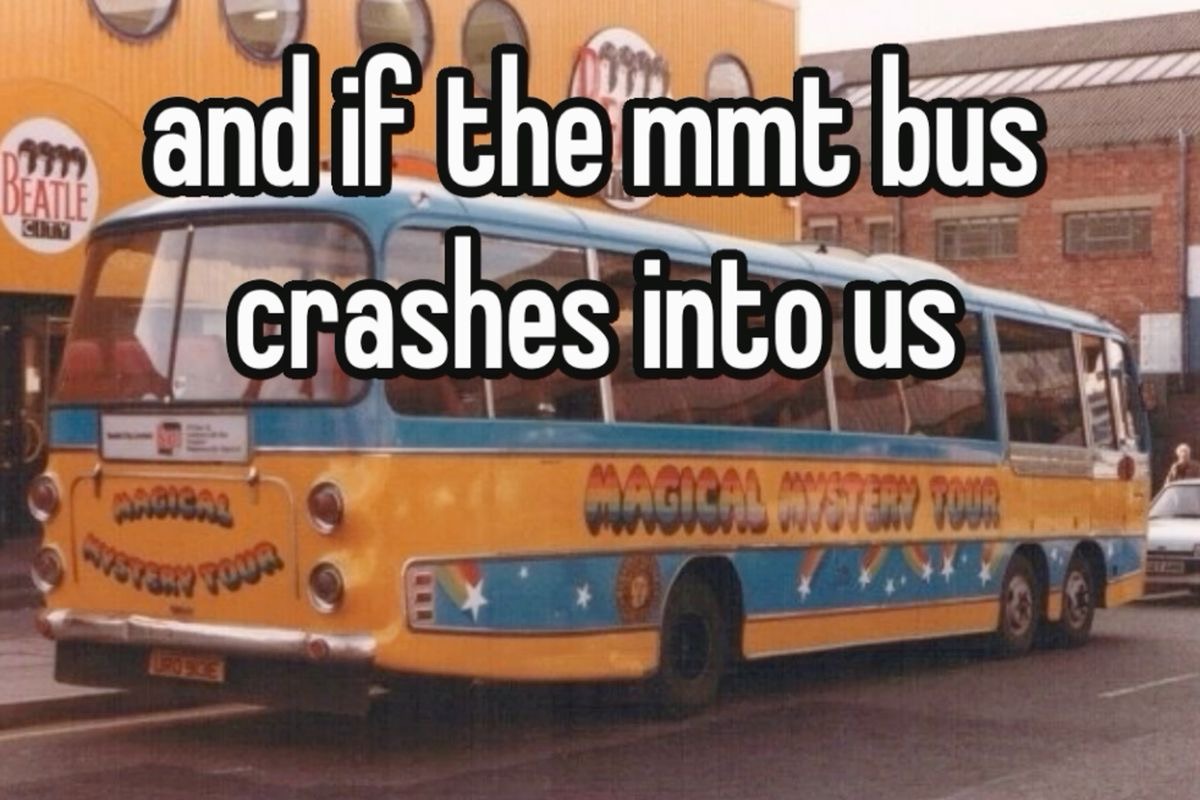
Best tracks: Penny Lane, Strawberry Fields Forever, All You Need Is Love, I Am The Walrus
#5 – Rubber Soul (1965)

In August of 1964, at a New York hotel, The Beatles met Bob Dylan. During that meeting, two events occured:
- The band is introduced to marijuana
- Rock music collides with folk music
The end product would be Rubber Soul, an album that marked the band’s lyrical jump from cheesy love songs into deeper, more introspective territory. Lennon was especially in awe of Dylan’s elusive and surrealist songwriting, employing his techniques of metaphors, symbolism and abstraction, much to his annoyance.
“What is this? It’s me, Bob. [John Lennon’s] doing me! Even Sonny & Cher are doing me, but, [ ]ing hell, I invented it.“
Bob Dylan
In Nowhere Man, Lennon writes of loneliness and existential dread, themes resonant under the bleak reality of the Cold War: “He’s a real nowhere man, sitting in his nowhere land, making all his nowhere plans for nobody.”
Through In My Life, he bares his soul and reminisces on his tumultuous past. “Some are dead and some are living. In my life, I’ve loved them all,” he sings in a bittersweet, weary tone.
Then, with Norwegian Wood (This Bird Has Flown), he leans into oblique, poetic imagery, with cryptic lines about an ambiguous relationship: “So I lit a fire, Norwegian Wood, isn’t it good?” In the background, George Harrison takes his first step into the realm of Indian classical, dutifully plucking away at a sitar.
With such painstaking care and unique themes seeping into each song, Rubber Soul would silently herald the album era, where albums as a unit, instead of standalone hits, became the new test for artistic merit.
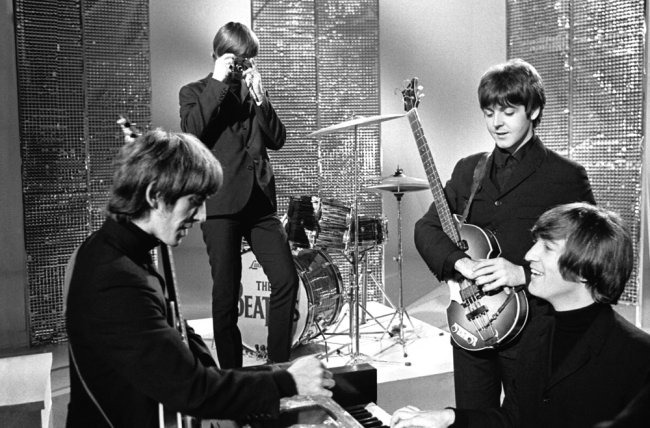
Ultimately, Rubber Soul stands tall as the album that set soaring new standards—standards the quartet would soon break—for artistry in popular music, positioning the Beatles, and future artists, not merely as entertainers, but as poets and thinkers, capable of caressing the soul and sparking the mind.
Best tracks: In My Life, Norwegian Wood (This Bird Has Flown), Nowhere Man
#4 – The White Album (1968)

30 songs tumble across genres, from the tenderness of Julia to the heavy metal of Helter Skelter. What might have descended into chaos in lesser hands becomes, here, something exhilarating—a portrait of a band splintering, yet ever so capable of alchemy.
The album was recorded in tense sessions after their spiritual retreat to India (where most tracks were written). The Beatles’ fascination with Transcendental Meditation and Eastern philosophy lingers in spirit, even as the songs move away from the overt psychedelia of Sgt. Pepper’s.
What makes The White Album so captivating is its rejection of cohesion—sprawling deliberately, capturing the Beatles as individuals pulling in different directions, yet somehow painting a fuller picture of who they were. Perhaps the blank white album cover says it all—no concept, just freedom, just the music. The Beatles, unbound.
With the album’s release coinciding with a world cracking open—the chaos of ‘60s counterculture, protests, and geopolitical tension—its wild multiplicity made it a fertile ground for different readings.
Back in the U.S.S.R., with its pastiche of the Beach Boys’ harmonies and humorous tone, sparked widespread outrage in the West as it was misinterpreted as pro-Soviet. Cult leader and fellow musician Charles Manson twisted tracks like Helter Skelter and Piggies into delusional apocalyptic messages. In many ways, the album became a sort of cultural Rorschach test. Often considered a post-modern work, it revels in reflexivity and parody—self-aware, self-deconstructing, and ever rich with interpretation.
Best tracks: Happiness is a Warm Gun, Helter Skelter, Julia, Ob-La-Di, Ob-La-Da, I Will, Revolution 1, While My Guitar Gently Weeps, Blackbird
#3 – Sgt. Pepper’s Lonely Hearts Club Band (1967)

By late 1966, the Beatles were burnt out.
But once the lush harmonic brilliance of the Beach Boys’ Pet Sounds landed on Paul McCartney’s ears, it was game time. Their musical dominance had been challenged, and with McCartney at the helm, they were about to mastermind a cultural detonation.
Building off the groundbreaking work on their previous album, 1966’s Revolver, the band would lean heavier into using the studio as an instrument, now with a more theatrical flair.
And with its release in June, the album would arrive just in time to usher in the climax of Hippie Culture: the 1967 Summer of Love, a landmark event where the counterculture sunbathed as one under the beauty of peace, love, Eastern religion…and psychedelic drugs, heaps of which the Beatles lapped up.
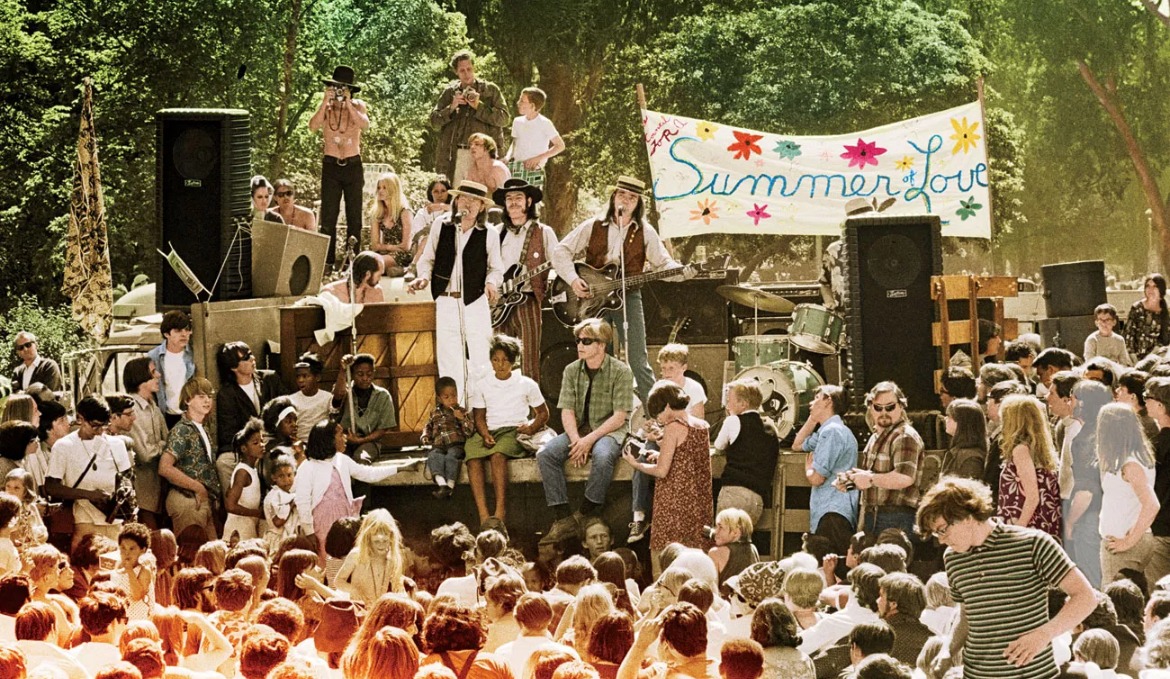
Psychedelia thus envelopes Sgt. Pepper’s. Lucy in the Sky with Diamonds hypnotically conjures up the sonic landscape of an acid trip, whilst A Day in the Life frankensteins Lennon’s neurotic haze with McCartney’s mundane realism. Meanwhile, on Harrison’s meditative Within You Without You… Well, just listen to it.

Despite the new aesthetic, however, simply being the Beatles was weighing on them. Their solution? Stop.
“We were fed up with being Beatles…I thought, ‘Let’s not be ourselves. Let’s develop alter egos. It would be much more free.’“
Paul McCartney
Flamboyant, glitzy army uniforms in shades of neon were donned, and Sgt. Pepper’s Lonely Hearts Club Band marched right in. The album’s one-of-a-kind cover art instantly sucked listeners into their bright, vivid, fictional world even before the record was spun. Ringo Starr masquerades as Billy Shears, a character he performs with vaudeville gusto on With A Little Help From My Friends, the album’s second track after seamlessly transitioning from McCartney’s thunderous introduction.
Sadly, this “plot” doesn’t go much further afterwards, but it showed the potential albums had to tell cohesive stories, paving the way for rock operas such as Pink Floyd’s The Dark Side of the Moon and intricate dramas like Kendrick Lamar’s good kid, m.A.A.d city.
The album era that began simmering just two years ago with Rubber Soul was now in a rolling boil. But beyond that, the grandiosity and unbridled ambition of Sgt. Peppers had catapulted popular music into the stratosphere of high art.
All this, shockingly, was still not the Beatles at their best, courtesy of a few very skippable tracks. Looking at you, Good Morning Good Morning!
Best tracks: A Day In The Life, Lucy In The Sky With Diamonds, With A Little Help From My Friends
#2 – Revolver (1966)

Having outgrown Beatlemania, screaming crowds and the confines of three-minute love songs, Revolver was transfiguration, a sonic revolution. The Beatles’ immersion in psychedelic drugs and Eastern philosophy had reoriented their sense of self and sound—birthing an album steeped in the cosmic and mystical.
Tomorrow Never Knows draws inspiration from The Tibetan Book of the Dead. Love You To is the band’s first full embrace of Indian classical music. These were not just mere flirtations with the exotic—these reflected an ideological rejection of Western materialism in favour of Eastern spirituality, and were sincere attempts to capture drug-expanded consciousness in sound.

So-called love songs like Here, There and Everywhere and Love You To also speak less of saccharine romance, but of awareness and unity—love as a way of life. This traces the growing maturity of the band’s songwriting as their voices were no longer tethered to just the personal, but soared towards the metaphysical.
Revolver achieves a rare equilibrium of discipline and dream. For the first time, the Beatles had stepped into the unknown and shed their old skin, never looking back.
Best tracks: She Said She Said, Here, There and Everywhere, Eleanor Rigby, And Your Bird Can Sing
#1 – Abbey Road (1969)

There’s not much to say about Abbey Road that hasn’t been said before. Putting their differences aside to record one final album, every skill the band had acquired, honed and perfected over their lifespan would culminate into this—their swan song, and their magnum opus.
Kicking off the album is Come Together, where John slithers in with a smoky half-snarl, half-whisper, hissing “shoot me…” Ringo follows with a swampy and rattly percussion, whilst Paul oozes his way into your ears with his sexiest and grooviest bassline to date.
George, no longer the junior songwriter, soon floors us with Something, a track which bewitchingly captures that subtle fuzziness someone can give you. Sinatra himself called it the greatest love song ever penned.
Two splendid contributions from Paul later, Ringo chips in with the whimsical Octopus’s Garden, his second official self-written song.
We’re then plunged into 8 minutes of droning, abrasive guitars with I Want You (She’s So Heavy), John’s radical stunt for the mainstream. But amidst being submerged in that brooding darkness, George slices through the black stormy clouds with a rainbow, embracing us with the infinitely gorgeous Here Comes The Sun.
It is this juxtaposition. This tension and release. This atmospheric switch-up. That shows just how intentional the Beatles were with their tracklists.

George and Ringo with Abbey Road’s secret ingredient, the Moog Synthesizer
Because then spotlights a rich, haunting, three-part harmony, with the band layering their vocals a whopping nine times, hitting notes together with surgical precision.
The iconic Abbey Road medley, the album’s crown jewel, picks up right after, stretching across 8 songs and totalling over 16 minutes of interwoven music, laced with melodic motifs and lyrical interludes.
As Paul’s brainchild, the suite of songs trailblazed a path for Progressive-Rock and later Post-Rock, ditching conventional song structures for longer, more free-form sonic architecture, conveying emotional highs and lows through key changes, time shifts, and conceptual storytelling.
“You don’t have to finish the song! Just edit them together and it works like a mini play. I love that section. It was really fun.“
Ringo Starr
The cherry on top would arrive on the medley’s finalé track, aptly titled The End, where Ringo dazzles, albeit reluctantly, with his first and last drum solo.
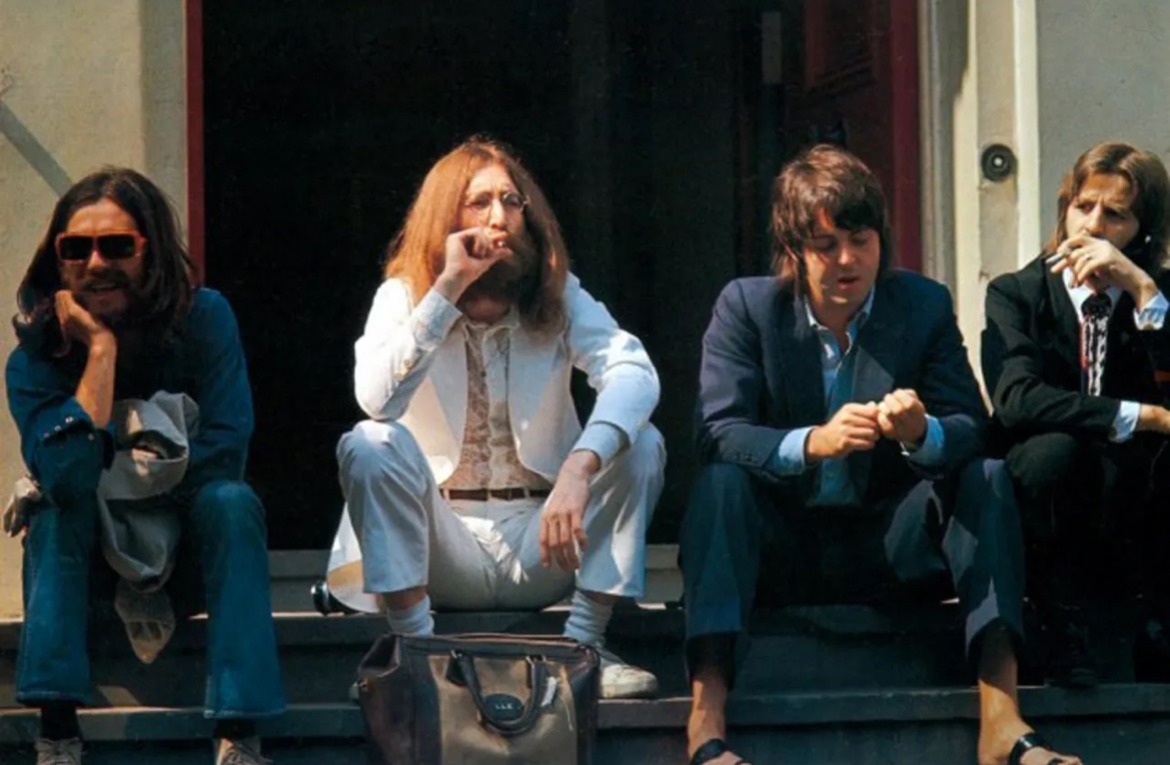
And that is Abbey Road. Timeless. Immaculate. A band ending an epic run at their creative peak.
Best tracks: Here Comes The Sun, Come Together, Golden Slumbers, Carry That Weight
The End?
Believe it or not, many of the Beatles’ most memorable songs don’t appear on their albums, a downside to being part of their exclusive singles club. Included, of course, is the immortal Hey Jude.

Following the band’s bitter breakup, the four continued on as solo artists, though none really reached the same heights they did as a group. That said, George finally got his flowers as a songwriter, whilst John dove deeper into activism and the avant-garde before traversing into domestic life. Paul started a new band—which would end after a drug arrest in Japan—whilst Ringo was still Ringo, loveable as ever.
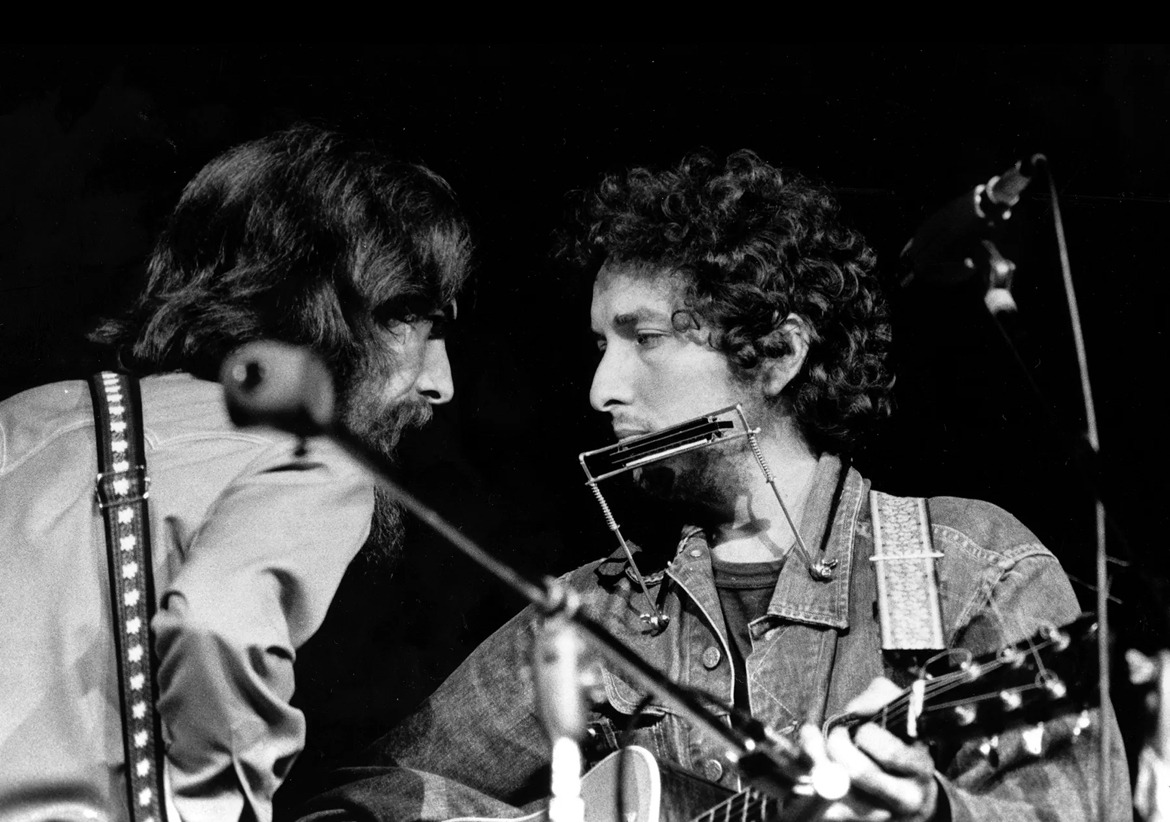

Nonetheless, throughout the ‘70s, fans ceaselessly yearned for a reunion. But it all came to a sudden halt in 1980, with horrific news out of New York.
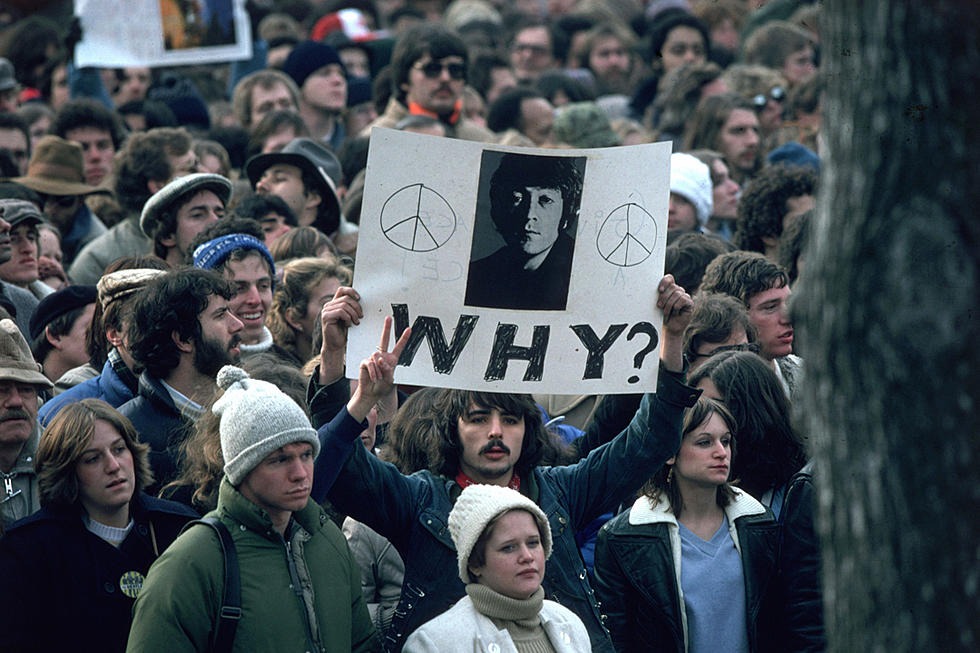
In the wake of John’s assassination, the prospect of a Beatles reunion felt like a dream sealed. Yet in 1995, Paul, George, and Ringo reunited to record Real Love and Free as a Bird as part of The Beatles Anthology project. Using John’s old cassette recordings, they layered their voices and instruments over his spectral piano and vocals—in a way, resurrecting their old friend.
The Beatles found their final coda in 2023. With Now and Then, the surviving Beatles—Paul and Ringo—used new audio restoration technology to isolate John’s 1970 demo. The song feels like a beautiful farewell—a circle closing after more than half a century, four lives reunited once again beyond conflict, death and all the years in between.
The End.
Like a big, blue mystic cloud, the legacy of the Beatles will drift on and on. Their optimism lives forever within their music, endlessly bringing colour to a grey world whilst inspiring millions of new listeners every generation.
That’s John Lennon, Paul McCartney, George Harrison and Ringo Starr.
The Beatles.
The band that changed the world.


Interesting content that is different from the stuff that yall typically write
It seems at first that you ranked all the early albums lower, as most modern listeners do, but probably accurate
I like the rankings of Revolver (usually slightly underrated) and Abbey Road
based ranking