By Jaden Lum (26S05A)
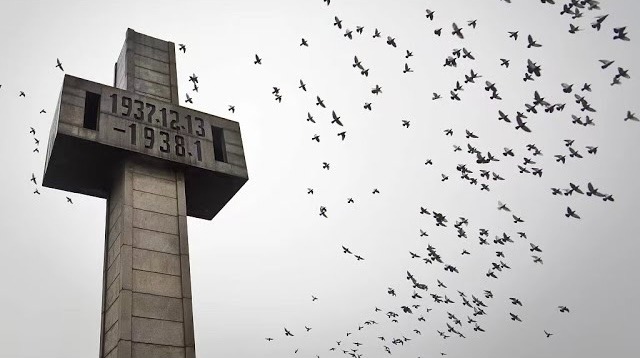
December 13, 1937
Nanjing, China
Morning
Just five months into the Second Sino-Japanese War, and China’s capital has already fallen.
Alas, as Japanese forces march in, roughly a quarter of Nanjing’s one million residents remain. Many are terrified civilians who simply could not flee in time. Women. Children. The elderly. Non-combatants who prayed that the worst of the fighting was now perhaps over. After all, soldiers were supposed to kill soldiers, not civilians—not them.
Dead To Rights
To call the Rape of Nanjing (1937-1938) an atrocity would be a gross understatement. Moments after the city walls were breached, civilians were already being rounded up and indiscriminately executed. They were bayoneted, beheaded, set aflame and gunned down; their bodies dumped into mass graves afterward.
Sexual violence was just as rampant as the slaughter. Civilians of both genders, but mostly women, were forced to endure mass rape with neither infants nor elderly spared.
Against this grim historical backdrop, Chinese director Shen Ao presents his 2025 film “Dead To Rights”. Loosely based on real events where Nanjing civilians preserved vital evidence of Japanese war crimes during the war, Shen remarked that he hoped it would “inspire audiences to uncover historical truths”. But box office triumph aside, does “Dead To Rights” really succeed in remembering Nanjing?

A Compelling Narrative
The impetus for the film’s events lies in two things war photographer Hideo Itō (Daichi Harashima) cannot do: developing photographs and taking a life.
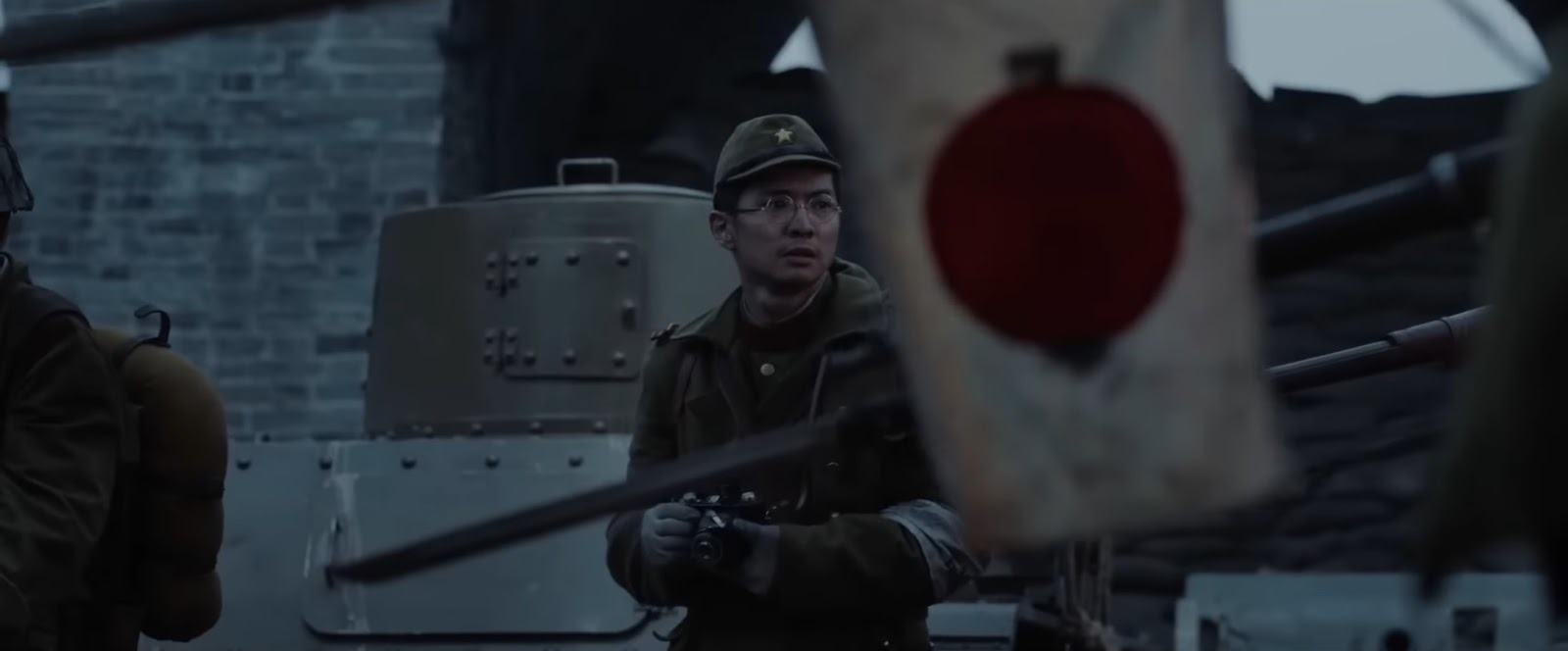
When a fleeing Su Liuchang (Liu Haoran) is caught by his division, Itō, prodded by superiors to pull the trigger, chickens out and coughs up an excuse. He needed a hand in developing photographs, and Su claimed to have worked at the local photography studio. It was providence, except Su is a postman, and has never once stepped foot into a darkroom.
Su’s lie would have only prolonged certain death, but when he discovers the studio’s actual owner, Lao Jin (Wang Xiao), hiding with his family in the basement, he begins covertly training as an apprentice to secure food and safety for them all.

In exchange for his work, Itō promises to give Su a pass to leave Nanjing once the job is done. Translator Wang Guanghai (Wang Chuanjun), who had been facilitating communications so far, butts in and asks Itō for another pass. He claims that it is for Su’s wife, but it was actually for his own mistress, Lin Yuxiu (Gao Ye). Lin, an actress now made to sing opera in halls full of lecherous Japanese men, soon moves in with Su, pretending to be his wife. In her luggage is Song Cunyi (Zhou You), a Kuomintang soldier she has been hiding.

A while later, Itō’s submissions begin to switch from images of decapitated heads to staged international propaganda showing Japanese forces as benevolent occupiers. What ensues is a fight for the truth, with photography as the weapon. The characters in the photography studio—seven at this point—hatch a plot to smuggle out Itō’s previous batch of pictures, now damning proof of the Nanjing Massacre.

With each character having such distinct arcs and moving performances, “Dead To Rights” offers a glimpse into the many experiences during the Rape of Nanjing.
Lin Yuxiu’s storyline reveals the sexual assault women suffered at the hands of soldiers, whilst the morally compromised Wang Guanghai reckons with his treasonous acts of self-preservation. Lao Jin’s daughter represents childhood innocence marred by war, and Song Cunyi, the sole militant amongst them, depicts the harrowing trauma of battle.
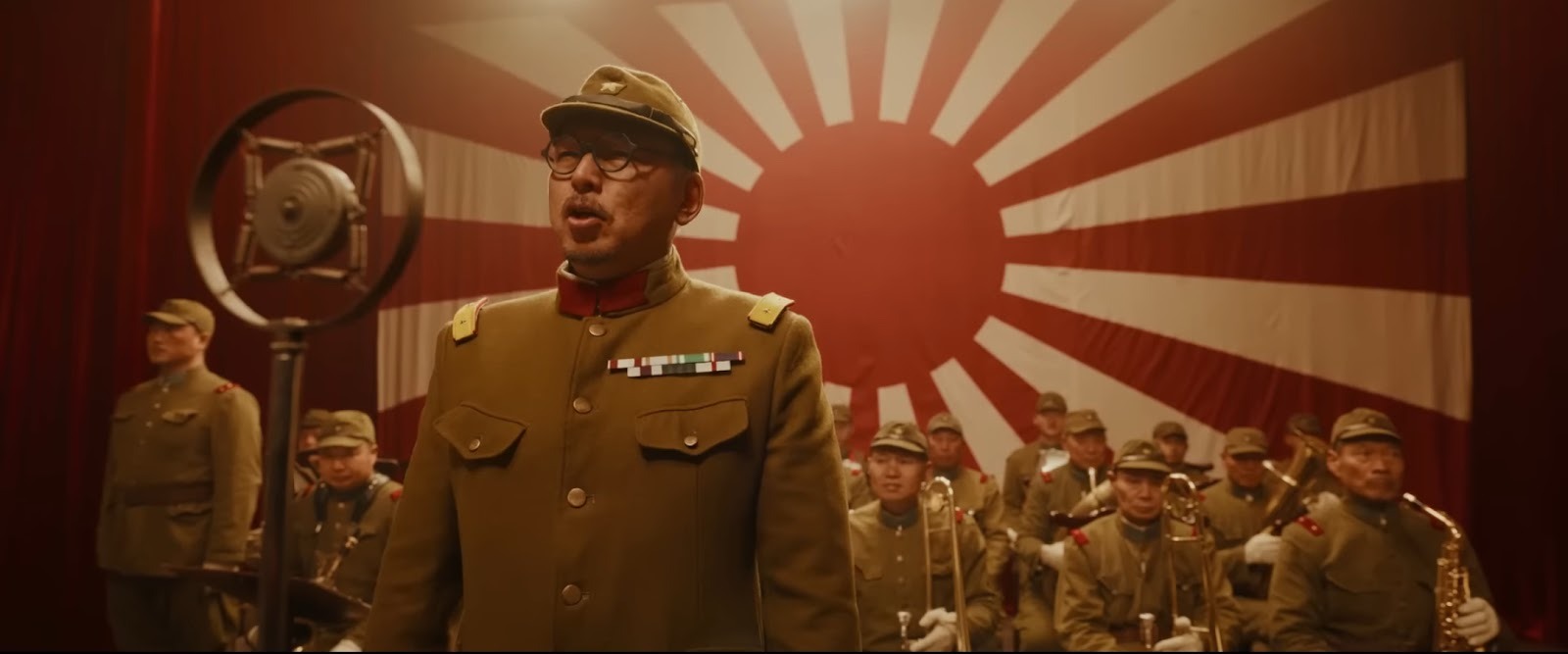
On the opposing side, while many Japanese soldiers are reduced to caricatures of ruthless, uncouth beasts, Itō, amongst others, is spared that. When his “partnership” with Su kicks off, he provides him food not even regular soldiers get, learns the Mandarin word “朋友 (friend)” to address him, and, in a brief return to humanity, dreamily remarks that after the war, he wishes to pursue filmmaking. His descent into yet another war machine warns how nationalism and imperialism can corrupt all.
Beyond the main cast, background characters like the comfort women pay tribute to some of the war’s most infamous victims, whilst the American lady who guards the Nanking Safety Zone Hospital is a likely homage to Minnie Vautrin, the real-life heroine who sheltered thousands during the massacre.
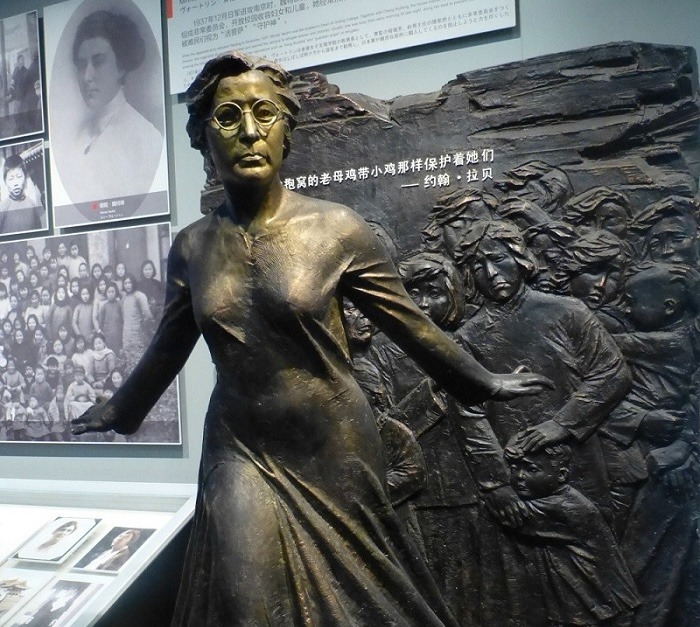
“Had I ten perfect lives, I would give them all to China.”
Minnie Vautrin, shortly before committing suicide in 1941
Honestly Brutal
“Dead To Rights” does not hold back.
Instead, it forces us to confront the horrors of Nanjing in its entirety. Japanese soldiers hold their infamous killing contests. Corpses float atop a red Yangtze River. Fires swallow up houses as inhabitants are spat out.


And whilst the film may at times teeter into gratuitous shock-gore, watching the hellscape unfold on screen compels us to confront our worst impulses as a species. Historical accounts back the film up, even as it creeps into pure horror movie territory, demanding us bear full witness to the savagery.
Nevertheless, it is important to ask: When does this unflinching honesty go too far? At what point does the truth start turning into spectacle?


A Sour End
Shen Ao begins the final act of “Dead to Rights” with a hefty dose of melodrama.
Stirring music swells in the background as characters break into fits of patriotism, singing praises for “the beautiful motherland”. Such sensationalism completely shatters the dark, gritty atmosphere the film has thus far painstakingly upheld.
Shen also seems hellbent on gratifying us with some sort of catharsis. When Japanese officials are tried and executed, the rage through the screen is pulpable. And in another scene, a burning Japanese flag unabashedly takes centre stage.
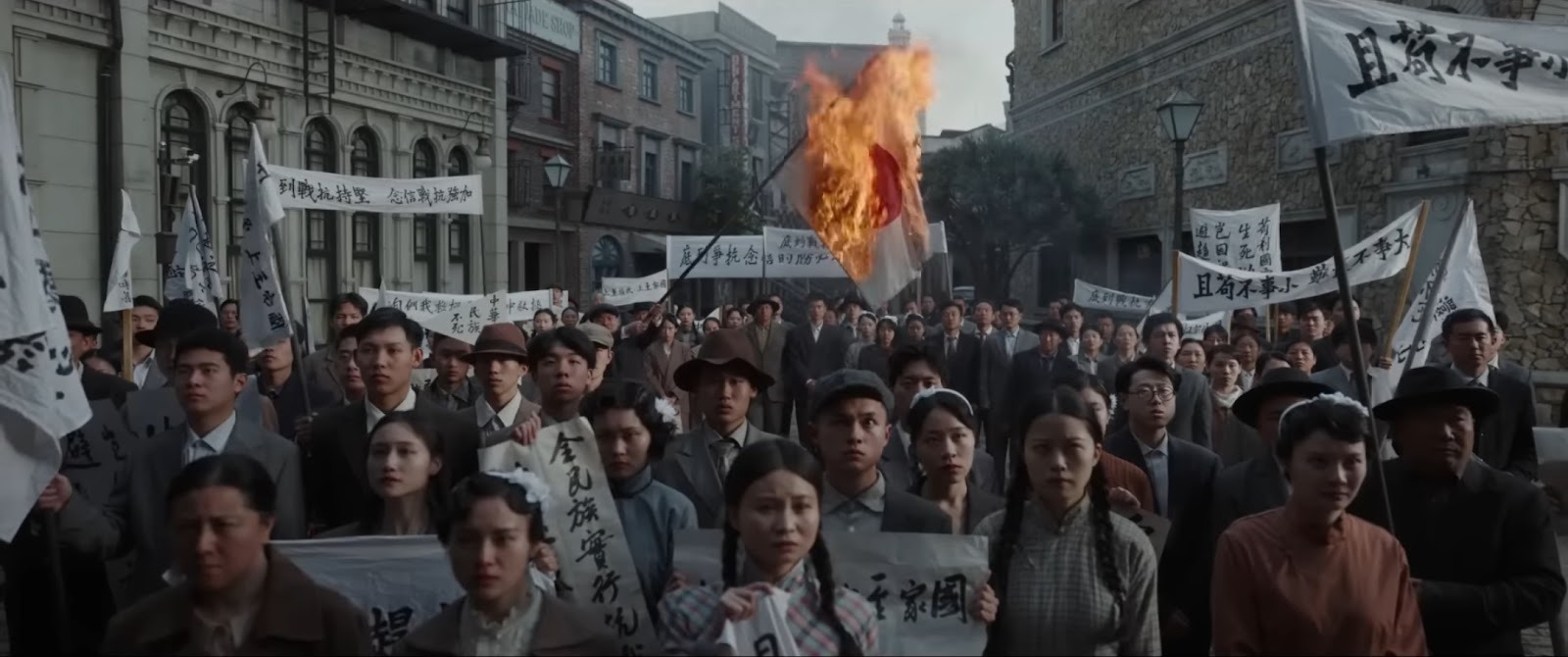
Ending on such a vengeful note seems exhilarating, but it robs attention away from the victims and mutilates the film’s message into one of unity against “the enemy”—unless, that was the message all along.
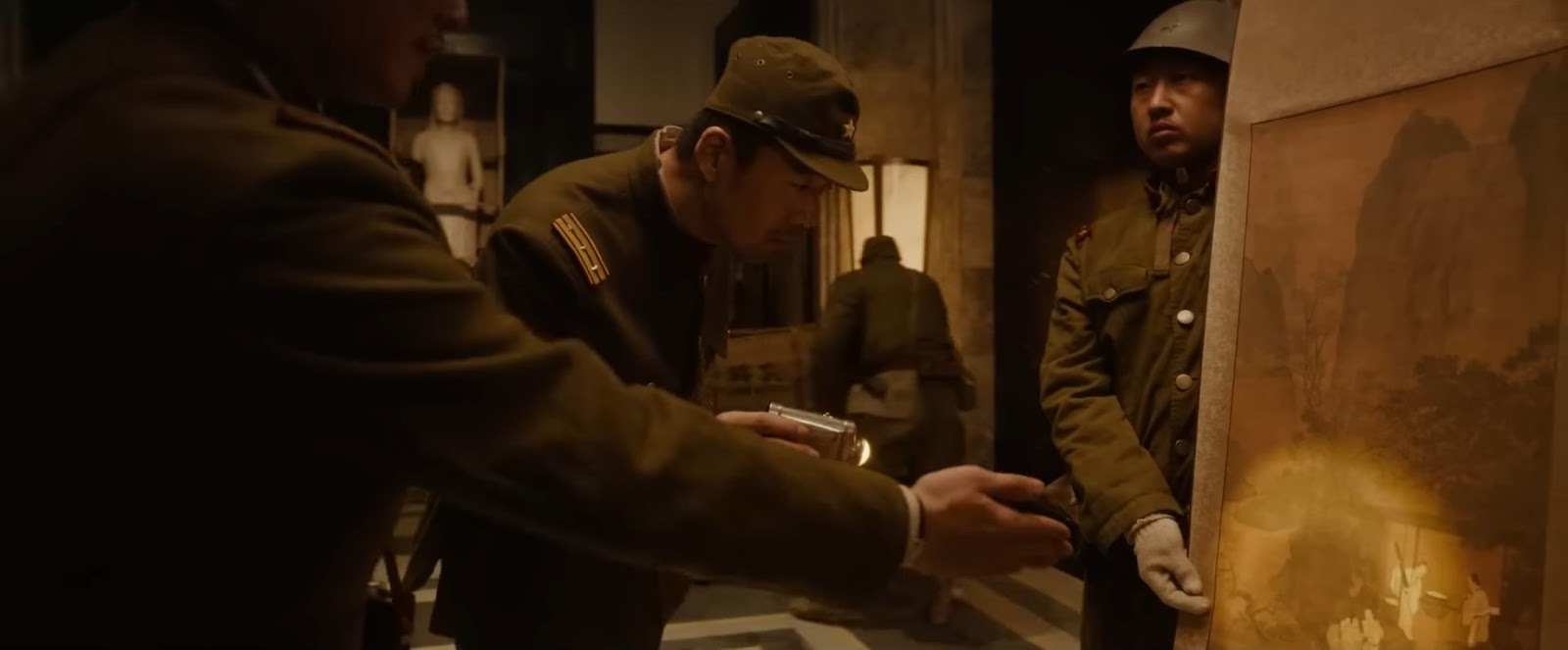
Beijing maintains total control over China’s media. Freedom House’s 2025 report asserts that “the Chinese Communist Party (CCP) maintains tight control over all aspects of life and governance, including the state bureaucracy, the media, online speech, religious practice, universities, businesses, and civil society”. To even get the “Dragon Seal” which permits legal screening, Chinese films must abide by the China Film Administration’s strict censorship and extensive review process.
And with each exclamation of “long live China” in “Dead To Rights”, nationalist sentiment, bit by bit, is reinforced. The result is that the film’s ending meanders on and on, bloated with unnecessary pandering.

“Dead To Rights” sees photography used as a weapon of truth. As such, it is poetic that, from one roll of film to another, the duty to bear witness and remember Nanjing has been passed down, with Shen Ao’s work now taking the mantle. But, in a dark, ironic twist, when Beijing laces the film with its nationalist agenda, it risks aligning more with Itō’s photography: one that doesn’t preserve the truth, but warps it instead.
Final Verdict
Let’s set the record straight. China was a victim during the war. Looking purely at numbers, they suffered the second-highest total death toll, and with their war being an overwhelmingly defensive one, their wartime policies towards other nations are less controversial compared to other major Allied powers (Britain with the Bengal Famine, the USSR with their atrocities whilst invading Nazi Germany, etc.).
Thus, for modern China to have WWII persist as a major diplomatic sticking point is, frankly, understandable—even if the main fighting force of the Kuomintang, which the CCP was not particularly helpful to, was willing to sacrifice their own people through catastrophic means.
Nevertheless, as “Dead To Rights” has shown, truth can be weaponised. To analysts, WWII and the Nanjing Massacre have long been seen as geopolitical leverage for Beijing. And as the 2025 Japan-China feud continues to develop, it has revealed some ugly truths about what Beijing really thinks about the war’s victims.
So, to answer the question, does “Dead To Rights” really succeed in remembering Nanjing? No, at least not with that ending, and not with how it functions merely as part of a broader project aimed at Chinese audiences.
Because to remember Nanjing and WWII shouldn’t be about melodramatic filmmaking or flashy parades. It should be to confront the event head on with unclouded vision, and to accept that, other than us knowing the unvarnished truth, there is nothing the victims deserve more than a promise that their memory shall not be exploited to continue our world’s cycle of aggression.